Seminar Introduction
Index
Jazz & Pop
Jazz & Pops Research (Instructor Hiroshi Kanda)
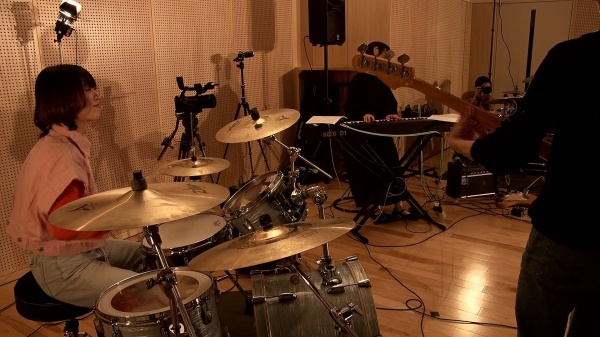
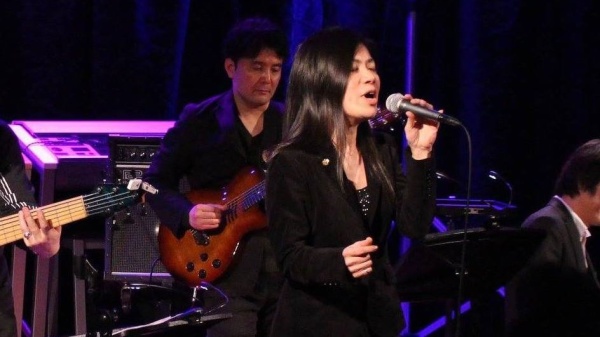
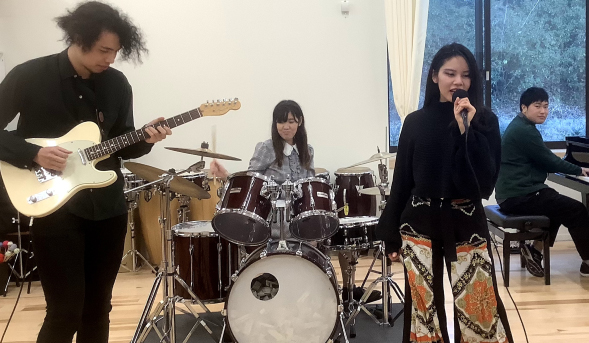
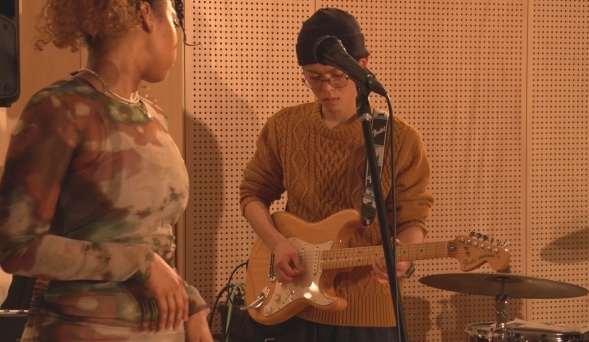
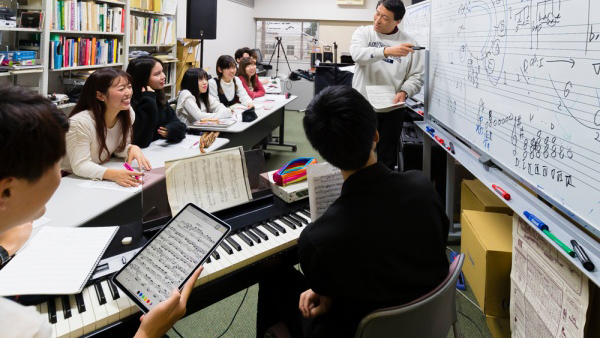
In the Jazz & Pops Research Seminar, students explore a wide range of popular music, from jazz to pop, through performance presentations, original compositions, and even DAW (Digital Audio Workstation) techniques, all tailored to their individual interests.
J. F. Oberlin University offers courses such as jazz & pops practical lessons, jazz & pops theory, songwriting, arrangement, and band ensembles. Based on the performance skills and knowledge gained in these classes, this seminar will pursue your own originality by performing and presenting original songs and DAWs. Then, regarding individual presentations, faculty and other students share ideas and discuss activity policies, aiming for a distinctly original style of expression. Furthermore, the goal is not only to develop performance and composition/arrangement skills, but also to acquire the research and communication skills necessary for musical activities.
The skills you acquire through studying jazz and pop music will greatly expand your possibilities for success not only in the music world but also in general society, allowing you to utilize your own originality.
Computer music and sound art
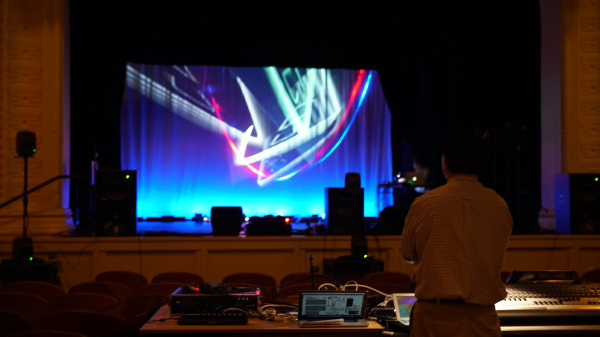
Music and Technology (Responsible Ryoho Kobayashi)
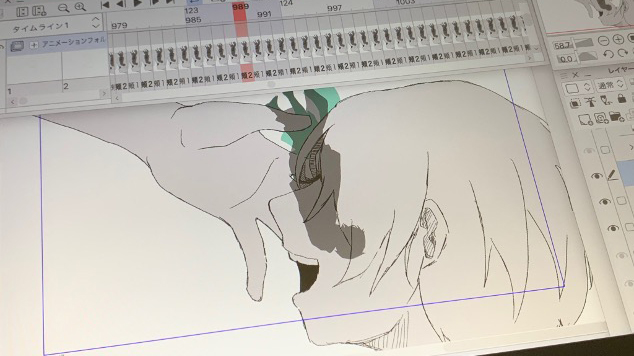
The recent advancements and widespread adoption of digital technology have brought about changes in how music is created and listened to, giving rise to new forms of sonic expression. In this seminar, with "Music and Technology" as the overarching theme, students will choose a field according to their individual interests and aim to complete a project. The form of the project is not limited to musical compositions, but can include a wide range of possibilities, such as performance pieces, exhibition works, and combinations with other fields such as video. Students participating in this seminar will create works that incorporate their own unique perspectives while flexibly considering and thinking about "what music is." In addition to instruction in the techniques necessary for creating such works (programming, sound processing, electronics, multimedia data processing, etc.), the seminar will also cover a wide range of topics such as acoustic/music psychology, music neuroscience, music sociology, and sensory information processing other than music, such as visual perception, aiming to create creative and original works.
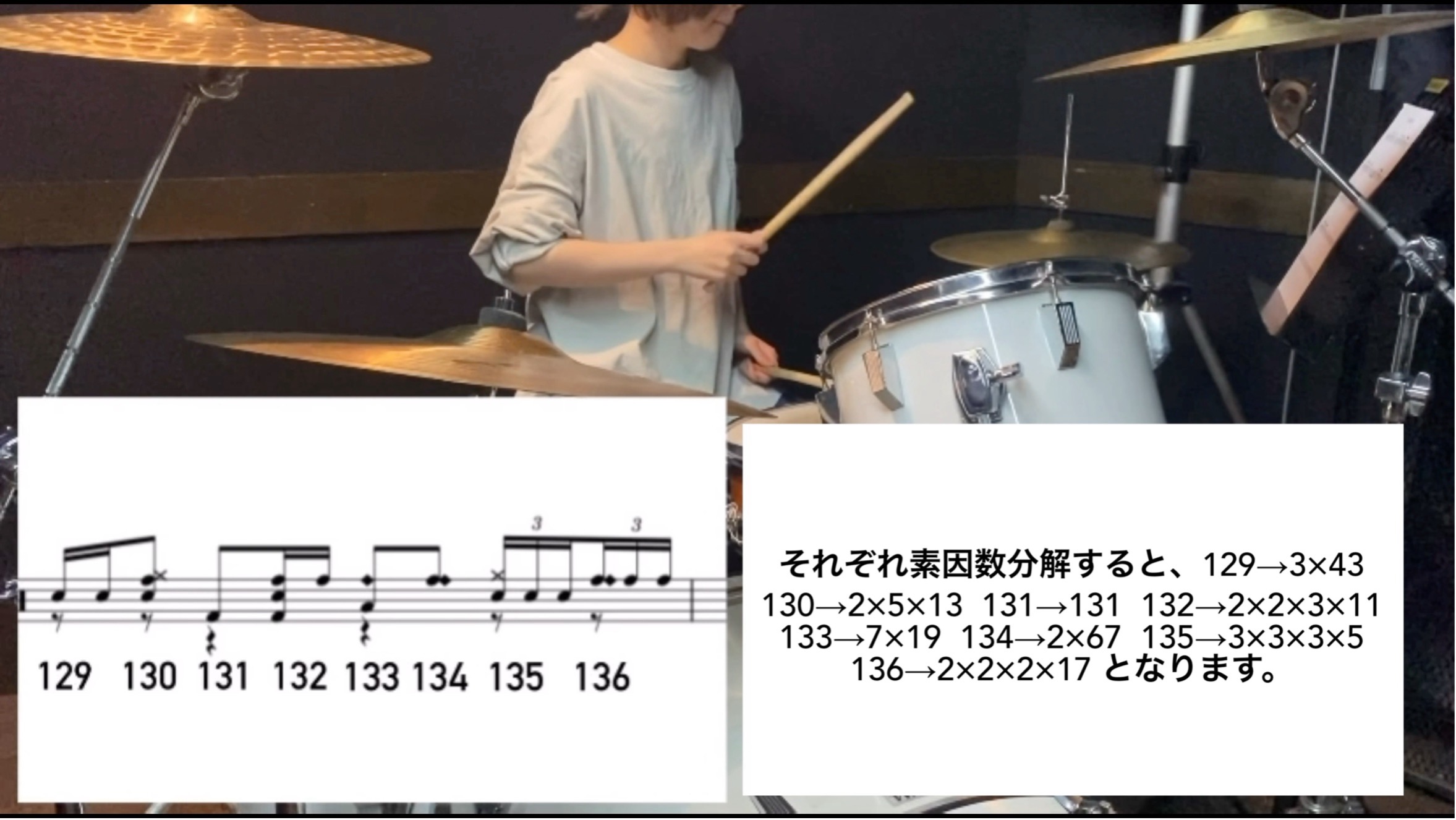
I created the drum fill according to the rules of calculation.
Opera
Italian Opera Research (Responsible Reiko Kobayashi)
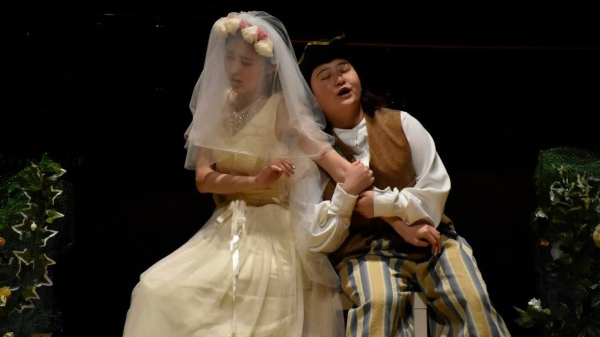
Building upon the vocal and expressive techniques acquired in the first and second years, students will perform Italian operas in their original languages. Through rehearsals of duets and ensembles, they will develop communication skills, teamwork, and perseverance, learning both the joys and challenges of opera production. While striving to overcome individual vocal and acting challenges, students will also deeply study opera, the art of breath control, to acquire and master a more beautiful, energetic, and expressive singing voice. The program primarily features performances of "The Marriage of Figaro" and "L'elisir d'amore." Students who participate in seminars in their third year will proceed to their graduation research in their fourth year, culminating in a graduation concert where they master challenging opera arias and ensembles as the culmination of their four years of study.
piano
Piano Works Research (Responsible Tokiko Kobayakawa)
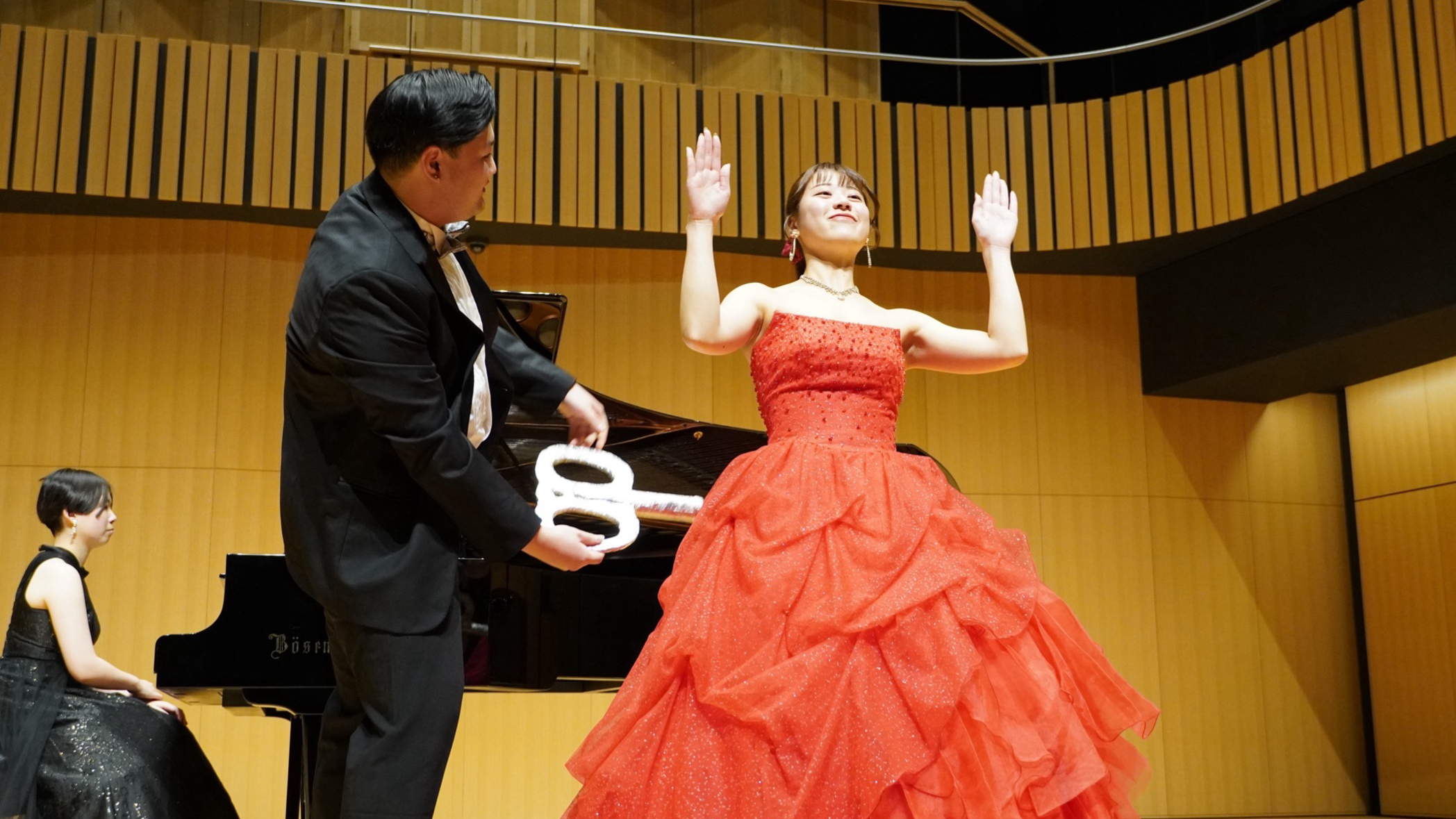
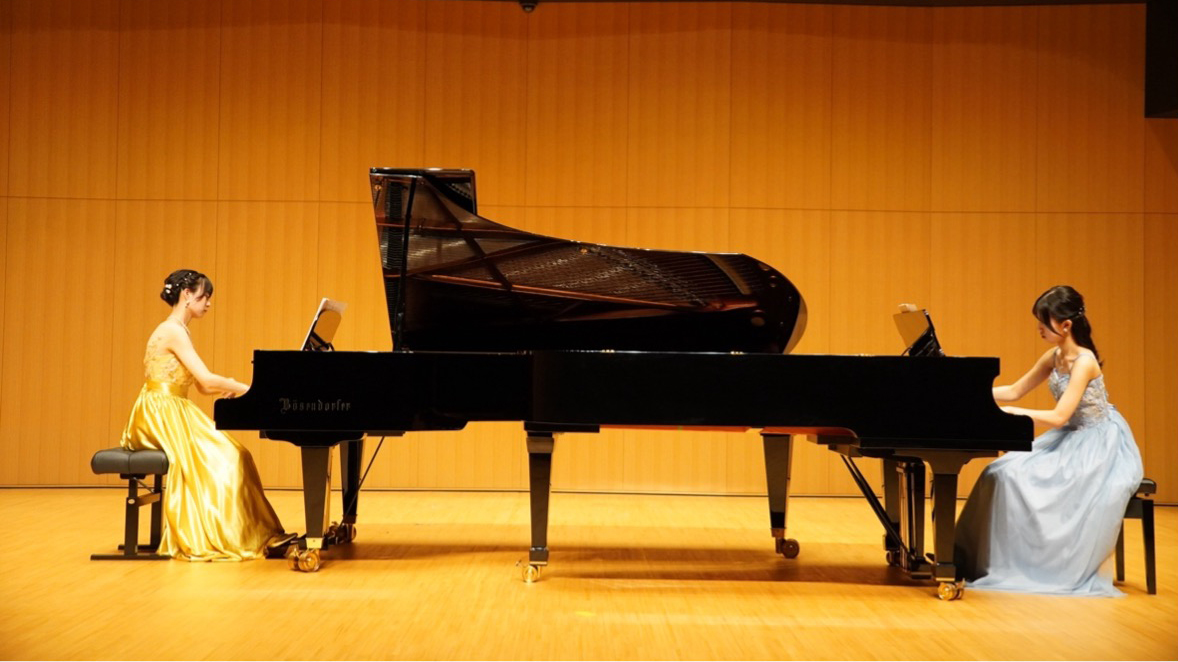
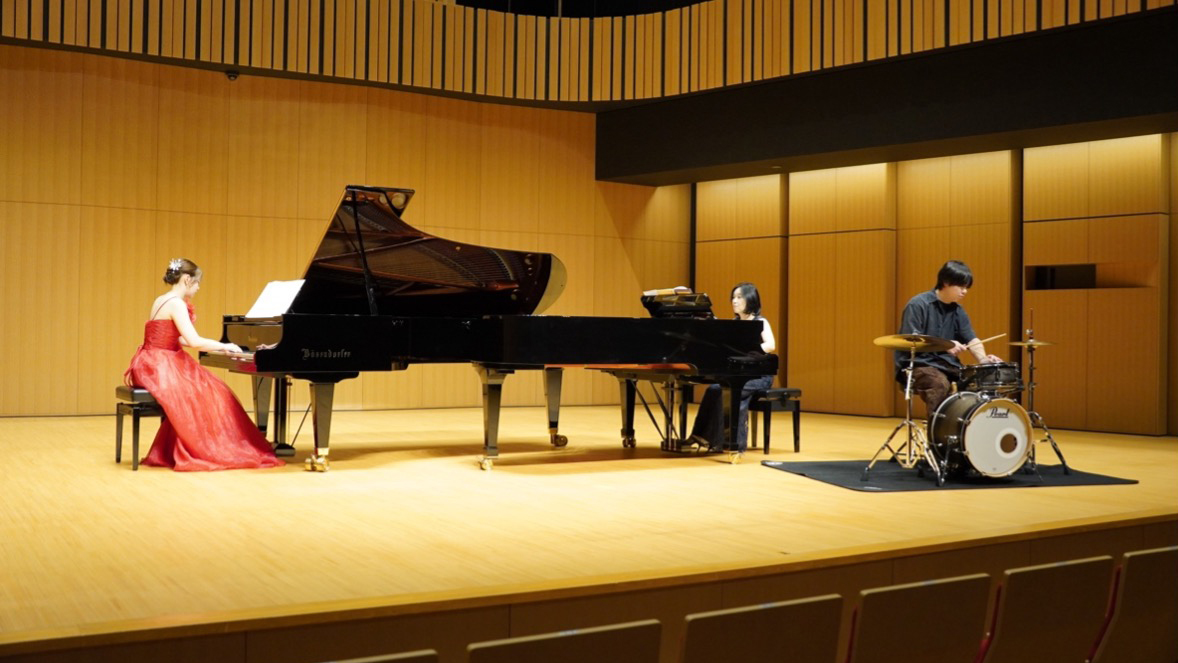
This course allows you to experience the joy of ensemble playing by studying not only solo works but also chamber music (piano duets, two pianos, piano concertos, piano and other instruments). Since all students plan and manage a recital together, you will develop teamwork skills and experience the challenges of performing in front of an audience, as well as the satisfaction of overcoming difficulties together with your peers. You will also write commentaries on the works, gaining knowledge about the historical context and composers, and learning how to reflect this in your performance. The goal is to develop expressive techniques and emotionally rich performances. While there may be challenging moments as you will often confront yourself, we hope that through your third-year specialized seminar and fourth-year graduation research, you will gain a firm understanding of your own individuality and grow into a confident individual who can step out into society.
- 2025 Academic Year Specialized Seminar BrochurePDF file
- 2025 Academic Year Graduation Research Project BrochurePDF file
Hymns and folk songs
Hymn and Song Research (Instructor Norio Ueki)
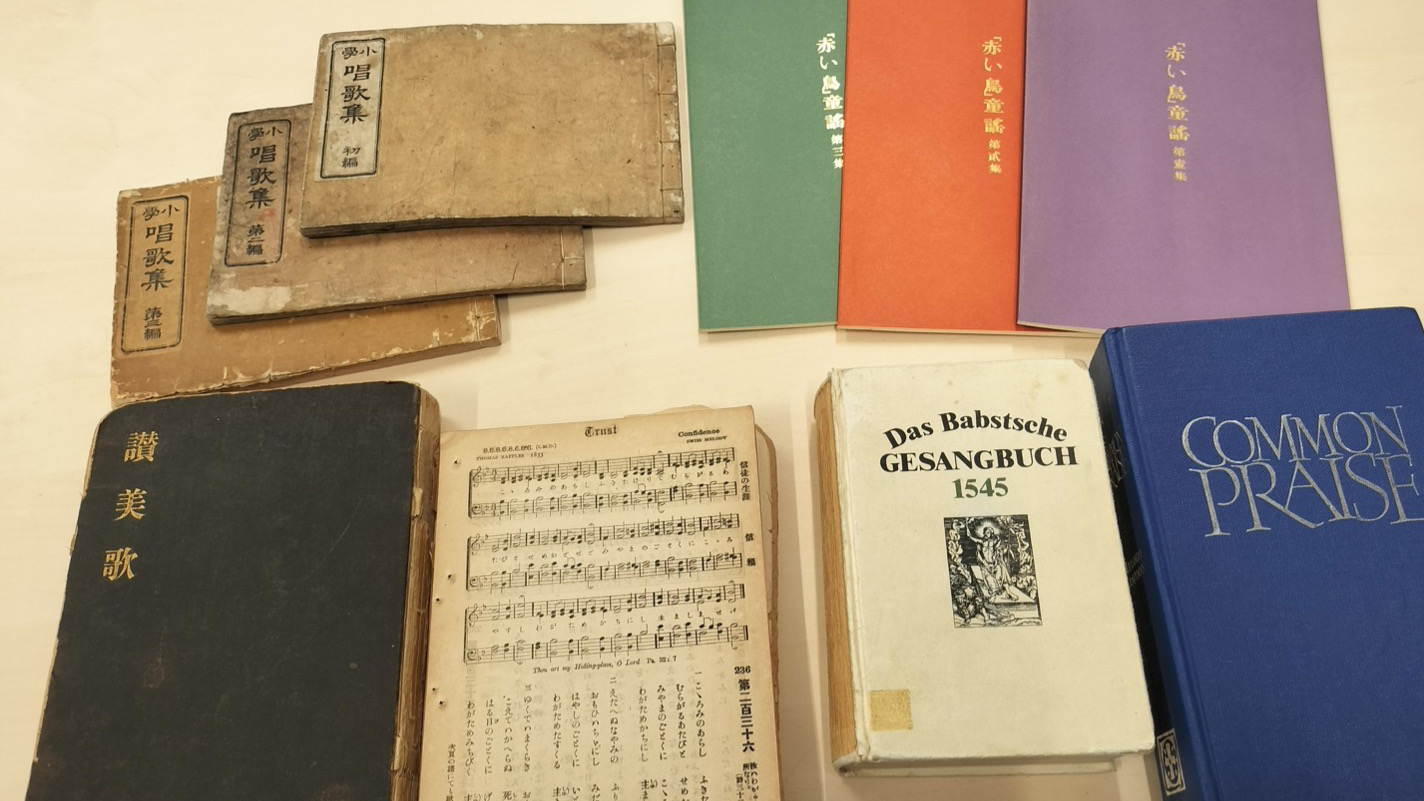
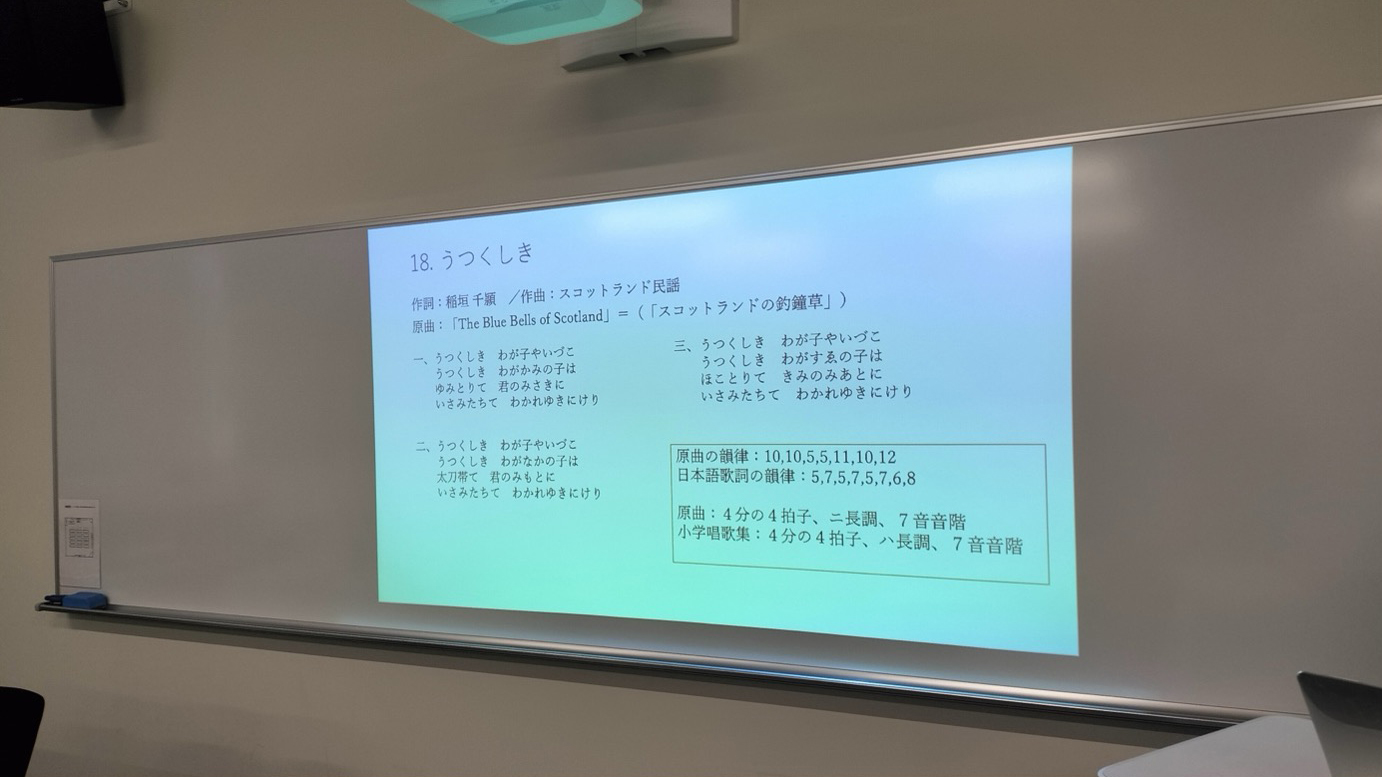
The "Hymns and School Songs Research" seminar provides comprehensive training and research necessary for choral instruction. Creating a choral performance requires multiple approaches. We build a strong foundation for comprehensive choral instruction by focusing on both "teaching methods" (including pronunciation, vocalization, and rehearsal planning) and "conducting methods," while deepening our understanding of musical pieces. The repertoire is diverse, ranging from classical pieces from the Renaissance, Baroque, Classical, and Romantic periods to contemporary Japanese choral music. With a view to vocal instruction in teaching, we encourage students to become familiar with choral music while simultaneously receiving training in teaching and conducting methods, always immersing themselves in both the singing and teaching roles.
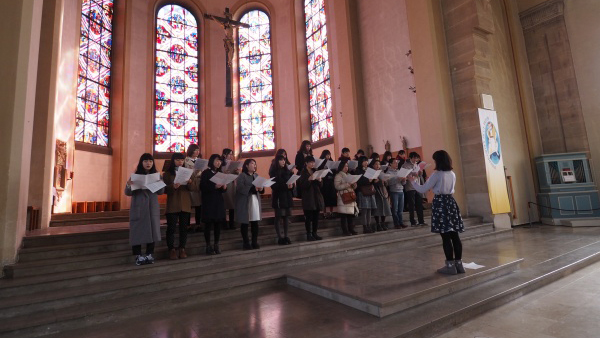
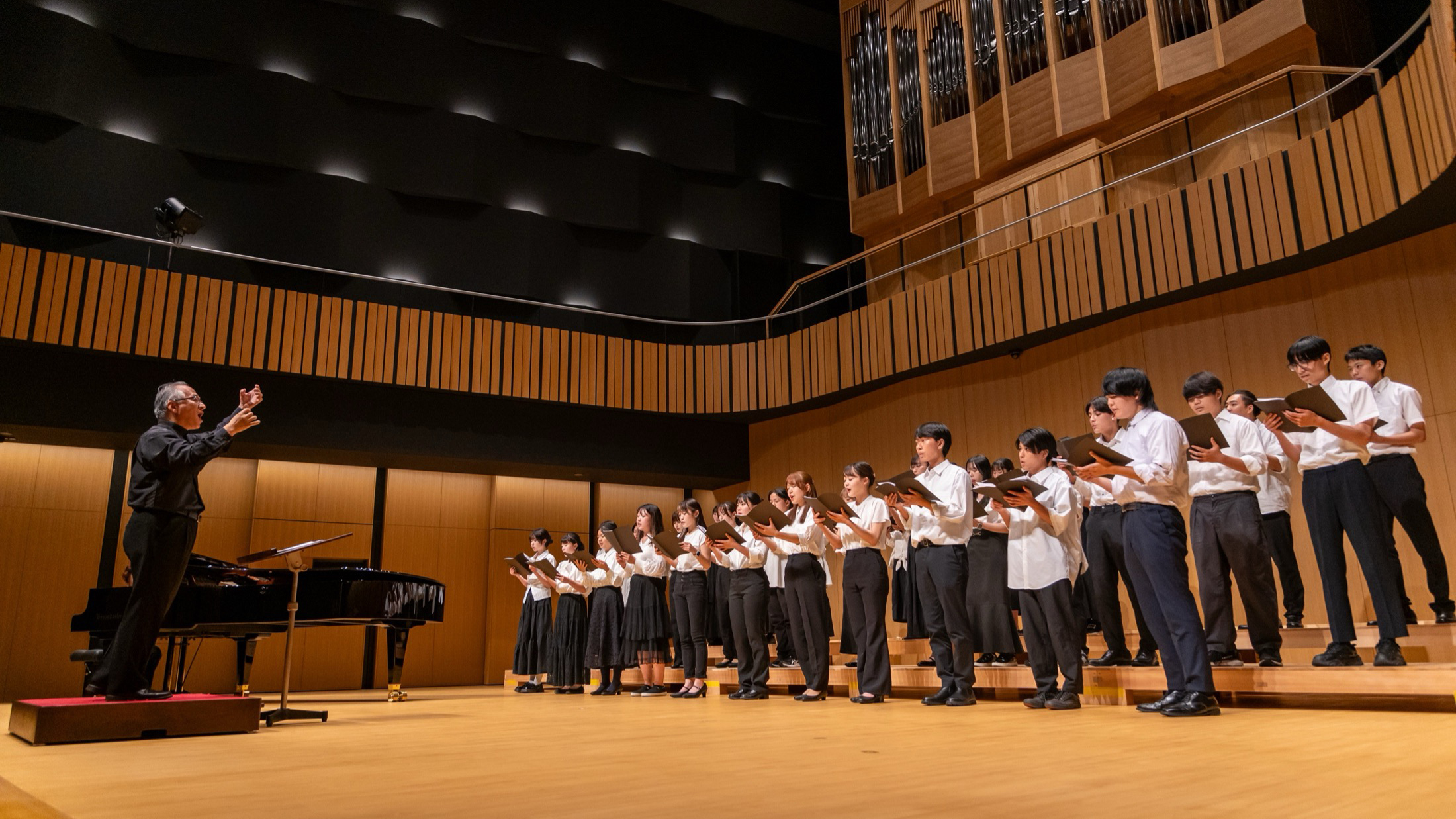
- [Video] J. Brahms: German Requiem (Op. 45), No. 1 "Blessed are those who suffer"External link
- [Video] J. Haydn: Oratorio "The Seasons" Hob.XXI:3, No. 2 "Come, tranquil spring"External link
- [Video] J.S. Bach: "Lord, our ruler!" from St. John Passion, Fourth Version (BWV 245)External link
Instrumental performance techniques
Instrumental Performance Research Seminar (Instructor Kunitada Matsuoka)
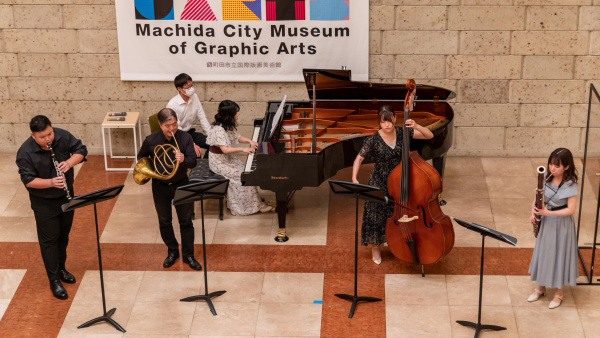
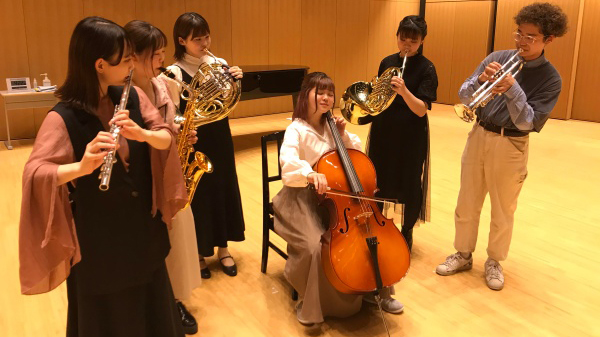
Building on the skills acquired through individual lessons in wind, string, and percussion instruments, students will perform various genres of music in ensembles of around five people. In the foundational classical genre, students will learn music in the form of Renaissance and Baroque music where each instrument plays equally. This will enable them to choose appropriate note lengths according to the tempo and content of the music, and aim to create musical expressions that incorporate nuances based on their own ideas. Students will not only play from the sheet music for their own instrument, but will also need the ability to arrange music to accommodate various parts. For example, they will experience creating ensembles from a single melody sheet music, such as jazz standards, assigning roles on the spot. Since the ensemble composition varies from year to year, it is also possible to work on creating and performing original pieces with unique instrumentations. Students actively perform both on and off campus, with an average of two performances per month.
Composition, music theory, musicology
Composition, Musicology Seminar (in charge of Akira Takaoka)
Composition and Musicology Seminar: The seminar provides instruction in composing instrumental, vocal, and computer music; creating multimedia works incorporating video and dance; developing automated composition and music analysis programs using Java and Python; researching music theory such as atonality, music cognition, and composition algorithms using artificial life; researching music history; and reading foreign books.
Characteristics of the academic group
Open list of subpages
Content of learning
Open list of subpages
Career paths, qualifications, and achievements
Open list of subpages
Student life/environment