Major in Social Welfare
Program Overview
Social welfare refers to the social systems and practices aimed at meeting the living needs of all people. These needs include basic living needs such as food, clothing, and shelter; social needs such as the desire to connect with various people and fulfill a role; and cultural needs such as the desire to enjoy culture. Social welfare explores people's needs and the philosophies, systems, and forms of support necessary to fulfill them.
Let's listen to the voices of those facing difficulties, work together to consider the necessary support, and create new systems and practices.
Class Featured

Social work practice
This course aims to equip students with the specialized skills and knowledge necessary for practicing social welfare, specifically focusing on counseling and support. Through small-group workshops, students will learn concrete support methods following the counseling process using case studies. Divided into small groups, students will acquire interviewing skills through role-playing and other methods, and learn how to solve problems in case studies. Furthermore, they will learn how to write interview records, among other things, providing a broad understanding of counseling and support.

Social work internship supervision
Social work internships take place in a variety of fields, including those involving children, the elderly, people with disabilities, government agencies, social welfare councils, and hospitals. Prior to the internship, students learn about the overview of the social welfare system and the fundamentals of social welfare assistance, enabling them to apply this knowledge in practice. After the internship, students reflect on their experiences and deepen their practical learning through group work and discussions, understanding how social work unfolds in various counseling and support situations.
Disability Welfare Theory
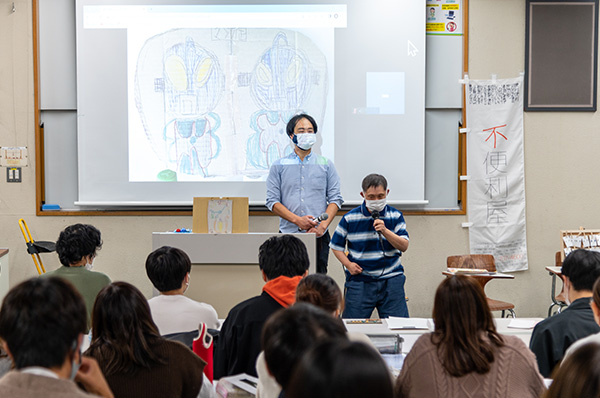
Who exactly does the term "person with a disability" refer to? In Japanese law, people with physical disabilities, intellectual disabilities, and mental disabilities are broadly classified. However, if we shift our perspective slightly, we can also see "disability" not as something physical or mental, but as people who experience inconvenience or hardship due to their social environment or social structure. Through studying disability welfare theory, I hope we can together find clues to happiness not only for people with disabilities, but for all people in society.
Introduction to Social Welfare
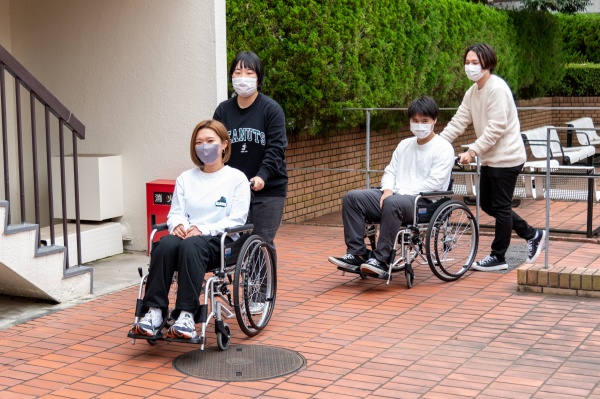
This course, available in the first year, aims to help students develop a future vision for welfare and enhance their interpersonal skills. By hearing about the rewards and challenges of work from people active in fields such as child welfare, elderly care, disability services, community welfare, and healthcare, students will learn about the diversity of the welfare field and find it easier to discover areas that interest them. Furthermore, through group work in communication and wheelchair experiences, students will expand their social circles and develop the ability to easily engage in volunteer work.
Other classes and subjects
Introduction to Social Welfare / Social Welfare Management Exercises A (Personal Assistance Services) / Theory and Methods of Social Work I-III / Foundations and the Professional Role of Social Work / Foundations and the Professional Role of Social Work (Specialized) / Social Work Exercises (Specialized) I-IV / Social Work Internship Guidance I-III / Social Work Internship / Principles and Policies of Social Welfare / Social Security / Public Assistance Theory / Fundamentals of Social Research / Community Welfare Theory / Community Empowerment Methodology / Child Welfare Theory / Children's Law / Disability Welfare Theory / Communication for the Hearing Impaired / Understanding Aging and Disability / Elderly Welfare / Dementia Care Theory / Theory and Practice of Long-Term Care Prevention / Fundamentals of Long-Term Care Services / Introduction to Long-Term Care / Life Support Techniques / Community Living Environment Theory / Welfare Business Management Theory / Welfare Facility Management Theory / Organization and Management of Welfare Services / Social Welfare Management Exercises C (Management and Welfare Business) / Health and Medical Services / Medical Social Work Theory
How seniors learned

Comprehensive support for learning
Yokohama City Urafune Home /
Junpei Ota
I work as a caregiver at a special nursing home for the elderly in Yokohama City. During my time at university, I was able to ask questions about anything that interested me, and my professors patiently taught me. The professors at the practical training support center listened to my concerns about how to choose classes and even my vague anxieties about the future, and the close relationship with the professors is one of the university's strengths.
Characteristics of the academic group
Open list of subpages
Content of learning
Career paths, qualifications, and achievements
Open list of subpages
Experiential and practical learning