Major in Mental Health and Welfare
Program Overview
This program trains social workers, welfare professionals who provide counseling to individuals with mental disabilities and their families, and support their social participation in collaboration with relevant organizations. Through small class sizes, exercises, and practical training, students will hone their communication skills and practical support abilities. Furthermore, the four-year program promises personal growth and development.

Class Featured
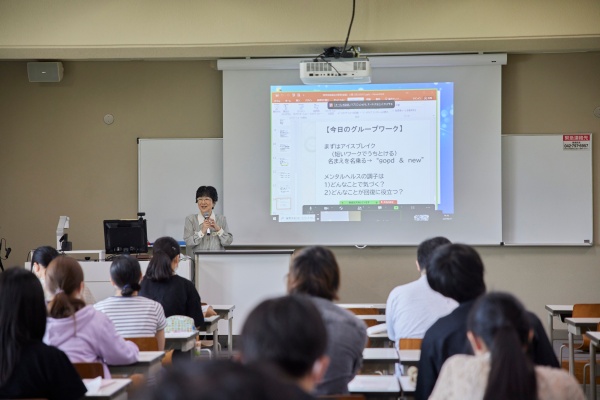
Principles of Mental Health and Welfare I & II
First, we trace the history of mental health and welfare to see how people with mental disorders have been perceived in society and what kind of lives they have led. You will also learn about the role and support mindset of mental health social workers in the Mental Health Welfare Area, laying the foundation for your studies.
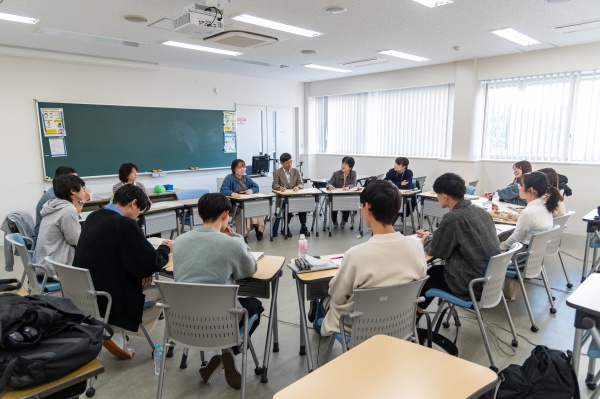
Mental Health and Welfare Practice Guidance I, II, III
"Field training," where mental health social workers learn how to support patients in medical institutions and welfare facilities, is the culmination of their learning.
To achieve this, we conduct preliminary studies to create plans, and after completion, we reflect on our experiences and present them at practical training debriefing sessions to deepen our learning.
Other classes and subjects
Psychiatry I & II / Theory of Mental Disorder Rehabilitation / Principles of Mental Health and Welfare I & II / Theory and Methods of Social Work I & II / Theory and Methods of Social Work (Specialized) (Mental Health) / Theory of Mental Health and Welfare Systems / Foundations and Professionalism of Social Work / Community Welfare Theory / Theory of Welfare for Persons with Disabilities / Principles and Policies of Social Welfare / Social Security / Fundamentals of Social Research / Advocacy and Adult Guardianship System / Criminal Justice and Welfare / Theory of School Social Work / Group Approach / Social Work Practice (Mental Health) / Mental Health and Welfare Practice I, II & III / Mental Health and Welfare Internship Supervision I, II & III / Mental Health and Welfare Field Internship I & II
How seniors learned

You can ask questions to experienced teachers and deepen your learning through books as well.
Mental health social worker /
Graduated from Komaba Gakuen High School, Tokyo.
Anmi Morigaki
With many experienced professors, opportunities to ask questions outside of class, and a wide selection of related books, I believe this university is an ideal and attractive place to deepen one's learning.

The connection with the university continues even after graduation.
SKY Kawasaki Social Welfare Corporation, Kitanoba Community Activity Support Center, Mental Health Social Worker /
Graduated from Komaba Gakuen High School, Tokyo.
Eriko Kano
We provide work opportunities through handicrafts and offer consultations on various aspects of daily life, aiming to create a space for self-realization for people with mental disabilities.
The Mental Health and Welfare major was small, and everyone got along well. The professors were very supportive, providing attentive assistance with practical training and job hunting. Even now, I still visit university classes to share experiences and insights from clients.
Characteristics of the academic group
Open list of subpages
Content of learning
Career paths, qualifications, and achievements
Open list of subpages
Experiential and practical learning