Aircraft Management Course
Index
To train personnel who will protect the airworthiness and safe operation of aircraft.
Students will learn the fundamental knowledge necessary for guaranteeing aircraft airworthiness, managing reliability, and overseeing quality and production management. They will also acquire specialized knowledge required for aircraft-related operations such as procurement, maintenance, flight operations management, and ground handling. Understanding of this knowledge will be deepened through practical training abroad, visits to companies like Boeing, off-campus classes, and lectures by external instructors. The program aims to cultivate highly skilled individuals capable of managing airlines and related companies.
Course features
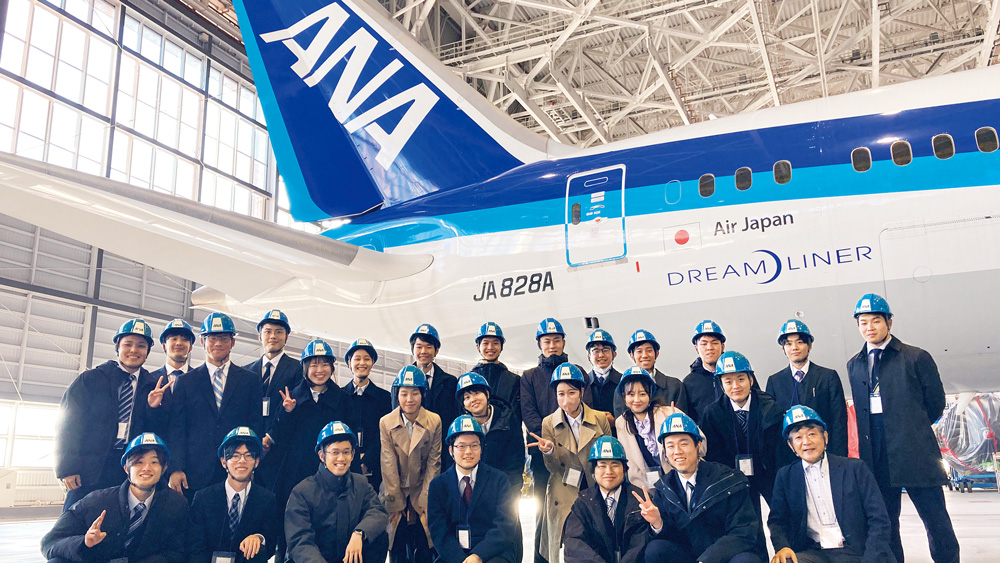
Acquire a broad range of fundamental and advanced knowledge necessary for aircraft management, from airworthiness assurance, reliability, quality, and production management, to flight management and ground handling. Develop a perspective that supports "flighting" from both legal and safety standpoints, and hone your ability to oversee the entire operation.
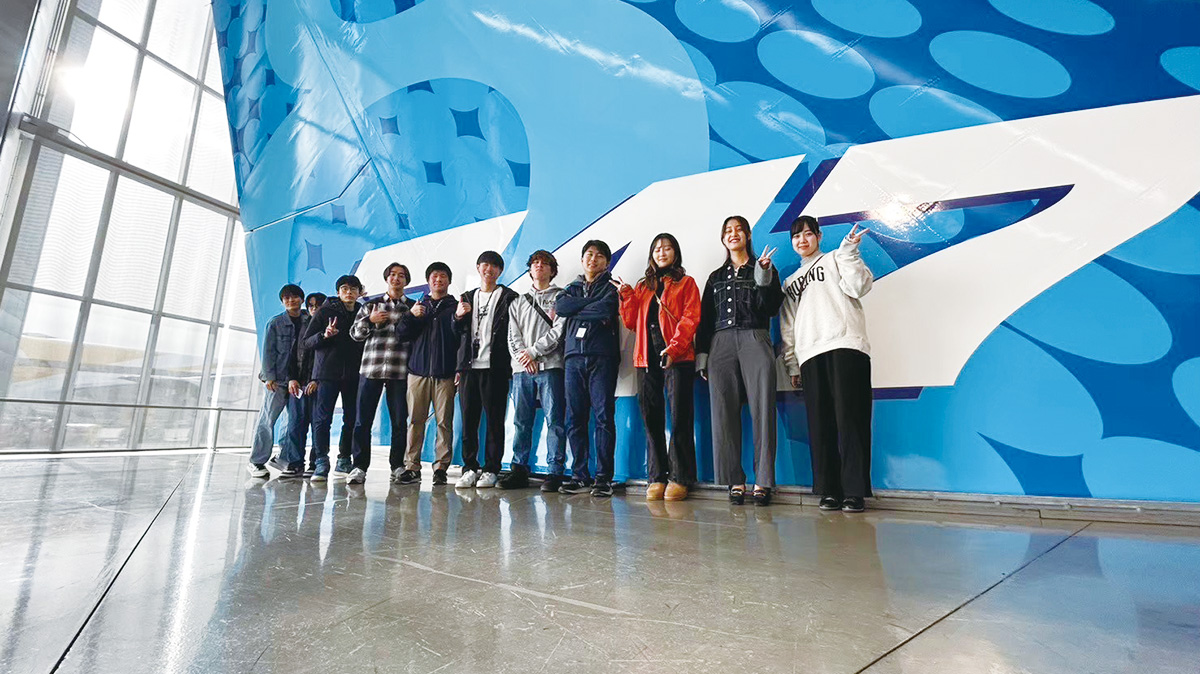
In the fall semester of their second year, students participate in an overseas training program based in Seattle, where they will experience the entire process from manufacturing to maintenance and operation firsthand through factory tours, lectures, and practical training at Boeing. Furthermore, through off-campus classes and lectures by external instructors, students will gain more practical knowledge by visiting actual maintenance sites and receiving direct explanations from professionals in the field, while also deepening the knowledge they have acquired through on-campus lectures.
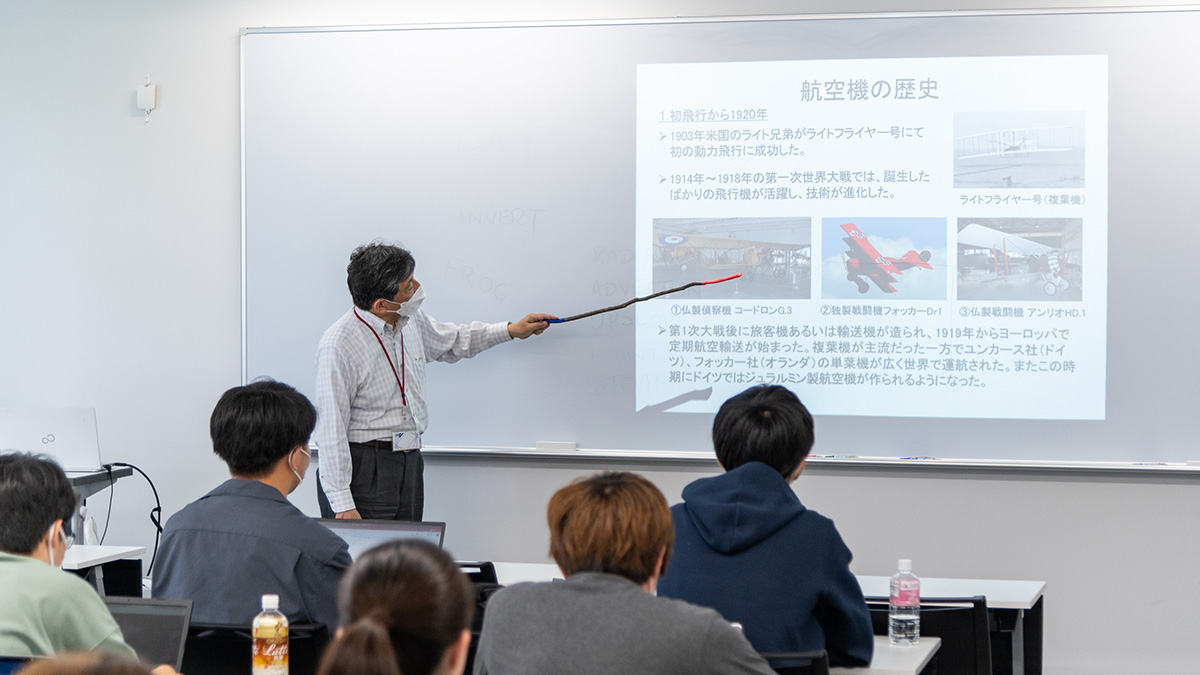
Experienced instructors will guide students not only in acquiring fundamental knowledge of technology, quality, and production management, but also in developing practical skills required in the aviation industry, such as compliance awareness, judgment, and negotiation abilities. Students will become familiar with various regulations written in English, and will learn not only the content but also how to apply aviation law. In addition, they will acquire a wide range of practical skills, including management and cost control.
Course learning
In the first year, students learn fundamental knowledge in the aviation field, such as aerodynamics, aviation meteorology, aircraft mechanics, and aviation law. In the second year, they begin specialized studies, including the mechanisms of aircraft and equipment maintenance, and the engines installed in aircraft. In the fall semester of the second year, they participate in an overseas training program in Seattle, USA, where they experience aircraft manufacturing sites and maintenance processes. From the third year onward, they study applied subjects such as aircraft airworthiness assurance and quality and production management, deepening their understanding of maintaining and improving aircraft safety in a practical setting.
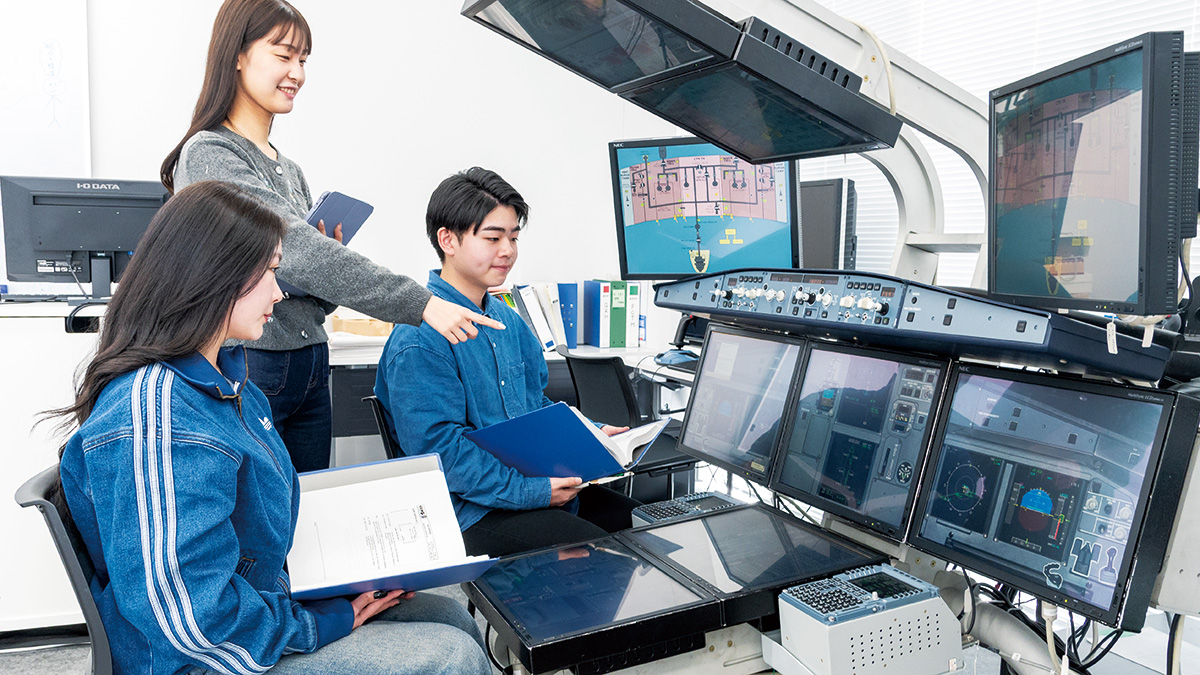
The campus is equipped with DA42 and B737-800 FTD (Flight Training Devices), an A320APT (Procedure Trainer), and an ATC (Air Traffic Control Simulator) to help students develop their expertise. These simulators allow students to learn how to handle various situations as part of their pilot training, maintenance management, and air traffic control courses. They are also used to learn about aircraft structure and mechanics.
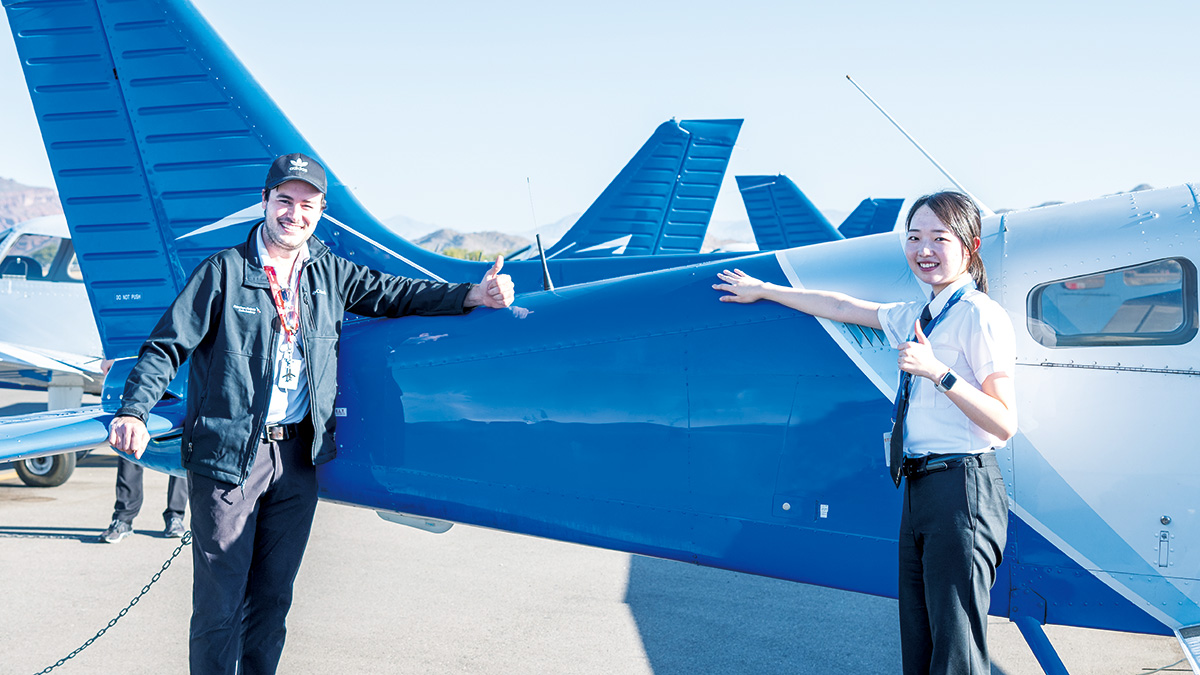
To cultivate internationally-minded aviation professionals, we place great importance on practical learning abroad. At our CAE training facility in Mesa, Arizona, USA, we conduct authentic flight training using the latest training aircraft in a stable climate. Students gradually acquire skills ranging from the fundamentals of safe operation to advanced piloting techniques. In addition, overseas training includes visits to airlines and airport facilities, allowing students to experience the global aviation industry firsthand. Through learning in a multicultural environment, we aim to cultivate pilots and aviation professionals who possess both an international perspective and practical skills.
Characteristics of the academic group
Open list of subpages
Content of learning
Career paths, qualifications, and achievements
Open list of subpages
Student life/environment