Air Traffic Control Course
Index
Developing aviation professionals through a broad range of learning.
We offer comprehensive learning related to air traffic control. This includes studying air traffic management, airspace management, and fundamental knowledge and international standards related to airport management and aircraft operations. By approaching air traffic control from a broad perspective, we cultivate individuals who can utilize their acquired knowledge to excel not only as air traffic controllers but also in roles such as airport management and airline dispatchers.
Course features
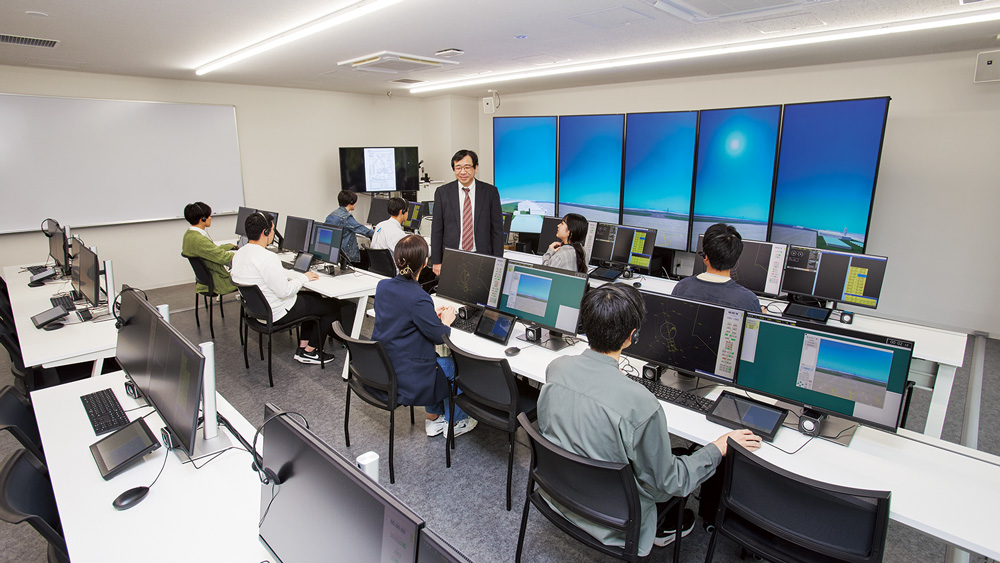
This program provides comprehensive learning related to air traffic control procedures, covering a wide range of aviation fields from the basics, including air traffic management, airspace management, airport management, and aircraft operations, and systematizing knowledge based on international standards. It fosters a broad perspective on air traffic control, cultivating a foundation that will be useful not only for future careers as an air traffic controller but also for roles in airport management, dispatching, and other related fields.
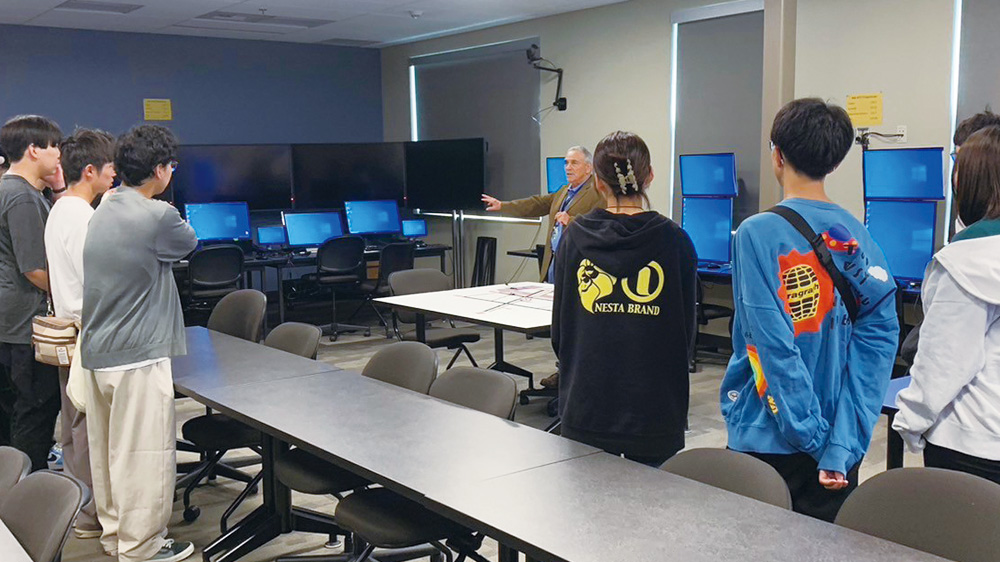
In the fall of their second year, students participate in an overseas training program in Seattle, USA. They connect their on-campus and off-campus learning with practical experience using the air traffic control simulator at Green River College, and gain insights into the differences in operations at various airports in the surrounding area, depending on their size and purpose. The on-campus ATC simulator is also utilized.
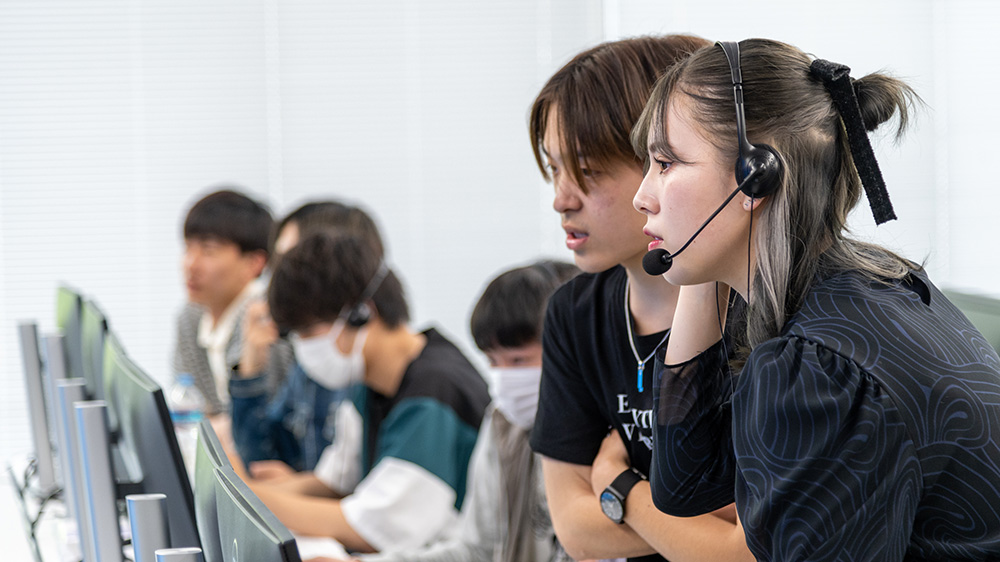
With the air traffic controller recruitment exam in the spring semester of the fourth year in mind, students systematically study related subjects while still enrolled in university. After passing the exam, they undergo training at the Air Traffic Control College and are then assigned to various air traffic control facilities. The environment in which students can study these subjects professionally at the university level is a major strength.
Course learning
In the first year, students study fundamental subjects such as air traffic control theory, aviation regulations, meteorology, and aviation English. In the fall of their second year, they participate in an overseas training program in Seattle, USA, to gain an understanding of the international aviation environment.
From the second year, students will gain an understanding of actual air traffic control operations through air traffic control simulation practice. In the third year, they will engage in comprehensive learning that fosters creativity, including the importance of TRM (Team Resource Management) and crisis management, through case studies and group exercises. From the third year, they will hone their judgment skills in line with actual operations through air traffic control simulation practice using radar and communication systems. In the fourth year, they will learn about emergency response and complex air traffic control operations through case studies and group exercises, acquiring comprehensive applied skills.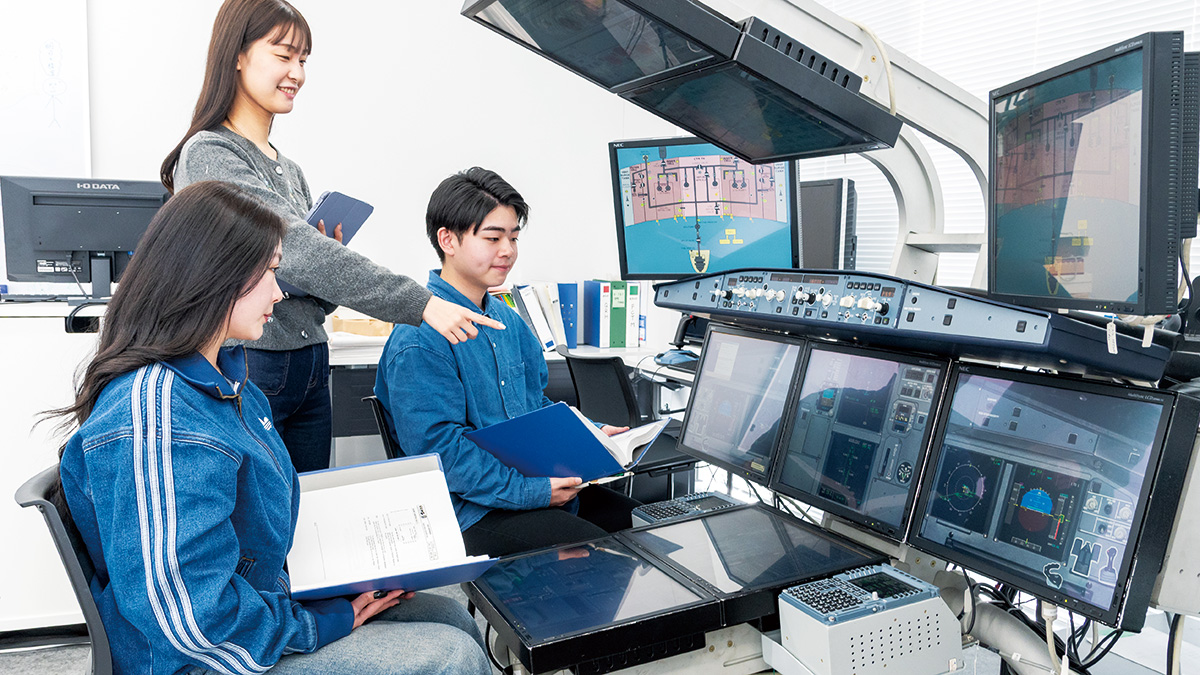
The campus is equipped with DA42 and B737-800 FTD (Flight Training Devices), an A320APT (Procedure Trainer), and an ATC (Air Traffic Control Simulator) to help students develop their expertise. These simulators allow students to learn how to handle various situations as part of their pilot training, maintenance management, and air traffic control courses. They are also used to learn about aircraft structure and mechanics.
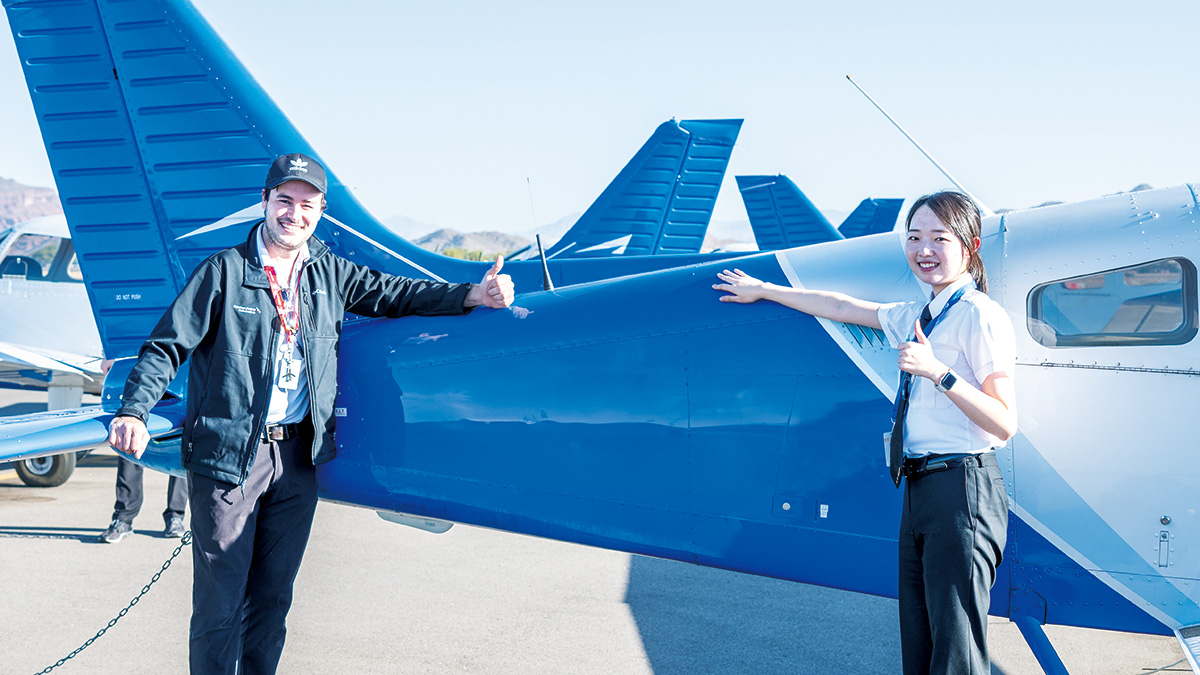
To cultivate internationally-minded aviation professionals, we place great importance on practical learning abroad. At our CAE training facility in Mesa, Arizona, USA, we conduct authentic flight training using the latest training aircraft in a stable climate. Students gradually acquire skills ranging from the fundamentals of safe operation to advanced piloting techniques. In addition, overseas training includes visits to airlines and airport facilities, allowing students to experience the global aviation industry firsthand. Through learning in a multicultural environment, we aim to cultivate pilots and aviation professionals who possess both an international perspective and practical skills.
Characteristics of the academic group
Open list of subpages
Content of learning
Career paths, qualifications, and achievements
Open list of subpages
Student life/environment