Airport Management Course
Index
To cultivate well-rounded human resources who will support the future of airports and the aviation industry.
The Airport Management course aims to cultivate individuals who possess a broad range of knowledge and advanced practical understanding to support airport management and operations, enabling them to proactively address the challenges of the evolving aviation industry. Through multifaceted learning in areas such as airport safety management, flight support, service quality, and regional cooperation, students will acquire the comprehensive skills necessary to shape the future of airports and the aviation industry.
Course features
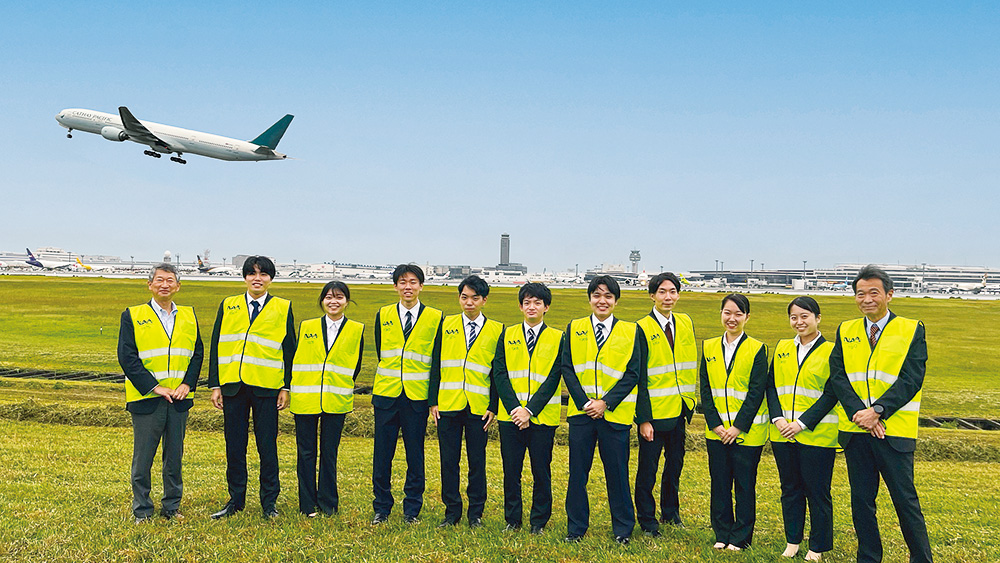
Students will systematically learn about a wide range of fields, including the management and operation of privatized airports, airline safety management, security, and passenger services, and will develop the ability to understand airports and the aviation industry from a cross-sectional perspective.
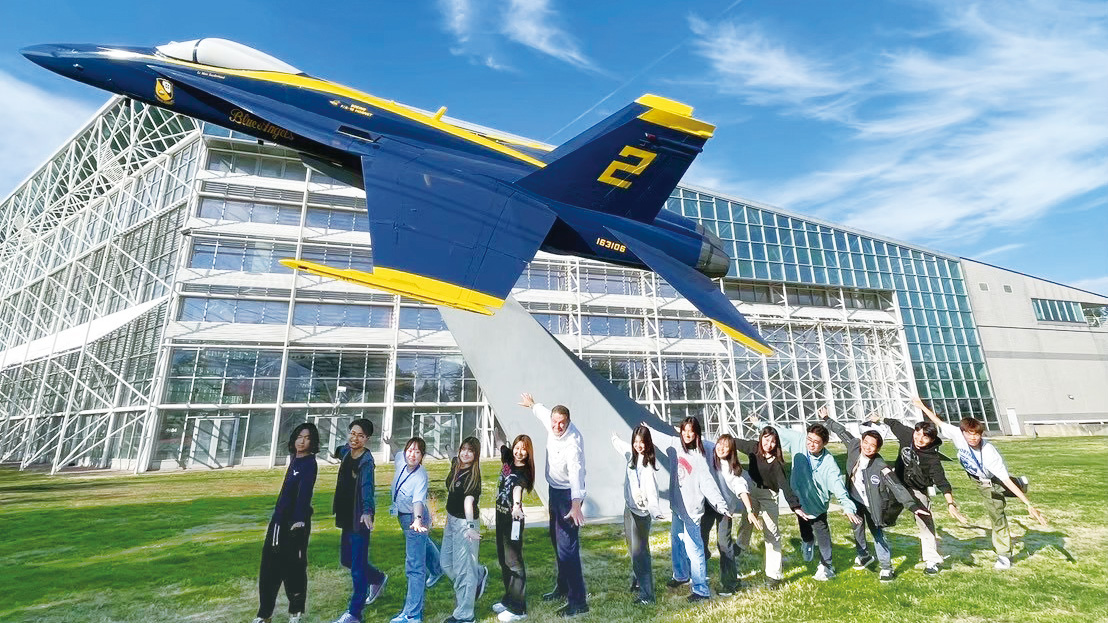
Using airport case studies as examples, students will engage in group and class discussions to repeatedly analyze problems and make decisions, thereby developing their problem-solving abilities and practical skills. Furthermore, during the Seattle study abroad program in the fall of their second year, students will broaden their perspectives by observing aviation and airport-related operations in the United States, fostering multifaceted analytical skills and accurate judgment.
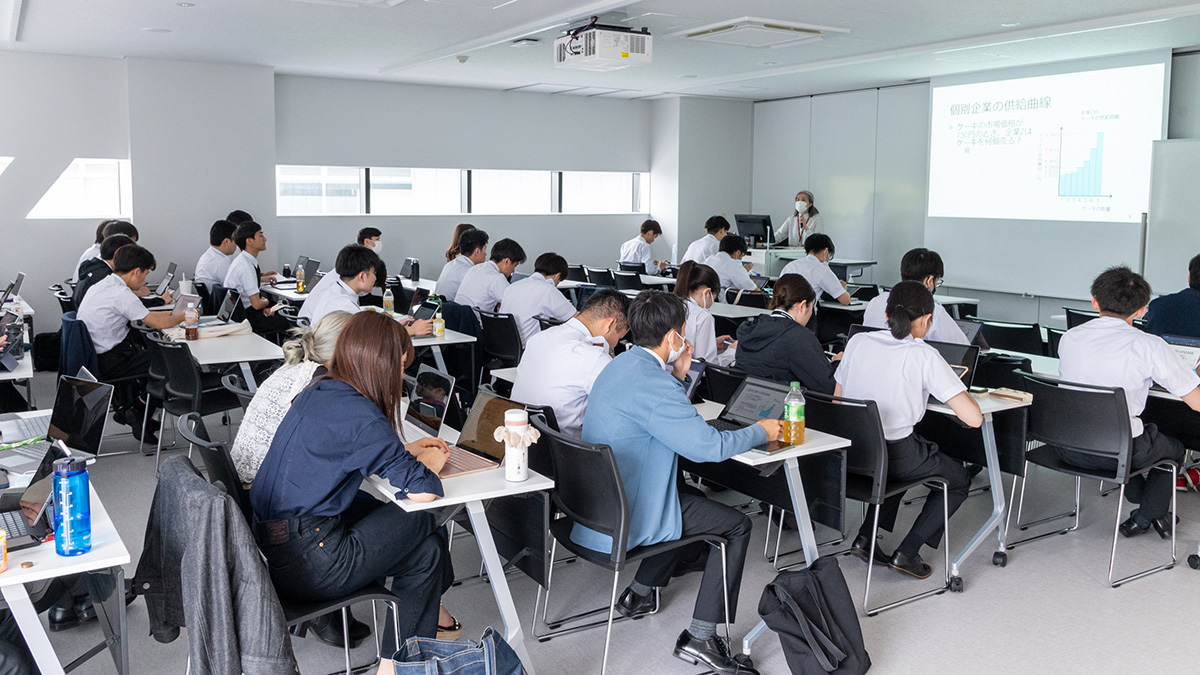
Through on-the-job problem-solving learning and collaborative courses with companies, students will develop practical skills to create new value for the future aviation industry, such as proposing improvements to airport operations and conceiving new services.
Course learning
In the first year, students learn fundamental knowledge of aircraft, including aeronautical engineering, materials science, and electrical/electronic control. In the fall of their second year, they participate in an overseas training program in Seattle, USA, to experience international aircraft maintenance and operation. From the third year onward, they study applied subjects such as aircraft airworthiness assurance and quality/production management, gaining a multifaceted understanding of aircraft safety. In the fourth year, they deepen their learning in a practical setting through exercises related to procurement, maintenance, operational support, and ground handling.
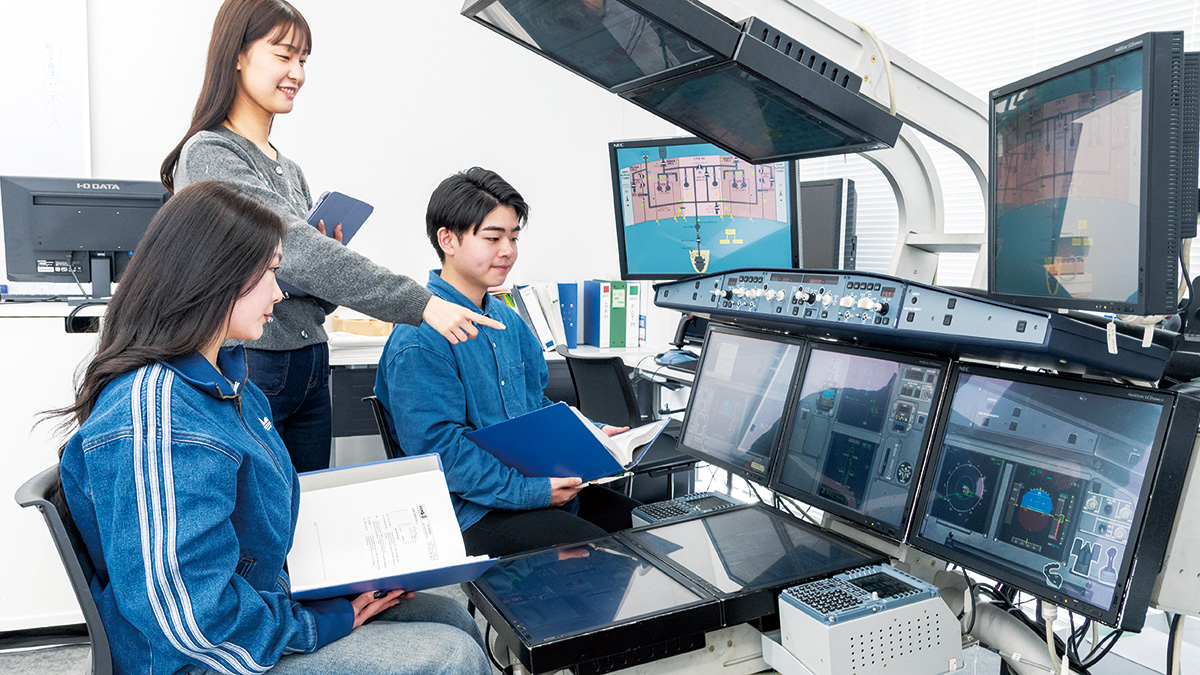
The campus is equipped with DA42 and B737-800 FTD (Flight Training Devices), an A320APT (Procedure Trainer), and an ATC (Air Traffic Control Simulator) to help students develop their expertise. These simulators allow students to learn how to handle various situations as part of their pilot training, maintenance management, and air traffic control courses. They are also used to learn about aircraft structure and mechanics.
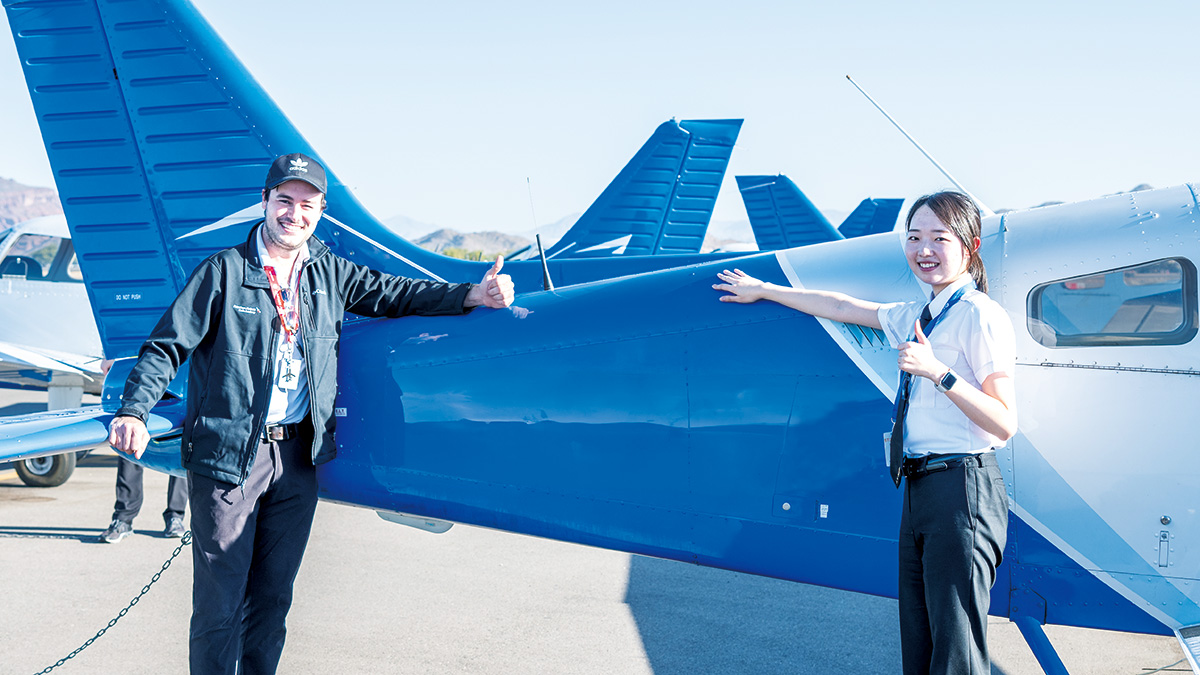
To cultivate internationally-minded aviation professionals, we place great importance on practical learning abroad. At our CAE training facility in Mesa, Arizona, USA, we conduct authentic flight training using the latest training aircraft in a stable climate. Students gradually acquire skills ranging from the fundamentals of safe operation to advanced piloting techniques. In addition, overseas training includes visits to airlines and airport facilities, allowing students to experience the global aviation industry firsthand. Through learning in a multicultural environment, we aim to cultivate pilots and aviation professionals who possess both an international perspective and practical skills.
Characteristics of the academic group
Open list of subpages
Content of learning
Career paths, qualifications, and achievements
Open list of subpages
Student life/environment