Each individual's story is what matters
Nurturing people
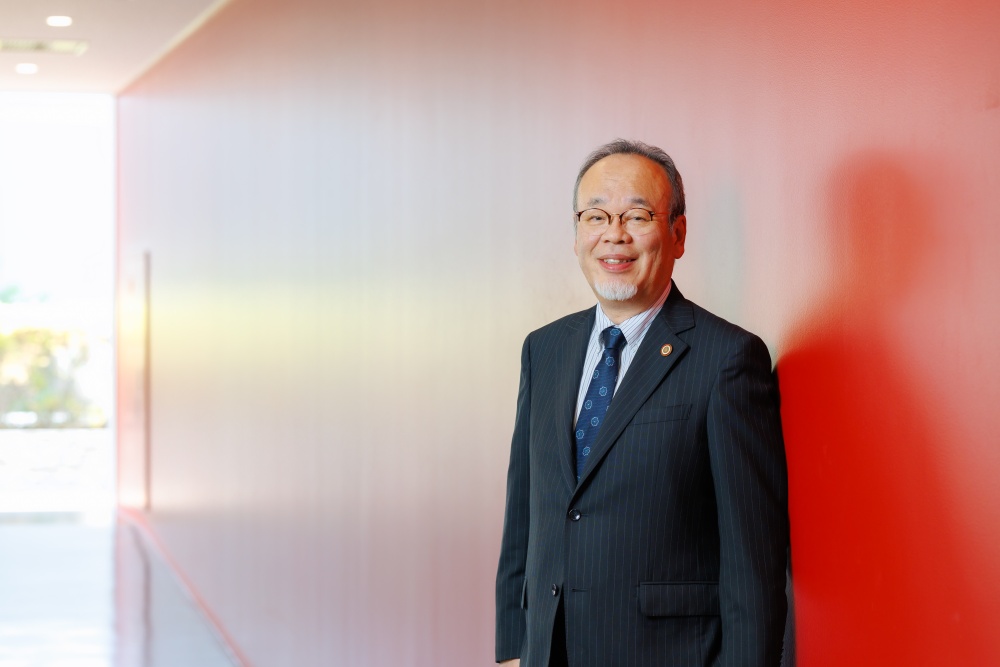
J. F. Oberlin University President
Hiroaki Hatayama
Main content
The diverse lives and thoughts of our teachers
"Other people's stories" are very useful.
Hatayama: That might be true. I became president in 2018. With SNS already spreading globally, I decided that the president's ability to communicate was important. At universities, interaction (exchange) between teachers and students is key. I wanted to promote myself with the professors and create a "win-win-win" relationship among students, each professor, and the president. I wanted to leverage the brand power of "AERA" to access the outside world.
There was a huge response right from the start. I learned a lot myself. University faculty, including myself, have expertise but rarely have opportunities to have deep conversations with other Area. When I invited various professors and listened, I realized a lot. As president, it is important to thoroughly understand fields outside your Area of your own specialty. I have continued this series while enjoying it.
Kimura: Even so, a truly diverse group of teachers appeared. Not only are their specialties, but their previous professional experiences before coming to J. F. Oberlin University are also diverse.
Hatayama: When talking with students, I often hear moments like, "Thanks to that teacher's class, I changed." "He taught me things I never even thought of before," "I changed with just a word from the teacher." These things happen every day on campus.
Why did the teachers choose this path? Why are they now in the educational field called J. F. Oberlin University? Each of them has passionate feelings. Listening to their stories, I understood well. It is my mission to clearly convey these teachers. By talking to me, the teachers come to realize what kind of mission they have at this university. That was also good.
Kimura: By answering interviews, your thoughts were organized and put into words.
Hatayama: The head of the school also presents a slightly different side. It's not just about your own research and education, but also about how to move the school, bring people together, and convey the appeal of the school. These kinds of topics are discussed.
Kimura: How was the response to the serialization?
Hatayama: "When will you call me? I want to go out," there were many teachers (laughs). The students posted various comments on social media.
Kimura: So you were able to learn about a different side of the professor and learn about their journey so far. There was talk online, and while social media has become an essential tool for younger generations, it also has the drawback of being recommended only for personal interests and interests, leading to narrow thinking. In such a context, universities where you can meet various people and encounter diverse ways of thinking have become more important than ever.
Hatayama: If I were an exam student right now, I think I'd be really unsure. Rankings, comments, behind-the-scenes information. Which should I use as my criteria for judgment? Understand for yourself, make judgments, and take action. I think education that cultivates that ability is necessary from elementary school through university. Otherwise, you'll be confused. A life where you hesitate every day won't be happy, right? If you never have certainty, no matter what decision you make, you wonder, "Was that really okay?"
Kimura: In the whirlpool of information, what do you choose, where to be convinced, and where to find happiness and live your life? It's very important to cultivate that foundation at university.
Hatayama: I myself was just dabbling in literature, but after becoming president, I had to study everything on my own—marketing, strategy, management, law, and more. What I found most helpful in all of that was actually the story of a single person. Something like 'You started a company, went through many hardships, coped with it this way, and achieved it this way.' I think students are the same. Stories from seniors are the easiest to refer to. I feel like stories from people in similar situations are the best. Furthermore, stories about people like 'Hyakka Gathering' are even more useful.
Kimura: I deeply relate. That's because 'AERA' is also a medium that focuses on people. Rather than just imparting theory, it's about what one person did. Even if it doesn't apply directly to you, I read cases of various people's ways of facing things and feelings, and using those as references, I decided to 'try incorporating this part.' The fact that 'Hyakka Shuku' contains so many diverse stories and thoughts of teachers can truly serve as a valuable reference for students' lives.
Kimura: Rather than just saying 'this is better,' you can really immerse yourself in the story. In that sense, it's a series packed with treasures.
Hatayama: Since the president is in a responsible position, rather than talking about know-how, what matters is mindset, mentality, and resolve. Listening to the teachers' stories made me clearly understand at different stages, how they felt responsibility, and how they faced the situation, which was interesting. When someone who has served as an executive in a company moves to a J. F. Oberlin University as a practitioner instructor, it's all about "education." For the future students, I want to teach my knowledge with all my might. All the teachers convey that spirit.
Kimura: I can really feel your desire to "pass on the lesson to the younger generation." In the workplace, people are often expected to deliver results in the short term and improve their grades and numbers. It's hard to put effort into spending time nurturing and connecting the younger generation. On the other hand, the educational field can become a place where you can pass on what you've learned. Every teacher finds a sense of fulfillment in that. That's what has been cultivated over a long history—that's the true value.
Hatayama: Both teachers and the younger generation value each other and interact with each other. Mutual understanding is the ideal relationship.
Uncompromising, tolerant, and flexible
To pass it on to the future for a long time to come
Hatayama: From what position, and to whom is the medium communicating? I want the media to imagine what students, faculty, and management want to communicate to society, and how to communicate it in a way that will please them. There are many different types of media, but I hope that they will have a sense of mission. The same is true for universities. The Ministry of Finance has published a proposal to reduce the number of private universities by about 40% by 2040, due to the declining birthrate. As a result, universities will increasingly focus only on marketing to recruit students. They will talk more about how to continue rather than about the curriculum. If both the media and universities enter a world where "it's all about sales," they will lose sight of what they are actually selling.
Kimura: With the advancement of digitalization, we tend to focus only on numbers, but we must not forget the essence of conveying what students and teachers truly want to communicate and what they want to know.
Hatayama: I think that as students spend their precious time at university, there will be some who are a good fit and some who aren't. I wish there was a media outlet that could help with that matching. I think that students are more likely to be happy if they can fulfill their desires, such as "I want to go into art," "I'm going into social sciences," or "I'm going into engineering," while also clearing their financial hurdles, and finding a university where they feel comfortable, the atmosphere suits them, and the employment record aligns with their dreams. Only a media outlet can provide that kind of guidance. I want there to be a media outlet that can convey information to students and their parents that shows what kind of story students can build over the course of four years.
Kimura: "Each individual's story" is a great hint. When high school students are thinking about their future paths, they tend to use things like academic achievement scores as selection criteria, but it would be better if they could see which university would enrich their lives instead.
Hatayama: That's right. I don't deny that aiming for high scores is proof of hard work, but personal stories are important. Speaking of personal stories, you often see disclaimers like, "These are personal opinions and do not reflect the views of the organization." I think that's nonsense.
I tweet on social media under the title of university president, but that's quite a risk. However, instead of saying, "Because the president said this, this is what will happen," I want to say, "This is what the president thinks, but what do you think?" Ideally, everyone on campus should think about it, and ultimately, "This is the decision the organization has made."
Therefore, the president should be aggressive and speak out boldly. In this age of advanced social media where everyone can become a media outlet and share their thoughts, I believe that "who you are" and "what your beliefs are" have become the greatest values.
Hatayama: That's actually healthier, isn't it? I think it's better to keep that happening.
Kimura: By the way, people say nowadays that 'young people lack ambition.' In that context, how do you evaluate the potential of students studying at J. F. Oberlin University?
Hatayama: I feel firsthand that they actually think about the value of society. They are digitally native and have significant advantages in fields we cannot understand. They no longer value what our generation has been working on. They are very sensitive to what the environment they will live in from now on. When it comes to money, it's not about high values; rather, they focus on what makes them feel happy, and they are pragmatic (realistic). I believe the potential for how these students will build society going forward is quite high.
Kimura: Finally, your term will end in spring 2027. What do you expect from J. F. Oberlin University in the future?
Hatayama: Organizations are also stories, so there are ups and downs. I hope the next structure will recognize the challenges, set its own mission, and build the J. F. Oberlin University for the future. As the organization climbs the next step on the ladder, I'm looking forward to seeing how the next presidents view the story so far and decide their mission.
Kimura: Rather than just taking over, it's about observing what will be born next.
Hatayama: Of course, while inheriting the founding spirit, I'm looking forward to seeing where we will focus on concrete tasks to be done. J. F. Oberlin University is now gaining momentum. I hope that more students and staff will feel the unique value of J. F. Oberlin University from now on. Ideally, more people will recommend J. F. Oberlin University, and to make that happen, a solid foundation is necessary.
J. F. Oberlin University has always carried a sense of 'symbiosis.' While never compromising, it is also tolerant and flexible. This tradition has been passed down continuously since when I was a student myself. Broad and deep, strong and bright. At 'Hyakka Gaushu,' we have continued to convey these virtues. I hope to pass them on to the future for generations to come.
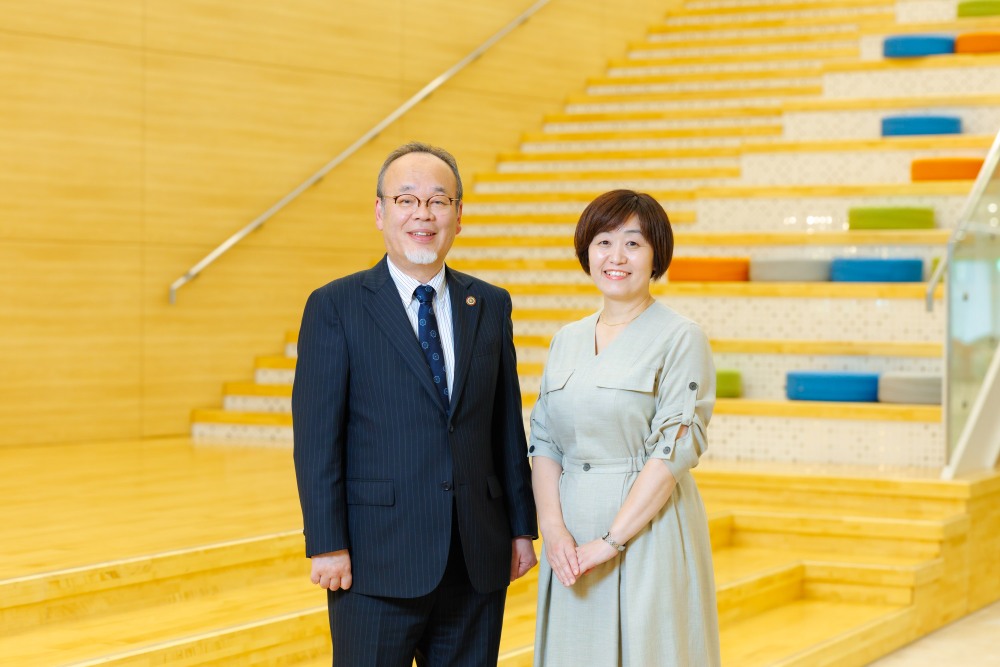
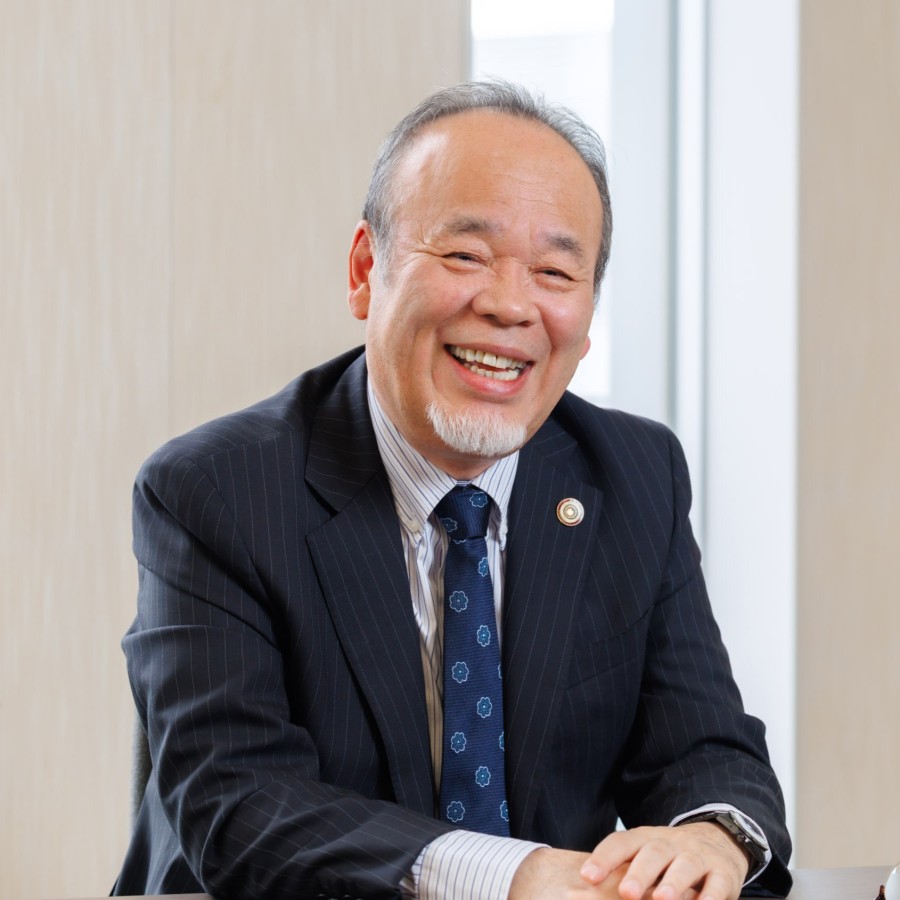
J. F. Oberlin University President
Hiroaki Hatayama
In 1985, he graduated from the Faculty of Letters at J. F. Oberlin University. After working as a teacher at a public high school in Kagoshima Prefecture, he completed the master's program at the University of North Carolina at Charlotte in 1994, earning a Master of Arts (M.A.: Literature). In 2001, he completed the doctoral program at the University of North Carolina Greensboro Graduate School, earning a Ph.D. in Literature. In 2010, he completed the master's program at the Graduate School of Business at the Massachusetts Institute of Technology, earning an MBA. In 2018, he became President of J. F. Oberlin University. He has served as a member of the Ministry of Education, Culture, Sports, Science and Technology's Council for University Establishment and Educational Corporations (University Establishment Subcommittee), director of the Public Interest Incorporated Foundation University Standards Association, councilor of the Japan Higher Education Evaluation Organization, councilor of the Kanagawa Prefecture Private School Education Promotion Foundation, and as an international exchange committee member of the Japan Association of Private Universities, among other positions. He was awarded the Nairamdar (Friendship) Medal by Mongolia. His specialties are rhetoric and critical theory. His major works include 'Techniques of Self-Expression' (contributed to Jikkyo Publishing).
Interview date:
*This interview was conducted in June 2026.
Related content
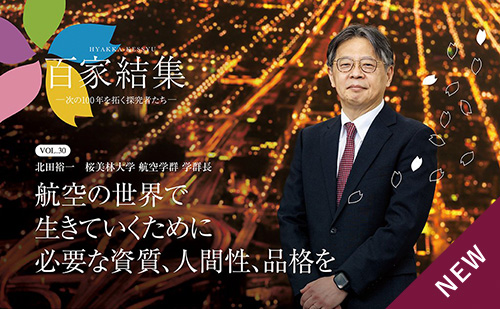
The qualities, character, and integrity necessary to survive in the world of aviation.
College of Aviation
Yuichi Kitada Professor
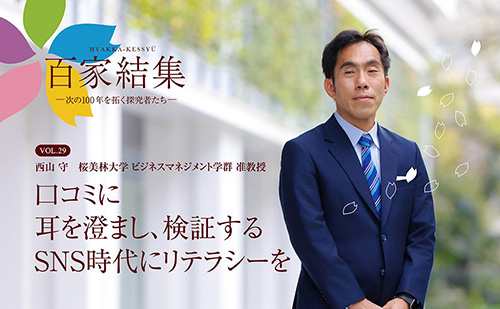
Listening to Word of Mouth, Verifying Literacy in the SNS Era / Associate Professor Mamoru Nishiyama
College of Business Management
Mamoru Nishiyama Associate Professor
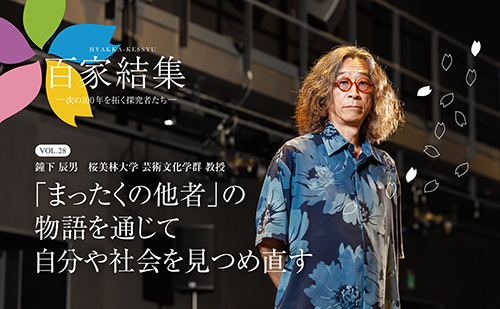
Re-examining Yourself and Society Through the Story of a 'Complete Other' / Professor Tatsuo Kaneshita
College of Performing and Visual Arts
Tatsuo Kaneshita Professor
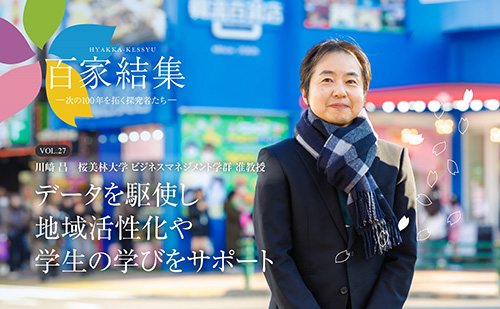
Utilizing data to support regional revitalization and student learning / Sho Kawasaki Associate Professor
College of Business Management
Sho Kawasaki Associate Professor
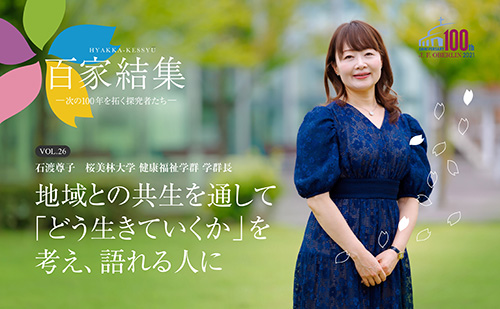
Becoming someone who can think about and talk about 'how to live' through coexistence with the local community / Professor Takako Ishiwata
College of Health and Welfare
Takako Ishiwata Professor
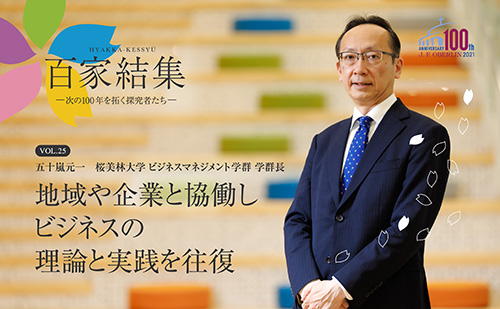
Collaborates with local communities and companies to exchange business theory and practice / Genichi Igarashi professor
College of Business Management
Genichi Igarashi Professor
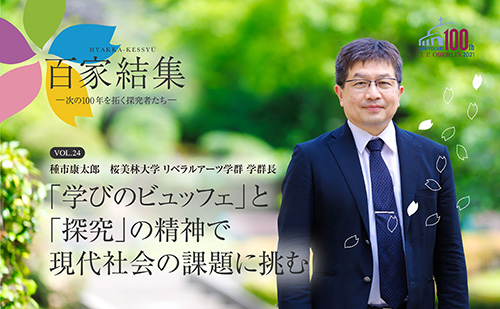
Facing contemporary social challenges with the spirit of a "buffet of learning" and "inquiry" / Professor Taneichi Kotaro
College of Arts and Sciences
Taneichi Kotaro Professor
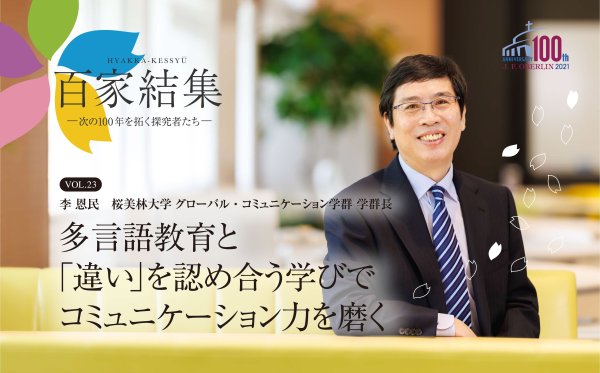
Improving communication skills through multilingual education and learning that acknowledges "differences" / Professor Enmin Li
College of Global Communication
Enmin Li Professor