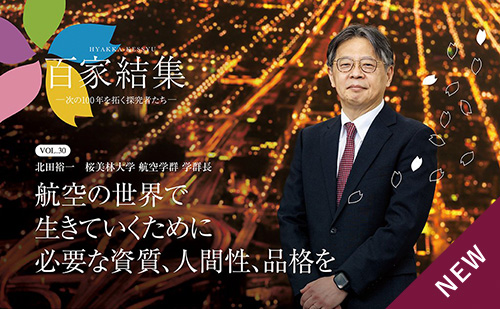
In the world of aviation In order to live The necessary qualities, character, and dignity
College of Aviation J. F. Oberlin University College of Aviation Student Council Leader
Yuichi Kitada Professor
Main content
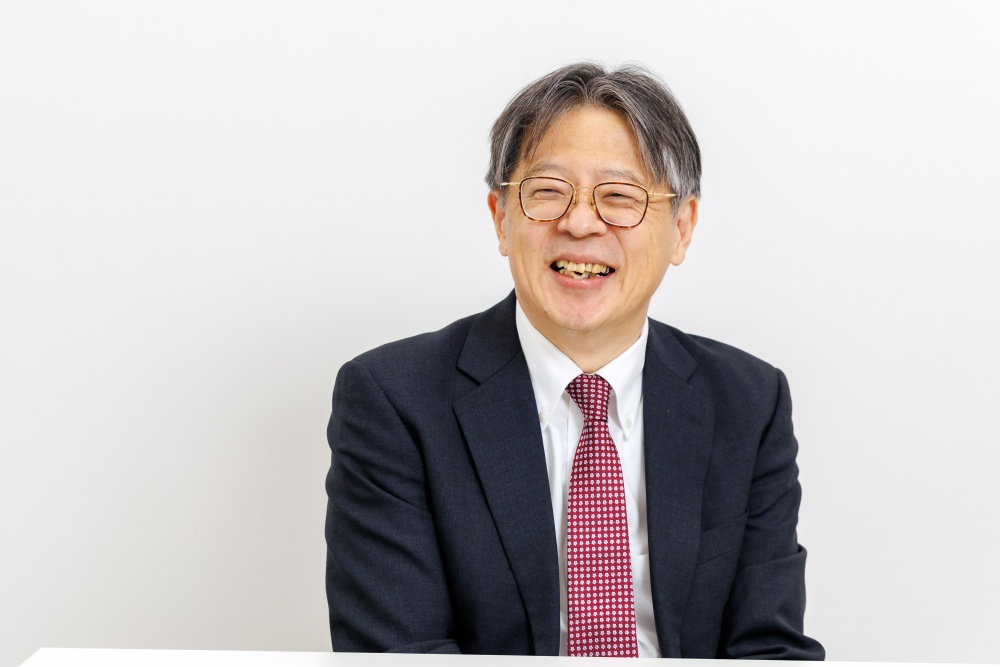
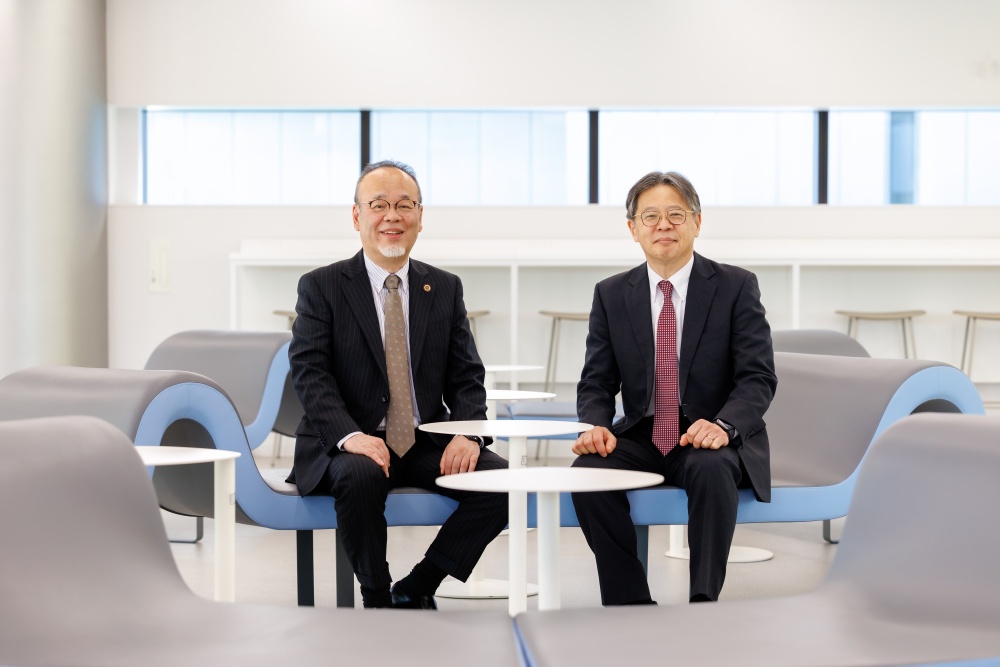
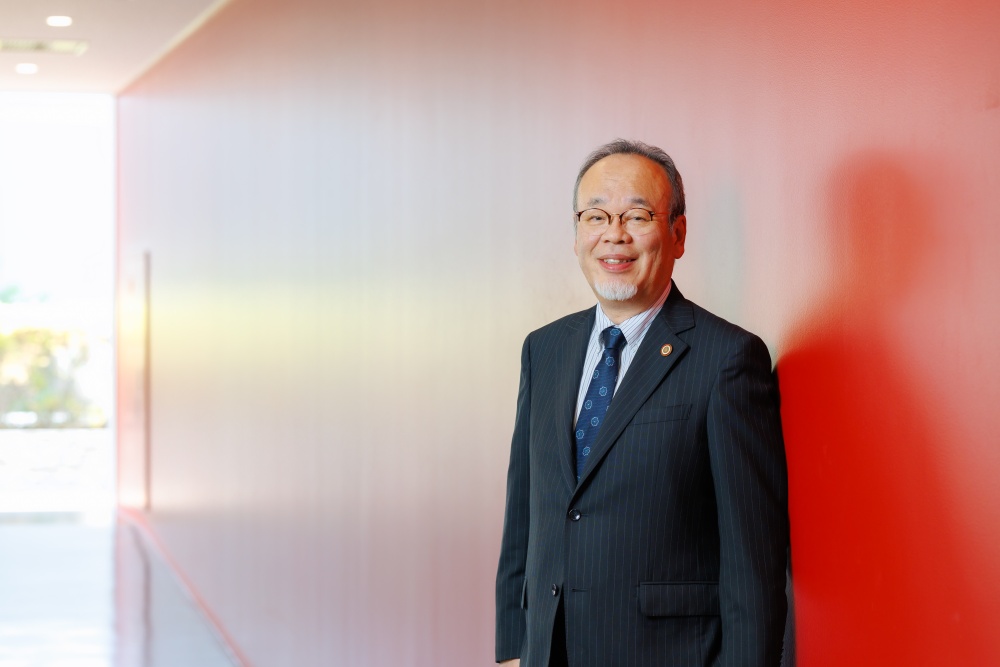
Professor Yuichi Kitada, who has long been a professional in maintenance in the aviation industry, has been newly appointed as the head of the College of Aviation school cluster. He shared the experiences and beliefs he has cultivated so far, as well as his vision for making the educational field even more attractive in the future (Interviewer: President J. F. Oberlin University Hiroaki Hatayama).
A job that brings together cutting-edge technologies. During my time as a company employee, I was almost exclusively dedicated to maintenance.
Hatayama: We will ask Mr. Kitada, who has just been appointed as the head of the College of Aviation school group, about his journey so far and what lies ahead. You graduated from Kyoto University's undergraduate and graduate programs. Were you originally interested in engineering fields as well?
Kitada: I have a science background, and I've loved making things and tinkering with machines since I was a child. I thought, "If I'm going to do research, I want to work in a cutting-edge field." The research I chose was on the fundamental technologies of digital communication. It's about how to send data efficiently and without errors. The concept of a mobile phone didn't exist yet, but I used to talk with my professor in the lab about how "in the future, there will be a time when we can talk using our own wristwatches."
Hatayama: I can't believe we were talking about that back then! After graduating from graduate school, you got a job.
Kitada: In the research lab, there were senior students and international students who were extremely talented and capable of meticulous design. I thought, "I can't compete with them," and began to want to work in a broader field than research. I thought that working on "aircraft," which is like the culmination of cutting-edge technology, would be interesting, so I decided to join Japan Airlines.
Hatayama: What was your first assignment?
Kitada: It was a site where we maintained electrical systems and communication equipment.
Hatayama: Was electricity more prevalent than electronics back then?
Kitada: It was still an analog world back then. You had to trace the wiring yourself and find the cause of the problem. Now it's all software, so things have changed, but back then you had to check things yourself, pinpoint what was wrong, and fix it. It was very rewarding.
Hatayama: Has the maintenance work environment changed since then?
Kitada: I think our awareness of safety hasn't changed, then or now. That's because I joined the company in 1986, the year after the Japan Airlines Flight 123 crash.
Hatayama: Oh, really!
Kitada: I had some worries, but that's precisely why I wanted to take on this job. When I was working for a company, I basically focused solely on maintenance.
Hatayama: When did maintenance technology change significantly?
Kitada: It was definitely after the accident I mentioned earlier. I think the way we think about maintenance and the programs we run changed drastically. Maintenance methods have continued to change since then, and new maintenance methods using new technologies have emerged. For example, there is predictive maintenance using big data, but I believe the fundamental changes were made at that time.
"The ability to discern the truth" The importance of "thinking for yourself"
Hatayama: After that, you took on responsible positions within the organization, right?
Kitada: That's right. Actually, when I was a university student, I vaguely thought about "what I want to do in my 20s, 30s, and 40s." In my 20s, I wanted to expand my own repertoire. In my 30s, I wanted to study how to motivate people. When I turned 40, I wanted to study how to manage an organization. I was thinking in 10-year increments. When I turned 40, I became a manager, and I realized that the most important thing is "developing people." Management is about how to develop your juniors. When I first became a manager, my boss told me on my first day, "Your job is to find my successor."
Hatayama: That's surprising.
Kitada: So you placed a great deal of importance on continuity. The way we nurture people is changing, but it's essential to balance strictness and kindness, and to believe in that person's abilities.
Hatayama: After serving as head of the maintenance headquarters and president of related aircraft maintenance companies, you came to J. F. Oberlin University and said that the students of College of Aviation need the ability to discern the truth and think for themselves.
Kitada: In this day and age, AI is widespread, and we can find the information we want instantly. However, there is also fake information out there, so we have to be able to discern the truth for ourselves. I have been involved in the maintenance department for a long time, and there are cases where it is not easy to pinpoint the cause. We have to analyze the malfunction and find out what is causing it. Even if we follow the procedures described in the maintenance manual, it doesn't always work. It is important to find the "solution" by thinking for ourselves, and I think that is something that cannot be done without training. A phrase that my superiors often told me was, "Don't stop thinking."
Hatayama: So, the point is, "Don't stop thinking."
Kitada: I was told to keep thinking. It's true that if you keep thinking, sometimes the answer will suddenly come to you, so you need to practice that. I think technologies like AI are good tools and should be used, but the important thing is whether you can use them properly. It's important to acquire the ability to think "this is correct" among various pieces of information, and I feel that this can only be done through university education.
Technology has advanced considerably, and fault diagnosis on aircraft itself has improved significantly, but even so, we still need to learn how to find the problem when things go wrong. The key is to ask yourself, "Is this really true?" People don't often reflect on things when they go well, but we need to question things like, "Was this really the right thing to do?" or "Was it just a fluke?" I think that's something we need to do.
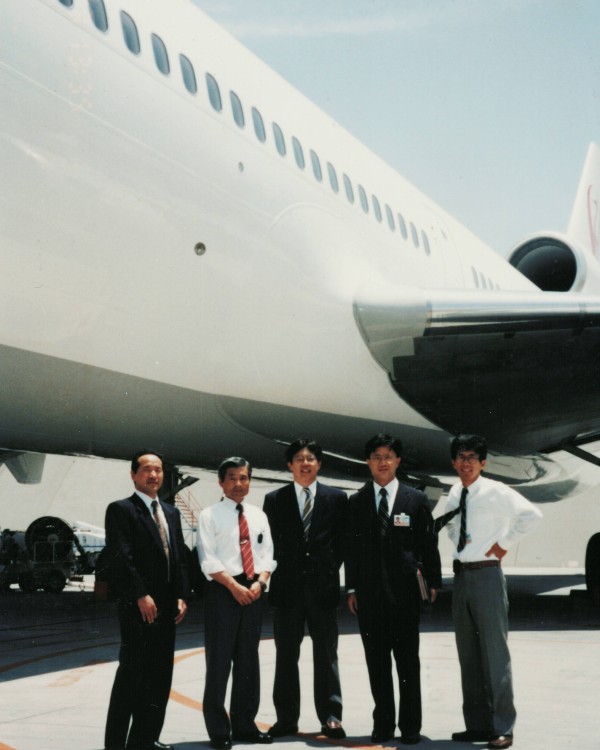
Professor Kitada in his younger days (center in the photo). He was on a business trip to Long Beach, USA, to have a new aircraft inspected.
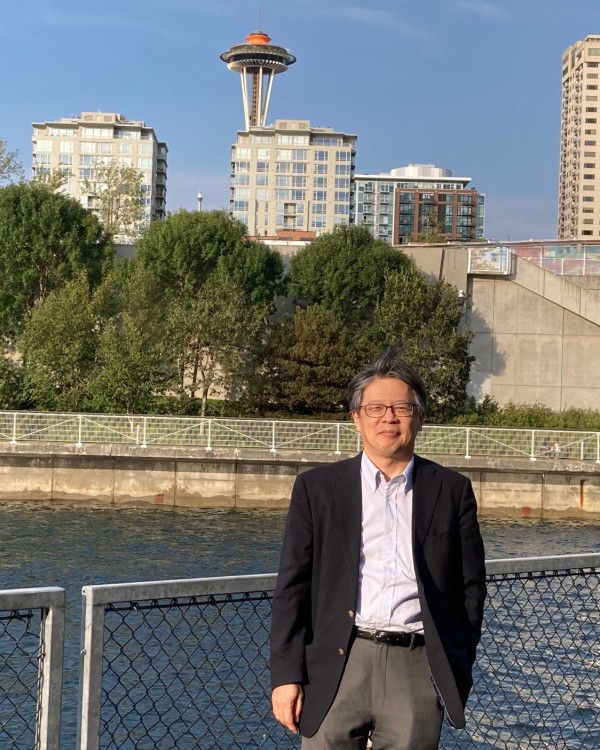
This photo was taken in Seattle, USA, where I was stationed for 1 year and 2 months starting in 2009.
Because it is a job where you are responsible for people's lives I will study fields outside of my specialization.
Hatayama: Professor Kitada came to J. F. Oberlin University from Japan Airlines, and actually, it's only been less than a year. You are suddenly asking you to take on the heavy responsibility of being the head of the school district. What is your impression of the educational field?
Kitada: I've only met students who are College of Aviation yet, but many of them are very honest. Many students enroll with a certain degree of their future dreams, so their motivation is high, and almost everyone graduates in four years. From the perspective of educators, I think it's a very good environment.
College of Aviation actively offers off-campus internships and invites external instructors with practical experience to attend. It's very effective, and I want to keep doing it going forward. Since there is solid overseas training, you can gain global experience, but while many classes are highly specialized, I also want to provide opportunities for students to learn about things other than aviation over the course of four years.
Hatayama: I think this is an important issue. In the past, specialized and general education were separated, and students acquired so-called general education through general education classes. In places with many specialized fields like College of Aviation, how to strengthen cultural knowledge is important.
Kitada: That's right. The aviation industry is fundamentally a job that involves people's lives, so I think it's necessary to have opportunities to learn about ethics, history, traditions, literature, and other related fields.
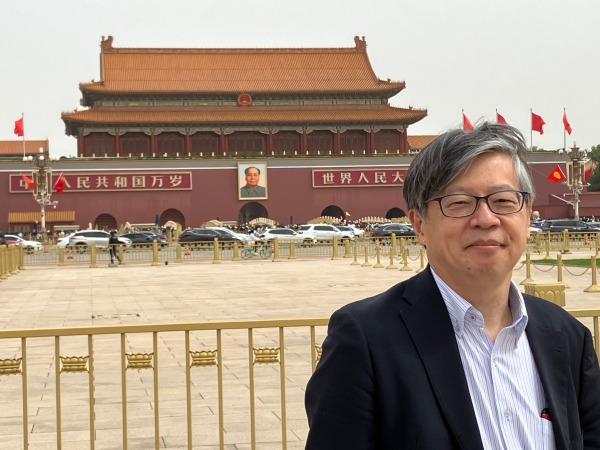
After working in maintenance, he also served as an auditor. This photo was taken during an audit at the Beijing branch in China.
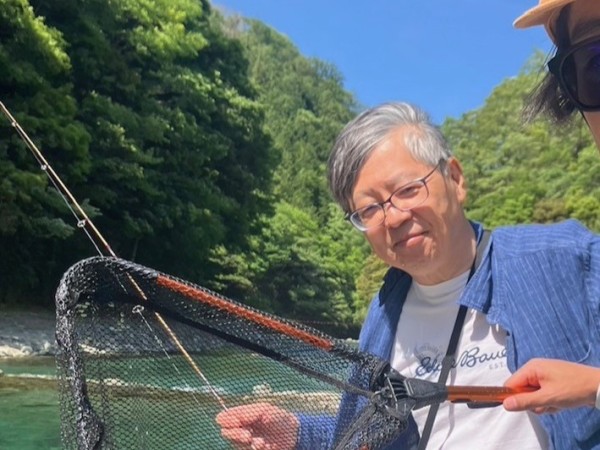
He values his private life, and fishing is one of his hobbies. He enjoys trout fishing with his sons.
Hatayama: What kind of image do students have of working in the aviation industry?
Kitada: Nowadays, everyone has access to information, so there may not be much of a gap between expectations and reality, but while it's a glamorous and enjoyable job, it also requires steady effort. Especially in the field of aircraft operations, flying on time is taken for granted, and praise is rare. How can you find fulfillment in such a job? It's tough, but it's a job where you can feel the moment you've "been useful to the customer," so I tell them to believe in that and keep working hard.
Hatayama: College of Aviation has its own program, but how do you want to highlight its unique features and strengths?
Kitada: For four years, I not only acquired knowledge, but also acquired the qualities, humanity, and dignity necessary to thrive in the aviation world. I want to emphasize that this can only be done with J. F. Oberlin University. Not only technical education, but there are many teachers with practical experience, so I hope people will learn from their experiences and think about what kind of attitude they should have in their work. Technology has advanced and efforts are being made to save labor, but the final decision must be made by humans. They say, "Be honest, be honest, or be sincere," and I want students to thoroughly learn these fundamental points, and I believe this is a university where you can do that.
Hatayama: Finally, do you have a message for the students?
Kitada: The aviation industry has its ups and downs, but I believe it is still an industry with room for growth. I hope you believe in your potential, never give up, and keep striving with hope to realize your dreams. The knowledge and ways of thinking you gain at College of Aviation should be useful in any kind of work. I also want to work hard to make this school even better in the future.
J. F. Oberlin University College of Aviation Student Council Head
Yuichi Kitada
After completing his graduate studies at Kyoto University's Graduate School of Engineering, he spent 39 years at Japan Airlines. He worked in various maintenance departments, including the operational division of the Maintenance Headquarters, quality assurance, production planning, and technology, and held positions such as Group Leader of the Planning Group in the Quality Assurance Department, Director of Technical Quality Assurance for the Americas, and Director of Technology. Subsequently, he served as Director of Maintenance Headquarters for Japan Airlines and President of JAL Engineering, and after serving as an auditor for Japan Airlines, he assumed his current position in September 2025.
Text: Naoki Kaga, Photos: Takuma Imamura
Interview date: *This interview was conducted in May 2026.