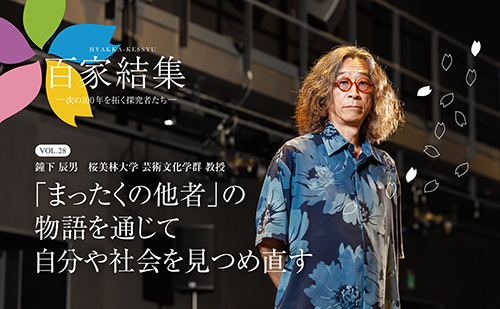
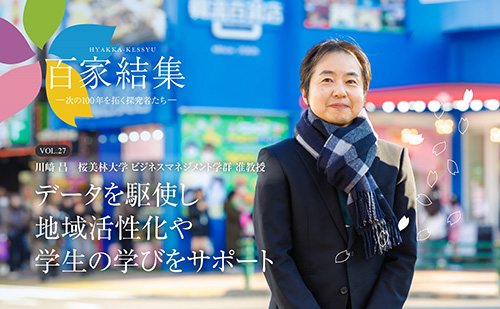
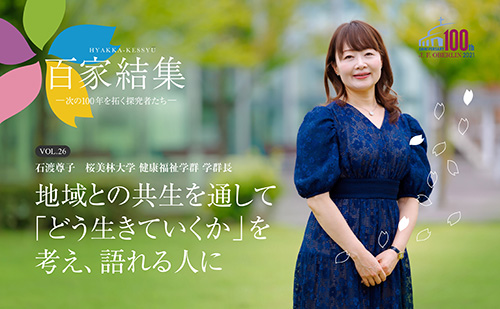
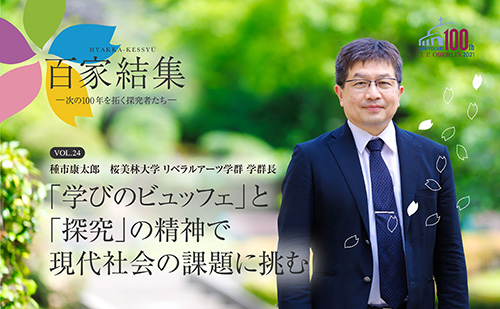
[Collection of Schools of Thought] 25. Genichi Igarashi
Faculty and President Dialogue
Collaborating with local communities and businesses Business Back and forth between theory and practice
College of Business Management
Genichi Igarashi Professor
Main content
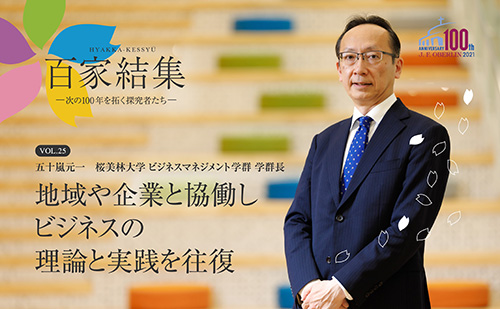
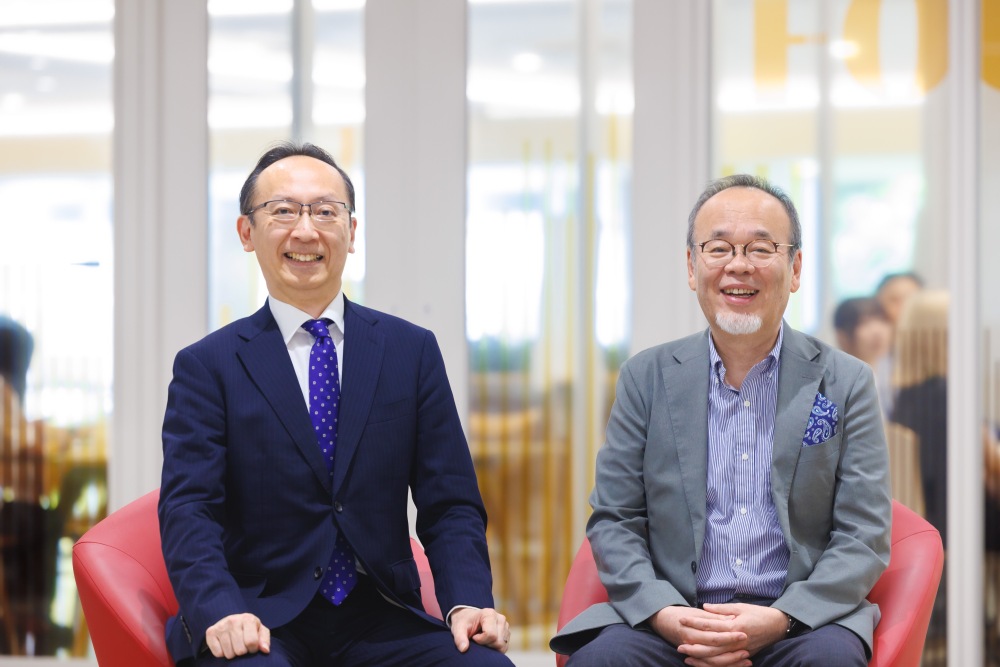
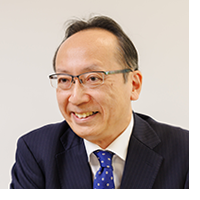
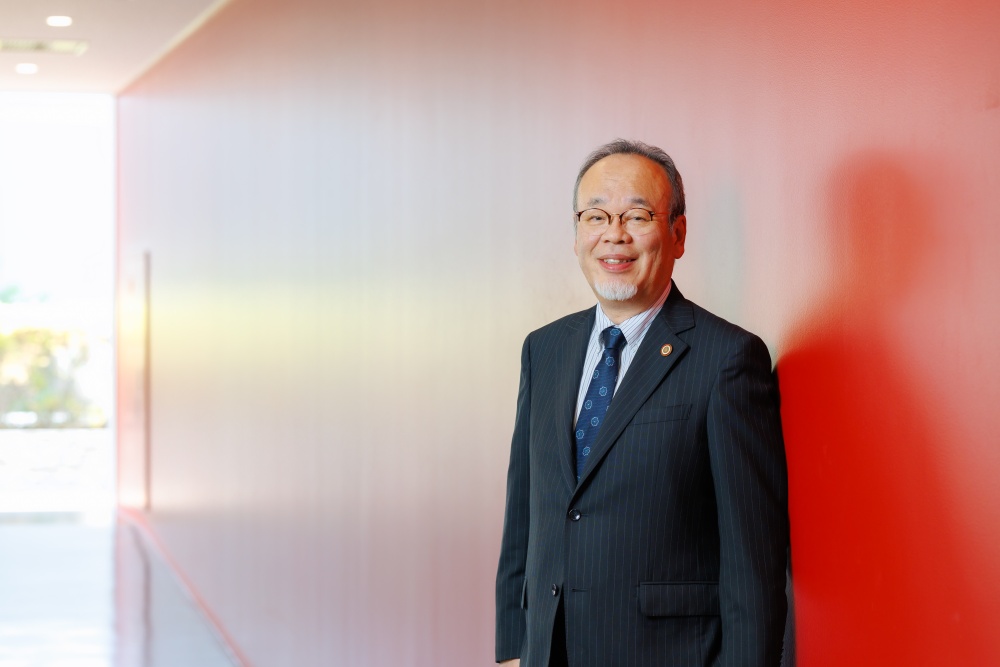
Professor Genichi Igarashi has a background in hospitality industry business after working at hotels in New York. As the head of the College of Business Management Cluster, she supports students' learning and career development together with practitioner faculty and researcher faculty from various industries (Interviewer: President J. F. Oberlin University Hiroaki Hatayama).
I went to graduate school in New York to study hospitality.
Hatayama: The Business Management (BM) program is located in Shinjuku, the heart of Japan's business district, and provides a variety of practical education programs in collaboration with local communities, companies, and organizations. Students gain a deep understanding of their desired industries and careers, and also experience the practical aspects of business. Professor Igarashi assumed the position of Dean of the program this spring. What are your thoughts on the direction of the BM program now?
Igarashi: I feel this is a learning environment unlike any other university. It's also different from the so-called 'business-related' faculties. By learning from both the "Business Program" and the "Management Program" that covers skills and functions, you can gain expertise and diversity. There are eight subject groups: four each for Business Area and Management Area. The BM School delivers its unique education and research together with faculty members who have walked professional paths in each field.
Hatayama: Could you tell us about your own roots, Professor Igarashi? I understand you majored in law at Waseda University during your student days.
Igarashi: Yes. I was considering a career in law and was even attending legal training classes. However, while traveling on a shoestring budget to Asia and America, I became interested in the tourism industry. I could have worked for a travel agency, but I wanted to provide direct service to customers, so I joined a company that operates hotels overseas.
Hatayama: I think the concept of "hospitality" wasn't yet common back then.
Igarashi: Absolutely. I myself came from a law background, so I hadn't even scratched the surface of hospitality (laughs). If I wanted to systematically learn about hospitality, it wasn't possible in Japan, so I had no choice but to go to Europe or America. So, first, I focused on my work on the front lines within the company. Many of my superiors had worked overseas, and there was a supportive atmosphere for young employees. So I directly asked them to let me go and learn, and I was given the opportunity to take a leave of absence from the company and study hotel management in New York. It was about three years after I started working.
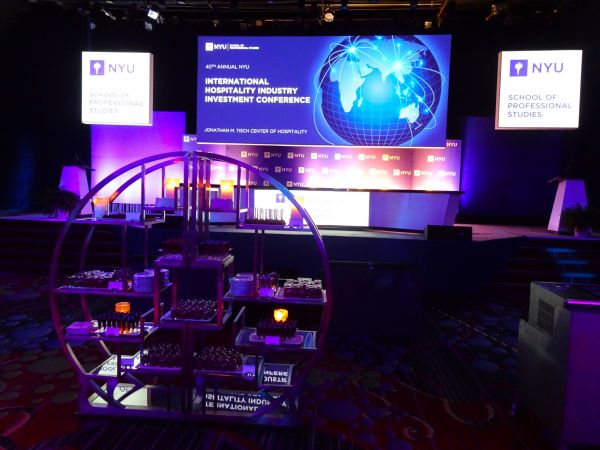
I participated in a hospitality industry conference hosted by the university where I studied abroad during my working years.
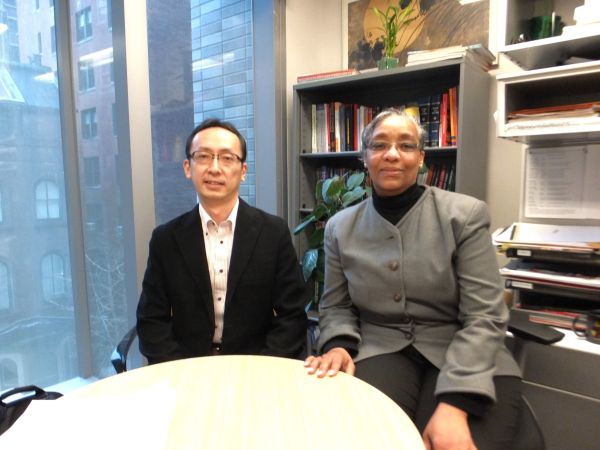
Even after returning from my studies abroad, I frequently visited New York to pay my respects at my mentor's office.
Hatayama: Were you good at English?
Igarashi: No, no, I wasn't good at it back then. When taking hotel reservations, there was a lot of communication over the phone, and I really struggled when people from overseas called... So in New York, I studied at the affiliated English school while I was in graduate school.
Hatayama: I imagine that gaining such experience will change your approach to your work as well.
Igarashi: That may be true. I had the opportunity to work with people from other countries after gaining experience through internships and other programs at our company's New York office. In the 1990s, Japan's economic bubble burst, and various changes occurred in the company's structure. When a major project I was involved in came to a close, I was wondering, "What should I do now?" Around that time, universities with tourism departments began to spring up in Japan, and I happened to be hired by a private university in Hokkaido that was recruiting faculty members, so I quit my job and decided to work there.
Acquire business theory and practice on a campus in the heart of the city.
Hatayama: That was quite a big decision. Having experienced both the "business world" and "academia," and both "practice" and "scholarship," what are your thoughts now, Professor Igarashi?
Igarashi: In future education, I definitely want to promote the integration and back-and-forth of these areas. The Shinjuku campus was established in 2019, and students from the BM School and graduate school (Degree Program in Business Administration) deepen their studies here. It is utilized as a venue for various "on-campus practicums," and by establishing a campus in Shinjuku, collaborative courses with companies in central Tokyo have been realized, allowing them to experience the latest business perspectives. Also, many working adults come to the Shinjuku campus to learn and rethink their work from an academic perspective.
Therefore, we want to apply what has been systematically considered in practice. Or, it would be good if there were more opportunities for faculty members to demonstrate it to students and for the results to be visible. In the BM (Business Management) program, practical work experience and job training, which fall under the "practical" aspect of "theory" and "practice," are conducted in "practical training and exercise courses." These are compulsory subjects and include internships, domestic and overseas business training, business exercises, field trips, and air transport industry practical training. We aim to cultivate well-rounded individuals who have experienced "knowing, understanding, and being able to do" in the business world, and who also understand the theories learned in the classroom.
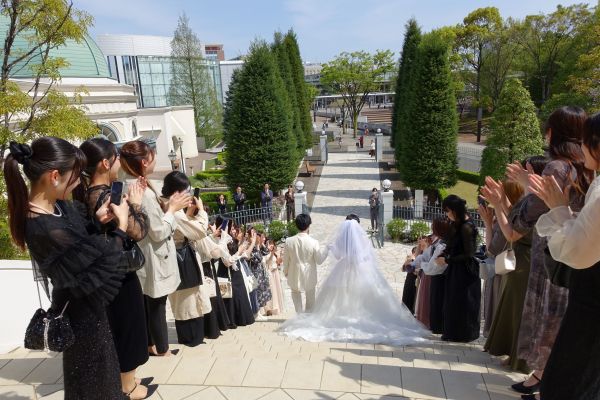
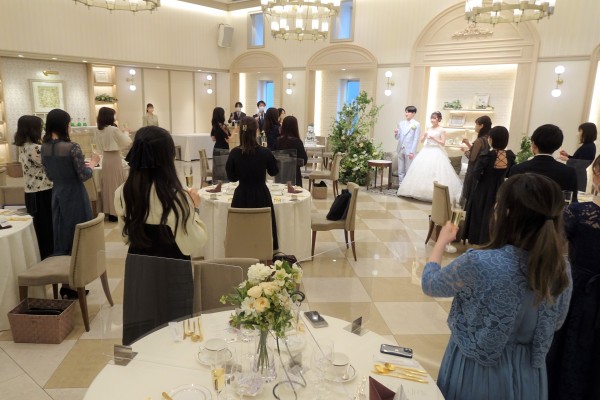
A mock wedding ceremony and reception were conducted as part of the practical training course "Domestic Business Training (Hotel & Bridal)".
Hatayama: The greatest feature of the BM program is that you can thoroughly acquire both "theory" and "practice." By the way, the hospitality industry has gone through a lot of hardship since the COVID-19 pandemic. What are your thoughts on that, Professor?
Igarashi: As someone who has "made a living" in this industry, I want to do everything I can to help and support those working in the hospitality industry. I hope to achieve that through my research. Regarding the hotel industry, which saw a large number of resignations due to the COVID-19 pandemic, inbound tourism is recovering, but workers are not returning, resulting in a labor shortage. Simply raising wages won't necessarily attract people.
It may be time to reconsider what motivates our employees. The hospitality industry has long been criticized for its low productivity and low wages, even before the pandemic. What measures need to be taken going forward? While the use of advanced technologies such as AI is a possibility, hospitality still inevitably relies on human interaction. We should research and explore what kind of innovations can be brought about within that framework.
Hatayama: For example, even if people in the food and beverage industry are ordered to suspend operations, they still have to pay rent and labor costs. I keenly felt during this COVID-19 pandemic that the "sustainability of hospitality" for such people—maintaining and developing hospitality—is crucial. No matter what situation arises in the future, it must be able to run smoothly. I believe that the research field you are involved in is extremely important. What are your thoughts on this in relation to "work style reform"?
Igarashi: In my research and surveys, the service industry sometimes gives the impression that there is still a lot of room for improvement. These industries, in particular, have a large number of female employees. Addressing this issue is urgent in terms of reforming working styles for women, and it also relates to how to increase the motivation of each individual employee. In other words, employee satisfaction is just as important as customer satisfaction. I think this is something we need to think about carefully going forward.
The concept of hospitality is similar to the principle of "learning and serving others."
Hatayama: Regarding the BM academic group itself, what improvements or reforms does Professor Igarashi currently think are needed?
Igarashi: Strengthening connections with local communities, companies, and organizations, and collaborating with J. F. Oberlin University graduates. While maintaining our faculty's motivation, as the head of the school cluster, I want to firmly promote each faculty member who is engaged in education and research at the BM School. Professionals from various industries gather here.
Hatayama: A distinctive feature of this academic group is that it includes both people who have been active in the business world and those who have followed an academic path. Finally, what kind of activities are practiced in Professor Igarashi's seminar?
Igarashi: "Hospitality management" is both my research topic and the common theme of my seminar. Many of the students who come to my seminar hope to work in the hotel or bridal industry. In the seminar, we engage in practical activities that allow students to put what they have learned into practice, such as planning products for companies in those industries and presenting tourism promotion measures to hot spring associations in hot spring resorts in the Kanto region. In addition, we conduct empirical research on hospitality management and surveys, and together with the students, we consider how we can improve working conditions in the industry.
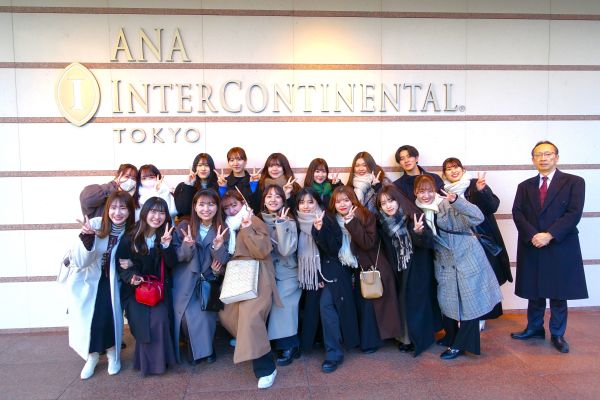
I "return home" to the hotel where I used to work every year for a seminar retreat.
With the arrival of our 15th class this year, the total number of seminar students has exceeded 300. The gifts from graduates of each class are priceless.
Hatayama: This aligns with the motto of Obirin Gakuen, "Learning for the benefit of people and society," and the philosophy behind it.
Igarashi: That's right. I'm realizing once again that it's a way of thinking that's very closely related to the very concept of "hospitality."
J. F. Oberlin University College of Business Management Student Council Head
Genichi Igarashi
In 1991, he graduated from Waseda University Faculty of Law. From 1991~2002, worked at All Nippon Airways Enterprise Co., Ltd. (ANA Hotel Management Co., Ltd., reorganized as ANA Hotel Tokyo Co., Ltd. = at the time). 1994~96, Completed Master of Science in Hospitality Industry Studies at New York University School of Continuing Education. From 2002~06, he was a lecturer at the Faculty of Tourism, Sapporo International University; from 2005~08, he was Deputy Director of the Career Support Department at the same university. In 2006, he completed the doctoral program in Business Administration at the Graduate School of Business Administration, Hokkai Gakuen University, earning a PhD in Business Administration. From 2006 to 2009, he served as associate professor and associate professor at the Faculty of Tourism, Sapporo International University. From 2008~2010, he was the head of the Department of Tourism, Faculty of Tourism, Osaka University. From 2009~2010, he was a professor at the Faculty of Tourism, the same university. From 2009~2010, he was the head of the Department of Tourism Business, Faculty of Tourism, Osaka University. 2010~2015, J. F. Oberlin University College of Business Management Associate Professor and Associate Professor. From 2011~2013, part-time lecturer at Kyorin University's Faculty of Foreign Languages. 2016~17, Part-time lecturer at the Faculty of Business Administration, Major University. 2015~, J. F. Oberlin University College of Business Management Professor. From 2018~2021, he served as Assistant Dean of the College of Business Management at the same university. From 2021~2024, he served as the head of the Department of Business Management at the same university. Current position since April 2024