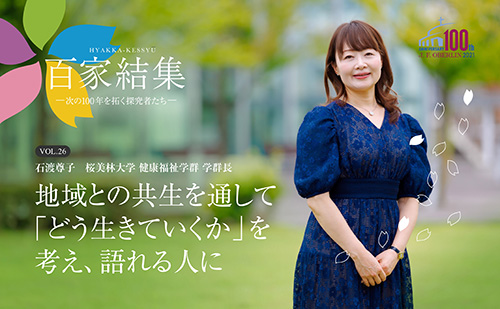
Through coexistence with the local community "How to live" People who can think and speak
College of Health and Welfare
Takako Ishiwata Professor
Main content
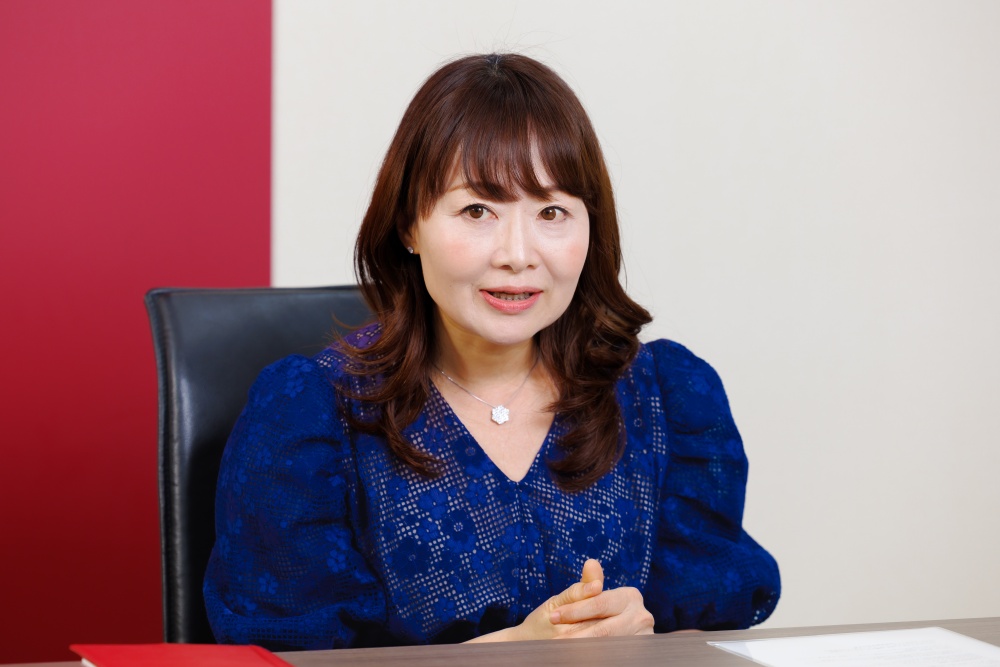
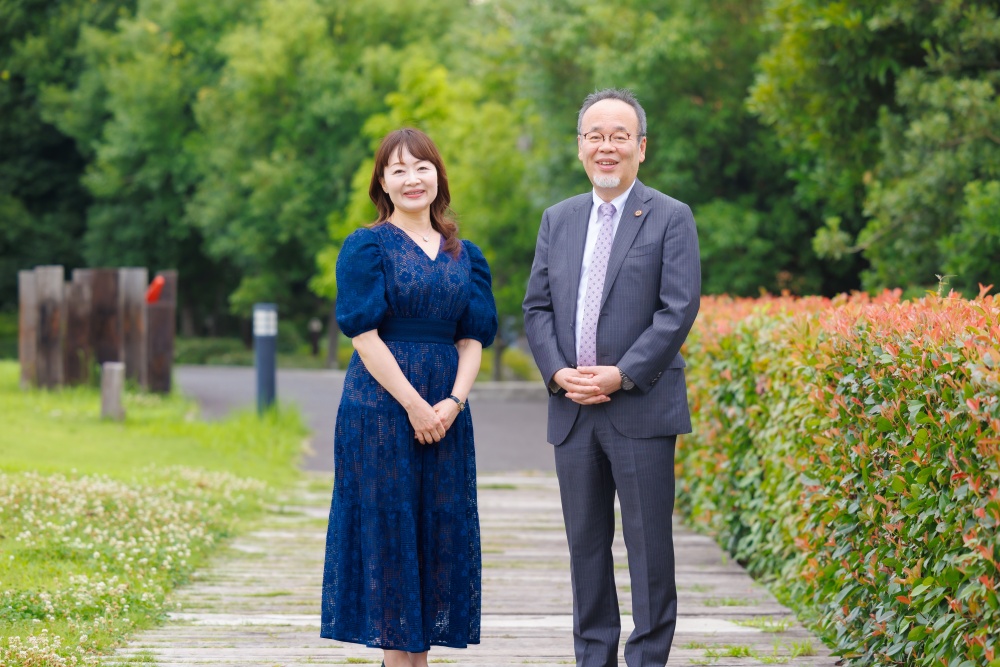
What is necessary to live healthier and more abundantly——。 In the College of Health and Welfare exploring these questions, learning unfolds through various experiences. We asked Professor Takako Ishiwata, the head of the academic district, about his emphasis on community-based education, as well as his own experiences during his studies abroad in the United States and his research in the history of home economics (Interviewer: President J. F. Oberlin University Hiroaki Hatayama).
Influenced by my father, I went abroad and actively engaged in cultural exchange.
Hatayama: Professor Ishiwata was appointed as the head of the College of Health and Welfare school this spring. When it comes to "health" and "welfare," the slogan "Health and well-being for all" is one of the United Nations SDGs goals.
Ishiwatari: Yes. In the College of Health and Welfare curriculum, students can learn about "health" and "welfare" in the classroom, go outside the university, and engage in activities such as creating playgrounds for children, creating spaces for local communities, and engaging in sports with the elderly and people with disabilities. By experiencing such programs from the first year, we aim to realize a 'healthy life' for all people and nurture professionals who promote 'welfare.'
Hatayama: Within the academic clusters, there are detailed divisions into "Area" and "majors."
Ishiwatari: There are three Area—'Health & Sports,' 'Welfare & Psychology,' and 'Childcare'—where learning is developed to support lifelong mental and physical health and improve quality of life. Within these Area, six majors are arranged (Health Sciences, Sports Sciences, Social Welfare, Mental Health and Welfare, Practical Psychology, and Childcare). Not only do students deepen their studies in each major, but by broadly studying across three Area, they gain broad expertise and broad perspectives.
Hatakeyama: Being able to learn across Area is a huge advantage. Next, could you tell us about your own journey, Professor Ishiwatari? Although he graduated from a university in the United States, it's a bit unusual for him to go abroad from undergraduate school rather than graduate school.
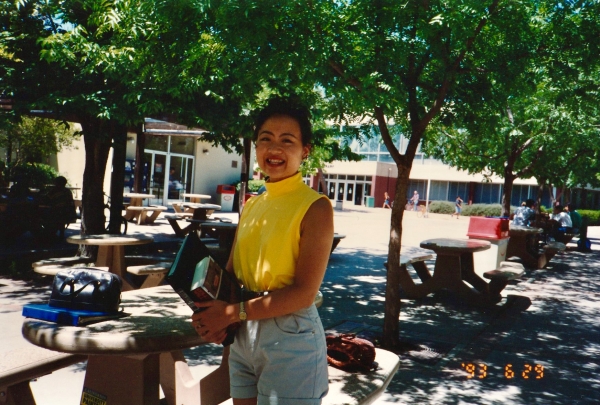
Ishiwata: Influenced by my father, who often worked overseas, I decided to attend a state university in California. I thought California was a place with beautiful oceans nearby, but when I got there, it was inland near Yosemite National Park in Fresno (laughs). I hadn't even researched what kind of place Fresno was. But I thought, "Well, that's fine."
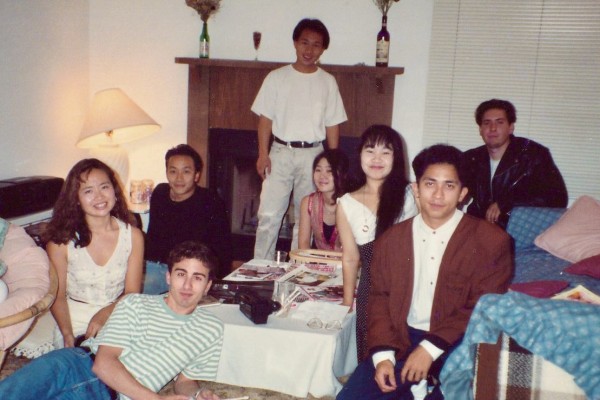
At that time, affirmative action, which aims to correct discrimination based on ethnicity, race, gender, etc., was being actively implemented in the United States, and "ethnic studies," which interdisciplinaryally study people who were considered minorities in American society, such as African Americans, Asian Americans including Japanese Americans, and Chicanos, was being widely adopted at universities. These classes, in which I learned about the history and culture of people from diverse backgrounds, were all new and enjoyable, and I was also fortunate to make many diverse friends. I then started a club where people from various backgrounds could interact. The city of Fresno was once the site of a Japanese American internment camp, and many Japanese Americans lived there. I also created opportunities to interact with those people.
During my time studying abroad in the United States, I was very active, including starting a club.
Hatayama: So you were very active. Was that during the lingering effects of the bubble economy, when students from Japan were welcomed?
Ishiwata: Yes. However, there were no other Japanese people in the course I was mainly studying, which was aimed at becoming an elementary school teacher.
Hatayama: That must have made him a valuable asset. Was he good at English?
Ishiwata: Not at all! At first, I couldn't keep up with the classes, so I begged the teacher, "I just came from Japan and I don't understand English. There's limited time on tests, so I can't get good grades! Please set up extra credits so I can get the credits!" and they gave me special assignments, like report assignments. In that sense, I had the ability to survive.
During my student days, I realized the importance of learning through experience.
Hatayama: Why did you choose to take a course to train elementary school teachers?
Ishiwata: I wasn't aiming to become a teacher; I was drawn to the program because it offered a lot of experiential learning opportunities. Of course, there were classroom lectures, but there were tons of other activities available. Fresno at the time had a particularly large immigrant population from Southeast Asia, especially the Hmong people, and I had the opportunity to spend several months working with these children at after-school elementary schools.
In addition, I played with children at shelters for those who have committed crimes, and cooked meals at places that provide food to the homeless. In a class on youth criminology, I even had the opportunity to sit in the passenger seat of a police car and spend half a day with them. What I realized there was that society, including school teachers, somehow lumped together many immigrant children who were living in poverty and had no hope for the future, thinking, "They'll never be able to contribute to society anyway." I felt a strong sense of indignation at such prejudice.
Through interacting with children, I began to question the country of America and the nature of education. To clear up that question, I first felt the need to properly study Japanese education. After returning to Japan after graduation, he decided to major in education in the master's program at Tamagawa University's graduate school. Later, at the recommendation of his then-advisor, Professor Yoshio Tanaka (now Professor at J. F. Oberlin University), I entered the doctoral program at J. F. Oberlin University to study under Professor Masao Terasaki (currently at the University of Tokyo, J. F. Oberlin University, Professor Emeritus at Rikkyo University).
Hatayama: Looking back on your time as a graduate student, are there any memories that stand out to you?
Ishiwatari: At that time, I really enjoyed taking almost all the courses offered in the Graduate School of International Studies at J. F. Oberlin University. For example, in the class taught by Professor Noboru Uesaka (now Professor Emeritus), who taught American political science, I was able to objectively understand the social background of my own study abroad days in America. In other classes, including philosophy, sociology, and education, I saw reality through practical programs from my study abroad days, which deeply moved me when abstract theories and concepts hit me.
I believe these experiences have contributed to the current College of Health and Welfare curriculum development. By having various experiences during your student years, you can gain a deeper understanding of what you learned in classroom learning. We created the curriculum with the hope that College of Health and Welfare students will also experience this.
Encounter with historical research: University history, self-history, historical development
Hatayama: That's a very important perspective born from your own experiences. After completing my doctoral program, I worked at other universities and institutions, and in 2006, I joined J. F. Oberlin University as a lecturer.
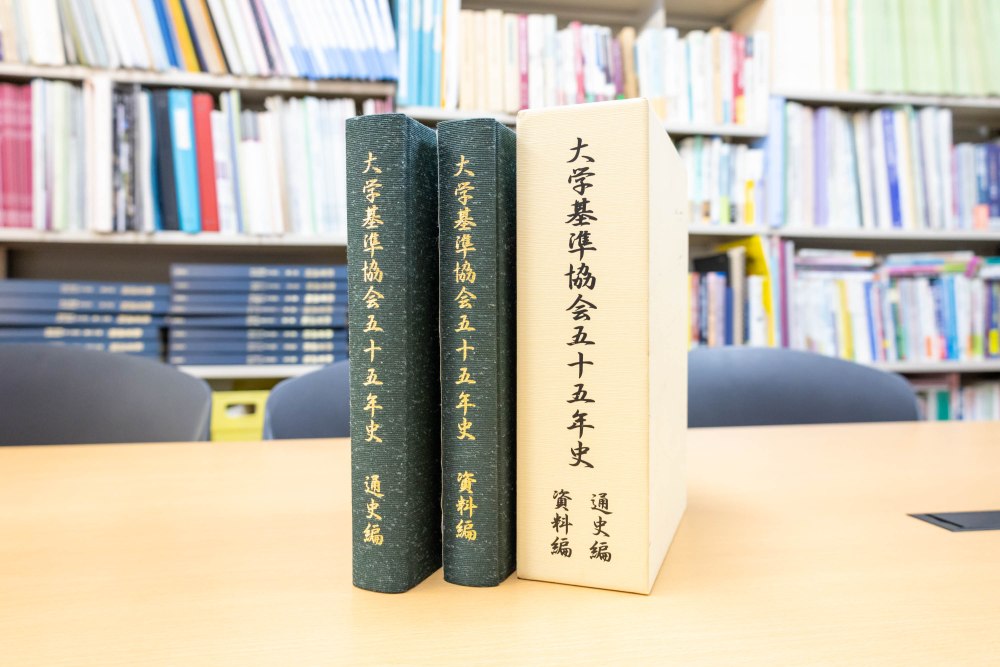
Ishiwatari: When I was a doctoral student, I was involved in organizing the belongings and historical materials of Yasuzo Shimizu and Ikuko, founders of Obirin Gakuen, so I had a special attachment to J. F. Oberlin University. And I think meeting a wide variety of teachers is also significant. His advisor, Professor Masao Terasaki, is a leading authority in university history research, and he demonstrated the significance and importance of university history education and university archives, which led to the spread of such works in many Japanese universities. As a researcher at the University Standards Association, I was involved in the association's 55-year history compilation project, and during that time, I was guided by Professor Terasaki, who was also the editorial committee chair, which helped me understand the importance of engaging with materials.
Also, in organizing the school's historical materials, I was greatly indebted to Professor Kahoru Kurematsu (now Professor Emeritus), who was a professor in the teacher training program, and the late Professor Junichi Takahashi, a cultural anthropologist who was then a professor in the Faculty of International Studies. Professor Takahashi introduced me to Professor Hiroaki Hamada (now Professor College of Arts and Sciences), who was a curator at the Sagamihara City Museum, and I had experience working part-time at the Sagamihara City History Compilation Room inside the museum to study organizing materials.
Later, Professor Hamada also joined the J. F. Oberlin University, and thanks to his efforts, school history materials were managed by the curator course, and the J. F. Oberlin Materials Exhibition Room was also established. I also teach curatorial courses that utilize those materials. Currently, we are working on the 'J. F. Oberlin Gakuen 100-Year History' compilation project, and even there, school history materials have become an indispensable resource group.
I contributed to and edited the "55-Year History of the Japan University Accreditation Association."
Thinking about a proactive way of life through community activities
Hatayama: So, your encounters with people have led you to where you are today. Another thing, Professor Ishiwata's research includes the keywords "history of home economics" and "women's history." What led you to become interested in these fields?
Ishiwata: Watching my mother, a full-time housewife, I naturally assumed that I would become the same, and I didn't really consider any other career paths. However, through various circumstances, I ended up becoming a graduate student. That's when I started asking myself, "Why did I come to graduate school?" and "Why do women pursue academics?"
During the postwar reform period, women's universities were established for the first time, and many of them established faculties of home economics, creating the academic field of home economics. I believe that the education I am trying to provide at College of Health and Welfare now is exactly what home economics education has aimed for. In other words, it means "putting each person at the center, thinking about and putting into practice what we can do so that each person can live happily and abundantly."
Hatayama: Indeed, it aligns with what College of Health and Welfare aims for. After all, it is learning designed to support lifelong mental and physical health and improve quality of life.
Ishiwata: I research home economics, which was established in the new universities after the war. For example, at Ryukyu University, home economics scholars did not just impart knowledge to the local people, but ate meals with them, made clothes together, and grew crops together. It is clear that they were actively supporting the improvement of people's lives by immersing themselves in the community. I find this aspect of "living together with the community" fascinating, and above all, I think "this is how Japanese universities should be in the future."
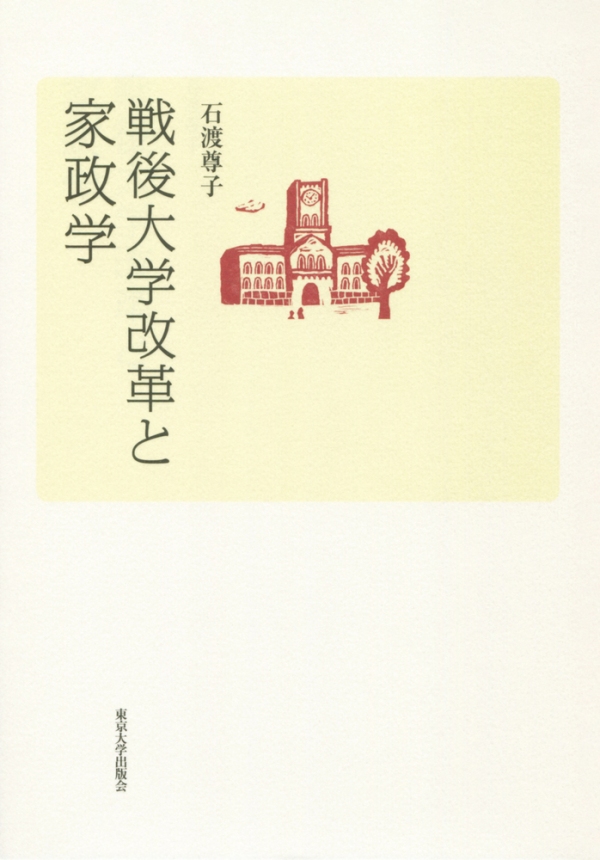
"Post-War University Reforms and Home Economics" (University of Tokyo Press) summarizes the development of women and home economics in university education.
The university I studied at was a state university, so it had a particularly strong focus on community-based "extension activities" (outreach programs), with many programs where faculty and students worked to enrich the lives of local people. I really want the students at Obirin University to have this kind of experience as well. To help students develop the ability to think about what they want to learn while living in the community, and how they want to provide and utilize that knowledge to others and live their lives, universities must be connected to the community, and I believe that is how they should be.
Hatayama: He presented the ideal form of J. F. Oberlin University, which has valued a sense of 'symbiosis' as its strength. Finally, what are your outlook for the future?
Ishiwata: At College of Health and Welfare, from their first year, everyone goes out on the field to learn and truly grows significantly. Going forward, we hope College of Health and Welfare will take on the role of creating spaces where everyone from children to the elderly in the community can gather. I hope that students will be able to work in these "places" that serve as the connection between the university and the community, so that each person can think about what is necessary to live healthier and more fulfilling lives, and be able to clearly express "how they want to live."
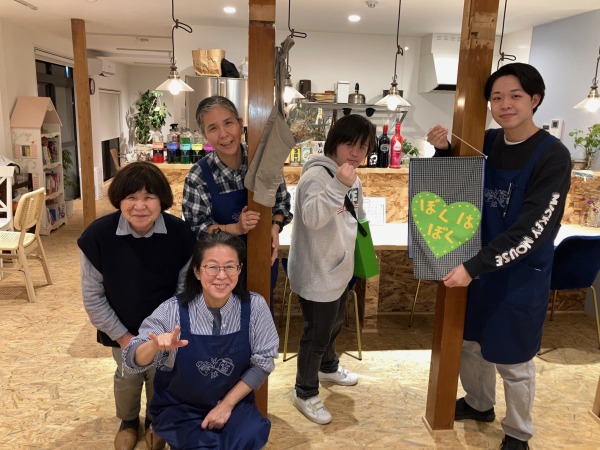
"A place for everyone to gather, I am me"
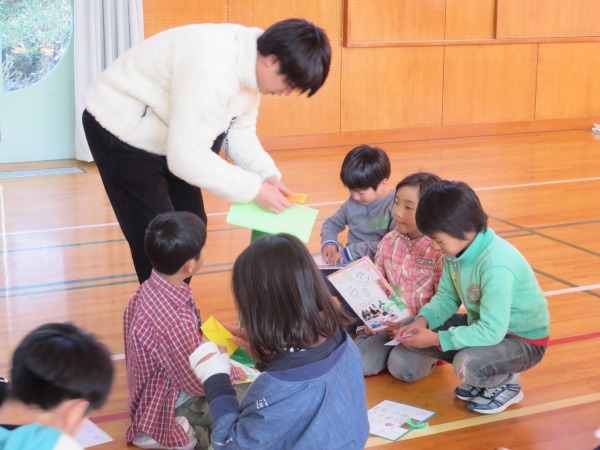
Interaction with children in small schools
J. F. Oberlin University College of Health and Welfare Student Council Head
Takako Ishiwata
In 1993, he graduated from California State University, Fresno. In 1996, he completed the master's program in Education at the Graduate School of Letters, Tamagawa University. In 2001, he withdrew from the doctoral program at the Graduate School of International Studies, J. F. Oberlin University before obtaining the required degree. In 2018, he received his Ph.D. (Academic Studies) from the same university. After serving as a part-time researcher at the University Standards Association and as an academic researcher at the University Education Development and Support Center at Rikkyo University, he has served as a full-time lecturer at J. F. Oberlin University since 2006, then as an associate professor, and since 2018 as a College of Health and Welfare professor. 2021–2023 College of Health and Welfare Assistant Student Councilor. Has held his current position since April 2024. He received the 'Common Research Encouragement Award' from the Principles of Home Economics Division of the Japan Home Economics Association (2008) and the 'Kametaka Academic Publishing Award' (2020). Secretary-General of the Japan Society for University Education (2010–14). Social Education Committee Member, Zushi City, Kanagawa Prefecture