[Hundred Schools of Thought] 18. Kana Ariga Mr. -Alumni and Student Interviews
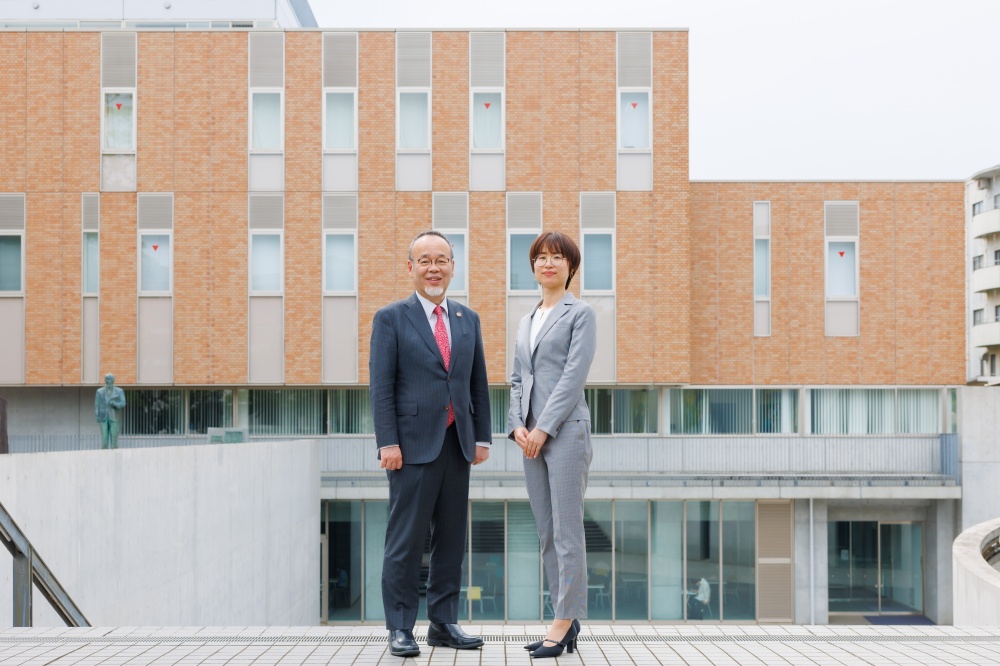
Faculty and President Dialogue
Bridging the gap with illustrations Communication between science and society
College of Arts and Sciences
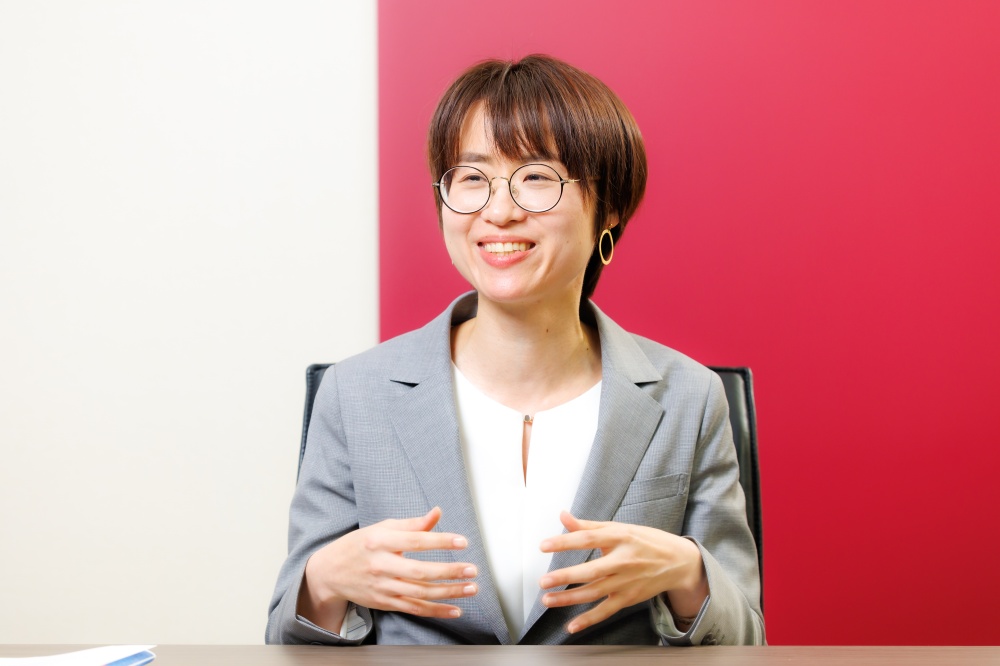
Kana Ariga Assistant Instructor
Main content
How to communicate scientific topics, which are often considered difficult, in an easy-to-understand way, and even consider the impact on society. Kana Ariga Assistant Professor has tackled such challenges by skillfully utilizing scientific knowledge, illustrations, and social science approaches. He encourages students, regardless of their major in arts or sciences, to develop multifaceted thinking skills by learning about communication between science and society (Interviewer: President J. F. Oberlin University Hiroaki Hatayama).
With an awareness of "research that is in harmony with society," we aim for new forms of science communication.
Hatayama: Professor Ariga, you're active in a dual career as both a "researcher" and a "designer." You specialize in "scientific illustrations," such as cell diagrams and research concept diagrams, which are found in textbooks, encyclopedias, and academic papers. But how did you get into this field in the first place?
Ariga: I've always loved birds, and since I was in elementary school, I've wanted to become a bird researcher. I would observe the titmice and other birds that came to my garden, noticing their intricately made feathers and bodies, and wondering, "How can something so small have life?" I listened to CDs of bird calls so much that I could identify a bird just by its call. In high school, I would attend academic conferences where ornithologists gathered and visit university research labs that studied ornithology. Gradually, I came to think, "I want to research not just birds, but more broadly, in the life sciences."
Hatayama: That's wonderful. Did you grow up in a family with a scholarly inclination?
Ariga: My father is a science major, dropped out of the doctoral program at Tohoku University, and worked as a high school teacher. Also, actually, my mother is from J. F. Oberlin University! I majored in Chinese literature. My mother has continued studying Chinese throughout her life, even after we children were born, studying abroad in China. I think I grew up in a family with a strong interest in academics.
Hatayama: Oh, really! So that kind of family environment played a role in building your current career.
Ariga: It all started when a professor of life sciences asked me to help with his classes while I was in the Faculty of Science at Rikkyo University. He was troubled because, when creating materials for his science lectures, "the lecture content wasn't getting across to the students, and they were misunderstanding it." I wondered, "Why isn't it getting across, and why is there a gap in understanding?" This led me to learn about "science communication," which promotes information transfer and dialogue between science and society, and the existence of science illustrations as one method of achieving this, and I recognized their importance.
Therefore, while pursuing my master's degree at the Graduate School of Life Sciences, Kyoto University, I joined a research lab specializing in science communication and began studying science illustrations using social science methods. 2005 is known as the "first year of science communication," a time when it began to attract public attention, and I entered this field shortly after. Subsequently, to further my studies in sociological methods, I enrolled in the doctoral program at the Japan Advanced Institute of Science and Technology (JAIST).
After obtaining my doctorate and becoming a researcher at Tohoku University, the Vice President, having heard that I was an expert in science illustration, asked me to design slides to explain various university research projects to the general public. My job was to express the research content and its impact on society in text and illustrations, based on the ideas conceived by researchers. I transitioned from researcher to designer and began working in research support at Tohoku University, where I was responsible for designing for diverse research fields. Through this work, I began to pursue the question of "what constitutes research that is in harmony with society" and discovered a new style of "science communication" that incorporates that perspective into diagrams and slides.
It is important to identify the message you want to convey and to address the other person's questions.
Hatayama: So you're making it understandable even to people who don't understand science. People often say, "Let's explain it in simpler terms," but there's a concern that this might undermine the original, essential understanding. How have you overcome that?
Ariga: Researchers tend to explain things in detail when they try to make them easy to understand. But that just increases the amount of information. First, I think it's important to "discern" the message that the researcher really wants to convey, and then "thin out" the unnecessary information. And if necessary, I try to rephrase it in simpler terms. If the topic itself is difficult, we also have to work hard on the expression and appearance to make it interesting. It's like combining all of these things and unraveling it. In a project at Tohoku University, there were cases where the advisor professors only clearly understood "what the professor who came up with the research plan wanted to do" after seeing the materials I created. Even though we had discussed the research plan beforehand, it wasn't always communicated effectively.
Hatayama: In your "Science Communication" course, how did you learn the skills to create diagrams and illustrations?
Ariga: I'm basically self-taught when it comes to design. On the other hand, it's also necessary to understand the unique characteristics and role of scientific illustrations. I think my experience studying "philosophy of science" and "science communication" was important. These fields give you clues to understanding the characteristics of scientific endeavors and why communication breakdowns occur between society and science. For example, in the world of scientific illustrations, "what style to use," "what kind of expression to use," and "what to depict" differ depending on the field. I research such visual culture of science in the field of philosophy of science.
Furthermore, while it's often said that "science is difficult to understand," the underlying issues include the fact that "scientists aren't answering what citizens want to know" and that "the information isn't reaching citizens because they distrust the government and corporations." For example, issues like nuclear power plants and vaccines cannot be resolved simply by explaining them in an easy-to-understand way. Scientists need to listen to and respond to citizens' concerns. They are expected to empathize with the feelings of the public.
Therefore, especially when creating illustrations to communicate research findings to the public, I often suggest to scientists things like, "I think you should also mention this," or "Let's conclude by explaining the significance of this research." I believe this is a different perspective from that of other typical designers.
Hatayama: There's a significant journalistic aspect to it. Especially regarding vaccines, we citizens have been surrounded by a variety of information over the past few years...
Ariga: People who refuse vaccines often have a strong underlying distrust, so communication with them is difficult. First, we need to listen to and acknowledge their underlying anxieties, and then work with citizens to consider what kind of information is currently circulating in society, how misinformation is created, and how it is shared. In modern times, vaccines, AI, environmental issues... many things happening in society are deeply connected to science and technology. I think the field of "science communication" has characteristics that transcend the boundaries of humanities and sciences.
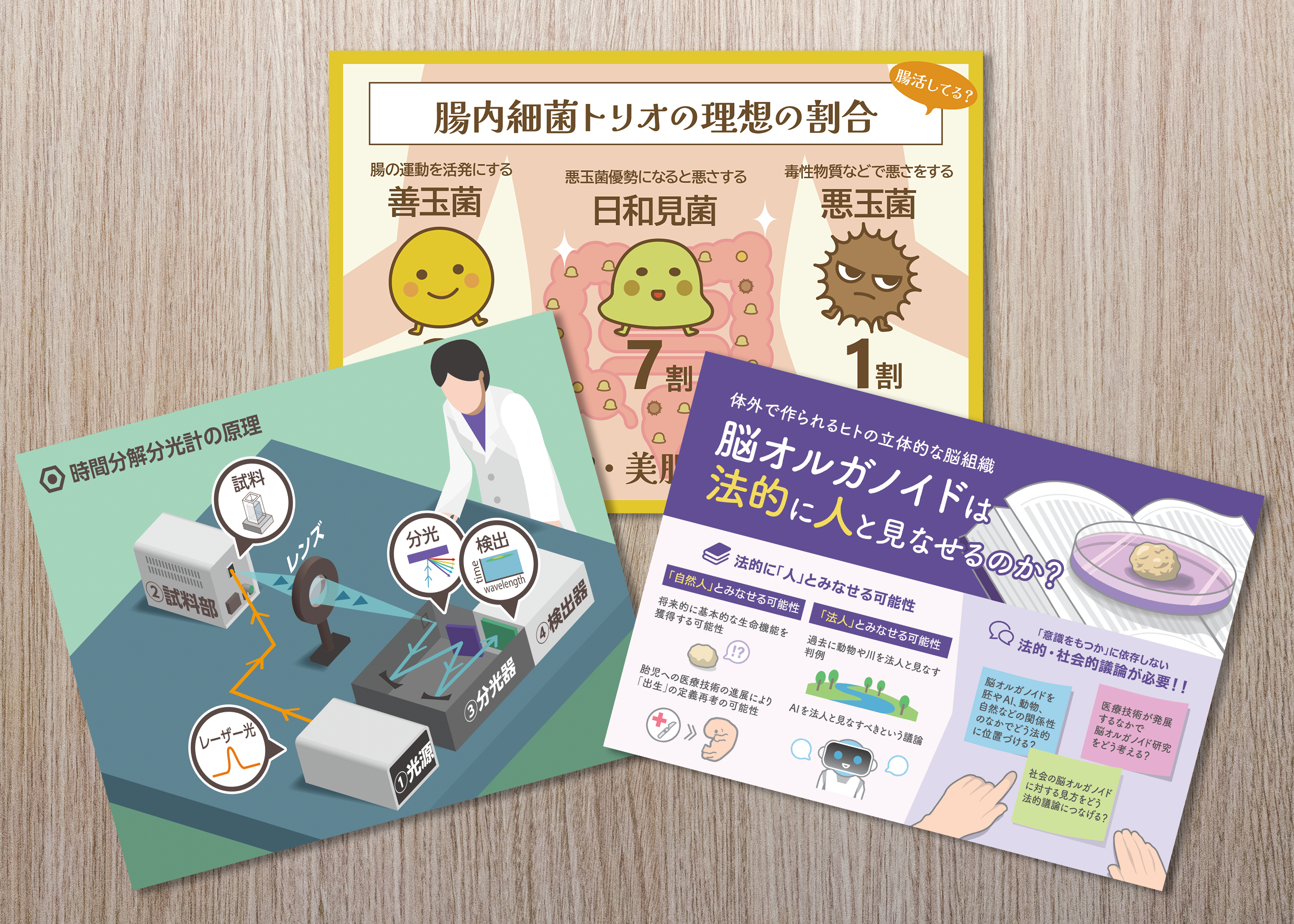
Examples of science illustrations I have created so far
To experience a connection with science and cultivate the ability to think from multiple perspectives.
Hatayama: We want to make appropriate choices as we live our lives in our own way. And when we do that, "science communication" can make it easier to understand information and make the right decisions. That's very important. By the way, speaking of AI, what are your thoughts on the recently popular artificial intelligence tool "ChatGPT"?
Ariga: As I mentioned in my lecture, students have high expectations for the emergence of new scientific technologies. However, when they actually use them, they quickly realize that there are "various problems." The information is mixed with lies, mistakes, and biases, and answers that they didn't intend to get appear. It's fine to use it as a "tool," but it shouldn't be used as the "answer." They learned that the hard way.
I believe that these new scientific technologies provide a great opportunity for people to realize that they are deeply connected to their own lives, even if they had previously thought they had nothing to do with science. Many students who take my lectures say they are "not good at science in the first place," but after class, I'm seeing an increase in enthusiastic responses such as "I've become interested" and "I'm not good at it, but I want to try and broaden my horizons." I'm currently experimenting with how to get them to participate in more specialized "science communication" programs.
Hatayama: Students who are good at graphic design may find their research topic very appealing.
Ariga: The lecture on visual design in science as a subject for College of Arts and Sciences will be offered for the first time in the fall of 2023 as a third-year course. I hope that students interested not only in science but also those interested in painting and design will be welcomed. What I want you to value is to be aware of the perspective of the viewer. It's important to think about what kind of information the other person is seeking and how to express it that resonates with their hearts.
Hatayama: For that, logical thinking is important.
Ariga: You're absolutely right. It is essential to focus on designs that are logically sound and convincing. Through "science communication," I hope people will feel that there are many scientific technologies close to us, such as social and ethical issues and educational problems related to "ChatGPT." With this perspective, I want to create a unique 'science communication' that is unique to the College of Arts and Sciences of J. F. Oberlin with the students. I hope they will develop multifaceted thinking and spread their wings in society.
J. F. Oberlin University College of Arts and Sciences Teaching Assistant
Kana Ariga
Graduated from Rikkyo University, Faculty of Science, Department of Life Sciences in 2008. Completed a Master's program at Kyoto University Graduate School of Life Sciences in 2010. Obtained a PhD (Knowledge Science) from Japan Advanced Institute of Science and Technology (JAIST) in 2015. Became a Japan Society for the Promotion of Science (JSPS) Research Fellow in 2013. After engaging in research and education as an educational and research support staff member at Tohoku University Cyclotron and Radioisotope Center in 2015, served as a specially appointed assistant professor at the Tohoku University Research Promotion and Support Organization URA Center in 2016, specializing in science visual designers. In 2019, worked as a communications director at Lehman Inc., handling visual design and writing for science and medicine, and from the fall of 2019, concurrently served as a specially appointed assistant professor at Tohoku University Cyclotron and Radioisotope Center using the cross-appointment system. Assumed current position in 2021.