[Collection of Schools of Thought] 17. Yuji Yamaguchi Mr. -Alumni and Student Interviews
Faculty and President Dialogue
Data in education Crossing the boundaries between real and virtual Towards a new era of learning
College of Business Management Student Leader
Yuji Yamaguchi Professor
Main content
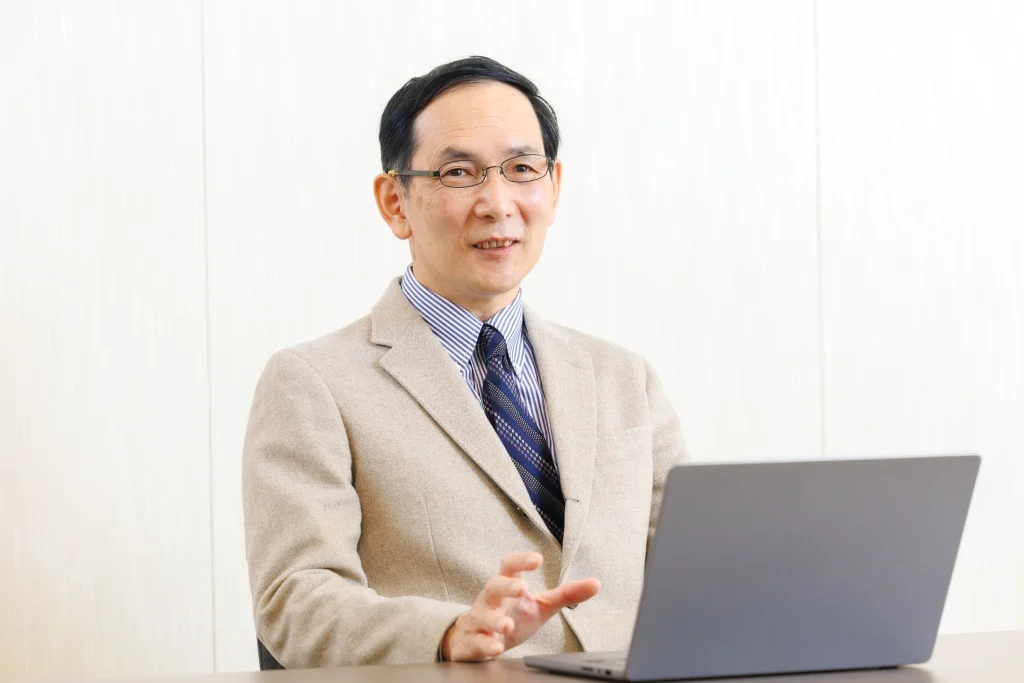
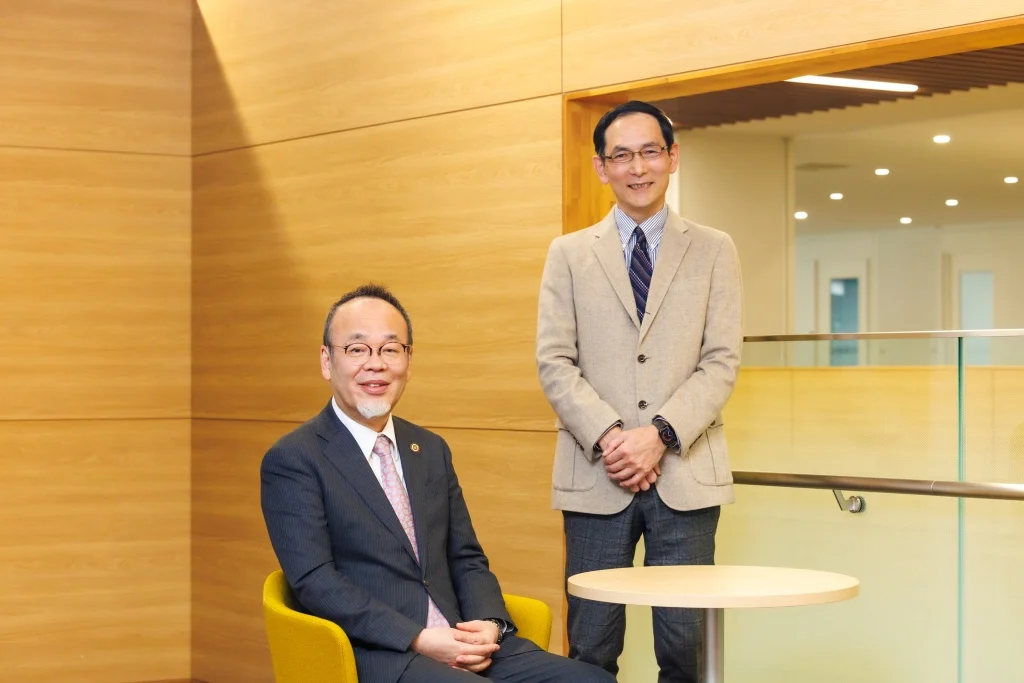
Professor Yuji Yamaguchi, who has been watching the leisure industry for many years. At College of Business Management, where he serves as the district president, he conducts classes that focus on the rare Disneyland in Japan. He shares his thoughts on approaches to education after the COVID-19 pandemic and the actively promoting information and digital-related learning (Interviewer: President J. F. Oberlin University Hiroaki Hatayama).
In both leisure and education, limited experiences are crucial.
Hatayama: Studying at the Shinjuku Campus, which opened in spring 2019 College of Business Management
Professor Yamaguchi has been serving as the head of the faculty since 2018. You yourself have specialized in research on "leisure," correct?
Yamaguchi: Yes. Are you familiar with the "Leisure White Paper" (published by the Japan Productivity Center)? It's a report compiled annually based on a nationwide survey, comprehensively and chronologically summarizing the state of leisure in Japan from both supply and demand perspectives. I've been writing it since 1990. Having observed the leisure industry for over 30 years, I can see that a lot of changes have occurred. From the immediate aftermath of the bubble economy to a period of stagnation, then signs of recovery, a huge leap forward thanks to "inbound tourism," and then the COVID-19 pandemic hit... As you can see, the industry has undergone some pretty drastic changes.
Furthermore, "leisure" includes fields such as sports, entertainment, and tourism. These fields are topics of great interest to students. I explain these topics theoretically to students through my classes, while observing the changes in each industry. Recently, not only are there more undergraduate students writing graduation theses on entertainment, but there is also an increase in graduate students researching entertainment, and I feel that the significance and recognition of exploring "leisure" as a research subject are increasing.
Hatayama: The COVID-19 pandemic has led to a rapid expansion of online educational and research activities. This has brought up the question of how to define the significance of "university in person." I think it's about entertainment. We are entering an era where universities must provide experiences that can only be had by coming to university. For example, classes that use large equipment that is not available at home, research that requires real-world group work, and spaces that are fun to visit. I think these entertainment elements are important, but what are your thoughts on this from your professional standpoint, Professor Yamaguchi?
Yamaguchi: I strongly agree. The leisure industry is exactly the same; if we go too far into virtual reality, the same things can be offered anywhere. I believe that only by offering extremely limited experiences that can only be enjoyed "in that place" and "at that moment" can we survive. The same applies to online classes and on-demand learning. There is plenty of knowledge available on the web. I feel that in the future, we will need advanced and innovative FD (Faculty Development, a practical method for improving the teaching abilities of university faculty) to develop learning that incorporates a live element into classes and includes the entertainment aspect that the president mentioned.
Theme park creation know-how applicable to any business.
Hatayama: I see, that's very reassuring. Speaking of entertainment, Professor Yamaguchi, you've been researching Disneyland for many years, haven't you?
Yamaguchi: Amusement parks and theme parks are easy to study because people's movements and behavioral patterns are very clear. Disneyland is an excellent example of a place where a lot of important know-how from managerial, spatial, ergonomic, and psychological aspects is comprehensively incorporated. It can be applied to any business, and you can even gain "wisdom for living."
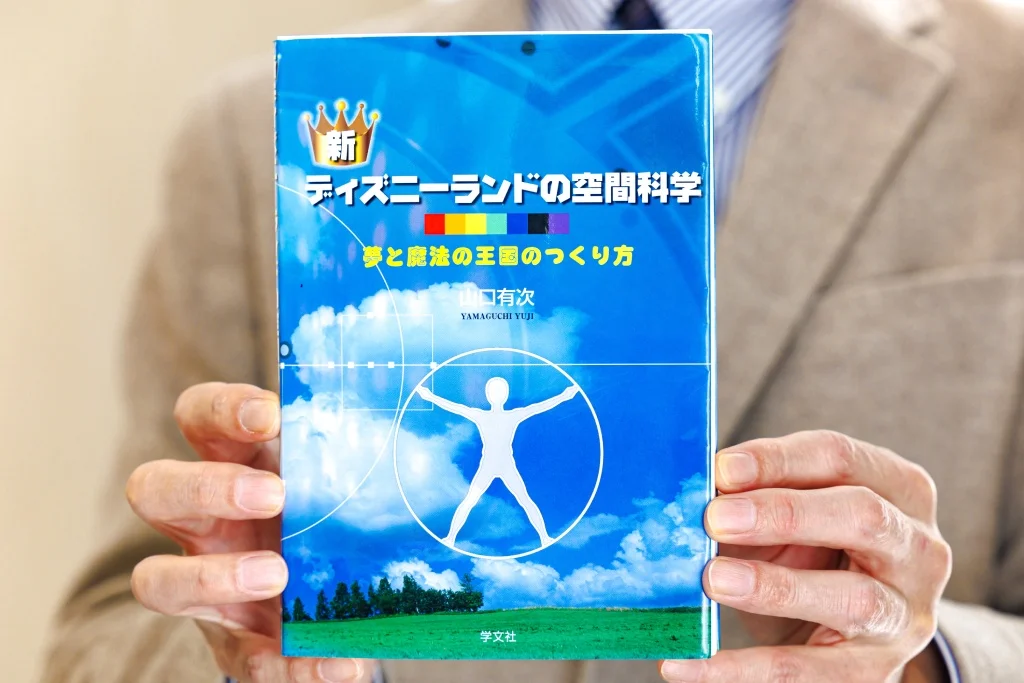
The book "The Spatial Science of the New Disneyland: How to Create a Kingdom of Dreams and Magic" (Gakubunsha) analyzes Disneyland's visitor attraction techniques from a spatial science perspective.
Hatayama: That's very interesting. For example, what kind of know-how do you have? Could you tell us a little bit about it?
Yamaguchi: For example, you consciously separate the inside and outside of the park, right? By placing embankments, plants, and buildings around the park, you divide the space so that people inside cannot see in. This creates an effect that enhances the psychological excitement of the people inside the park. Furthermore, you incorporate psychological elements in various ways, such as not showing the back areas, the flow of visitors, and the relationship between attractions and shopping booths. I think the know-how on how to create space can be applied to other industries as well. I teach a class called "Theme Park Theory," and it includes content like this.
Hatayama: The teachers at College of Business Management are about half from academic backgrounds and about half from business backgrounds. They have abundant wisdom, experience, and resources, so if things work well, I think this will become a huge advantage.
Yamaguchi: That's right. We have various specialists in areas like public relations, marketing, strategy, law, accounting, and more—it's almost like a whole company. Furthermore, since the faculty moved to the Shinjuku campus, it has become significantly easier to collaborate with companies. We can now provide a variety of educational opportunities, such as on-campus internships and training programs.
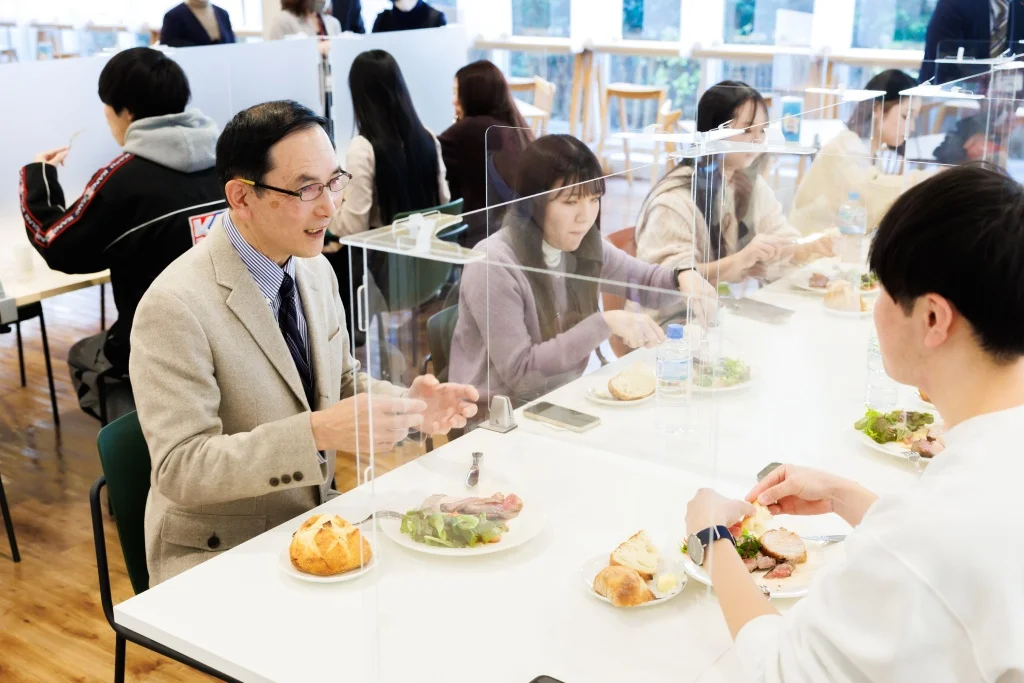
The Shinjuku campus offers a wide variety of business-related courses. The "Business Seminar (Food Business and Cooking)" course aims to cultivate knowledge and understanding of food and the food business. In this particular class, students tasted dishes made with ingredients provided by JA Kagoshima Kimotsuki and learned about the thoughts and feelings of producers involved in the livestock industry.
I studied data science and also create AR apps and videos.
Hatayama: That's true, the Shinjuku campus is an open space, and it has lowered the barriers to collaboration. Access is also very good. Given that, how do you want to steer the faculty from here on out, Professor Yamaguchi?
Yamaguchi: Popular career paths among students include airline service, tourism, hospitality, entertainment, and retail/marketing, and the demand for these fields remains strong even after the COVID-19 pandemic. We have prepared a variety of seminars to address these needs, and we are setting up a system that allows students to learn more about their desired industries and occupations. While we will focus on these areas first, we also want to concentrate on cultivating students who are robust, have a solid foundation, and can succeed anywhere.
Therefore, digital transformation (DX), an attempt to transform people's lives through the widespread adoption of information technology, is now an indispensable element in education. We would like to enhance courses that address information literacy and data science.
One example already underway is the revitalization project for the Shin-Okubo shopping street near the Shinjuku campus. Fixed-point cameras have been installed, and students are collecting the latest data on the number and demographics of customers. Through this data, they have been able to identify correlations between weather and customer numbers, such as "when it rains, the number of customers decreases," and see how this relates to sales. By accumulating data, they have become able to predict the number of visitors and customers with a fairly high degree of accuracy.
Hatayama: In terms of data collection, J. F. Oberlin University uses its original app "OBICON," which visualizes the amount of study. This system uses beacons installed in classrooms and other locations to detect smartphones with apps installed and to monitor the status of students using those facilities. You can register attendance information for classes and view your records.
Yamaguchi: We are paying attention not only to how much students attend classes, but also to the amount of time and places they spend on campus, and how much they access the network. We are using this data to create a learning portfolio and utilize it in education.
In our classes, we also incorporate learning using AR (Augmented Reality, which extends the real environment by adding virtual visual information to information from the real world). As I mentioned at the beginning, neither leisure nor education should go too far into virtual reality, and we are paying attention to AR as a technology that connects the real and virtual worlds. Specifically, we investigate how a space is activated when AR images are overlaid onto it. The process involves having the general public use the AR app developed by the students, and then using that data to update the app.
Additionally, students learn about videos introducing the Shinjuku campus through classes and share information both inside and outside the campus. It was hard to imagine College of Business Management students getting involved in AR and video. However, skills such as image design, video shooting and editing, and streaming have become standard even for today's business professionals.
Hatayama: That's really good. It might be a good idea to collaborate with College of Performing and Visual Arts Learning Art. It would be interesting if the entire university could create something new together.
J. F. Oberlin University College of Business Management Student Council Head
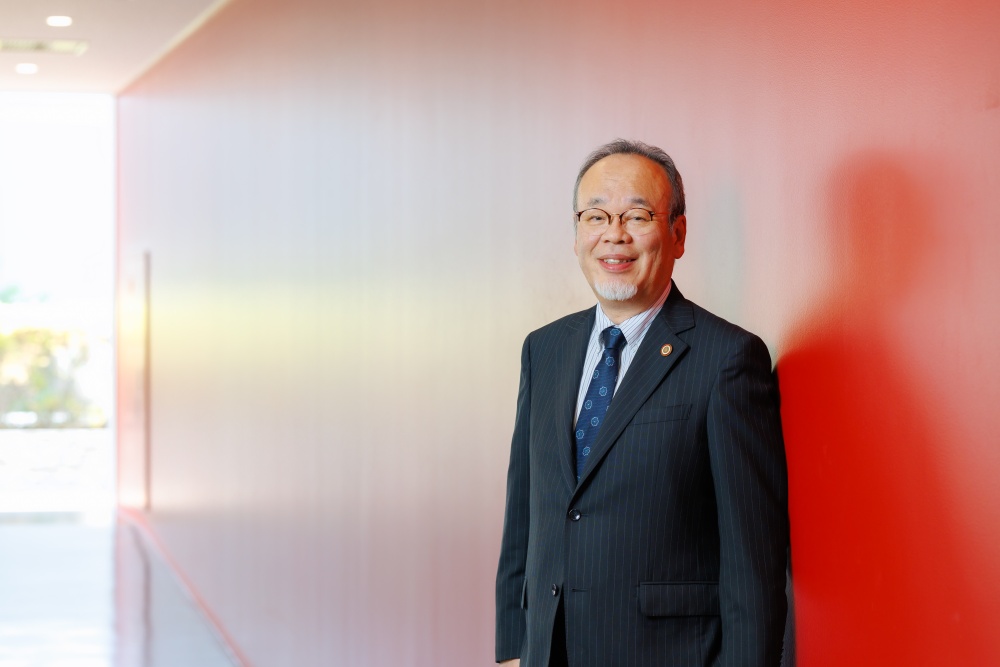
Yuji Yamaguchi
In 1987, he graduated from the Department of Mechanical Engineering, Faculty of Engineering, Doshisha University. In 1996, he completed the master's program at the Graduate School of Science and Engineering, Waseda University. In 2000, he completed the doctoral program in engineering at the same university. 2000~2004: Visiting Researcher at the Center for Advanced Science and Engineering, Waseda University. 2004~2010: Visiting Lecturer at the Institute of Integrated Research, Institute of Science and Technology. In 2006, he became an associate professor in the Department of Business Management at J. F. Oberlin University College of Business Management. After serving as associate professor and then professor at the same university, he has held his current position since April 2018. Since April 2021, he has served as Assistant to the President of J. F. Oberlin University. His areas of expertise are the leisure industry, leisure facilities, and leisure activities. Since 1990, he has been involved in writing the 'Leisure White Paper'