[Collection of Schools of Thought] 16. Masao Nouso Mr. -Alumni and Student Interviews
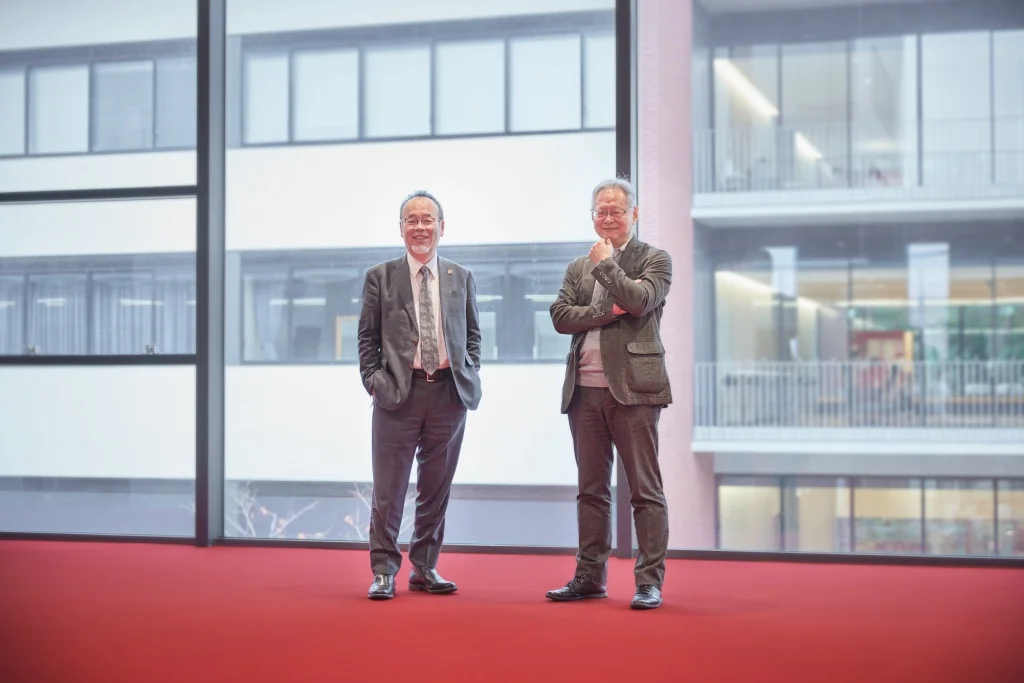
Faculty and President Dialogue
Nurturing the value of art Beyond the individual Towards becoming a force for society
College of Performing and Visual Arts Student Leader
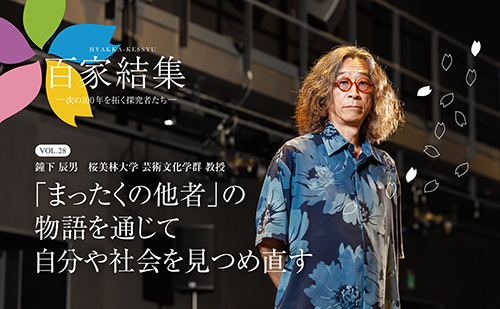
Masao Nouso Professor
Main content
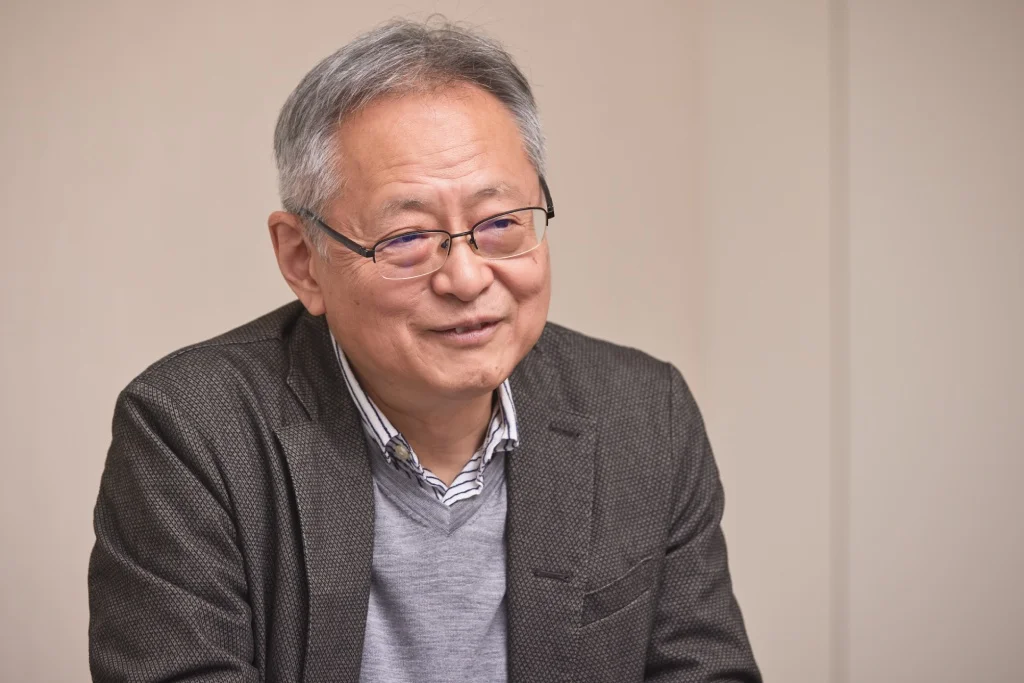
Mr. Masao Nouso started his career with the Shiki Theatre Company and has spent many years in the theater field. Drawing on his experience producing numerous performances and theater festivals, he guides students as the College of Performing and Visual Arts district president. We asked about theater education rooted in the community, with an eye on the Tokyo Hinatayama Campus (Interviewer: President J. F. Oberlin University Hiroaki Hatayama).
He established a theater and has produced a string of hit productions.
Hatayama: "College of Performing and Visual Arts" is divided into three fields: "Theater & Dance," "Music," and "Visual Arts," where students compete to become creators who will lead the future. As the head of the school district, Professor Noso said his career began with the famous "Theater Company Shiki," famous for "CATS" and "Lion King."
Noso: During my university days, I ran a theater company, albeit a rather laid-back one, so I thought, "I want to enter the world of theater," and joined the company. At Shiki Theatre Company, I first spent two years training in the sales department and the film and broadcasting department. This was around the time that "CATS" opened as Japan's first "indefinitely long-running musical." I was deeply impressed when President Keita Asari told me directly, "Theater is about people, both performing and watching it, and the themes are all about people, so you can't do theater if you don't understand people. Study people." Later, in 1985, when the Aoyama Theatre and Aoyama Round Theatre opened in Shibuya, Tokyo, Shiki Theatre Company became involved, and they said, "If you're interested, we'll let you go." That's how I ended up being involved in the launch of both theaters.
Hatayama: What were your days like as a theater producer?
Noso: "In an environment where people who want to do a project do it, I raised my hand and was given the opportunity to be a producer. The 'small theater' movement, which was started in the 1960s by people like Juro Kara and Shuji Terayama, was reaching its peak in the 1980s. Moreover, the performers at that time were around 30 years old, the same generation as me. So I thought, 'I want to introduce the expressions of my generation!' and launched the 'Aoyama Theater Festival' to introduce small theater, and I started to bring in new theater companies to the festival."
Hatayama: What themes were trending?
Noso: We didn't just gather theater companies together; we had them create new works based on themes we set. We started this in 1987 and continued it until I left the theater in 2001. A distinctive theme was "High School Girls" in 1994. This was around the time when high school girl culture, including loose socks and the "kogal" subculture, became a movement, and the festival attracted a lot of attention. Also, in 1997, we focused on the giant playwright Minoru Betsuyaku, and had young small theater directors direct Betsuyaku's plays, which had previously been performed mostly by modern theater companies. This was back when Oriza Hirata, Keralino Sandrovich, and Akio Miyazawa (deceased), who are now leading figures in the Japanese theater world, were still considered young. They took Betsuyaku's world, a leading figure in "absurdist theater" with a philosophical and somewhat difficult side, and interpreted it in a fresh way within the context of comedy, which received a great response. I will never forget how Betsuyaku himself came to see it and was laughing heartily with enjoyment.
Leading participatory theater in two contrasting regions
Hatayama: Among the works that Mr. Noso worked on, "Night on the Galactic Railroad" was also a hot topic, wasn't it?
Noso: It premiered in 1995 to commemorate the 10th anniversary of the Aoyama Theatre's opening. I was in charge of production and scriptwriting, and I asked Akira Shirai to direct. To be honest, I chose "Galaxy" simply because I liked its worldview. When creating the play, I wanted to do more than just follow the story; I wanted to make it "a Galaxy Railroad for people living in the present, carrying the thoughts and feelings of people living in the present." In 2020, it was revived at KAAT Kanagawa Arts Theatre, where Mr. Shirai was the artistic director. And actually, this Galaxy is connected to "Night on the Galactic Railroad," a musical play with choral readings that we have been performing at this university every year since 2007. It is a long journey through the galaxy.
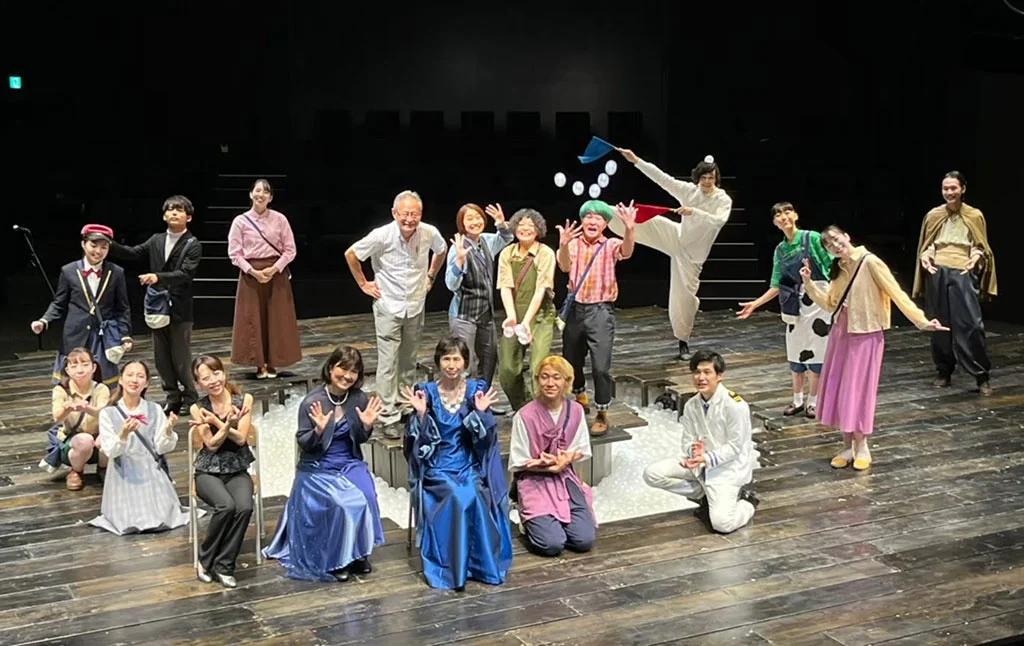
Cast members of "Night on the Galactic Railroad 2022: A Choral Recitation Musical"
Hatayama: I also think that there are many things that theater and Kenji's world can relate to from a philosophical and intellectual standpoint. What kind of career have you pursued since then?
Noso: The era was just entering a new century, a time when I felt that the world, people, and I all had to change...and that's when I received offers from the preparation offices of two newly established theaters. One was in Minori Town, Ibaraki Prefecture (now Omitama City). The other was in Kitakyushu City. I received offers simultaneously to be artistic director in Minori, which has a population of about 25,000, and theater producer in Kitakyushu, which has a population of about 1 million. I could have chosen one or the other, but I thought, "It might be interesting to be involved in theaters with such different populations, budgets, and missions at the same time," so I accepted both.
In Ibaraki, we launched the concept of "resident participation." From the planning stage, residents and citizens are involved. Just because someone is the artistic director doesn't mean decisions are made in a top-down manner; decisions are made through discussions with the citizens.
Hatayama: So you thoroughly implemented what's called "outreach," actively engaging with the arts from their own perspective.
Noso: Yes. For the opening performance, we launched a musical theater company run by local citizens. We also implemented a similar citizen-participatory approach in Kitakyushu. We created a new style of work called "Choral Story," which is a collaboration between chorus and theater. Professionals and citizens of all ages collaborated to create it. We wanted people of all generations to experience firsthand the joy of creating something together with complete dedication. Speaking of outreach, my experience as a coordinator for a music outreach program run by an organization affiliated with the Ministry of Internal Affairs and Communications for about 20 years has been a great asset. I gained immeasurable value from meeting classical artists and people from various halls throughout Japan.
Dedicated to drama education and collaboration with the local community.
Hatayama: You've been teaching at this university since 2001. What was the reason for that?
Noso: I was invited by Oriza Hirata. When Mr. Hirata established the Department of Integrated Culture in the Faculty of Letters, the predecessor of College of Performing and Visual Arts, he asked, "Please help me." The students at Obirin are lively and pursue what they love. At that time, the facilities were not as well-equipped as they are now, but I got the impression that various innovations were being made to connect them to practical application.
Hatayama: Initially, it was mainly lectures, but thanks to the efforts of the professors, the performance improved dramatically, and it eventually came together as a proper "academic group." I became the head of the academic group in 2021.
Noso: Until now, I focused on how to promote the 'Theater and Dance Major,' but now I pay attention to all three Major and steer the ship of a large ship called 'College of Performing and Visual Arts.' You must communicate, propose, and realize which direction you want to take. It is a feeling that tightens my spirits.
Hatayama: Just recently, the choral and theater fusion stage play 'Choral Story: The Life of a Pebble,' performed on campus with participation from local residents, left a deep impression and achieved great success. Professor Noso said, "Collaboration is very important." How will College of Performing and Visual Arts face and resonate with modern society going forward?
Noso: The COVID-19 pandemic has given us a chance to think about the value of art. For example, in Germany, politicians have declared that "artists are not only essential, but necessary for survival." On the other hand, in Japan, arts such as music and theater have been criticized as "non-essential." I think we are now being asked to re-examine what kind of power art possesses.
When considering this, I feel that the fact that the Tokyo Hinatayama Campus, where College of Performing and Visual Arts is located, is located in a corner of the large-scale housing complex area called the Kiso Yamazaki Housing Complex holds great significance. The housing complexes take on the wave of declining birthrate and aging population, presenting a symbol and microcosm of Japan. If the art we believe in can have power beyond individuals and society beyond the individual, I think it would be interesting to explore together with students what can be done in this environment. And from now on, we want to continue collaborating on three-Major Area, such as 'Choral Story: The Life of a Pebble.' I feel like only Obirin can do that.
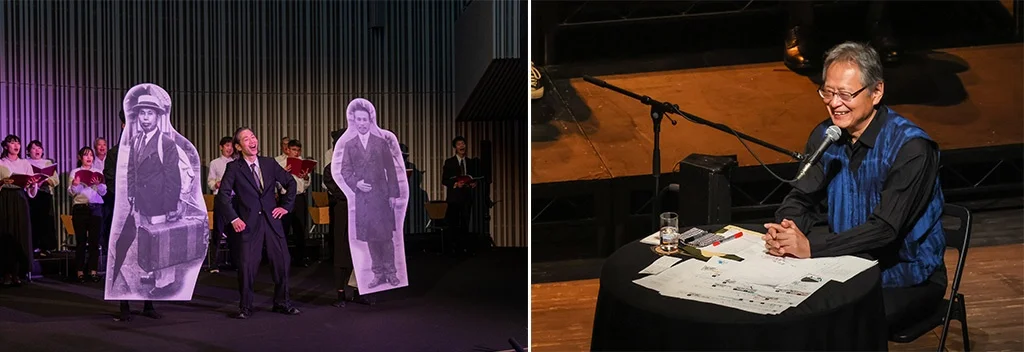
A scene from the Obirin Gakuen 100th Anniversary performance "A Choral Story: The Life of a Pebble" (left photo). Narrator at the Kitakyushu Performing Arts Center's "A Choral Story: My Bluebird" (right photo).
Hatayama: Rooted in the community. That's a key word here, isn't it? Professor Noso often says, "Art gives me life. My art gives life to society." What does that mean?
Noso: I want each of you to use what you've learned for the benefit of the world, for the benefit of others, and for the benefit of society. Up until now, for people involved in art, "personal feelings" have always come first. Expressing "things that you can't help but say" and "things that you can't help but express." It has been talked about only from that perspective. (That motivation) is of course absolutely important, but I think it's also important to consider "how you engage with society" at the same time. I want you to acquire these two perspectives during your student years. I think these perspectives will be useful even if you get a job at a general company.
As for myself, I want to continue creating works. This includes performing arts, but I'm also thinking about taking up poetry again, something I've been away from for a while.
J. F. Oberlin University College of Performing and Visual Arts Student Council Head
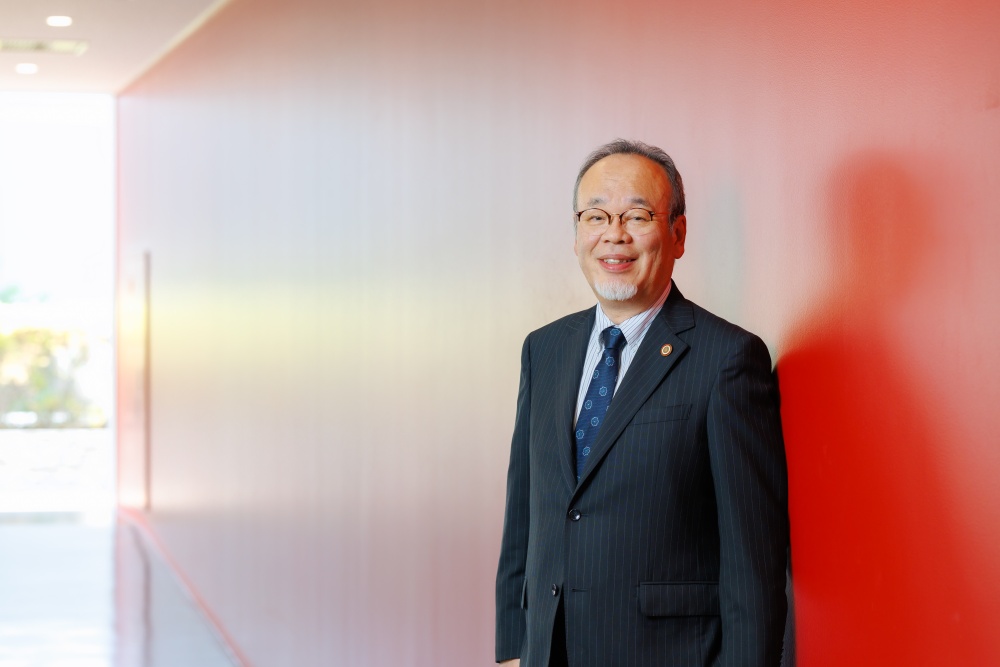
Masao Nouso
He graduated from the Department of French Literature, Faculty of Letters, Keio University. In 1983, after working in the sales department and film broadcasting department at Shiki Co., Ltd., he was involved from the very beginning of the theater's founding as a producer for the 'Aoyama Theater' and 'Aoyama Round Theater,' which opened in Shibuya, Tokyo in 1985. From then until 2001, for 16 years, he launched numerous theatrical projects. The 'Aoyama Theater Festival' and the 'Musical Drama: Night on the Galactic Railroad' became hot topics. In 2001, as the artistic director of the Shiki Culture Center in Minosato Town, Ibaraki Prefecture (now Omitama City), and in the same year, as producer of the Kitakyushu Arts Theater, he was involved in preparing for the theater's opening together. Major stage productions he has directed include 'Tsukineko Picture Book Music Concert' (Aoyama Round Theatre, etc., 1999~2014), 'Choral Story: My Blue Bird' (Kitakyushu Arts Theatre, 2004–2021), 'Group Reading Musical Drama: Night on the Galaxy Railroad' (Prunus Hall, Taiwan, etc., 2007–/winner of the 2020 Child Welfare Culture Award), 'My Life, My Stage' (Meguro Persimmon Hall and others, 2011–), "Bee Republic" (Japanese Script / SPAC - Shizuoka Prefectural Performing Arts Center, 2020–present), among others. Winner of the 4th Beagle Newcomer. His poetry collections include 'Cloudy Day' (Shoshi Yamada, 2009), 'Amedama' (same, 2016), 'Soul Stepping' (same year, 2016), 'A Bomb Called Sorrow' (same publisher, 2017), and 'The Abbot's Cat' (Shichigatsudo, 2019). In April 2001, J. F. Oberlin University Part-time lecturer in the Department of Integrated Culture, Faculty of Letters. Current position since 2021