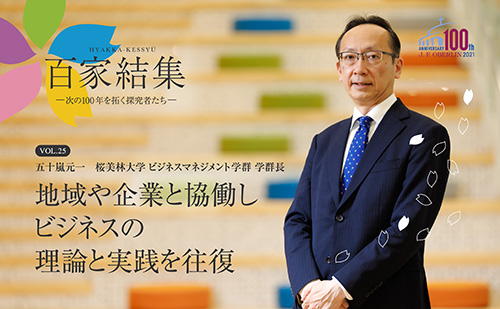
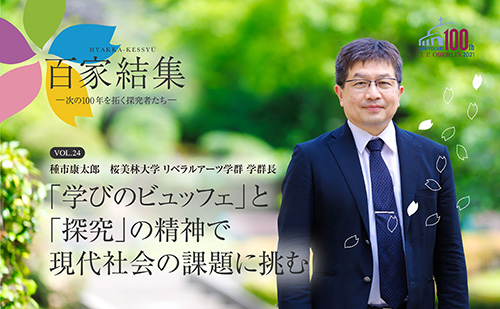
[Collection of Schools of Thought] 12. Atsuko Abe Mr. -Alumni and Student Interviews
Faculty and President Dialogue
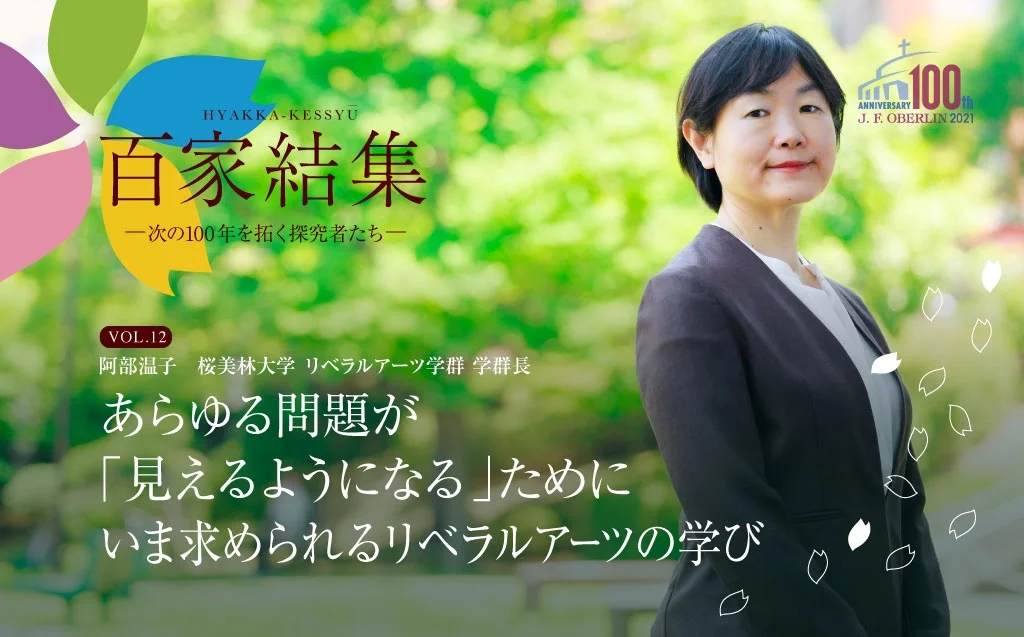
All problems In order to "become able to see" The Liberal Arts Education Needed Today
College of Arts and Sciences Student Leader
Atsuko Abe Professor
Main content
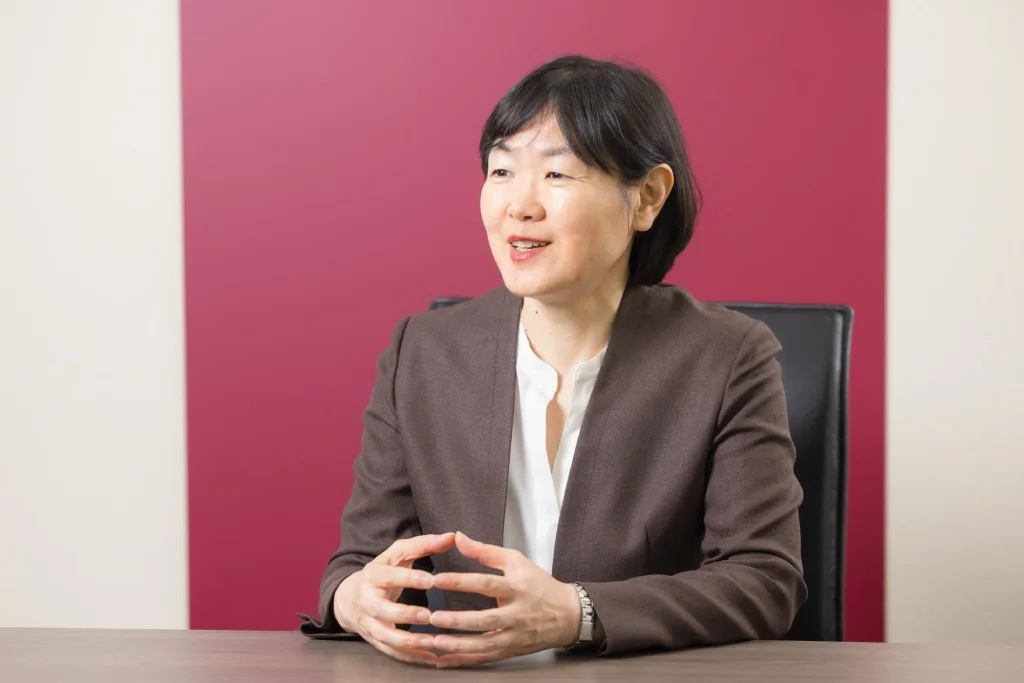
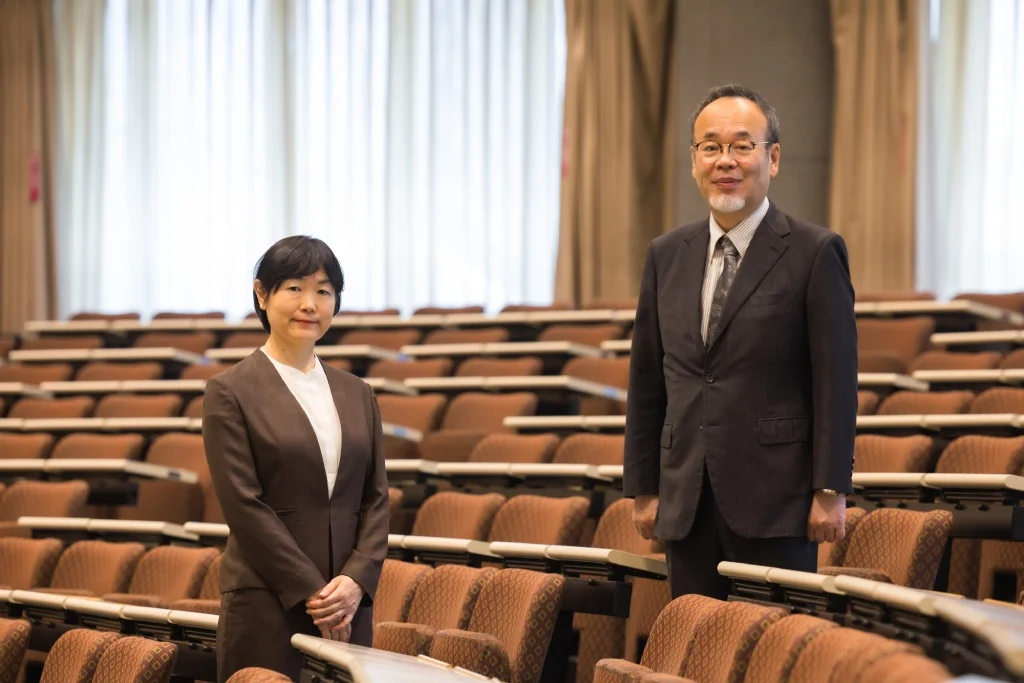
Professor Atsuko Abe said that witnessing the world's major changes during his student days sparked his interest in building relationships at the level of national units. Now that I have taken on the role of leading the College of Arts and Sciences, I will talk about how to learn liberal arts that are effective for addressing issues such as politics, international relations, science, and bioethics (Interviewer: President J. F. Oberlin University Hiroaki Hatayama).
Focusing on international relations woven by frameworks that transcend national borders.
Hatayama: Professor Abe is also the head of the College of Arts and Sciences school group. Your specialties are political science and international relations. What kind of research path have you taken?
Abe: I spent my student days right when the Cold War structure was collapsing before my eyes. I entered the University of Tokyo in 1987, and in 1989, as a third-year law student, when it came time to choose my specialization, I initially went into the "private law course." However, after witnessing the news of the Tiananmen Square incident in June and the fall of the Berlin Wall in November, I decided to switch to the "political science course." In my fourth year, while studying German politics in Professor Susumu Takahashi's seminar (European diplomatic history and international politics) and Eastern Europe in Professor Nobuaki Shiokawa's seminar (Russian politics and comparative politics), the Gulf War also broke out. During that time, I read a paper written by Professor Takehiko Kamo (international politics, security, and international integration theory) about the European Community (EC) at the time, and I became interested in communities other than the framework of the "nation."
Hatayama: After graduation, you studied abroad at Cambridge University, correct?
Abe: In the fall of 1991, I enrolled in the newly established "European Studies Course." There, while researching "Japan-Europe relations centered on trade," I learned that exchanges at the local and corporate levels, in addition to those at the national and community levels, also influence the formation of international relations. At that time, a Japanese automobile company built a factory in a declining town in northern England, and it was well-received. Japanese companies were creating jobs, showing respect for local culture, and supporting the revitalization of the region. While trade friction was a problem between the EC and Japan, there were exchanges such as expatriates from Japanese companies learning Welsh and teaching origami cranes in return. I feel that this changed the phase of trade friction. I became interested in these kinds of points that are overlooked when viewed solely from a national perspective.
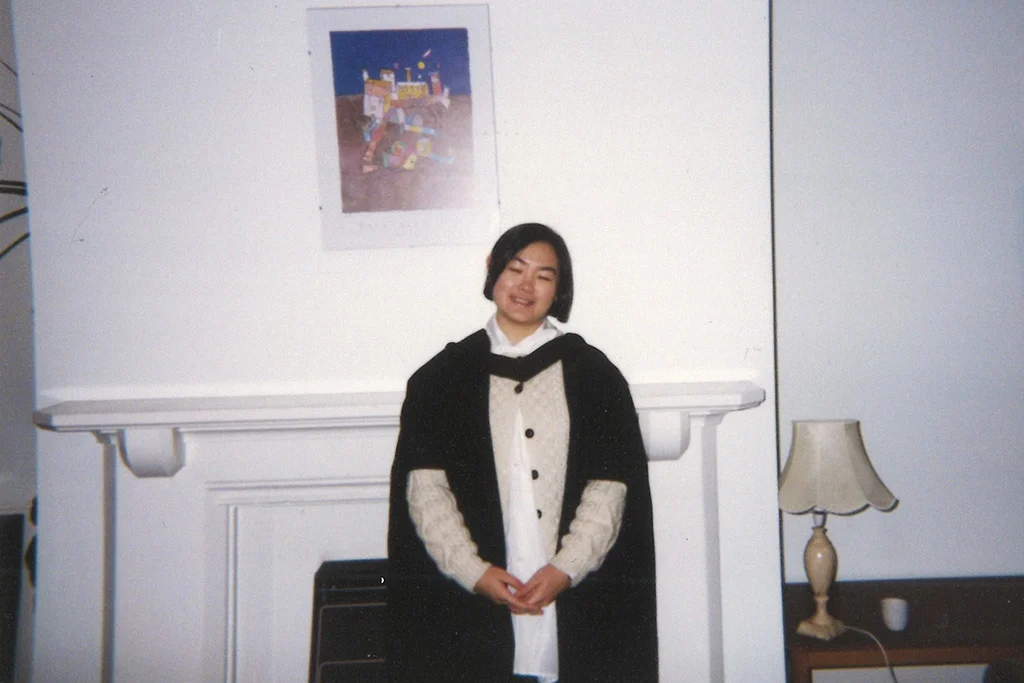
A photo taken at Trinity Hall, Cambridge University, where I was studying abroad.
Hatayama: So the relationship deepened at a much more granular level than just national level. What kind of research did you do after that?
Abe: When goods move, when money moves, that means people move. Gradually, my interest shifted to "human movement," that is, immigration studies. The initial simple trigger was the question I asked myself: "Am I an immigrant now, studying abroad?" I went to the International Relations Association, and from there I researched immigration policies in Germany and the UK. Even in Japan, even if the word "immigrant" is not used, the problem exists latently. There are Koreans living in Japan for five or six generations, but they do not automatically acquire Japanese citizenship. When you look at immigration issues in this way, you inevitably come to the conclusion that it is impossible to simplify them into units of "nation."
Hatayama: What do you mean by "it's becoming unreasonable"?
Abe: In a democracy, participation in "decision-making" should be widely open, but immigrants, being "foreigners," cannot participate unless they change their nationality. Yet, they are at the mercy of decisions made at the national level. Immigrants, especially women who are engaged in domestic work, face a "triple handicap" and are excluded from decision-making. In that case, we must also study gender issues thoroughly. If I pick out the keywords of my current interests, they have gone from "politics" to "international relations," "immigration," and then to "women."
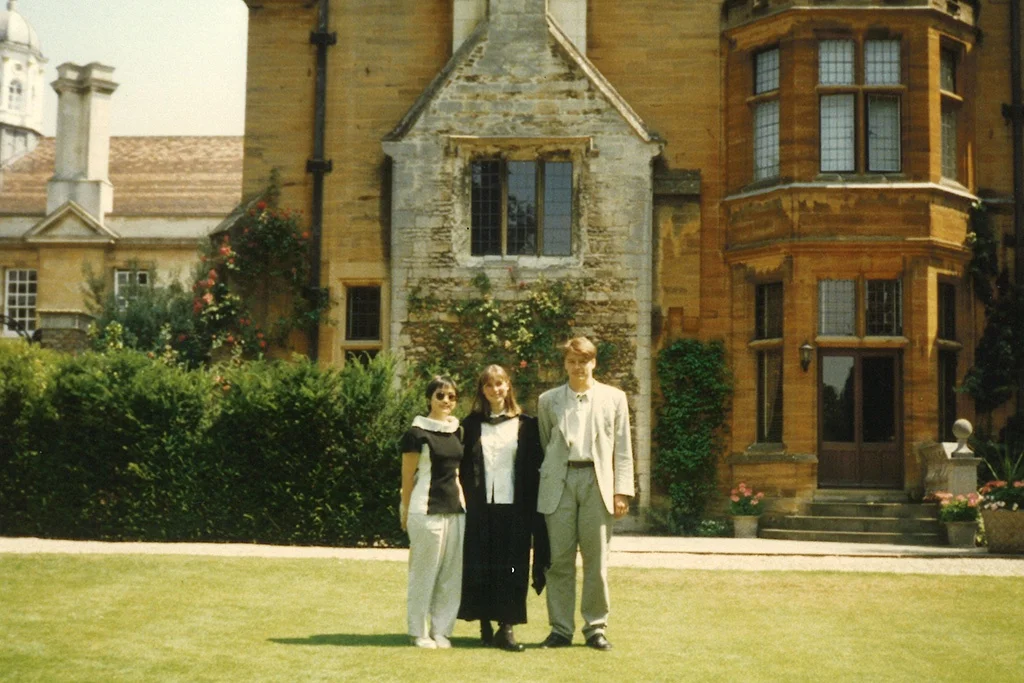
In the gardens of Trinity Hall, Cambridge University
Learning liberal arts helps you to view various issues as your own.
Hatayama: I also studied in the United States from 1992 to 1997, around the same time as you, Professor. Structuralism had collapsed, and after postmodernism, it was a time when everything was uncertain. And listening to what you're saying now, it seems that the various issues that have continued from the 80s and 90s to the present—democratization, the state, transnational communities, race, etc.—can all be addressed through economic, political, and cultural approaches.
Abe: When the Cold War structure collapsed, even though the future was uncertain, there was still a sense of hope. However, with Russia's invasion of Ukraine, history has returned. In particular, the strategies of those making political decisions have not been able to cope with the need to extend beyond national borders and consider other areas. It has long been said that the economy cannot be separated by national borders, but politics has not yet become truly global.
Hatayama: I see. Next, I would like to ask about liberal arts education. The College of Arts and Sciences of J. F. Oberlin University advocates fostering "independent learners" with an international perspective who utilize interdisciplinary thinking and excellent analytical and expressive skills to contribute to society. Long ago, there was an aspect where people who gained knowledge and mastered various academic fields would help improve society. However, since the advent of scientific methods, academic disciplines have become more subdivided, believing that all truths can be discovered through scientific approaches. Humanities Area But for example, 'linguistics' became 'linguistics,' right? In modern times, when people talk about 'liberal arts,' they often see it as 'common education and liberal arts education for university students,' but as the head of the academic district, what are your thoughts on College of Arts and Sciences?
Abe: Students are able to approach issues they are interested in from various angles and integrate those perspectives. I think that will be a very reliable skill when they live as "citizens" in society. For example, while our lives are made possible by the benefits of science, we cannot overlook its negative aspects. A clear example of this is the nuclear power plant issue. In order to "see" it as our own problem, the ability to tackle complex and multifaceted issues, which is cultivated through liberal arts, is useful.
Science, politics, bioethics. We confront and act upon all aspects of life.
Hatayama: It's important to view this not as "someone else's problem," but as "our own problem."
Abe: In College of Arts and Sciences 's new 13 programs called 'Integrated Area,' we will also add a specialized program called 'Science Communication' that deals with the field of science. People tend to avoid it, saying things like 'Because I'm in the humanities' or 'I'm not good at math,' but for students coming from the humanities and social sciences Area, it's important to learn how to address issues in the scientific field. I want you to consider whether to take action. I believe the faculty should not show a rigid attitude limited to their own specialty. I once included many bioethics topics in my lecture on "Understanding Nature," focusing on the themes of "living, aging, and dying." The issue of abortion, caregiving, and the so-called "euthanasia." How you perceive these things as "personal matters" is crucial.
Hatayama: Speaking of bioethics, this year the U.S. Supreme Court completely overturned the 1973 Roe v. Wade decision, which declared abortion a constitutionally guaranteed right.
Abe: Ultimately, decision-making is about politics. You have to be interested in "what kind of problem it is" and "what is happening in society," and when you have questions, you have to take action. In the United States, for example, by "participating" through demonstrations and voting, you can really make a difference, for better or for worse. That's when liberal arts education comes into play.
Hatayama: Indeed, as was the case with gun control in the United States, the response to political topics on campus is very quick and significant. Japanese students may hear about it as something far removed from their own lives, but in that respect, liberal arts education has an enlightening effect. It's learning that is relevant to all the events happening in the world today. Finally, could you tell us about your future outlook as the head of the faculty?
Abe: Since the new curriculum began in 2021, for the first time starting in 2023, students will be required to take both the interdisciplinary 'major' (major major) and 'minor (minor)' courses as required courses. As one outcome of the new curriculum reform, we want to support students in making their interests more balanced and diverse. As I mentioned earlier, we want to further enhance the appeal of the newly launched "Integrated Area" program, especially in science and engineering fields. We also want to refine the content of the "Inquiry Service Learning" course, which leverages the knowledge learned to contribute to society.
J. F. Oberlin University College of Arts and Sciences Student Council Head
Atsuko Abe
In 1991, he graduated from the University of Tokyo's Faculty of Law (Political Science course). In 1992, he completed the master's program in European Studies at the University of Cambridge Faculty of History. In 1997, he earned his Ph.D. in International Relations from the University of Cambridge Faculty of History. After teaching as an assistant professor at George Mason University in the United States, he joined the University of Tsukuba as a JSPS Research Fellow (Postdoctoral). In 2000, he became a full-time lecturer at the J. F. Oberlin University School of International Studies, and in 2018, he became the J. F. Oberlin University College of Arts and Sciences Area Dean. Current position since April 2021