[Collection of Schools of Thought] 11. Miki Ikeda Mr. -Alumni and Student Interviews
Faculty and President Dialogue
Disaster victim care and Supporter support Supporting people's emotional well-being during disasters
College of Arts and Sciences
Miki Ikeda Associate Professor
Main content
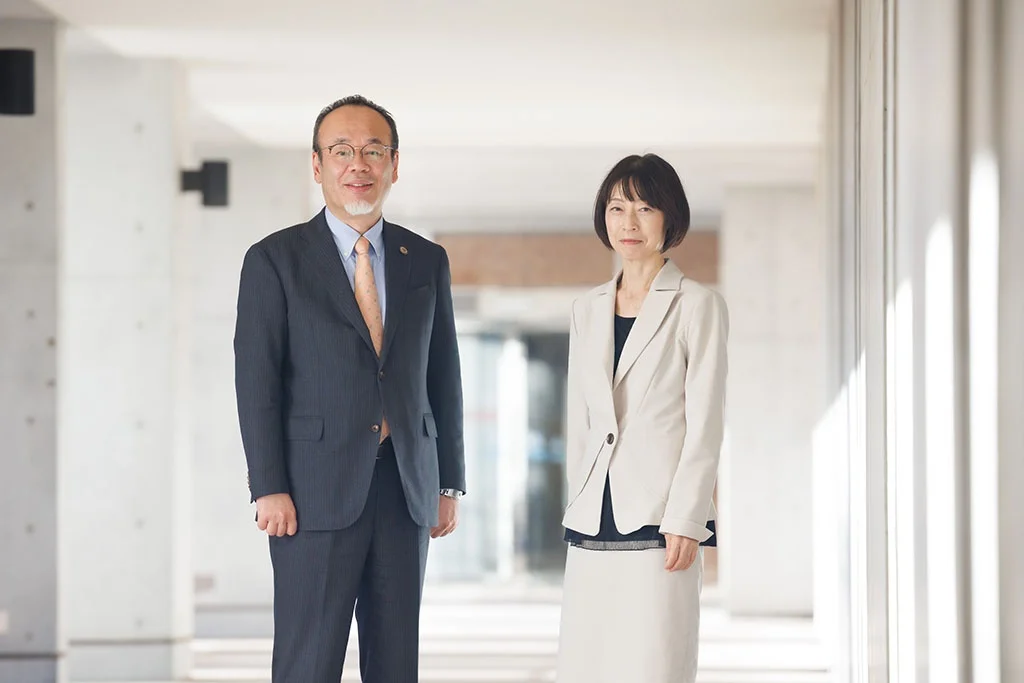
With repeated large-scale disasters, mental care for victims has become increasingly important. We spoke with Associate Professor Miki Ikeda, who has worked on establishing emergency measures during disasters and supporting psychiatric healthcare workers, about building a 'mental care system' (interviewer: President J. F. Oberlin University Hiroaki Hatayama).
Working on "psychosocial" support during disasters
Hatayama: Professor Ikeda, you have been involved in mental health care activities, such as going to the affected areas during the 2011 Great East Japan Earthquake and the 2016 Kumamoto Earthquake. How did you originally get into the field of mental health?
Ikeda: In the late 1990s, when the Ministry of Education, Culture, Sports, Science and Technology launched the "School Counselor" system, I was involved in providing support to children and students at elementary and junior high schools in Tokyo. At that time, I saw cases where adequate care could not be provided due to problems in the family environment or because the parents had mental illnesses. In rare cases, the children themselves also had mental illnesses. In such cases, it is necessary to connect them not only with regular psychological counseling but also with the medical field. That's why I decided to work at a general hospital and moved to Musashino Red Cross Hospital.
Hatayama: So, while working, you also went back to graduate school and obtained your doctorate, is that right?
Ikeda: While supporting the people in front of us is very important, it is also necessary to provide theoretically sound, evidence-based treatment. I wanted to take on a social role by compiling what I have practiced so far into research and sharing it with others.
Hatayama: Is your current research on "mental health care during disasters" based on your clinical experience at a Red Cross hospital?
Ikeda: That's right. The year 2000, when I moved to the hospital, was also the time when a movement to develop "psychosocial support" during disasters began in Japan. "Psychosocial" is translated into Japanese as "psychologically social." When a major event such as a disaster occurs, everyone experiences stress, right? It takes time to return to daily life, and recovery occurs as social life stabilizes. "Psychosocial support" is what supports the process of recovery that people undergo on their own.
Aiming to create a care system based on the problems observed in disaster-stricken areas.
Hatayama: What kind of activities did you actually do during the "3.11" disaster?
Ikeda: Reports from the medical relief teams that had arrived in the disaster-stricken areas indicated that not only injuries and illnesses, but also mental health care was needed. The Red Cross formed a "mental health care team" mainly composed of nurses to provide psychosocial support to the victims, but we heard many voices of anxiety and confusion from those involved in the relief efforts, asking, "Is this the right way to provide support?" So, while working with the victims as a clinical psychologist, I also took on a consulting role for the supporters. After the relief efforts were completed, we decided to review and improve the "mental health care system," mainly with those involved in the relief efforts.
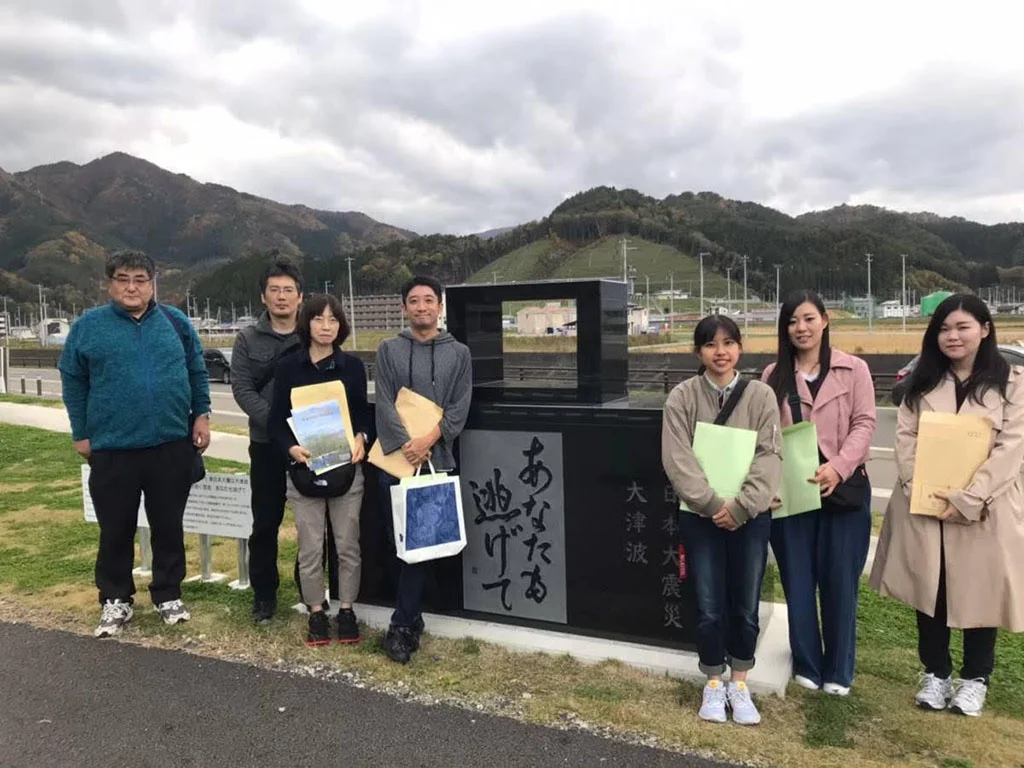
In 2019, she visited Kamaishi City in Iwate Prefecture, where she had provided support during the Great East Japan Earthquake, with graduate students. She was able to reunite with city officials and public health nurses.
Hatayama: So that was a lesson learned. Were there any other difficulties?
Ikeda: When people with mental illness experience traumatic events, their symptoms can worsen or relapse. Those undergoing treatment faced the problem of running out of their medication, which worsened their symptoms. Also, many people have experienced the loss of family members or acquaintances. In response to this "loss," many people experienced a decrease in motivation and a deepening sense of isolation.
During the "3.11" incident, there were cases where support could not reach psychiatric medical institutions, leading to isolation. While evacuating from hospitals on their own, more than a dozen people lost their lives. This cannot be overlooked. To ensure that psychiatric Area receive timely support during disasters, the Ministry of Health, Labour and Welfare has established a national project called the "Disaster Psychiatric Assistance Team (DPAT)," and I was involved in this effort.
Hatayama: I see. Japan is a country prone to natural disasters, but do you conduct preliminary training in advance, anticipating that disasters will occur?
Ikeda: We are working to implement and spread a form of emergency response called "Psychological First Aid (PFA)." We are creating a system where not only mental health and psychological professionals, but all support providers are familiar with PFA, and can quickly access what disaster victims need. If they need food, clothing, and shelter, we provide those; if they need connections with family and community members, we provide those spaces; and if they need special welfare or medical support, we connect them with those resources. We are responsible for the overall coordination and coordination of this support.
Furthermore, disaster relief is carried out by various organizations over a certain period. Therefore, we are researching "4Ws" (commonly known as the "connection map"), a tool to clarify "who, when, where, and what" is being done. We are also conducting collaborative research on what factors are involved in the mental health of disaster relief workers, from the perspective of "supporting disaster relief workers."
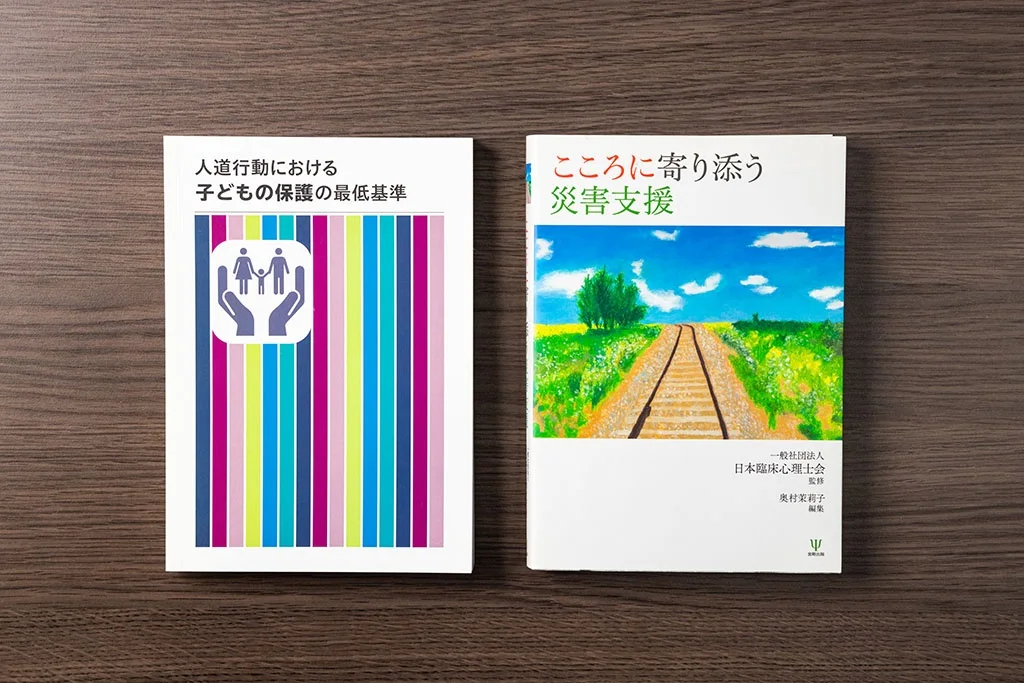
The book I helped publish, "Minimum Standards for the Protection of Children in Humanitarian Action" (left), is the Japanese translation of international standards that those involved in emergency relief efforts such as conflict and natural disasters should adhere to. My co-authored book, "Disaster Relief that Supports the Heart" (right, Kongo Publishing), is a comprehensive guide to psychological support during disasters, illustrated with concrete case studies.
We also share ways to cope with everyday stress.
Hatayama: By the way, the COVID-19 pandemic is also a kind of "disaster." Students must have had a lot of different thoughts and feelings while they were unable to attend school.
Ikeda: I recently had the opportunity to speak with some students who will be joining my seminar next year, and they said things like, "After entering university, I hardly had any opportunities to talk directly with friends, and I studied alone, so I felt lonely," and "I'm looking forward to doing things in a group when I join the seminar."
Hatayama: Based on what they've experienced, some students might then think, "Now it's my turn to help others." Even so, psychology is incredibly diverse. What areas do you focus on, Professor Ikeda?
Ikeda: "Cognitive behavioral therapy" is a relatively new field. Numerous pieces of evidence have been presented in both the theoretical model and the verification of its practical effectiveness, and it has been attracting attention in recent years. I believe it can be used not only for people with illnesses or psychological problems, but also for healthy people, for interpersonal relationship problems, health-related issues such as sleep and exercise, and in a variety of other situations and for different people.
Besides research and teaching, although interrupted due to the COVID-19 pandemic, I have been in charge of the regional public lecture "Childcare Support Course" hosted by J. F. Oberlin University Clinical Psychology Center. Going forward, I want to share things that ordinary people can practice in daily life, such as "how to deal with stress." I hope to organize such activities together with the students.
Hatayama: Lastly, there's something I've always wanted to ask you... How do you maintain your own mental health when you're constantly listening to the problems of people who need mental health care? If I were to keep listening to people's stories like that, I think I'd eventually become depressed.
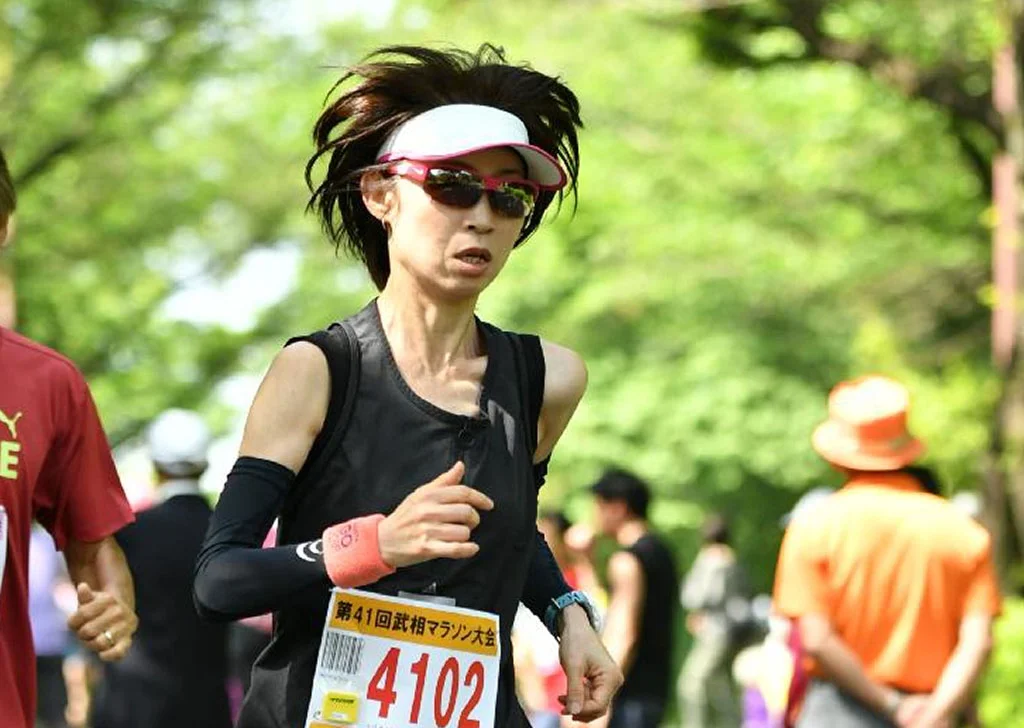
The Buso Marathon, which took place in Machida City, was a great success (Photo courtesy of Buso Marathon Organizing Committee).
Ikeda: While empathizing with the other person's feelings, I also set the line that 'the other person's feelings belong to them.' And then there's 'stress management.' To avoid bottling things up, I try to take time to relax and distract myself. Running I started five or six years ago can be done alone, anytime, and I can set my own pace. The degree of freedom is incredibly high. In fact, I once ran on the podium in the half marathon 'Bushou Marathon' held in Machida City, where J. F. Oberlin University 's campus is located.
Hatayama: Running is really good for mental health. I'm a pro, so it must be true!
J. F. Oberlin University College of Arts and Sciences Associate Professor
Miki Ikeda
Completed the master's program in Health Sciences at Waseda University's Graduate School of Human Sciences (Human Sciences), completed coursework for the doctoral program at Waseda University Graduate School of Human Sciences, but withdrew before obtaining the required credits. After serving as a mobile instructor for childcare for children with disabilities and a member of the Developmental Support Committee at the Adachi Ward Welfare Department in Tokyo, a school counselor at public elementary and junior high schools in Tokyo, and as the head of the Clinical Psychology Section at Musashino Red Cross Hospital, in 2016, he became a lecturer at the College of Arts and Sciences and Graduate School of Clinical Psychology at J. F. Oberlin University Graduate School of Clinical Psychology. In 2019, he took up his current position. Co-authored works include 'Disaster Support That Supports the Heart' (Kongo Publishing) and 'Basic Knowledge You Should Know in Disaster Nursing' (Nanzando), among others.