[Hundred Schools of Thought] 06. Mr. Itaru Kobayashi-Alumni and Student Interviews
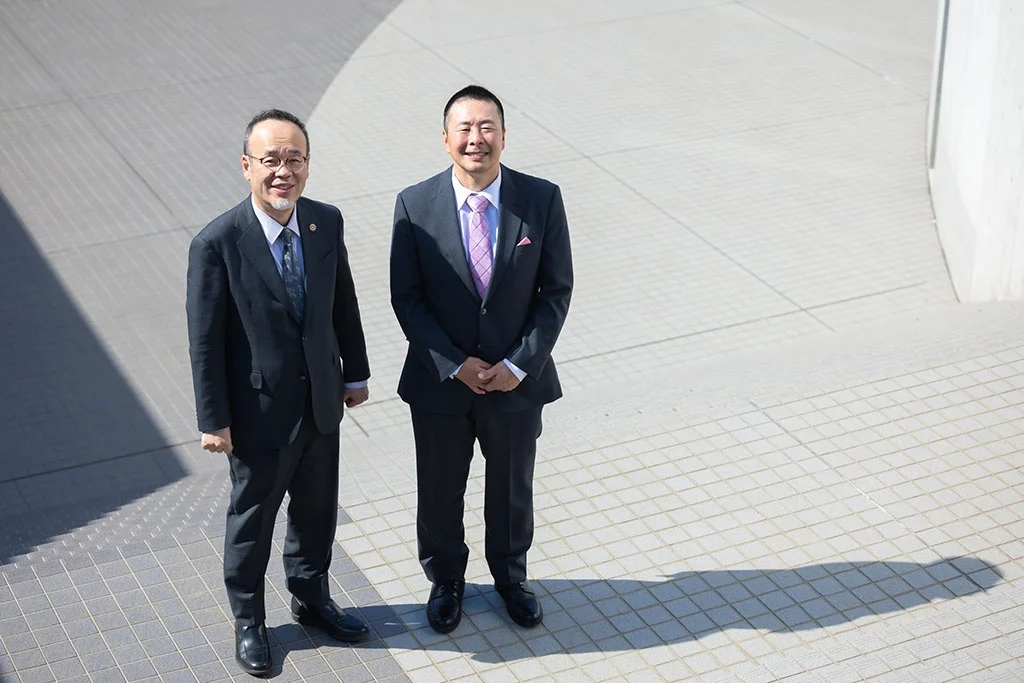
Faculty and President Dialogue
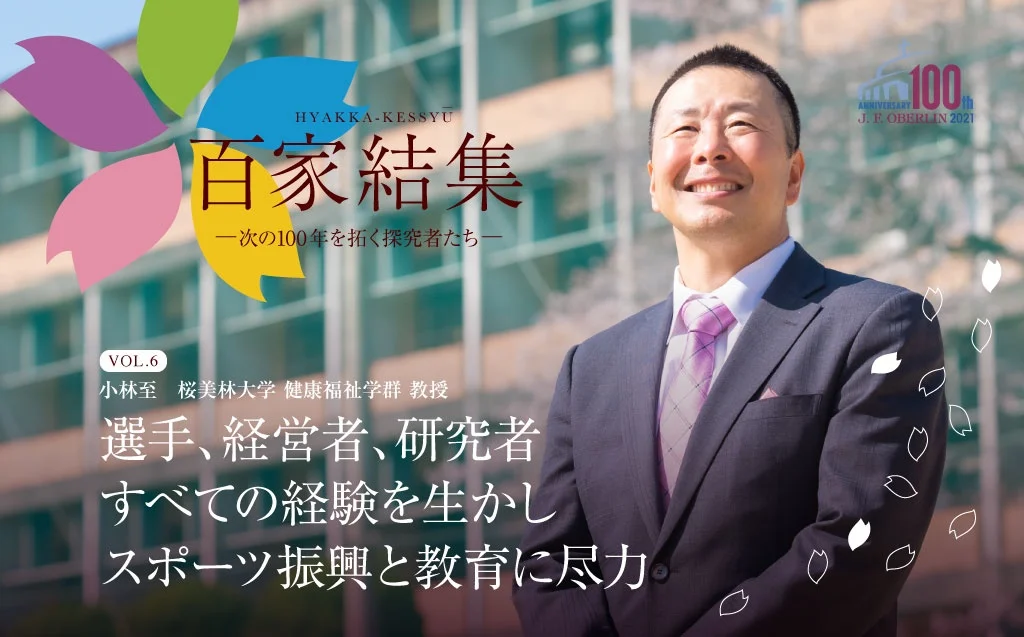
Athletes, managers, researchers Making the most of all my experiences Dedicated to promoting sports and education.
College of Health and Welfare
Itaru Kobayashi Professor
Main content
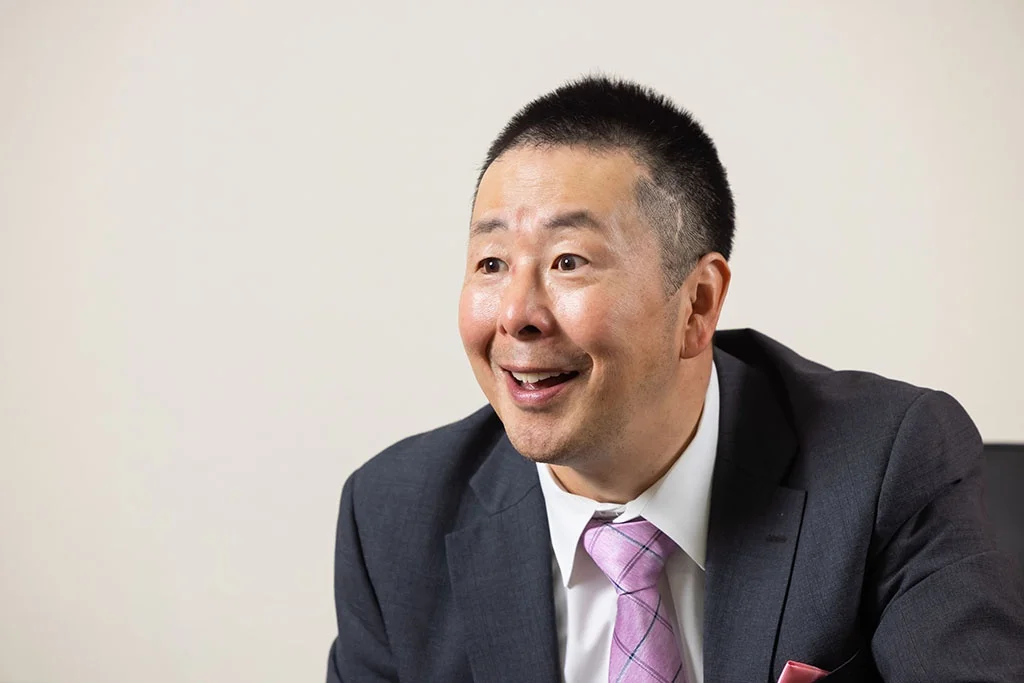
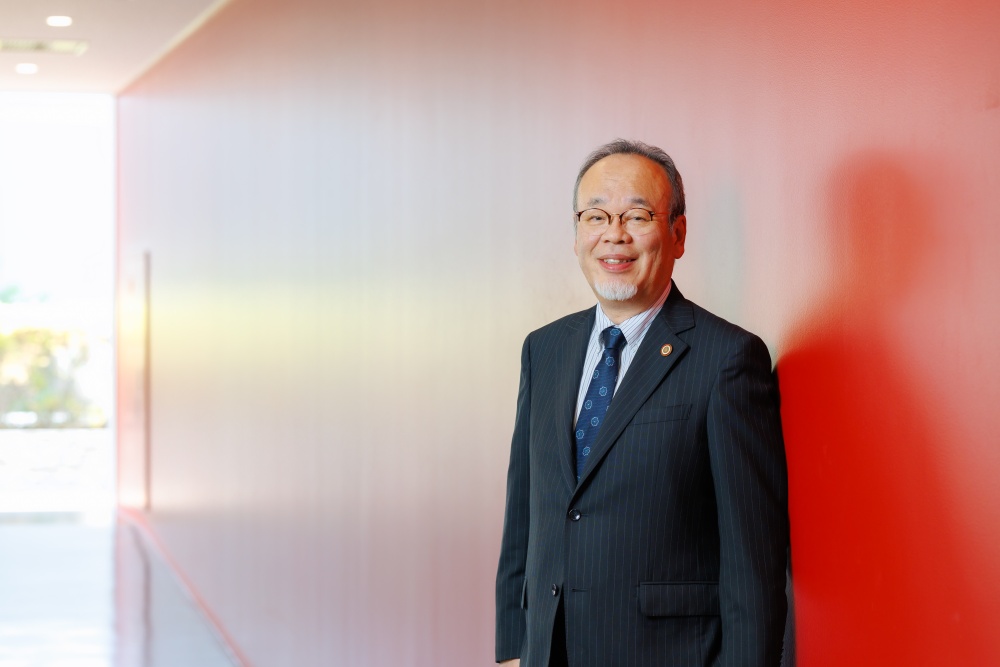
He became the third professional baseball player in history to graduate from the University of Tokyo, and after retiring, earned an MBA and pursued a career in team management——。 Professor Itaru Kobayashi, a professor with an extraordinary background, has been driven by the spirit of 'you don't know until you try.' He will discuss the significance of continuing to challenge ourselves while being involved in sports promotion (Interviewer: President J. F. Oberlin University Hiroaki Hatayama).
Drawing on experience in baseball team management, I aim to promote university sports.
Hatayama: This time, we're talking about a teacher with an unusual background. After graduating from the University of Tokyo, he played professional baseball and earned an MBA in the United States. After contributing to the team as a team executive, he joined J. F. Oberlin University. It seems you are currently focusing on promoting sports.
Kobayashi: Yes. My main goal as a researcher is to grow Japanese sports as an industry. In particular, I am practically involved with the "University Sports Association (UNIVAS)." It is an organization established in 2019 under the leadership of the Ministry of Economy, Trade and Industry and the Ministry of Education, Culture, Sports, Science and Technology. There is still a lot of room for development in Japanese university sports as an industry. In the United States, the market size is more than 1 trillion yen, and some universities earn more than professional sports. Of course, I'm not saying that making money is the only good thing, but I think we should try to boost it a bit more in Japan as well.
For example, there are university sports that are widely known, such as the Hakone Ekiden and the Tokyo Big6 Baseball League, but I believe that other sports, depending on how they are managed, can also generate revenue and greatly contribute to the branding of universities and the enhancement of the identity of students, faculty, and alumni. Currently, the financial burden on students in university sports clubs is enormous. In the United States, all sports expenses are borne by the university. I think Japan should place more importance on the role of students involved in sports. Fortunately, I was involved in baseball team management for about 10 years, so I would like to approach this from a management perspective and contribute in any small way I can.
Hatayama: So, Professor Kobayashi, you were on the University of Tokyo baseball team, weren't you? Balancing academics and sports must have been really tough.
Kobayashi: In high school, I was completely dedicated to the baseball club, but I never made it to the starting lineup. I wanted to get revenge for that disappointment. The only way to do that was to go to the University of Tokyo. Looking back now, it seems like a strange idea, but I studied for a year and passed the entrance exam to the University of Tokyo despite having a GPA in the 40s. Now I feel embarrassed thinking, "How could I have said something like that?", but the energy of youth is invincible. I declared, "I'm going to go pro," and then Masakazu Kaneda, the manager of the Lotte Orions at the time, said, "That's interesting! If you want to join so badly, take our team's tryout." Because of my success in the university entrance exam, I think I somehow had the belief that "if you make your intentions clear and take action, a path will open up for you." After going through the training period, I fulfilled my dream of becoming a professional baseball player.
However, I couldn't deliver results and was fired after just three years. I was 25 years old. While I was unsure what to do, Professor Kazuhiko Ozawa (Professor J. F. Oberlin University College of Arts and Sciences) introduced me. "Kobayashi-kun, studying abroad is great. You can do it." "What do you prefer?" "An MBA is good." "Is an MBA basketball?" "No, no!" So, (laughs), I studied intensely.
From studying in America to the introduction of the three-team system at SoftBank
Hatayama: When you go to the United States, which you've always admired, you learn the harsh realities, don't you? Professor Kobayashi, you've also written about the negative aspects of the United States in your books.
Kobayashi: I still regret the title, but... it was "Are Americans Stupid?" (Gentosha). I went there with high hopes, but the gap was huge, and I thought, "I'm glad I was born in Japan." For example, medical expenses in America are outrageously high. The same goes for tuition fees. I want young people to study abroad as soon as possible and experience the outside world.
Hatayama: And then, after returning to Japan, how did you come to be appointed as a director of the Fukuoka SoftBank Hawks?
Kobayashi: In 2004, the baseball league underwent a restructuring. Team management became a social issue, and in the process, when I wrote a book about team management, I managed to get an exclusive interview with Tsuneo Watanabe, the head of the Yomiuri Shimbun Group and at the time also the owner of the Yomiuri Giants. Masayoshi Son, the owner of the Fukuoka SoftBank Hawks, read the book and contacted me. I lived in Fukuoka for 10 years, working there concurrently as a university professor, and was involved in team management. For the first five years, I was in charge of the business side, such as expanding ticket sales, acquiring sponsors, and renovating the stadium. I was also involved in the establishment of Pacific League Marketing (PLM), a joint venture company of the Pacific League. PLM has grown to an annual sales scale of 5 billion yen thanks to the hard work of my successors.
For the last five years, under Chairman Sadaharu Oh, I was in charge of team organization. At the time, the team was in a slump, so I worked on structural reforms to the club's organization. I also made changes to personnel and salary systems, which caused considerable opposition, but I believe I was able to help make the organization one that could always compete for the championship by introducing the first three-team system in baseball history and through talent scouting and development. We were able to discover hidden talents such as pitcher Koudai Senga and catcher Takuya Kai, which was only possible because we had excellent personnel, including scouts, but I think we were able to revitalize the organization.
His book, "The Economics of Sports" (PHP Institute), is used as a textbook in his classes. It explores trends in the sports business, introducing global case studies and offering insights into future possibilities.
In everything, overall ability is what matters. Take a bold step forward.
Hatayama: So, each of your experiences has accumulated and led to who you are today, Professor Kobayashi. What are your prospects for education at Obirin University?
Kobayashi: One of the strengths of Obirin University is its liberal arts education. When students enter society, and after they enter society, what is required of them is comprehensive ability. In my lectures, as in others, I want to cultivate students who can draw upon a wide range of knowledge. I have been part of diverse groups of people, including those who have dedicated their lives to baseball, brilliant minds from all over the world, and top executives, but what is required everywhere is comprehensive ability. I want students to acquire a wide range of knowledge, experience, and judgment.
Hatayama: Finally, could you tell us your personal motto?
Kobayashi: "You won't know until you try." For example, even if you bring in a foreign player with a proven track record in professional baseball, you won't know how they'll perform until you actually try them out on the team. In the end, it comes down to whether or not they can adapt. That's why I want students to take the plunge and try new things.
Hatayama: When I listen to Professor Kobayashi speak, I find him incredibly persuasive. I think students have a lot to learn from a professor who has lived a life far richer than most.
J. F. Oberlin University College of Health and Welfare Professor
Itaru Kobayashi
PhD (Sports Science), J. F. Oberlin University and Affiliated Schools Executive Director. Born in 1968. He is from Kanagawa Prefecture. After being a trainee with the Lotte Orions, he joined the Chiba Lotte Marines in 1992 as an 8th pick in the draft. He left the team in 1993. From 1994, he lived in the United States for seven years. During that time, he earned an MBA from Columbia University. From 2002, he was an associate professor at Edogawa University (professor from 2006 to 2020). From 2005 to 2014, he concurrently served as a director for the Fukuoka SoftBank Hawks. He has been a visiting professor at Temple University, Ritsumeikan University, and Cyber University. He serves as the secretary of the Public-Private Partnership Council for the Promotion of Stadiums and Arenas under the Japan Sports Agency, and as a director of the University Sports Association (UNIVAS), a general incorporated association. Recent publications, including 'The Economics of Sports' (PHP Institute), and numerous other books and papers. His family consists of his wife, two sons, and one daughter.