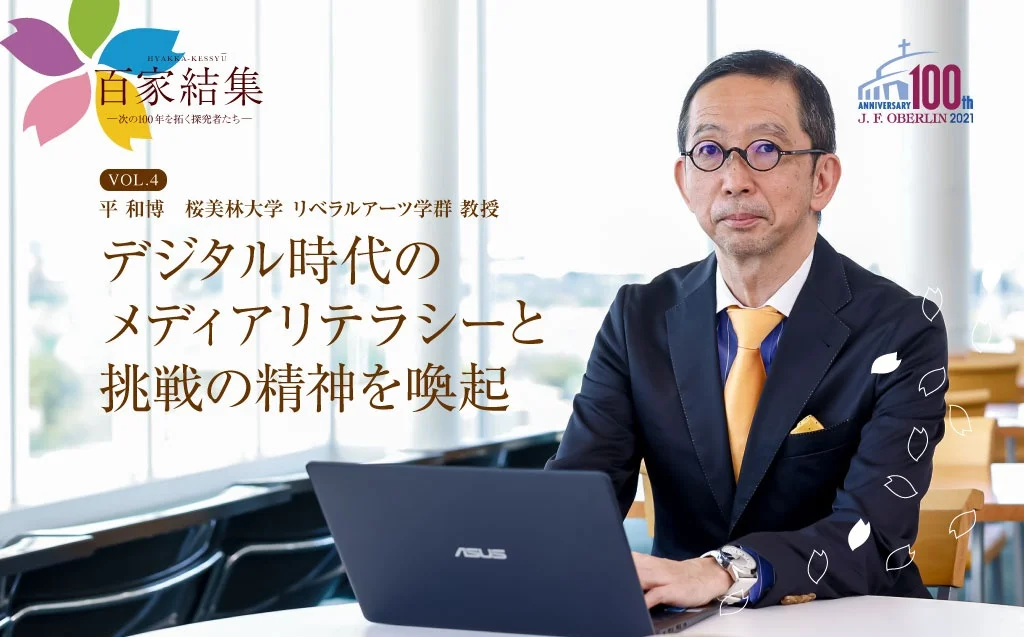
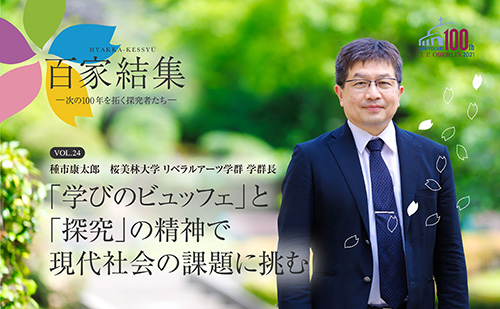
[Collection of Schools of Thought] 04. Kazuhiro Taira Mr. -Alumni and Student Interviews
Faculty and President Dialogue
Digital Age Media literacy and Inspire a spirit of challenge
College of Arts and Sciences (Media Journalism Major)
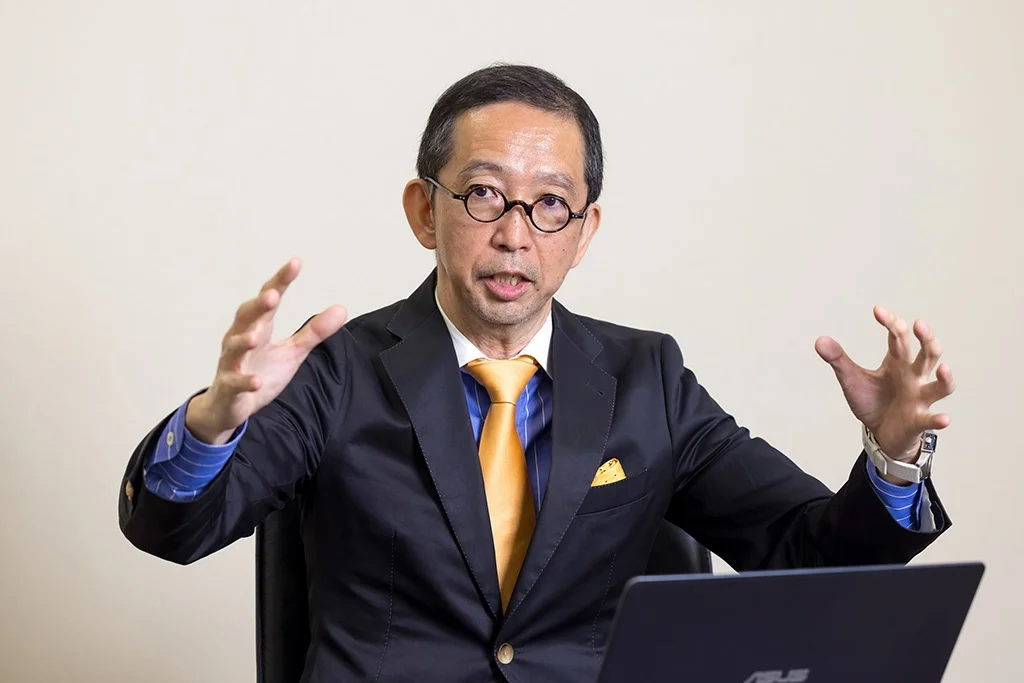
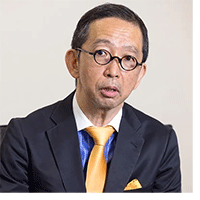
Kazuhiro Taira Professor
Main content
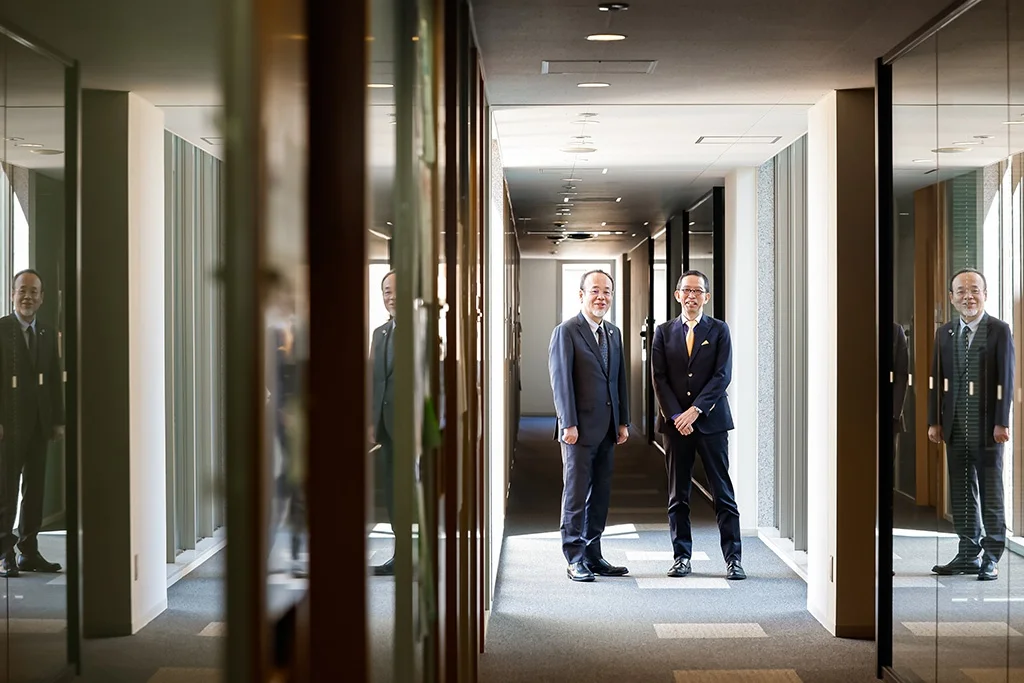
Nowadays, the internet and social media have become indispensable to our lives. Professor Kazuhiro Taira, who has worked for many years as a newspaper reporter, emphasizes the necessity of learning how to scrutinize and disseminate information in the digital society and the potential for new challenges (Interviewer: President J. F. Oberlin University Hiroaki Hatayama).
A society undergoing a seismic shift: Why is it necessary to study media now?
Hatayama: Professor Taira worked as a newspaper reporter for 33 years before joining J. F. Oberlin University. Has the role and environment of media changed significantly during this time?
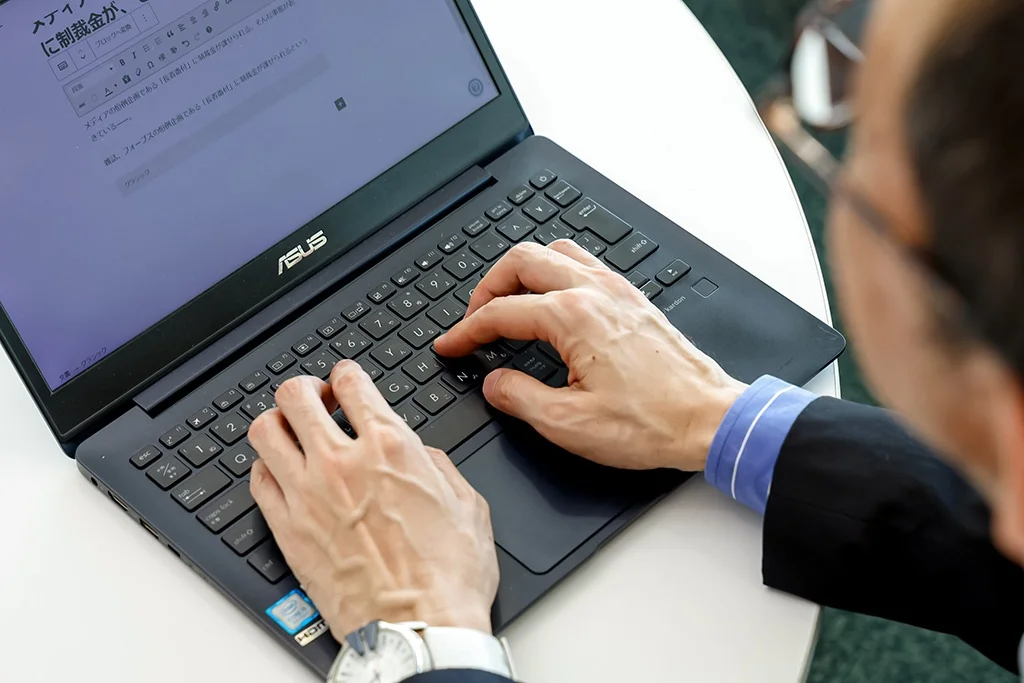
Taira: Things have changed dramatically. I joined the newspaper company in 1986. When I first joined, articles were written on manuscript paper with pencils or pens, but a few years later, word processors were installed in each branch office, and we started compiling articles using keyboards. Since the dawn of the internet in the mid-1990s, newspaper companies have been using both "paper and digital" methods to disseminate information. I myself have focused on the internet itself as my subject of coverage, writing articles on themes such as IT, society, and changes in media.
From the very beginning of the internet's emergence, I've always believed that it would eventually swallow up both newspapers and television. Indeed, since the release of Windows 95 in 1995, the number of internet users has steadily increased, while newspaper circulation has been declining since its peak in 1997. In terms of advertising revenue, the internet surpassed newspapers in 2009 and television in 2019, and now wields an enormous presence.
Hatayama: So, "old media" like newspapers and television have lost their authority, haven't they?
Taira: When you consider influence, you might say that. IT companies like Facebook and Google, which are considered information distribution platforms, are becoming a social infrastructure that surpasses the influence of an entire country. In the past, "studying media" mainly involved learning about the structure of mass media and the role of journalism in a democratic society. The core will remain the same, but we must take a broader view of media, taking into account the tectonic shifts in the media environment. As everyone can now disseminate information and society as a whole is becoming a media, I think that students will need to study media no matter what kind of job they pursue.
To avoid being overwhelmed by the flood of information, "first, take a deep breath."
Hatayama: The internet has given information a two-way nature, allowing for free exchange of information. On the other hand, it has also led to problems such as doubts about credibility, confusion about which media to trust, and discrepancies in the interpretation of a single piece of information.
Taira: Social media society can be described as a "many-versus-many media space." Readers and viewers exchange information with each other, and newspapers and television stations have become merely "one of many information providers" within that space. Everyone is placed on a level playing field, and it has become possible to verify whether "what that media outlet is saying is correct." The old media, where a handful of journalists were responsible for disseminating information, has been relativized.
The COVID-19 pandemic occurred amidst a global information overload brought about by the development of social media. Unreliable information, as well as rumors and fake news—problems that had been a concern for some time—spread, especially on topics related to health and life. The World Health Organization (WHO) calls this influx of a vast amount of mixed information into the media space an "infodemic." For example, there was information with uncertain scientific basis, such as "this will cure COVID-19," and panic buying triggered by the false information that "toilet paper will become scarce." Rumors that would normally be laughed off were believed by a certain number of people. Not only the virus, but anxiety also became contagious. Social media is called the "medium of emotions." It spreads emotions rather than logic.
Hatayama: How should we deal with this?
Taira: What I tell my students is, "First, take a deep breath." For example, on Twitter, you can reflexively spread information just by pressing the retweet or "like" button. So, take a deep breath, regain your composure, and think about whether this information is really correct and whether it's okay to tell your friends. To do that, you also need to check who started the information. In the case of COVID-19, was it the WHO, the Ministry of Health, Labour and Welfare, or your local government? Or was it posted on a blog by someone you don't know? You can only make such judgments once you've calmed down.
The "entrepreneurial spirit" of trial and error is required in the digital society.
Hatayama: On the other hand, the COVID-19 pandemic has led to a rapid increase in digitalization, such as online classes.
Taira: The term "digital transformation" is being widely discussed these days. It means "adapting to dramatic societal changes by utilizing digital technology and creating new competitive advantages." The COVID-19 pandemic has accelerated the digitalization of society as a whole.
In a digitized society, it's not enough to simply replace existing systems with digital ones; we need the vision to try new challenges and achieve new results. In other words, we need an "entrepreneurial spirit." In the digital world, we can use a variety of services without spending money, and we can try and fail as much as we want. This means the "cycle of challenges" is incredibly fast. What's needed now is a spirit to keep trying new things without fear of failure.
Hatayama: Finally, what themes would you like to work on with students in the future?
Taira: I want to deepen our understanding of 'digital media literacy.' Even though social media has expanded as a social foundation, the literacy to use it effectively has not caught up. This is the cause of flames and other incidents. Understanding and mastering the mechanisms and ecosystem of digital media can lead to both empathy and backlash. To master it thoroughly, cross-disciplinary knowledge across various fields is required. College of Arts and Sciences offers learning beyond Area, so I hope you develop a multifaceted perspective.
J. F. Oberlin University College of Arts and Sciences Professor (Media Journalism Major)
Kazuhiro Taira
After graduating from Waseda University, he joined the Asahi Shimbun in 1986. He has worked at the Yokohama Bureau, Hokkaido News Department, Social Affairs Department, Silicon Valley (San Jose) correspondent, Science Group Desk, Editorial Board Member, and IT Specialist Reporter (Digital Watcher). He has held his current position since April 2019. As a journalist, he continues to pursue the theme of "IT, Society, and Media Change."
Text: Naoki Kaga, Photos: Takuma Imamura
Interview date: This took place in September 2020.