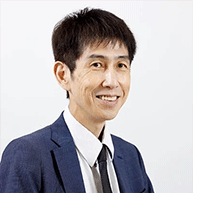
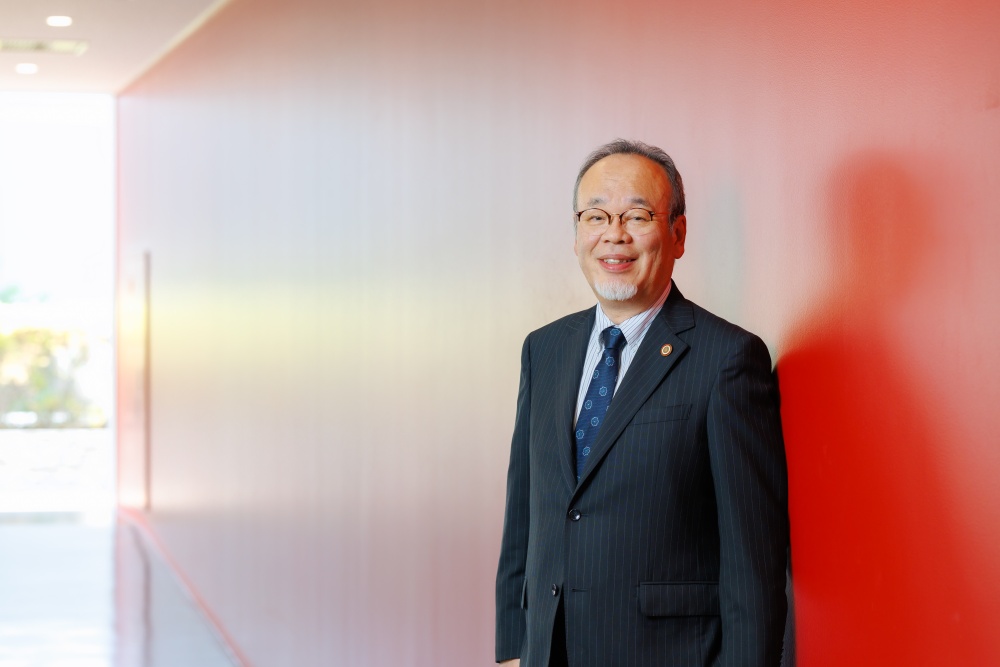
[Hundred Schools of Thought] 03. Mr. Hajime Tozaki-Alumni and Student Interviews
Faculty and President Dialogue
A nation built on tourism Towards a super-aging society Outlook on Transportation Systems
College of Business Management
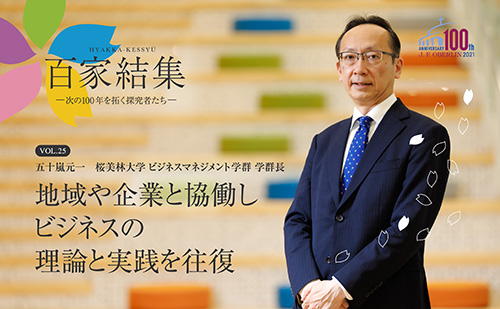
Hajime Tozaki Professor
Main content
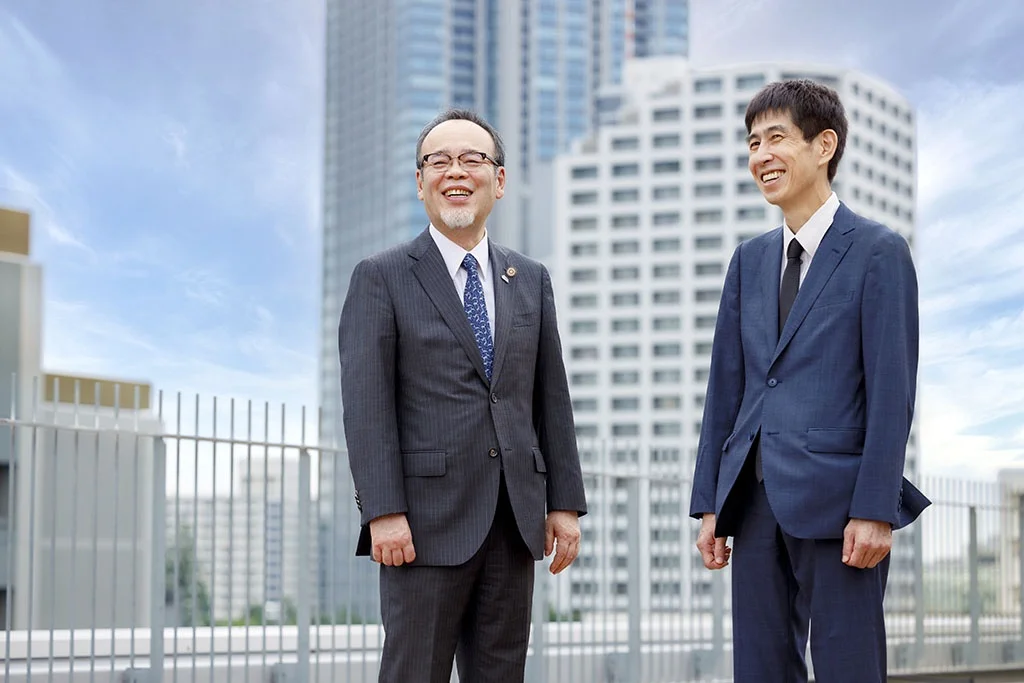
The transportation and tourism industry faces headwinds during the COVID-19 pandemic. Professor Hajime Tozaki, who also worked at Japan Airlines, says, "Now is the perfect time to advance the development of Japan into a tourism-oriented nation." We asked about the future outlook for transportation systems in a super-aged society (Interviewer: President J. F. Oberlin University Hiroaki Hatayama).
Aiming for a job that spans the globe, he joined Japan Airlines the year after the plane crash.
Hatayama: When did Professor Tozaki first become interested in the field of transportation?
Tozaki: When I was a third-year student in the Faculty of Economics at Kyoto University, I participated in a project called "Operation Raleigh," where young people from various countries gathered to sail around the world on a sailing ship. At that time, I wanted to work in a job that spanned the globe, and that's when I thought, "Maybe an airline company." So I applied to Japan Airlines, and a week after my final interview, the Japan Airlines plane crash occurred on Mount Osutaka (August 12, 1985, a Japan Airlines flight from Haneda to Itami crashed into the mountains of Gunma Prefecture. 520 of the 524 passengers and crew died, with only 4 survivors). I remember the company calling me many times, worried that I might decline their offer. The following April, I attended the company's entrance ceremony and was assigned to Haneda Airport. The senior employee who was in charge of my in-house training had lost his father in the crash. Looking back now, there were so many different human dramas unfolding.
Hatayama: It must have been fate that you joined the company at that time.
Tozaki: Those were tough times. There were times when we'd take off a jumbo jet, but only have two or three passengers. I worked for Japan Airlines for eight years and nine months. After Haneda, I was transferred to Fukuoka and worked in sales. I would sell airline tickets to travel agencies and have them put together tours. I enjoyed the work, but compared to my classmates who became bankers, the amount of money I handled was not that much. It was the height of the bubble economy at the time, and I started to question myself, "Is this really the right thing for me?" So I went to consult with my former professor at my alma mater. That's what led me to enroll in the newly established graduate school for working adults at Kyoto University.
The aviation industry in the post-COVID era needs to prepare for increased tourism demand.
Hatayama: From this point on, you pursued an academic career. You have focused on business models in the aviation industry and policy theories for the sustainable development of the tourism economy. How do you think the aviation industry will change in the post-COVID era?
Tozaki: There will likely be significant restructuring. Low-cost carriers (LCCs) will have their business models fundamentally questioned. Major airlines will also have to change their operations to accommodate COVID-19 countermeasures. Cramming passengers into flights will be impossible, and the close-contact in-flight service that is a characteristic of so-called Japanese hospitality will become difficult. There will likely be an increase in airline bankruptcies, and some may even call for nationalization. After that, the question is how they will be able to rebuild as new private companies. I think the aviation industry will face a tough battle for the next four or five years.
On the other hand, the stress of "not being able to travel" will likely be released all at once in the coming days. I am confident that this will create a new surge in tourism demand. In order to climb the ladder towards becoming a tourism-oriented nation, we need to seriously re-examine not only COVID-19 countermeasures but also how to improve infrastructure such as aviation security. Now is the perfect opportunity to do just that.
Imagination is essential for a future supported by technology.
Hatayama: Professor, you research not only the aviation industry but also transportation policy in general. Currently, there are technological advancements in transportation, such as autonomous driving of automobiles. With the declining birthrate and aging population, it seems that AI will try to help us as we age through the Internet of Things (IoT). What are your views on this?
Tozaki: A recent topic of discussion was "driving accidents caused by elderly drivers." It became a social problem, and there was a surge in voluntary surrender of driver's licenses. Even so, it's still very difficult to live without a car, especially in rural areas. If we want to encourage people to go out as much as possible instead of staying cooped up at home, the key point is "autonomous driving." It's important to support safe driving with technology.
Another area of focus, as President Hatayama mentioned, is "IoT." In the world of transportation, "MaaS"—"Mobility as a Service"—is advancing. This system connects all modes of transportation, such as buses, trains, taxis, ride-sharing, and shared bicycles, using IT to make them more efficient and convenient to use. However, there is a shortage of drivers to operate these services. Just like with e-commerce, even if a system is developed, it's meaningless without people to operate it. Solving this problem is a major research theme for me.
Hatayama: At J. F. Oberlin University, we offer education for students aiming to become flight attendants (College of Business Management Airline Business Area), education in air traffic control, maintenance management, airport management, and education for students aiming to become pilots (College of Aviation). Do you tell the students, 'You should do this properly!'?
Tosaki: In College of Aviation, you can learn about air control, maintenance, and even the airport right next door. I can't believe there's no other school like this. Each course is set up professionally, and they share the same learning environment, comprehensively considering the nature of aviation professions. I believe that having specialties while inspiring each other across those boundaries is a strength. On the other hand, I believe that liberal arts education is extremely important. Especially for those working with technology, I want them to learn about history and culture. Without such a background, thinking only about technology is a bad thing. I hope you will continue to cultivate the "imagination" that the world lacks right now.
J. F. Oberlin University College of Business Management Professor
Hajime Tozaki
He graduated from the Faculty of Economics, Kyoto University in 1986. After working at Japan Airlines Co., Ltd., he completed his doctoral program in Modern Economics at the Graduate School of Economics, Kyoto University in March 1995. He has held positions as Assistant Professor at the Faculty of Economics, Teikyo University, Professor at the Faculty of Commerce, Meiji University, Professor at the Graduate School of Commerce, Waseda University, and Professor at Otsuma Women's University, among others, before assuming his current position. His research themes are "aviation policy," "transportation policy," and "tourism policy."