[PICK UP Class Introduction] A College of Global Communication Required Course That Re-examines Humanity from the History of the Universe, Earth, and Humanity
Main content
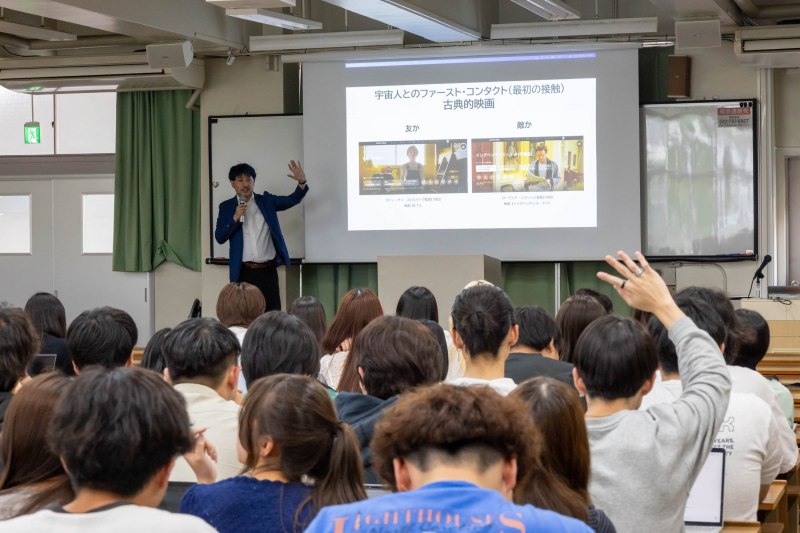
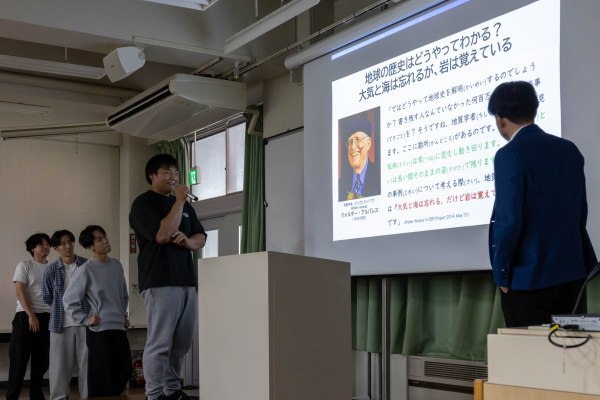
J. F. Oberlin University is a pioneer in Big History education in Japan. College of Arts and Sciences has been implementing the Big History Program for 10 years. In the Global Communication (GC) Department, 'Introduction to Natural Sciences' is a required course for studying Big History.
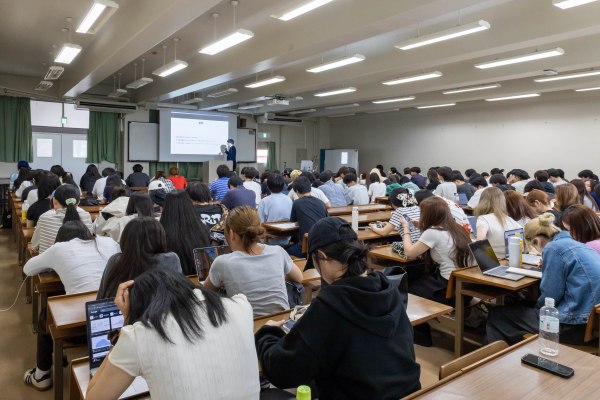
To build the foundation for basic and liberal arts education, each college has established a program called "Core Education Area Designation (commonly known as Core Seven)." In the GC Cluster, students not only focus on language studies in their first and second years, but acquire the fundamental knowledge necessary for university study through Core Seven subjects. "Introduction to Natural Sciences" is a compulsory subject in "Life and Nature," one of Core Seven's Area.
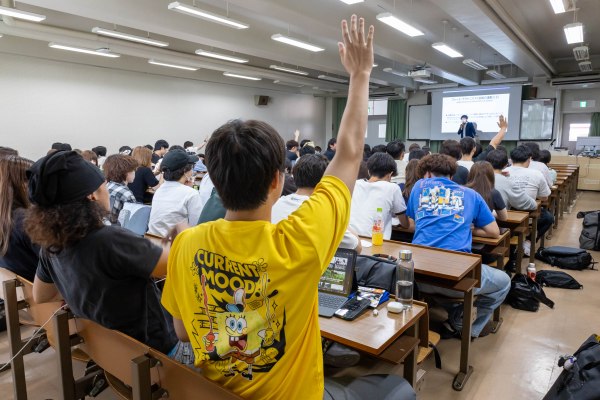
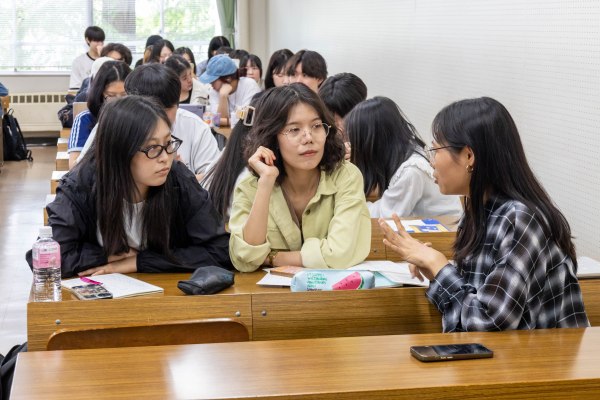
Big History is a learning approach that transcends even the framework of "thinking and acting globally," fostering the ability to re-examine the world and humanity from an overwhelmingly broad perspective, looking beyond the ever-changing modern society. In "Introduction to Natural Science," emphasis is placed on giving form to the thoughts and feelings gained through this grand learning experience in one's own words and expressions. At the end of the course, students submit an essay or artwork as a learning outcome, but the genre of the artwork is free, and diverse forms of expression are accepted, including novels, poems, paintings, sculptures, videos, music, and dance.
◆ Message from the instructor in charge, Professor Nobuo Tsujimura
"Big History is the entirety of history, from the beginning to the end of the universe. In this course, we will take you on a grand journey through the history of the universe, the history of life on Earth, the history of humankind, and the future."
We are usually preoccupied with human affairs. However, whether it's environmental issues or individual lives, a human-only perspective will eventually lead to a dead end.

So, let's step back from humanity for a moment. By studying Big History, we can learn how the universe was created, how Earth was born within it, and how Earth and life have together shaped the world we live in today. This leads to new insights that we hadn't considered before.
Afterward, you return to the human world. You look at humanity again with new eyes. Then you'll realize that your perspective and feelings have changed. What changes will differ from person to person, but something will change. That's the most fascinating thing about Big History.
Why not try a journey unlike anything you've ever experienced before? It will surely be beneficial to your life.
◆ Student submissions
We'd like to introduce "The Journey Never Ends," a short animated film created by RK (a first-year student in the GC program at the time), who took the course in the spring semester of 2024.

Inquiry
J. F. Oberlin University and Affiliated Schools General Planning Department, Public Relations Section
- TEL
- 042-797-9772
- webadmin@obirin.ac.jp
Latest News
-
2026.10.8
J. F. Oberlin University ・Graduate School Japanese teacher training and practical training courses registered as 'Registered Practical Training Institutions' and 'Registered Japanese Teacher Training Institutions' by the Ministry of Education, Culture, Sports, Science and Technology
-
2026.10.2
Positive Psychology Fair 2026External link
-
2026.9.30
"Kenpuku Cafeteria" and "Childcare Fair" to be held in fiscal year 2026.
-
2026.9.24
18 massive star "cradles" captured — Structure and evolution of W49A's hot molecular cloud core —
-
2026.9.17
In six years, I earned a bachelor's degree and two master's degrees.