We co-hosted the international forum "1976: 50 Years Since That Turbulent Year" with Waseda University.
Main content
On October 16, 2026, the 81st SGRA Forum "1976: 50 Years Since That Turbulence – Changing China, Changing World" was held at the Waseda University International Conference Hall and online, hosted by the Atsumi Foundation Sekiguchi Global Research Group (SGRA), co-hosted by Waseda University's Institute of East Asian International Relations, Waseda University's Institute for Advanced Social Sciences, and J. F. Oberlin University College of Global Communication.
This forum was organized to reinterpret the transformation of China and the world from both historical and international perspectives, marking the 50th anniversary of 1976, a major turning point in modern Chinese history. On the day of the event, more than 140 researchers, students, and citizens attended both in person and online, engaging in lively discussions under simultaneous interpretation in Japanese and Chinese.
This forum was organized to reinterpret the transformation of China and the world from both historical and international perspectives, marking the 50th anniversary of 1976, a major turning point in modern Chinese history. On the day of the event, more than 140 researchers, students, and citizens attended both in person and online, engaging in lively discussions under simultaneous interpretation in Japanese and Chinese.
Reconsidering 1976 from the perspectives of China, Japan, and Taiwan.
In the first part of the program, Professor Niu Dayong of Peking University delivered a keynote speech discussing the historical significance of 1976 and the path to reform and opening up. Following this, Professor Miyoshi Akira, Professor Emeritus of Aichi University, shared his experiences from his first visit to China in 1977, discussing the social conditions at the time and the state of Sino-Japanese exchange. Furthermore, Associate Professor Wang Wenlong of Nankai University reported on the perception of China in 1976 from the perspective of Taiwanese society.
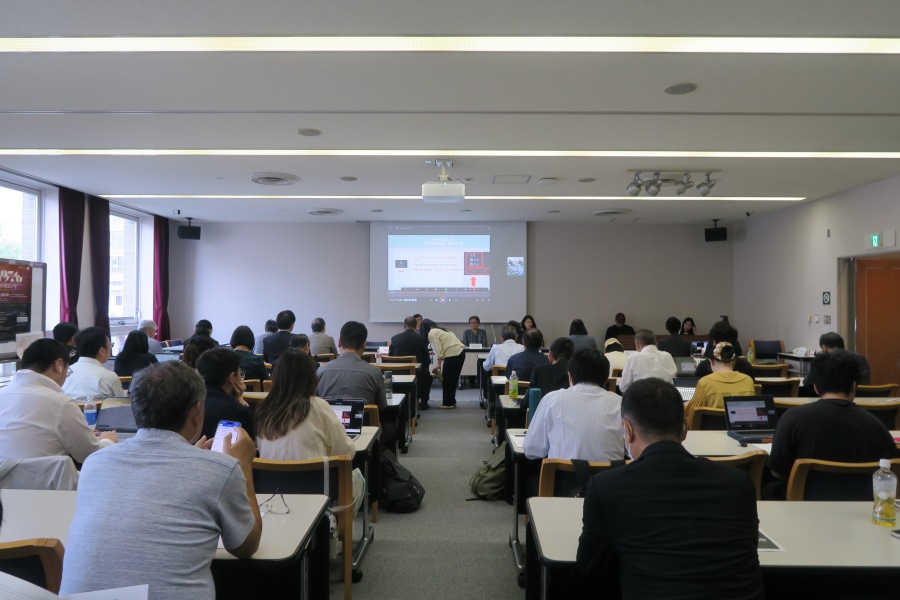
Presentations from different regions and perspectives—China, Japan, and Taiwan—provided multifaceted viewpoints for interpreting the same historical events. The reports, based on diverse experiences and research findings, attracted considerable interest from the participants.
A discussion where historical experience and academic research intersect.
In the second part, Professor Liu Jie, Director of the Institute for East Asian International Relations at Waseda University, served as moderator, and a free discussion was held with Professor Motoya Nakamura of the University of Tokyo, Associate Professor Sun Jianjun of Peking University, Professor Wang Xueping of Toyo University, and Associate Professor Chen Lu of Waseda University.
The discussion brought together the perspectives of those who actually experienced the year 1976 and academic viewpoints based on the latest research findings. A multifaceted and in-depth discussion unfolded regarding the impact this historical turning point has had not only on the development of Chinese society but also on today's international order and the East Asian region.
The discussion brought together the perspectives of those who actually experienced the year 1976 and academic viewpoints based on the latest research findings. A multifaceted and in-depth discussion unfolded regarding the impact this historical turning point has had not only on the development of Chinese society but also on today's international order and the East Asian region.
A space for practicing cross-border intellectual dialogue
The co-host institution, J. F. Oberlin University College of Global Communication, participated in planning and managing the forum, and Professor Enmin Li, the head of the school, served as the overall moderator. This forum, where researchers and practitioners with different historical perspectives and social experiences engaged in cross-border dialogue, became a concrete platform to embody the global communication education philosophy promoted by the school. It was an opportunity to reaffirm the significance of intellectual exchange by sharing history and deepening mutual understanding while looking ahead to the future.
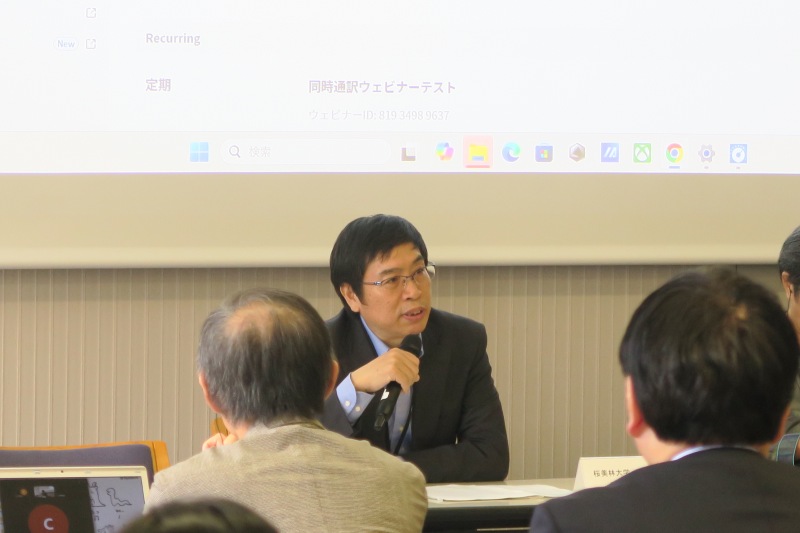
Furthermore, this forum served as a valuable opportunity to reaffirm the importance of historical perspective and dialogue skills in a rapidly changing international society, and to share the value of academic exchange connecting East Asia and the world.
J. F. Oberlin University College of Global Communication will continue to work on nurturing global human resources who understand diverse values and proactively address the various challenges facing the world through promoting international academic exchange and intellectual dialogue.
J. F. Oberlin University College of Global Communication will continue to work on nurturing global human resources who understand diverse values and proactively address the various challenges facing the world through promoting international academic exchange and intellectual dialogue.
Inquiry
J. F. Oberlin University and Affiliated Schools General Planning Department, Public Relations Section
- webadmin@obirin.ac.jp
Latest News
-
2026.7.1
We held an exchange event to discuss multicultural coexistence, centered around the traditional Turkish sweet "Aşle".
-
2026.6.9
[PICK UP Class Introduction] A College of Global Communication Required Course That Re-examines Humanity from the History of the Universe, Earth, and Humanity
-
2026.6.1
A lecture entitled "Japan-Korea Relations in the 21st Century - Our Neighbor is Our Partner -" was held.
-
2026.5.1
College of Global Communication Professor Nobuo Tsujimura appears on the radio!
-
2026.3.25
Recipients of the 2025 Academic Year Undergraduate and Graduate School Scholarship Certificates