Integrated Area / Environmental Studies Program
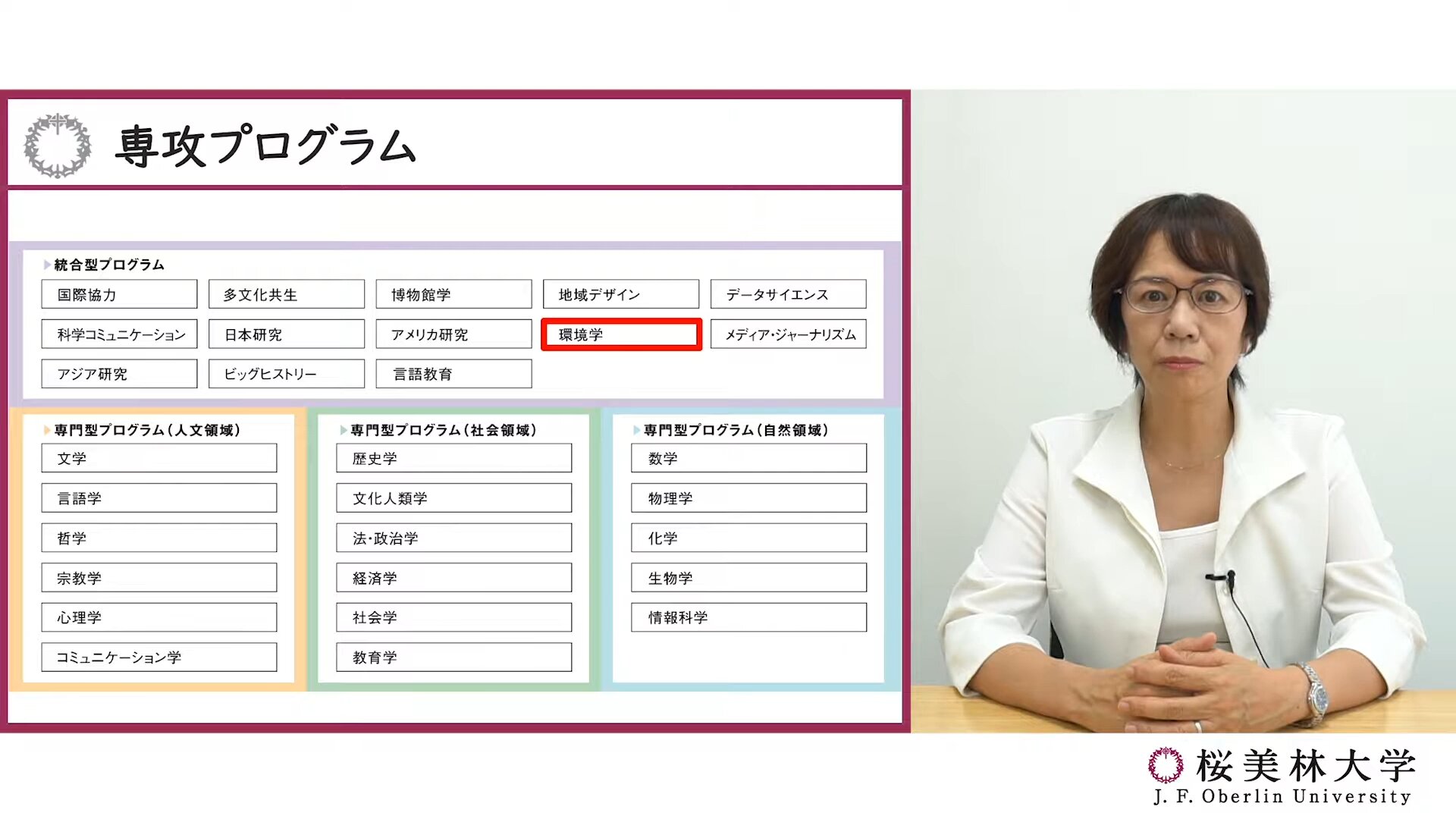
Program Overview
Environmental problems stemming from our lifestyles, such as global warming and plastic marine debris, are threatening the world. As seen in recent natural disasters, these problems have a significant impact not only on our immediate environment but also on the economy and society. Solving these increasingly complex environmental problems requires knowledge not only from natural sciences but also from social sciences and humanities—in other words, a liberal arts education. Let's think together towards a sustainable society.
Class Featured
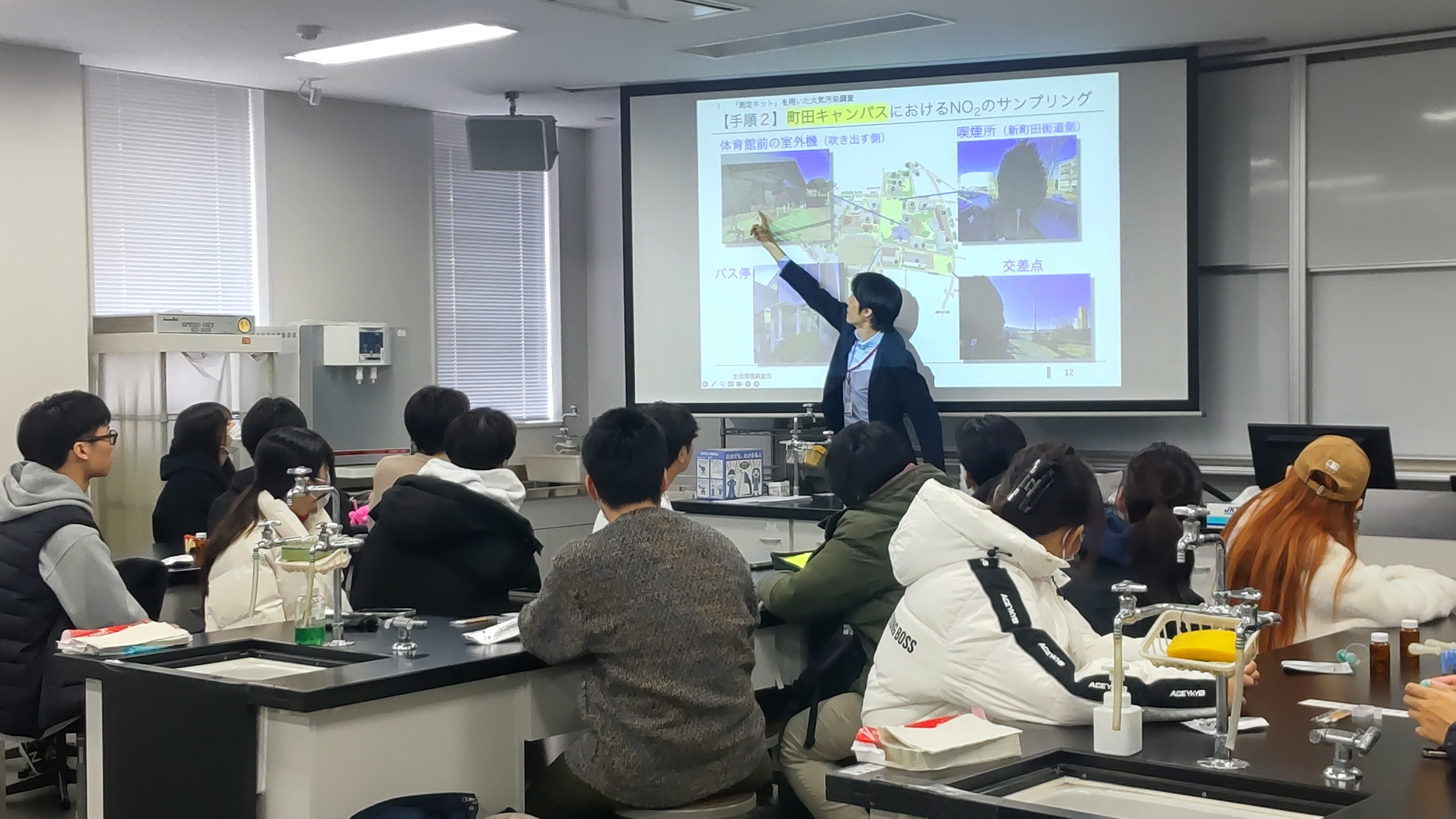
Living Environment Survey Method
In this course, you will learn about so-called environmental problems in daily life, such as air pollution, water pollution, and waste, including the targets of measurement, the representativeness of data from the perspective of measurement locations and frequencies, and methods for evaluating data. In addition to official methods, simplified measurement methods have also been developed, so we will conduct simplified measurements of air and water pollution, waste composition surveys, and scattered litter surveys both on and off campus. Through hands-on learning, let's get to know the environmental problems around us.
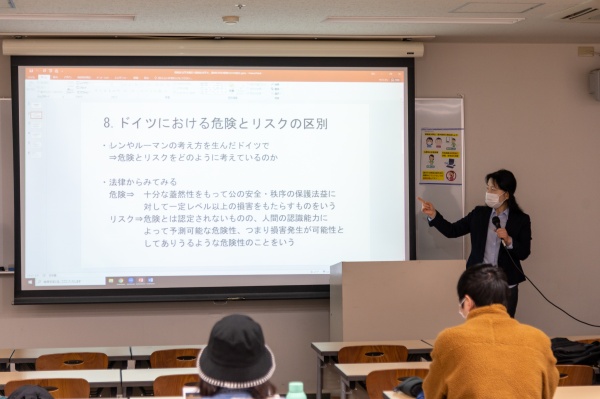
Environmental Sociology B
This course aims to provide a sociological understanding of post-pollution environmental problems by introducing theories such as environmental justice, social constructivism, and environmental risk theory, and then examining the asbestos and waste management issues to gain a deeper understanding of these theories. For example, the asbestos problem is not a thing of the past; we are still exposed to the risk of asbestos dispersion because buildings containing asbestos are reaching the end of their lifespan. Why not analyze contemporary environmental problems using a sociological analytical framework?
Other classes and subjects
Environmental Civilization Studies / Environmental Science for Humanities Students / Global Environmental Issues and International Initiatives / Environment and Urban Development / Environment and Local Communities / Sensory Pollution Theory / Environmental Risk Theory / Human Environmental Studies / Environmental Education Theory / Environmental Ethics / Environmental Economics / Environmental Law / Environmental Sociology A / Environmental Sociology B / Food Safety Theory / Environmental Management Theory / Environmental NPOs and NGOs / Energy and the Environment / Environmental Biology / Environmental Chemistry / Earth System Science / Meteorology / Circular Economy Theory / Environmental Assessment Theory / Natural Environment Survey Methods / Living Environment Survey Methods / Global Environment Survey Methods / Social Environment Survey Methods, etc.
How seniors learned

Environmental Studies & International Cooperation
Aiming for international activities centered on environmental studies.
Masashi Kubo
Having grown up on Amami Oshima, an island rich in nature, it was inevitable that I would major in environmental studies. On Amami Oshima, the progression of global warming is beginning to affect coral bleaching and the ecosystems of rare plants and animals. Furthermore, environmental issues are not limited to nature but are also related to global issues addressed in the SDGs, such as hunger and energy self-sufficiency, so I also needed to learn about international cooperation. In the future, I would like to engage in international activities centered on environmental studies, and since this university offers the ECO-TOP program, I will pursue in-depth and specialized learning by making the most of it.

Environmental studies & sociology
Combining different learning approaches can provide clues to solving environmental problems.
Asumi Koyama
I am interested in solving environmental issues and hope to work in environmental conservation in the future. The reason I chose environmental studies was that I wanted to know specifically the environmental conservation methods that suited me. I was also attracted to sociology, which allows you to learn about the norms of society and avoid being trapped by them. I thought that understanding the social issues that occur for granted would broaden my perspective for solving environmental problems, so I chose sociology as my minor. If you want to study environmental studies, it is recommended to enroll in the ECO-TOP program, a Tokyo qualification obtained at J. F. Oberlin University.
Characteristics of the academic group
Open list of subpages
Content of learning
Open list of subpages
Career paths, qualifications, and achievements