Current position

  1. HOME
  2. news
  3. College of Arts and Sciences Ikko Tanaka Humanitext, with Professor Participation, Selected for the International Research Program HAVI, Visualizing the Lineage of Knowledge Connecting Western Classics Through AI and Expert Collaboration

College of Arts and Sciences Ikko Tanaka Humanitext, with Professor Participation, Selected for the International Research Program HAVI

AI and experts collaborate to visualize the intellectual lineage connecting Western classical texts.
  • Education/Research
  • College of Arts and Sciences

Main content

The research project "Humanitext," involving Professor Ikko Tanaka J. F. Oberlin University College of Arts and Sciences, has been selected for the international research program "Humanities and AI Virtual Institute (HAVI)" by the U.S. nonprofit Schmidt Sciences. Out of 501 applications submitted from 42 countries worldwide, this is one of 19 selected.
This project is led by Associate Professor Naoya Iwata of the Center for Promotion of Digital Humanities and Social Sciences at Nagoya University, and is jointly advanced by researchers from our university, the University of Tokyo, and the National Institute of Informatics. AI will propose relationships such as citation, criticism, and rephrasing among classical literature, and experts will verify them, thereby constructing a knowledge graph that traces the connections between texts along with evidence.

Overview of selected projects and grants

The official name is "Humanitext: A Human-AI Co-Creation Platform for Verified Classical Scholarship." The total grant amount is US$816,667 (approximately 128 million yen) over three years, from October 2026 to September 2029. The grant will be disbursed in two 18-month periods, with the second period's disbursement scheduled to follow a progress evaluation.

Professor Tanaka's role

Professor Tanaka will leverage his expertise in Greek philosophy to work on the interpretation of classical texts and the verification of relationships between them. He will be responsible for quality control of annotations, including creating guidelines for annotation work and evaluating the degree of agreement among commentators, while also designing a knowledge graph database and conducting final verification as an expert.

Research background

In Western classical studies, a single text can have multiple readings and translations, and centuries of annotations have accumulated. General-purpose AI struggles to adequately handle these differences in interpretation and the relationships between texts, leading to errors such as misidentifying sources and non-existent citations. The research group has developed "Humanitext Antiqua," an AI research platform and related applications that, when asked questions in natural language, provides the source text as evidence, based on over 2,300 classical Greek and Latin works. These applications were released in August 2024.
Figure 1 Humanitext Antiqua, the foundation of this project

AI and experts collaborate to verify relationships between different sources.

This project will develop a system based on Humanitext Antiqua where AI and experts collaborate to build relationships between texts. First, researchers will manually construct 500 relationships from genres such as philosophical commentaries, historical narratives, and literary allusions, using these as a basis for verifying and evaluating the data design. Then, the AI will propose new relationship candidates, and a team of experts and graduate students will decide to accept, revise, or reject each one.
The verified relationships are stored as a knowledge graph that records not only their type (such as "quote," "allegorization," "paraphrase," and "criticism"), but also the direction of the relationship, its likelihood, and the history of the verification. Wikibase and the graph database Neo4j are used to manage the data.
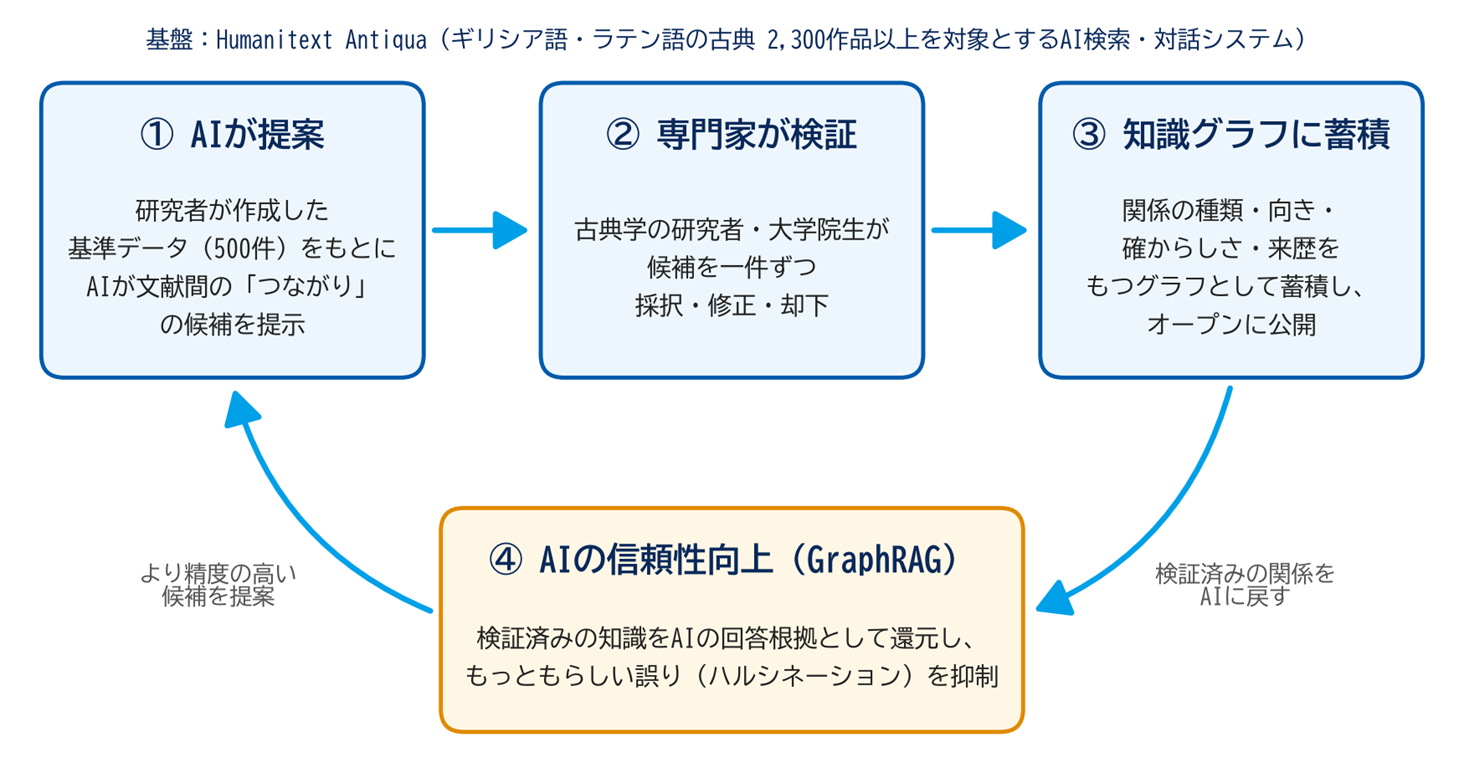
Figure 2: The cycle of building a knowledge graph through collaboration between AI and experts.
Furthermore, we will use "GraphRAG," a method that utilizes verified relationships as the basis for AI responses, to evaluate how much the reliability of responses and the accuracy of citations improve compared to conventional search augmentation generation (RAG). We also plan to collaborate with external classical scholars in the evaluation. We aim to build more than 10,000 verified relationships over three years and expand to Latin-language texts in the third year.

Expected results and ripple effects

The knowledge graph, annotation software, and evaluation benchmark data that we have constructed will be released under an open license. The functions based on the knowledge graph will also be made available to the general public through Humanitext. This is expected to enable everyone to examine, based on data, questions such as which arguments have been debated among commentators and how ideas have changed across time and tradition.
Furthermore, a system in which experts verify AI suggestions and use the results to improve the AI is expected to have applications in specialized fields where accuracy is crucial, such as medical literature and law.

Research system

full name Affiliation and position Main role
Naoya Iwata
Research representative
Nagoya University
Associate Professor, Center for the Promotion of Digital Humanities and Social Sciences
(Cross-appointment institution: National Institute of Informatics)
Research Director, design of intertextuality research, overall management of RAG/GraphRAG development, and final verification as an expert.
Ikko Tanaka J. F. Oberlin University
College of Arts and Sciences Professor
Expert knowledge of Greek philosophy, quality control of annotations, and final expert verification.
Jun Ogawa University of Tokyo
Assistant Professor, Graduate School of Humanities and Sociology
Graph design, LOD integration, annotation interface development
Kazuki Omukai University of Tokyo
Associate Professor, Graduate School of Humanities and Sociology
Technical oversight of the entire knowledge graph infrastructure
Daiki Uematsu National Institute of Informatics
Specially Appointed Researcher
Building a Wikibase, identifying people and works, etc.

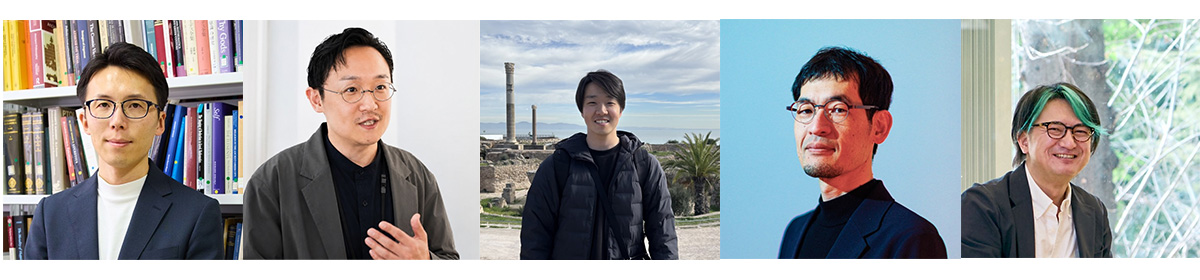
Photo: Research Team (from left: Naoya Iwata, Ikko Tanaka, Jun Ogawa, Kazuki Omukai, Daiki Uematsu)

About HAVI

HAVI is an international research program run by Schmidt Sciences that promotes collaboration between humanities and AI researchers to advance both fields. In 2026, it will provide a total of US$10 million in grants to 19 research teams, bringing the total grants for the past two years to over US$21 million. It supports interdisciplinary research exploring human history, culture, and expression, and places great emphasis on making developed code, models, and benchmark data widely available.

About Schmidt Sciences

Schmidt Sciences is a U.S. non-profit organization founded in 2024 by former Google CEOs Eric and Wendy Schmidt. It works to accelerate scientific knowledge and breakthroughs in fields such as AI and advanced computing, astrophysics, life sciences, climate, and space, by utilizing cutting-edge tools.

Related Links

Inquiry

Obirin Gakuen, General Planning Department, Public Relations Section