Social Area / Sociology Program
Program Overview
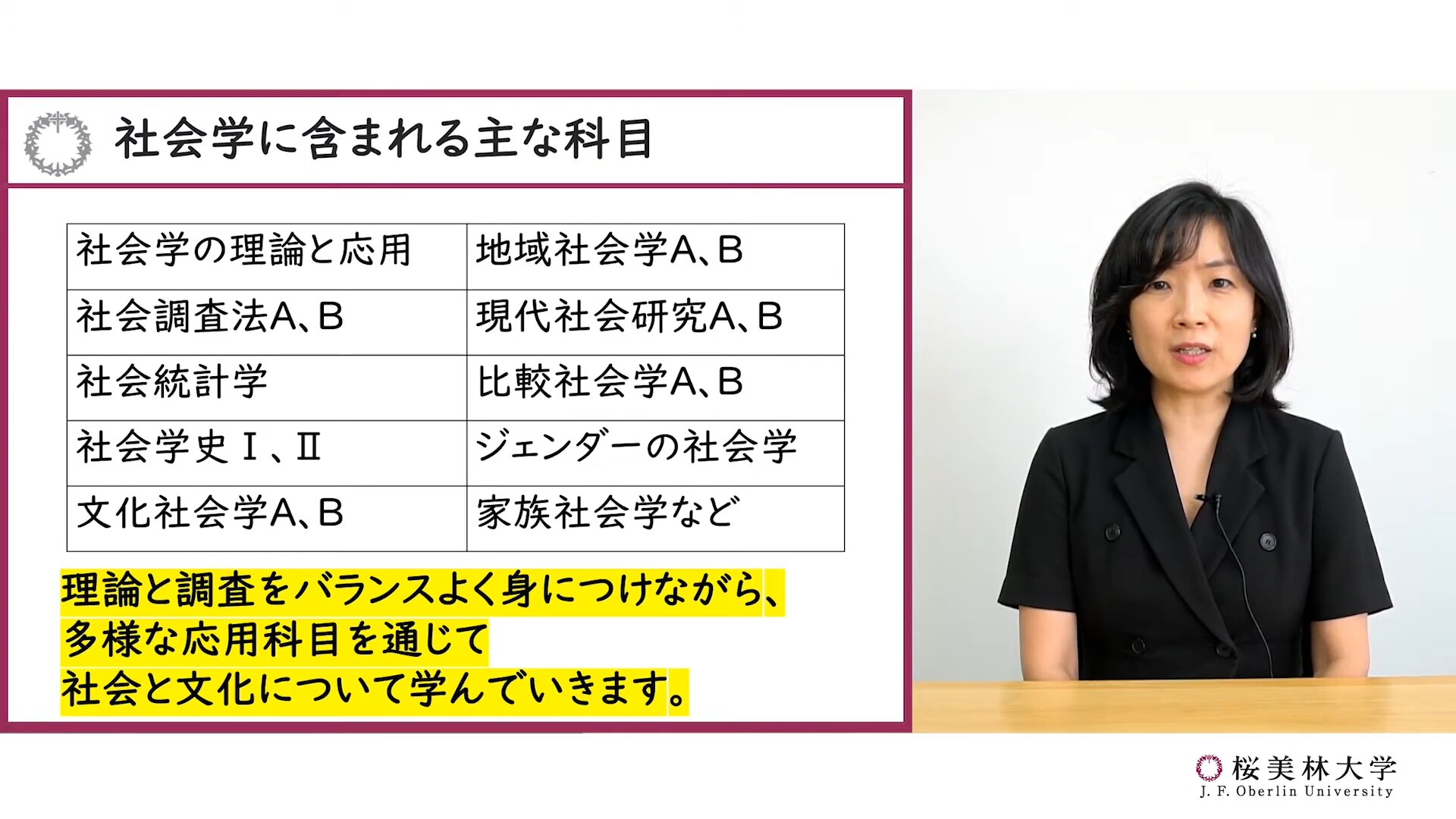
Sociology is the study of interpersonal relationships, including the problems faced by organizations and groups such as corporations, schools, and nations. This program aims to provide a broad understanding of society and culture, and to unravel the workings of the world. Through this learning, we cultivate individuals with a broad perspective who can understand diverse cultures different from their own, and coexist with mutual respect and acceptance in international and local communities.
Class Featured
Regional Sociology A
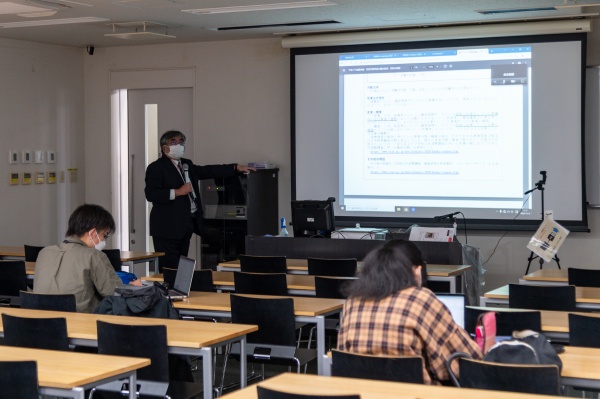
The crises facing contemporary Japanese society can be more clearly understood by examining the situation in local communities. This course will utilize statistics and visual materials to address issues such as population decline, changes in industrial structure and reliance on foreign workers and technical trainees, over-concentration in Tokyo, and declining rural communities, while also exploring paths to the revitalization of local communities.
Family and Gender Studies Seminar I & II
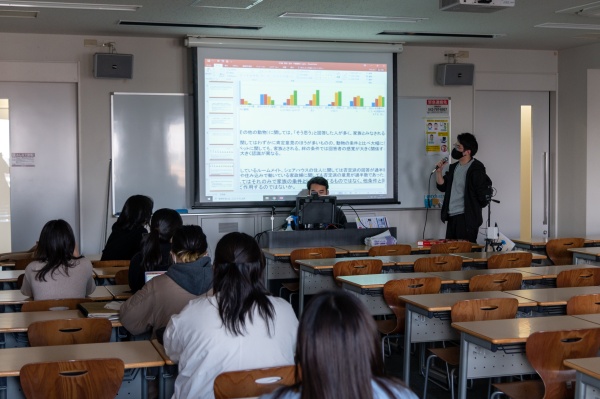
From a sociological perspective, this course addresses various issues related to "family" and "gender" in contemporary Japan, including love and marriage, dual-income families, divorce/remarriage, declining birthrate and aging population, and LGBTQ+ issues. In the spring semester, students will determine their research themes through literature reading and discussion. In the fall semester, they will conduct research activities individually or in groups on their chosen themes. Finally, at the end of the academic year, a seminar paper collection will be compiled as a result of the learning and research conducted throughout the year.
Other classes and subjects
Sociological theory and applications / Social research methods A (qualitative research) / Social research methods B (quantitative research) / History of sociology I, II / Regional sociology A, B / Cultural sociology A, B / Family sociology / Sociology of gender / Contemporary social studies A, B / Comparative sociology A, B / Contemporary social studies A, B / Advanced lectures in sociology / Social statistics / Social environment research methods / Environmental sociology A, B, etc.
How seniors learned

Sociology & Environmental Studies
I aspire to become a civil servant who studies society and the environment and works closely with citizens.
Momona Magawa
I chose sociology as my major and environmental studies as my minor. The reason is that they are connected to the profession I want to pursue. I want to become a civil servant, specifically a city hall employee. I am particularly interested in issues related to family and gender, and I believe that learning about various family structures in Japan and abroad, as well as acquiring knowledge and perspectives on gender, will be very useful in my future role as a city hall employee, where I can support each and every citizen. Furthermore, the global environment is closely intertwined with our lives, so it is not something we can ignore. I want to utilize what I learn in environmental studies in a job that will improve the lives of people in the future.

Sociology & Japanese Studies
Deeply considering familiar environments in sociology and Japanese studies
Sayaka Nakano
After entering College of Arts and Sciences and being exposed to various academic fields, I chose sociology as the field I was most interested in, so I chose the major. The deciding factor was that I was attracted to the method of discovering problems from a sociological perspective. The reason I chose Japanese studies as a minor was that I believed that focusing on Japan, re-examining familiar environments that are usually overlooked, and questioning the "norms" would deepen the learning gained at the major. For those choosing a major or minor in the future, we recommend first broadening your academic knowledge and identifying the field that you find most appealing to.
Characteristics of the academic group
Open list of subpages
Content of learning
Open list of subpages
Career paths, qualifications, and achievements