Humanities Area / Psychology Program
Program Overview
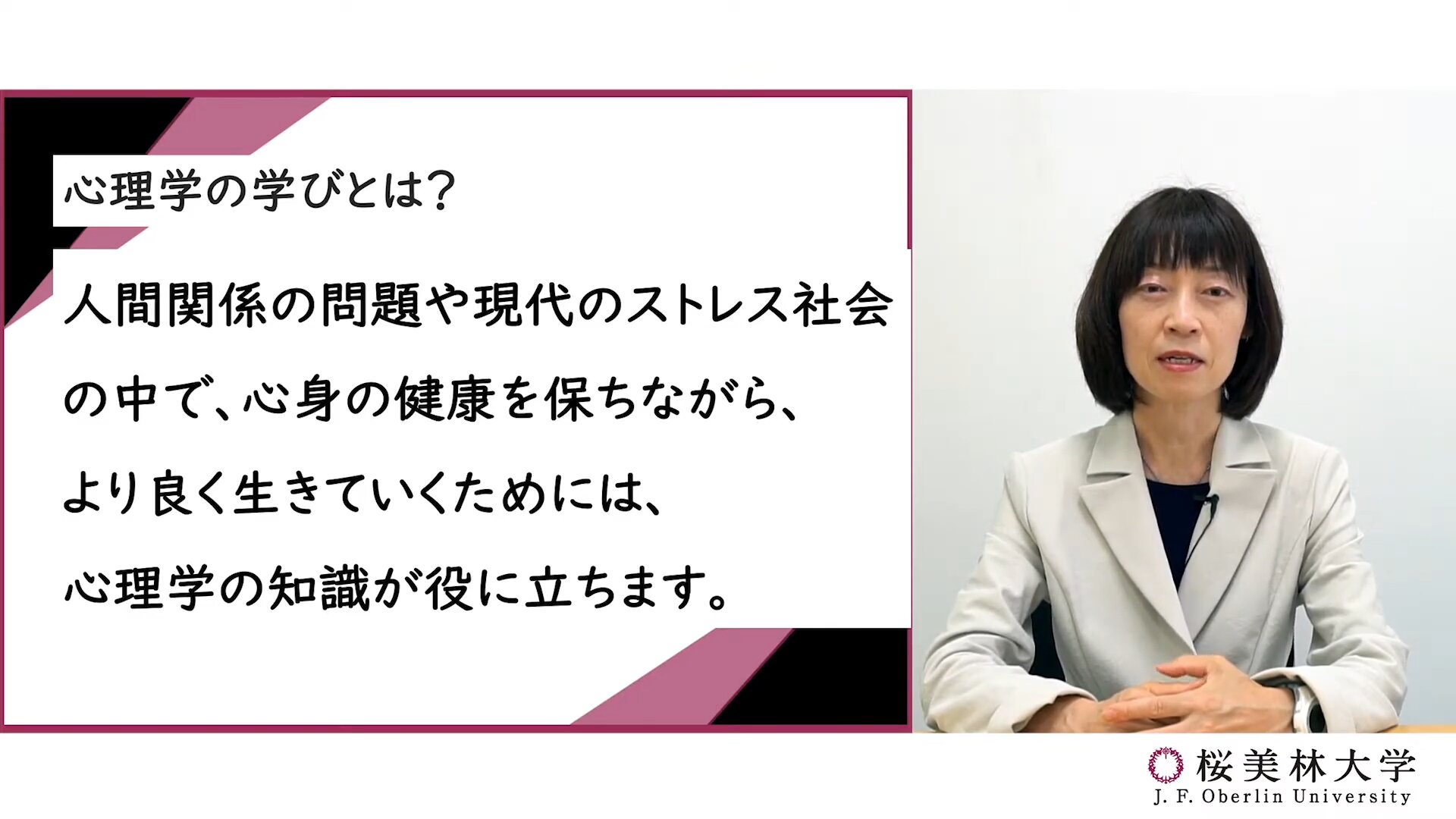
In modern society, there is a growing demand to resolve and prevent mental health issues that arise in various Area such as healthcare, education, industry, justice, and welfare. In the psychology program, students learn fundamental knowledge and research methods of psychology, aiming to practically acquire knowledge and methods that can be applied to solving social issues. The main subjects include 'Psychological Research Methods,' 'Introduction to Clinical Psychology,' 'Psychological Support Methods,' 'Educational and School Psychology,' and 'Judicial and Criminal Psychology.'
Class Featured
Introduction to clinical psychology
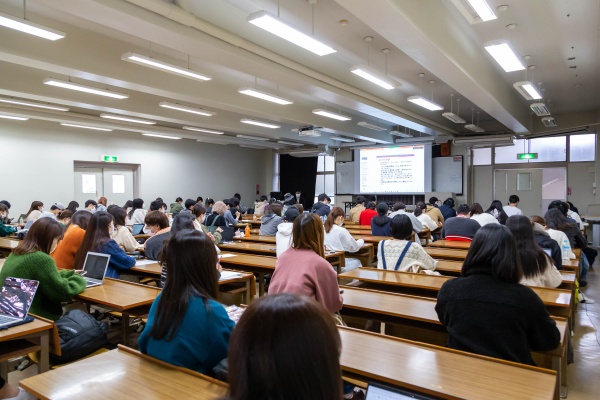
This lecture aims to provide an understanding of the origins of clinical psychology and its representative theories. We will learn about representative theories and their origins regarding how humans maintain and develop mental health, and how to understand and approach psychological problems. Furthermore, as this is a required subject for obtaining certification as a certified clinical psychologist, we will also consider its relationship to the knowledge gained from basic psychology.
Specialized Seminars I and II
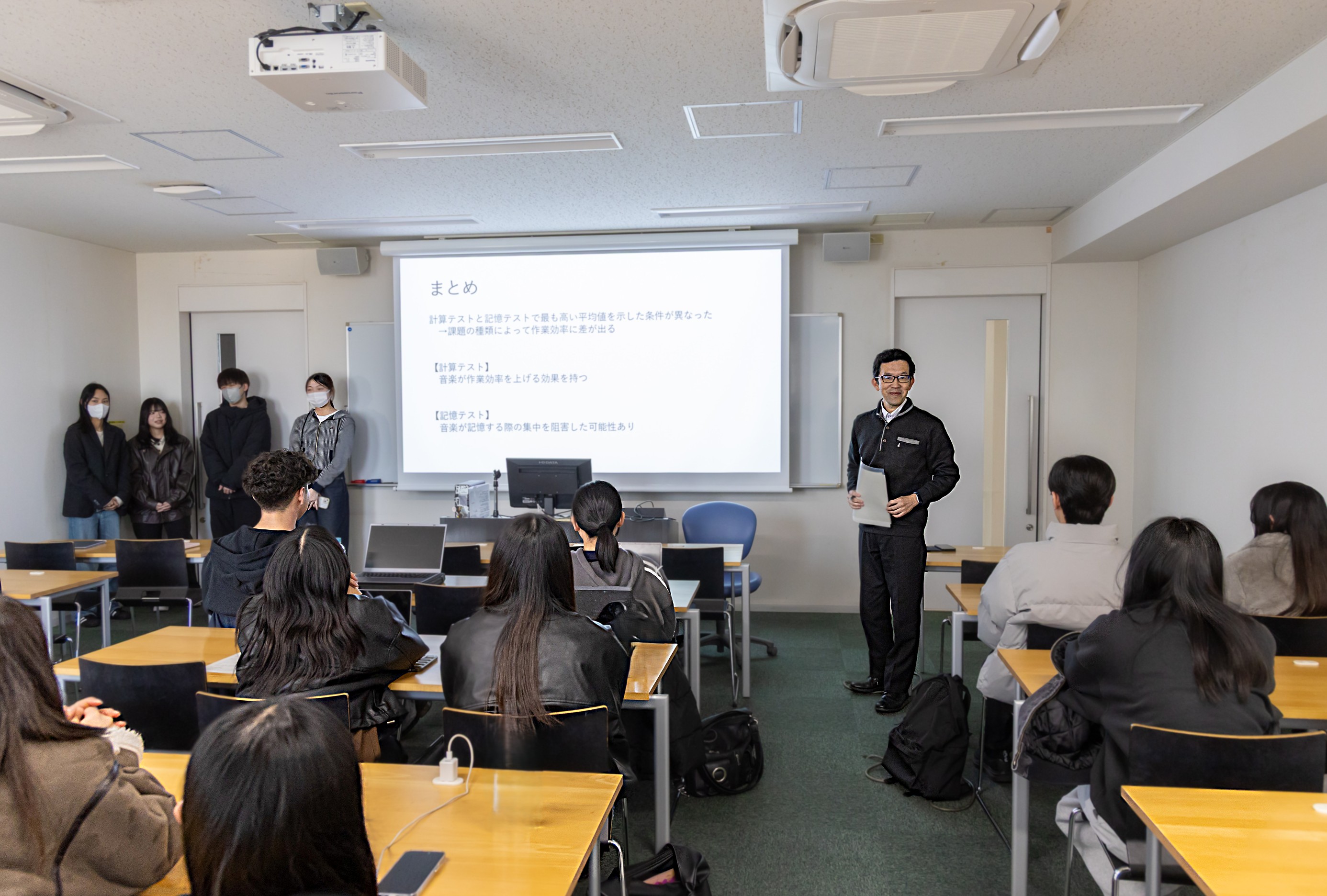
In this seminar, students learn proactively through discussion. In the spring semester, students will explore and present on topics related to children's mental health (attachment disorders, developmental disorders, abuse, etc.) through discussion. In the fall semester, students will write seminar papers based on topics they have chosen themselves. Through these activities, students will acquire valuable skills for society, such as identifying problems, formulating hypotheses, clarifying findings through research, and summarizing results.
Other classes and subjects
Introduction to Psychology / Psychological Statistics I / Psychological Research Methods / Psychological Statistics II / Lifespan Developmental Psychology / Educational and School Psychology / Learning and Language Psychology / Perceptual and Cognitive Psychology / Neuropsychology / Social and Group Psychology / Family Psychology / Industrial and Organizational Psychology / Emotion and Personality Psychology / Introduction to Clinical Psychology / Psychological Support Methods / Psychiatry / Health and Medical Psychology / Psychological Experiments / Psychological Experiment Practice / Introduction to Health Psychology / General Medicine / Responsibilities of a Certified Clinical Psychologist / Psychology of Persons with Disabilities (Children) / Psychological Assessment / Welfare Psychology / Forensic and Criminal Psychology / Related Administrative Theory / Psychological Exercises / Psychological Practice, etc.
How seniors learned
Psychology & Multicultural Coexistence
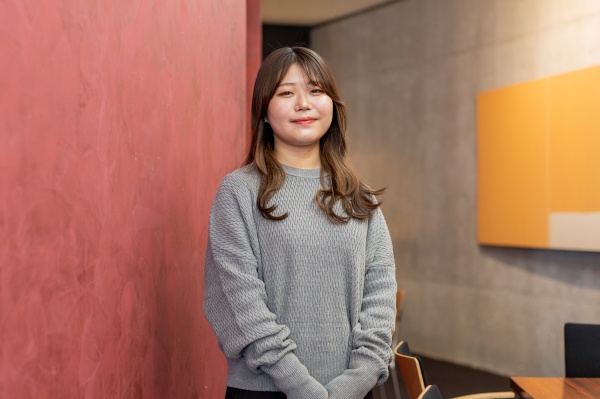
Learning to understand different cultures and use that understanding to provide psychological support.
Ami Izawa
I majored in psychology and aim to become a psychology specialist who can provide support from multiple perspectives. I have a broad interest not only in the field of psychology but also in the community coexistence of children, people with disabilities, and people from various different cultures, and I chose the multicultural coexistence program, which is an integrated Area for minor students. By combining psychology with multicultural coexistence, I believe our understanding of people from different cultural backgrounds deepens, enabling us to provide appropriate psychological support that empathizes with them. We encourage you to major in these two programs and deepen your personal learning.
Characteristics of the academic group
Open list of subpages
Content of learning
Open list of subpages
Career paths, qualifications, and achievements