Natural Area / Information Science Program
Program Overview
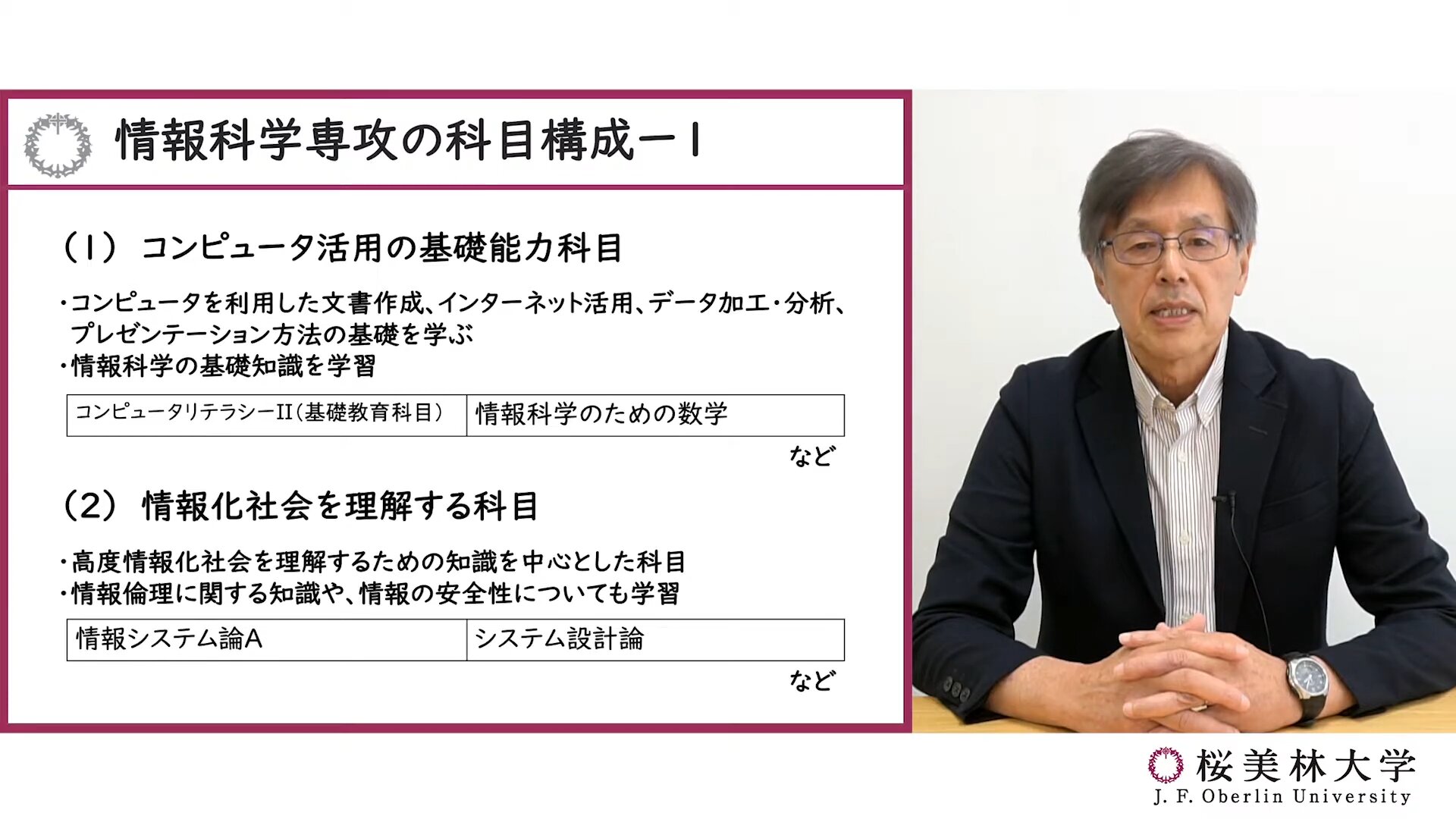
In addition to acquiring basic computer operation skills, students will learn multimedia techniques, database handling, programming skills, and networking technologies through practical exercises. At the same time, they will acquire general knowledge of information science through lectures, including the impact of information technology on society, the basic mechanisms of computers, the principles of networks and their security, and the concepts of databases.
Class Featured
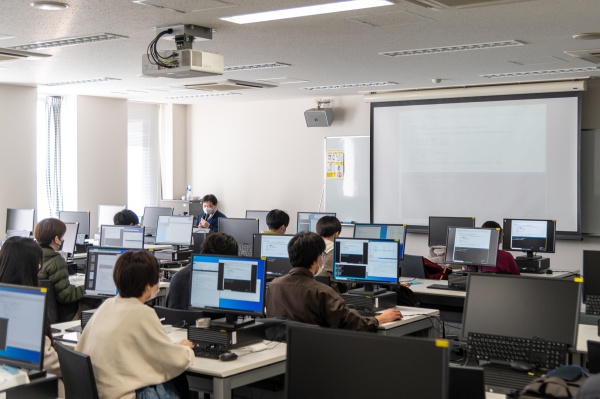
Programming 1
As an introductory course in programming, students will learn about data types and variable usage, how to write basic syntax (sequential, conditional, and loop) and how to utilize arrays. The programming language used is Java, which is widely adopted in system development. This course is an important course that leads to higher-level courses that cover more advanced topics (Programming II & III, System Design Theory, Web Application Development Exercises, etc.).
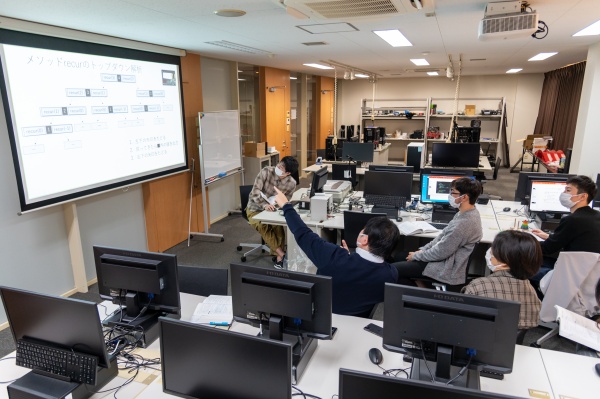
Specialized Seminar
The specialized seminars offered by the Information Science program are tailored to the themes of each faculty member, covering topics such as software utilization and the theory and practice of programming. Through small-group seminars and inquiry-based activities, students can cultivate an information science perspective and way of thinking, while simultaneously learning software utilization and development skills aligned with the themes of their respective seminars. Furthermore, by taking higher-level courses for graduation research or a graduation thesis, students can engage in deeper inquiry-based activities.
Other classes and subjects
Information and Society / Information and Ethics / Mathematics for Information Science / Information Systems Theory A / Information Systems Theory B / Databases I / Cognitive Science / Information Networks / Applied Spreadsheets / Programming I / Programming II / Programming III / Presentation Exercises / Multimedia Expression I / Multimedia Expression II / Web Page Programming / Databases II / Information Network Exercises / Information Analysis Theory I / Information Analysis Theory II / Information Design Theory / System Design Theory / Introduction to Software / Algorithms and Data Structures / Information Security Theory / Web Application Development Exercises, etc.
How seniors learned

Information Science & Data Science
Drawn to the evolution of information technology, I continue to learn through repeated challenges.
Komai Kazuto
I chose this program because information technology holds a wide range of possibilities.
The computers we use casually in our daily lives have evolved remarkably. Things that were unthinkable in the past, such as the realization of virtual spaces and the collection and utilization of big data using AI, are now possible.
This program allows you to learn a wide range of information technologies, from fundamental network knowledge to system design and programming. It's certainly not easy, but by diligently taking on the challenges, you can acquire skills and knowledge that will be useful in society.
Characteristics of the academic group
Open list of subpages
Content of learning
Open list of subpages
Career paths, qualifications, and achievements