Social Area / Economics Program
Program Overview
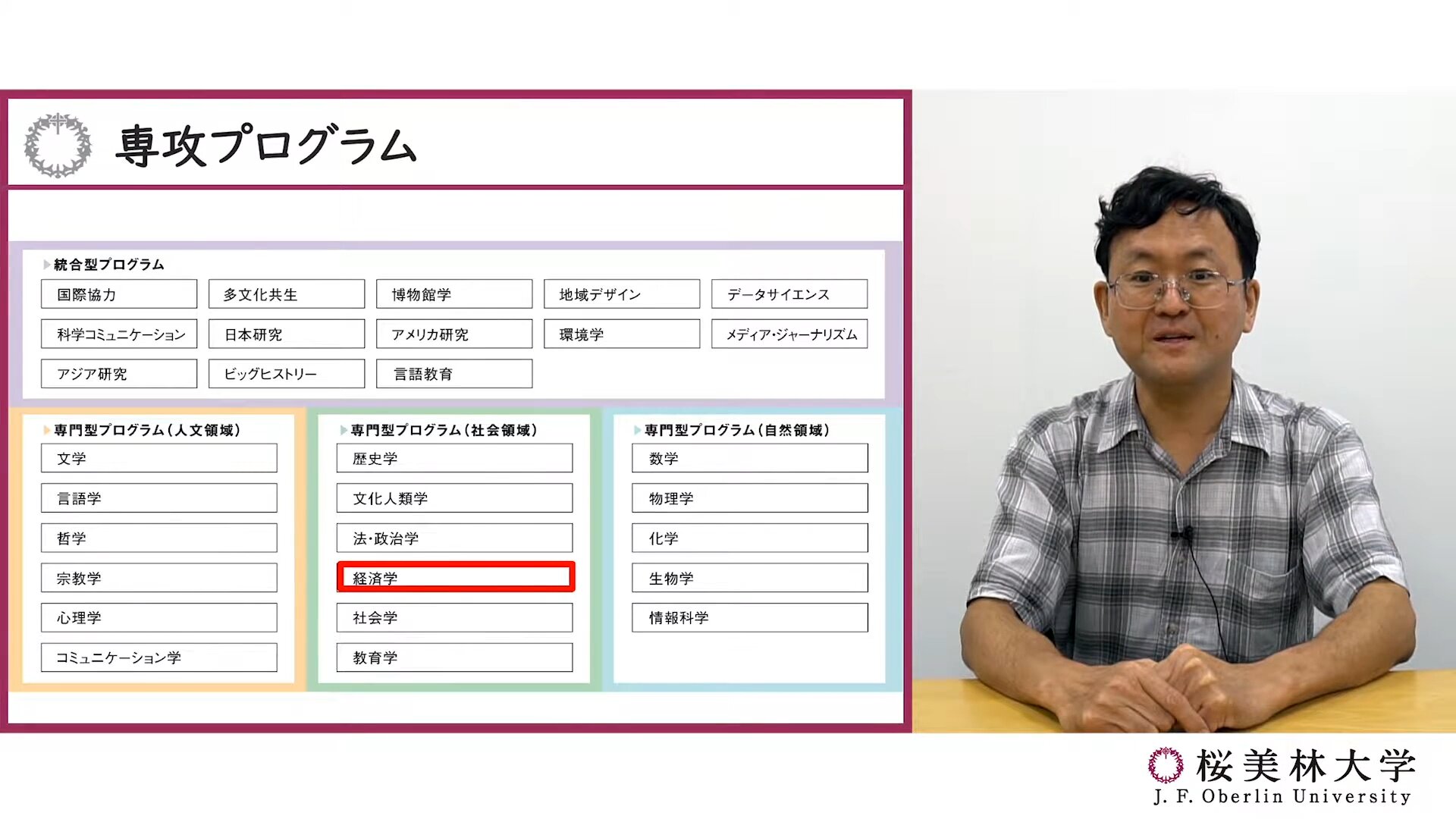
A key characteristic of the market economy in which we live is that individual economic entities, such as companies and individuals, act based on their own interests, and these actions are adjusted through "prices," which determine the prices and production quantities of various goods. This market mechanism influences many everyday issues, such as the production of goods and services, employment, and prices. This program aims to cultivate the ability to understand this market economy mechanism and apply it to policy and corporate strategy.
Class Featured
Basic Microeconomics
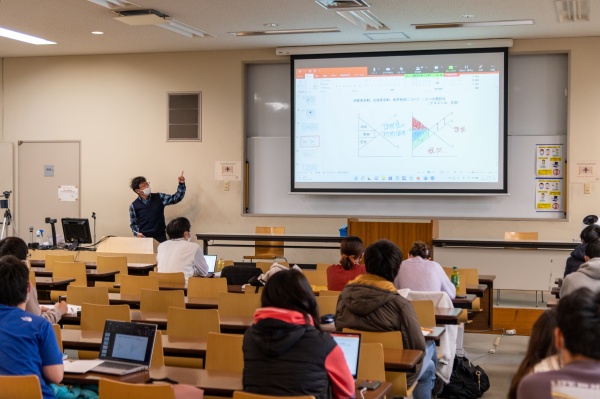
This course clearly explains the fundamentals of how resource allocation, such as prices and production volumes, is determined in a market economy, using diagrams and videos. Topics covered include the mechanisms of supply and demand, the mechanism of market equilibrium, the problems of monopolies, market failure and externalities, issues surrounding the supply of public goods, and the economics of incomplete information. A short report assignment is given each time, which is submitted via Moodle, and feedback is provided based on the grading results.
Major Seminar (Kiyoshi Hori Seminar)
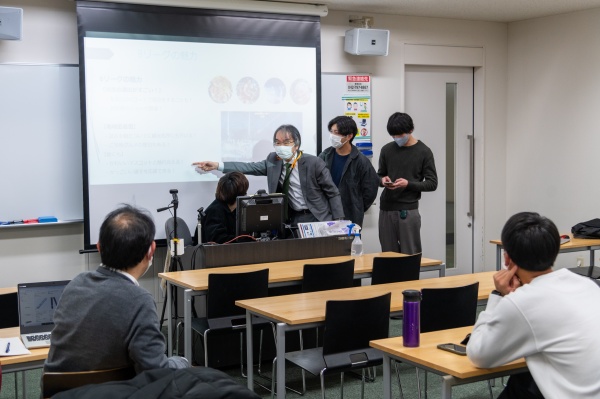
I am learning about the role that companies play in society. Business owners don't run their businesses just to make a profit for themselves. In my seminar, we conduct corporate and industry analysis using financial data from listed companies (most of which are unknown to most people), read books written by business owners in collaboration with the library, and during the summer break, we visit several companies to think about the relationship between business and society through dialogues with business owners and employees.
Other classes and subjects
Macroeconomics I & II / Microeconomics I & II / Japanese Economy / Monetary Economics / International Economics / Public Finance / Economic History / Introduction to Economic Mathematics / Economic Statistics / Econometrics / International Finance / International Trade / Development Economics / American Economy / Chinese Economy / Corporate Economics / Small and Medium-Sized Enterprises / Industrial Organization / Agricultural Economics / IT Economics / Environmental Economics / Labor Economics / Public Economics / Local Government Finance / Regional Economics / Economic Analysis Seminar / Economic Analysis Fieldwork, etc.
How seniors learned

Economics & Psychology
Learn about economics and psychology, and explore the future of marketing.
Toranosuke Horikawa
People drive the economy, and their choices and emotions at the time can bring profits or losses. I wanted to learn how people's choices and emotions influence the market from a psychological perspective, so I chose the combination of economics and psychology. By studying economics and psychology, I had the opportunity to study a new field called behavioral economics, which combines the two disciplines. My current goal is to study behavioral economics further and deepen my understanding of marketing within it. Even seemingly unrelated disciplines can have surprising commonalities. There are many other types of majors and various combinations, so I encourage you all to think about what you want to do in the future and choose accordingly.
Characteristics of the academic group
Open list of subpages
Content of learning
Open list of subpages
Career paths, qualifications, and achievements