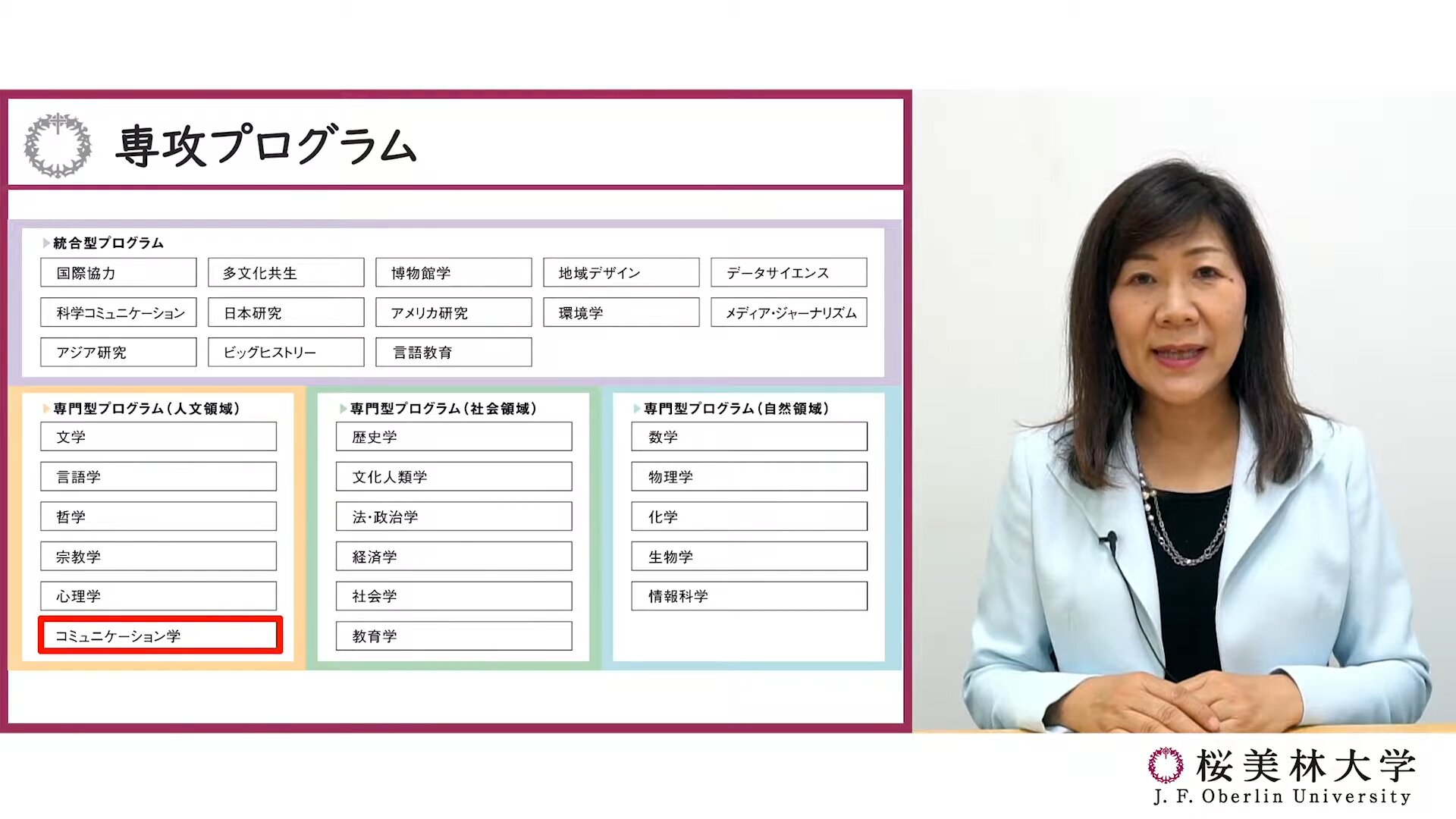
Humanities Area / Communication Studies Program
Program Overview
In modern society, communication skills that enable smooth interpersonal relationships with diverse individuals are essential. This program teaches comprehensive communication skills, including the ability to logically express one's own thoughts and listen to others' opinions, through both theory and practice. Participants will learn how to communicate with people from different cultures, negotiate and lead in groups and organizations, and develop empathetic interpersonal skills.
Class Featured
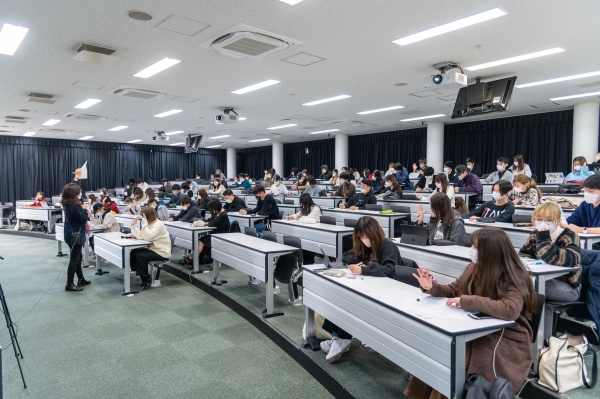
Intercultural Communication A
We face environmental problems, conflicts, and various other difficulties. Solving these problems requires communication with people from different cultures from a global perspective. This course will cover essential concepts for intercultural understanding, including differences in linguistic and nonverbal communication across cultures, cultural values, discrimination and prejudice, and cross-cultural adaptation. Simultaneously, active learning activities such as group discussions and presentations will encourage skill acquisition.
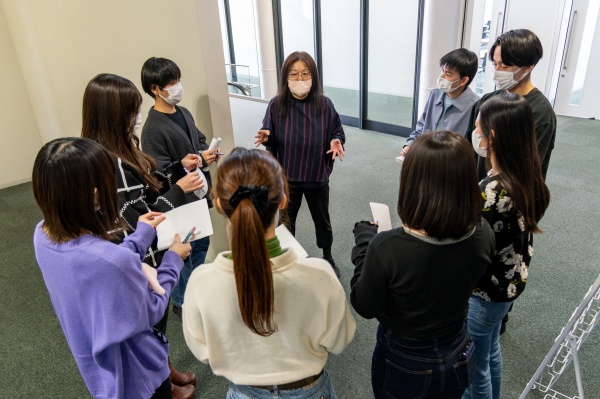
Specialized Seminars I & II
In modern society, the knowledge and practical skills necessary for people of different backgrounds to reach consensus through communication are essential. This seminar aims to cultivate "dialogue facilitators." To this end, students engage in thorough reading of literature to acquire fundamental knowledge and develop team-building activities, which they then practice in the classroom. Both activities are student-led, providing a time for collaborative learning with classmates.
Other classes and subjects
Modern Communication / Group Communication / Interpersonal Communication A / Interpersonal Communication B / The Science of Listening / Nonverbal Communication / Intercultural Communication A / Intercultural Communication B / International Communication / Multicultural Coexistence and Communication / Intercultural Understanding Education / Gender and Communication / Interpersonal Helping Communication / Organizational Communication / Leadership Communication / Business Communication / Media Communication / Oral Communication Theory / Oral Communication Practice / Argument and Debate / Negotiation / Mediation / Persuasive Communication / Communication Research Methods / Communication Research Surveys / Qualitative Research in Communication, etc.
How seniors learned

Communication Studies & Environmental Studies
To become someone who can balance academic knowledge and practical skills, and solve problems.
Okumura Kyoka
I chose to double major, specializing in Asian Area Studies and Cultural Anthropology. My reason for choosing this program is that I had been interested in Asian international relations, history, and culture since before entering university, and wanted to study them at university. Therefore, I had decided to major in Asian Area Studies from the start of my studies. However, after taking a course called "History and Methods of Cultural Anthropology" in the spring semester of my second year, I became interested in the concepts of cultural anthropology, and decided to specialize in cultural anthropology as well. Through this program, I hope to understand Asian international relations and how Japan is involved, and to work in a field that connects Asia and Japan.

Communication Studies & Multicultural Coexistence
From the surprise of realizing cultural differences
Matsumoto Rina
I have never lived abroad, but I was surprised to learn in a year of classes that "ways of thinking differ depending on the country's culture," and I wanted to learn more about the differences in communication across cultures. I am interested in overseas countries, so in the future I would like to communicate with people from many different nationalities. I don't think there is a right or wrong combination of major and minor. Even if they don't seem connected on the surface, I think they are connected somewhere if you study them in depth. Even if you can't see it now, you will be able to find it as you learn. I believe that my choice is not wrong and that I will be able to enjoy learning until the end.
Characteristics of the academic group
Open list of subpages
Content of learning
Open list of subpages
Career paths, qualifications, and achievements