Integrated Area / Big History Program
Program Overview
Big History is the history from the birth of the universe to the present day. It provides an overview of the Big Bang, the formation of the solar system and Earth, the origin and evolution of life, the origin of humankind and the emergence of civilization, and the modern era, while also offering a vision for humanity's near future. It is the "ultimate liberal arts" that integrates natural science, social science, and humanities, and it examines the essence of the universe, life, and humanity, as well as the meaning of human existence in the universe, within the context of 13.8 billion years of cosmic and Earth history.
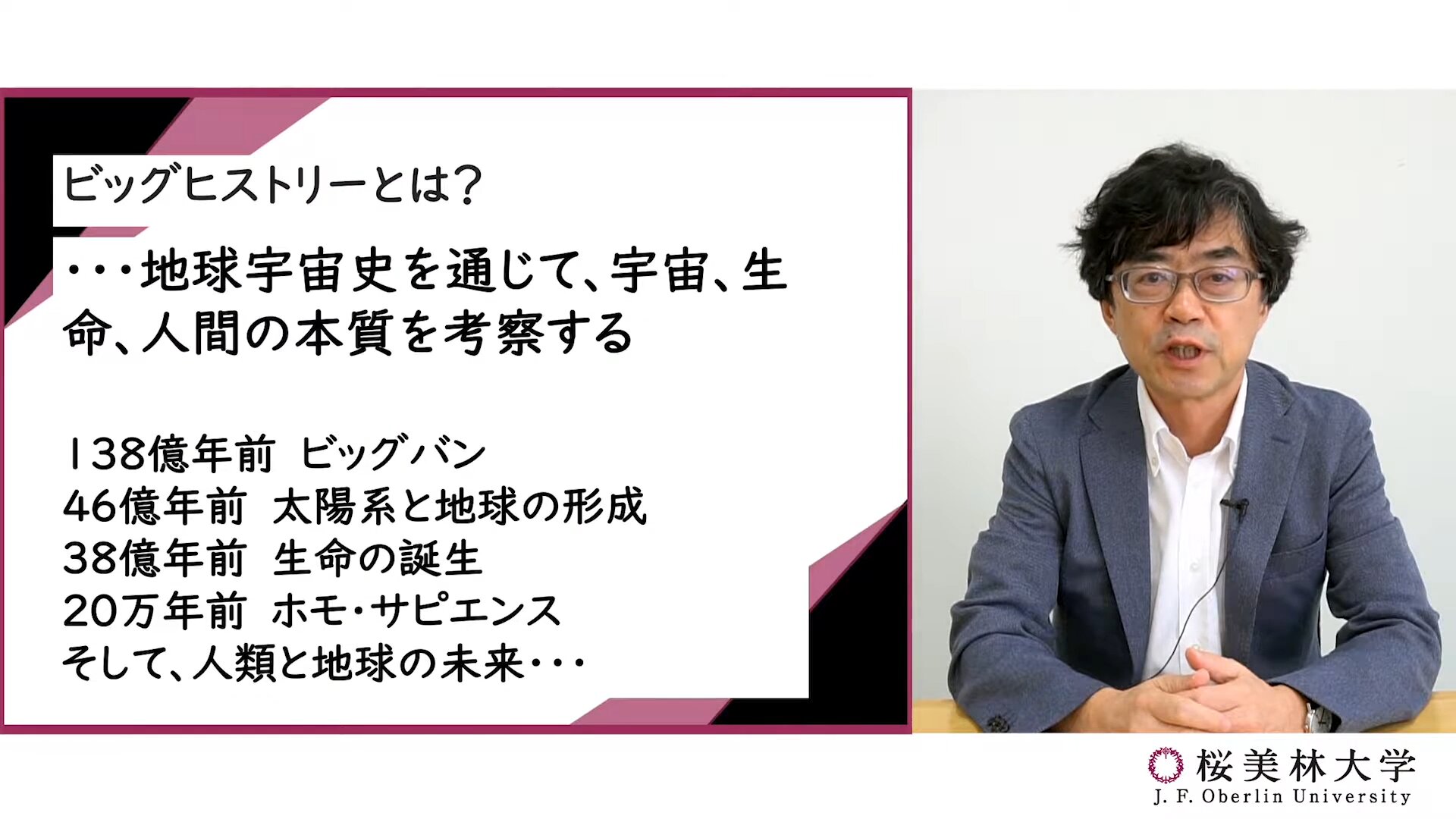
Class Featured
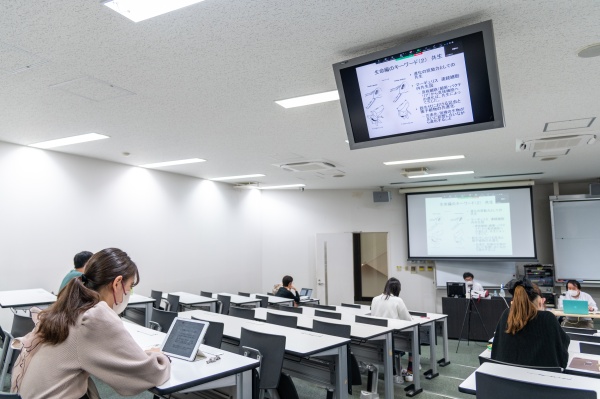
Natural History (Big History)
This is an introductory course to Big History, tracing the 3.8 billion-year history of the universe and Earth. A key feature of this course is its attempt to explore and express the essence of the universe, life, and humanity not only scientifically but also philosophically and poetically, using available scientific information. There will be no calculation problems or memorization of chemical symbols. Rather than simply acquiring scientific and historical knowledge, the course encourages students to freely expand their imaginations about the essence of the universe, life, and humanity based on that scientific knowledge, and to express these ideas in writing and illustrations.
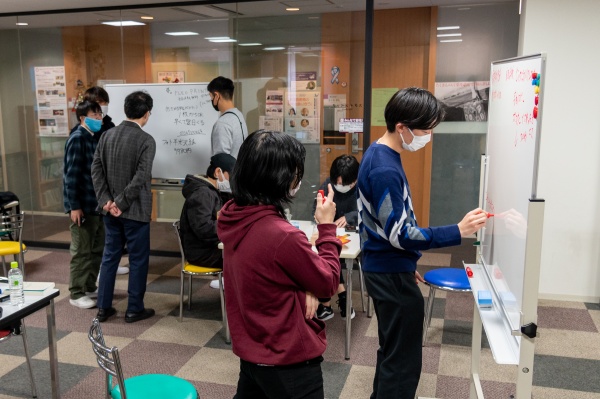
Big History Seminar (Specialized Seminar I & II)
While learning scientific knowledge about Big History, we freely discuss questions such as "What is the universe?", "What is life?", and "What is humanity?". We also engage in various forms of expression and workshops, such as "Creating modern myths," "A paleontology fascination contest," "Composing Big History haiku," and "Thinking about the space business." Furthermore, we consider how to apply Big History to contemporary global issues such as climate change and war. We also conduct extracurricular activities such as astronomical observation and visits to museums and art galleries.
Other classes and subjects
Astronomy / Space and Modern Physics / Thermodynamics / Geology / Earth System Science / Botany I / Zoology I / Ecology I / Systematics and Evolution / Paleontology / Introduction to World History A & B / Religions in Japan and the World / Environmental Anthropology / Perceptual and Cognitive Psychology / Structure of Language / Environmental Civilization / Global Civil Society / Conflict Theory / Peace Theory / Information and Society / Chemistry and Human Society, etc.
How seniors learned

Big History : International Cooperation & Education
Learning from Big History: Reflecting on the Present Through the Lens of a Grand History
Kurumi Sumiyoshi
I've been interested in social issues and education since high school. However, as I studied at university, I realized that problems are interconnected, and that simply studying one thing in depth wouldn't solve them. That's when I discovered "Big History." Big History connects grand events to the present, allowing us to view things from a slightly broader perspective. I believe this allows us to consider current problems from a different viewpoint. With this perspective, I want to confront the international and educational issues I've chosen as my minor and clarify what I can do to help.
Characteristics of the academic group
Open list of subpages
Content of learning
Open list of subpages
Career paths, qualifications, and achievements