Qualification Acquisition
Index
Qualifications Obtained at J. F. Oberlin University
J. F. Oberlin University offers a variety of qualifications. You can also obtain eligibility to take the exam to obtain the qualification.
These may be common to all academic groups, or they may differ depending on the academic group to which you belong.
LA: College of Arts and Sciences GC: College of Global Communication BM: College of Business Management Health & Fortune: College of Health and Welfare
Literature: College of Performing and Visual Arts Aviation: College of Aviation Teacher: College of Education and Social Transformation
| LA |
GC |
BM |
Kenpuku |
Arts and Culture |
aviation |
Teaching search |
|
|---|---|---|---|---|---|---|---|
| Teacher's license Junior High School Teacher's License (Type 1) High School Teacher (Type 1) |
〇 |
|
〇 | 〇 | |||
| School librarian teacher | 〇 |
|
〇 ※1 |
〇 ※1 |
|||
| Museum curator | 〇 |
〇 |
〇 | 〇 | 〇 | 〇 | 〇 |
| Japanese Language Teacher Training Course | 〇 |
〇 |
〇 | 〇 | 〇 | 〇 | 〇 |
| Social worker (Eligibility requirements) |
|
|
〇 ※3 |
||||
| Mental health social worker (Eligibility requirements) |
|
|
〇 ※4 |
||||
| Certified Psychologist (Eligibility Requirements) ☆ |
〇 |
|
〇 ※5 |
||||
| Certified psychologist | 〇 |
|
〇 |
||||
| health psychologist | 〇 |
|
〇 |
||||
| JPSU certified Sports Trainer (Eligibility requirements) |
|
|
〇 ※6 |
||||
| Health and exercise instructor (Eligibility requirements) |
|
|
〇 | ||||
| Officially recognized by the Japan Sports Association Sports Instructor "Common Subject III" Sports Coaching Leader (Eligibility requirements) |
|
|
〇 | ||||
| Officially recognized by the Japan Sports Association Junior Sports Instructor (Eligibility requirements) |
|
|
〇 | ||||
| Beginner Parasports Instructor | 〇 |
〇 |
〇 | 〇 | 〇 | 〇 | 〇 |
| Functional Movement Screen Level 1 (Eligibility requirements) |
|
|
〇 ※6 |
||||
| childcare worker |
|
|
〇 ※7 |
||||
| Teacher's license Kindergarten Teacher (Type 1) |
|
|
〇 ※7 |
||||
| Social welfare officer (Qualifications for appointment) |
〇 |
〇 |
〇 | 〇 | 〇 | 〇 | 〇 |
| Childcare worker (Qualifications for appointment) |
〇 |
|
〇 | 〇 | |||
| Child Welfare Officer (Appointment qualifications) *12 |
〇 |
|
〇 ※10 |
〇 |
|||
| Child psychologist (Qualifications for appointment) |
〇 |
|
〇 ※5 |
||||
| Aircraft pilot |
|
|
〇 ※11 |
||||
| ECO-TOP Program (Certified by the Tokyo Metropolitan Government) |
〇 |
〇 |
〇 | 〇 | 〇 | 〇 | 〇 |
| Social educator (title) | 〇 | ||||||
| Social Researcher | 〇 | 〇 | |||||
| Cultural Exchange Creation Coordinator | 〇 |
To obtain the qualification, you must take the required courses at the campus where the courses are offered. Please note that due to scheduling constraints, obtaining the qualification may be difficult even within four years. Furthermore, if you wish to obtain multiple qualifications, please be aware that certain combinations may make it challenging.
☆ After completing designated courses at a university, eligibility to take the exam can be obtained by enrolling in a designated graduate school or gaining at least two years of work experience at a designated institution.
*2: If you are not majoring in a psychology program (whether major or minor), it may be difficult to complete all the required courses in four years.
*3: While this can only be obtained by majoring in Social Welfare, it can also be obtained by majoring in Mental Health and Welfare depending on the subjects and grades obtained.
*4: This can only be obtained in the Mental Health and Welfare major, but it can also be obtained in the Social Welfare major depending on the subjects and grades obtained.
*5: Only for those majoring in Practical Psychology
*6: Only for Health Sciences and Sports Science majors
*7: Only for those majoring in early childhood education.
*8: Only those who have completed a major in a psychology or sociology program.
*9: Only those who have completed a major in the psychology program.
*10: Only for the majors of Social Welfare, Mental Health and Welfare, Practical Psychology, and Early Childhood Education.
*11: Flight Operations (Pilot Training) course only
*12: Qualification for appointment can be obtained by working in counseling and support services at a designated facility for one year or more. (Excluding those who hold a social worker or mental health social worker qualification)
Teacher training course
J. F. Oberlin University provides meticulous support to help students aiming for teaching careers continue efforts toward achieving their goals, such as establishing the educational organization "Teacher Education and Professional Licensure Center." In addition to deepening their studies in specialized subjects and teacher training programs for each academic cluster, they also actively participate in educational volunteer work at nearby elementary, junior high, and high schools. By gaining insight into actual educational settings, we aim to become teachers with outstanding practical abilities.
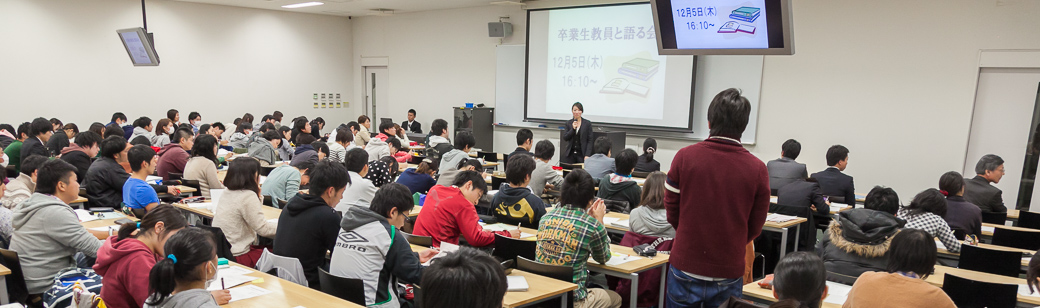
Teacher Education and Professional Licensure Center
Teacher Education and Professional Licensure Center provides consultations on teacher training courses, preparation for teaching practicums, and support for obtaining qualifications.
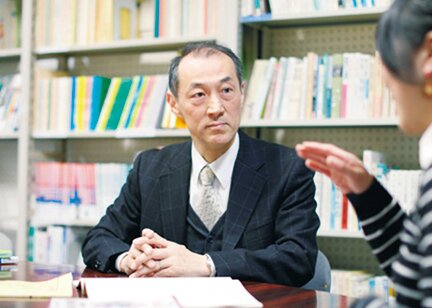
Thorough individualized instruction
From the time of registration for the teacher training program in the second year, a class teacher system is implemented, and students prepare for their teaching practice under the strict and thorough guidance of their assigned teacher. Individual interviews are conducted based on the "Personal Record" that students create and submit at the beginning of each academic year, and the "Course Record" that they compile from the start of the course. The "Course Record" is used to delve deeply into why one aspires to become a teacher, and to reflect on the accumulation of learning and activity records over the four years. The Course Record is created from the time of registration for the teacher training program in the second year and is also used in the required course "Teaching Practice Seminar" in the fall semester of the fourth year. It is also useful for self-promotion during the teacher employment examination.
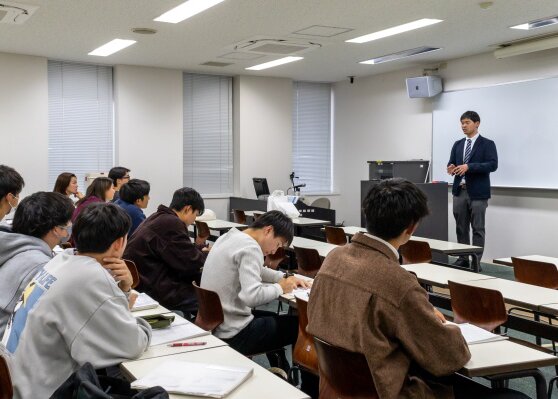
Teacher recruitment exam preparation
We offer teacher recruitment exam preparation courses twice a year (spring and summer). In the spring, we primarily provide guidance on essay writing for the teacher recruitment exam. In the summer, we provide guidance on individual interviews, group interviews, group discussions, situational instruction, and mock lessons for the second selection stage. Since the content of the public school teacher recruitment exam varies depending on the local government, we analyze the trends of each local government and provide instruction separately for the local government that students are applying to. The content of the private school recruitment exam also varies from school to school, so we provide guidance on the know-how necessary for individual interviews. We also conduct a "Teacher Recruitment Mock Exam" at our university in the fall semester of the year before the practical training.
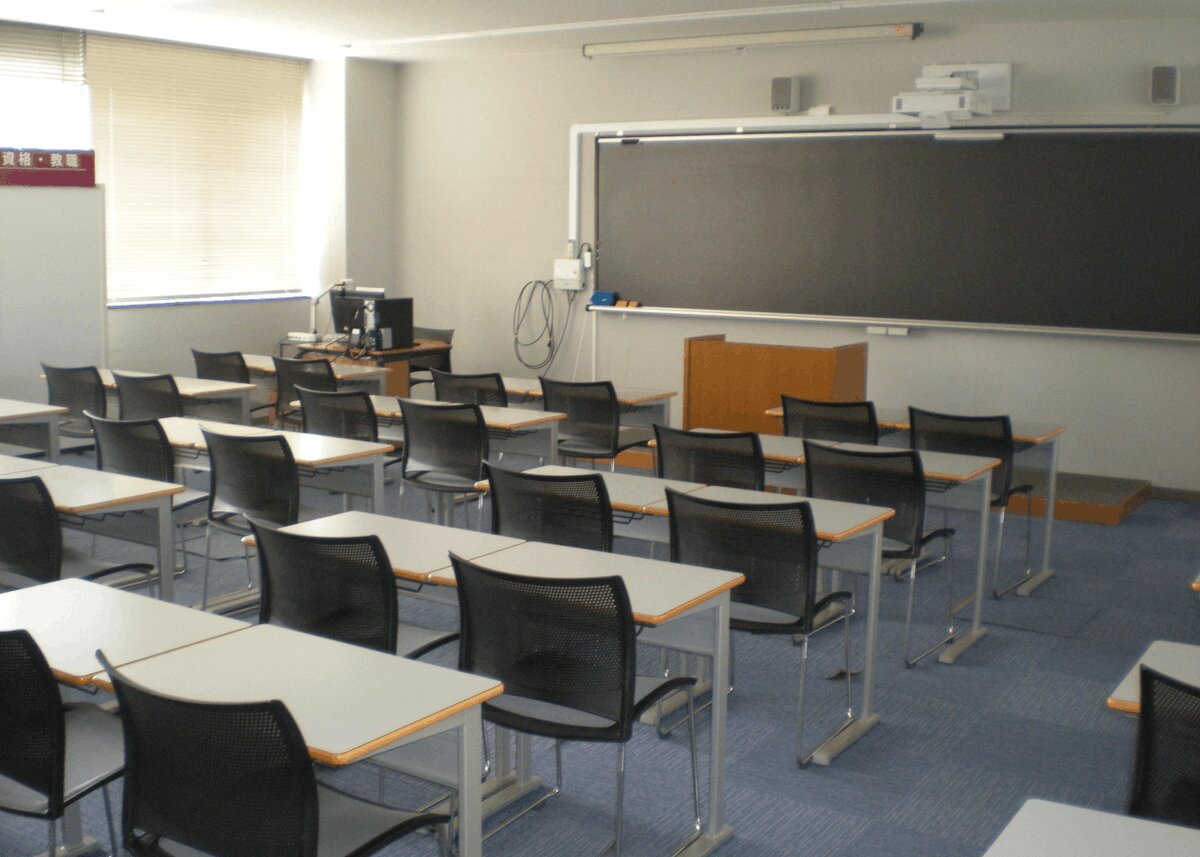
Abundant learning environment
We have equipped the university with a "Teacher Training Practice Room" and a "Teacher Training Guidance Room" for students enrolled in teacher training programs. The "Teacher Training Practice Room" is a classroom modeled after a junior high or high school, equipped with a blackboard and an electronic blackboard. Students can practice writing on the blackboard and actually use digital textbooks before their teaching practice. The "Teacher Training Guidance Room" is stocked with teacher recruitment exam question books, approved textbooks, curriculum guidelines, books and magazines related to teaching. Both rooms are used by students for mock lessons and independent study, both individually and in groups.
Connections with schools
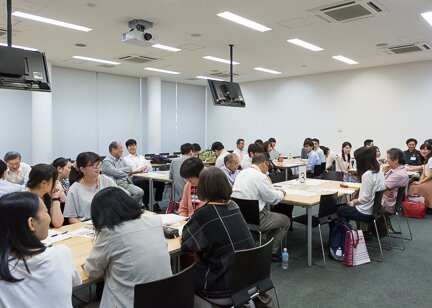
In the pre-training classes for teaching practice, we hold a "Meeting with Alumni Teachers" where graduates of our university who are currently working as teachers share their experiences in schools and offer advice for those considering a career in teaching. We also request lecturers from nearby city and prefectural boards of education to provide guidance on the realities of school education under their jurisdiction and the ideal teacher profile. Furthermore, students can gain an understanding of students and school environments by participating in educational volunteer activities at junior and senior high schools in the vicinity of the university.
Teacher training programs accredited by our university
|
College of Arts and Sciences ※1 |
Junior High School Teacher's License (Type 1) | national language |
|---|---|---|
| society | ||
| mathematics | ||
| science | ||
| Foreign language (English) | ||
| Foreign language (Chinese) *5 | ||
| High School Teacher's License (Type 1) | national language | |
| Geography and History | ||
| Citizens | ||
| mathematics | ||
| science | ||
| information | ||
| Foreign language (English) | ||
| Foreign language (Chinese) *5 | ||
|
College of Performing and Visual Arts |
Junior High School Teacher's License (Type 1) | Music *2 |
| Art *3 | ||
| High School Teacher's License (Type 1) | Music *2 | |
| Art *3 | ||
|
College of Health and Welfare |
Junior High School Teacher's License (Type 1) | health and physical education |
| High School Teacher's License (Type 1) | health and physical education | |
| Kindergarten Teacher's License (Type 1) *4 | ー |
*1: The Area preferred at admission depending on the subject you wish to take are as follows.
・Japanese (Junior High & High School Type 1), English (Junior High & High School Type 1), Chinese (Junior & High School Type 1) ⇒ Humanities Area
・Social Studies (Type 1 Junior High), Geography and History (Grade 1), Civics (Grade 1) ⇒ Social Studies Area
・Mathematics (Junior High & High School 1st Track), Science (Junior/High School 1st Class), Information (High School 1st Class) ⇒ Natural Sciences Area
*2: Only students with College of Performing and Visual Arts Music Major can take it.
*3: Only students of College of Performing and Visual Arts Visual Arts Major can take it.
*4: College of Health and Welfare Only students majoring in childcare studies can take this course.
*5: Only students admitted before the 2025 academic year are eligible to take this course.
Disclosure of information regarding teacher training programs
University: Kindergarten Teacher Certification Course (Type 1)
- Teacher training objectives and plans for achieving those objectivesPDF file
- Course subjects and instructors related to teacher trainingPDF file
- Teacher certification status of graduatesPDF file
- Employment status of graduates as teachersPDF file
- Initiatives to improve the quality of education in teacher training.PDF file
University: Junior High School (Type 1) and High School (Type 1) teaching license courses
- Teacher training objectives and plans for achieving those objectivesPDF file
- Course subjects and instructors related to teacher trainingPDF file
- Teacher certification status of graduatesPDF file
- Employment status of graduates as teachersPDF file
- Initiatives to improve the quality of education related to teacher trainingPDF file
Self-assessment and evaluation of teacher training programs
Museum Curator Training Program
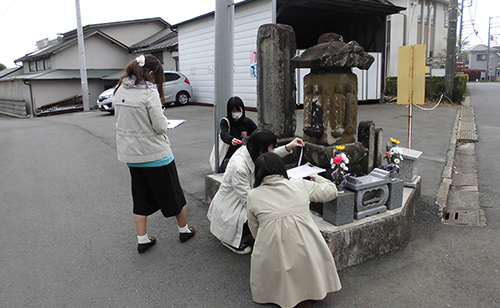
A "museum curator" is a nationally certified professional who works in museums, art galleries, science museums, zoos, etc., and is responsible for collecting, organizing, preserving, researching, and conducting educational and outreach activities related to materials.
J. F. Oberlin University offers well-equipped facilities and facilities for acquiring specialized knowledge and skills, as well as practical programs. Teacher Education and Professional Licensure Center offers a wide range of guidance, including museum visits as well as graduate school admission and employment at related companies.
The museum also has excellent facilities for internships.
In addition to audiovisual training equipment and exhibition equipment, we have introduced new styles of training facilities and equipment, such as a "mobile planetarium." Students can choose from a variety of training programs that suit their interests and career aspirations, and they will learn practically in line with the changing social needs for museums.
Supports the diverse duties of museum curators.
In addition to basic practical skills such as exhibition management and research and organization of materials, we also emphasize the acquisition of various skills required of museum curators, such as barrier-free exhibitions, hands-on training methods, and poster and catalog design. The informational flyers for the on-campus materials exhibition room also utilize the results of the practical training.
Other qualification acquisition support
Obirin Extension offers support courses for obtaining qualifications and other certifications. These courses do not count towards academic credit. While there are separate fees for qualification courses, students can enroll at a discounted price. In addition to your university studies, we support skill development to help you achieve your career goals.