Students from College of Performing and Visual Arts are currently creating a logo for the track and field team!
—Creating a “team symbol” as a practical learning experience—
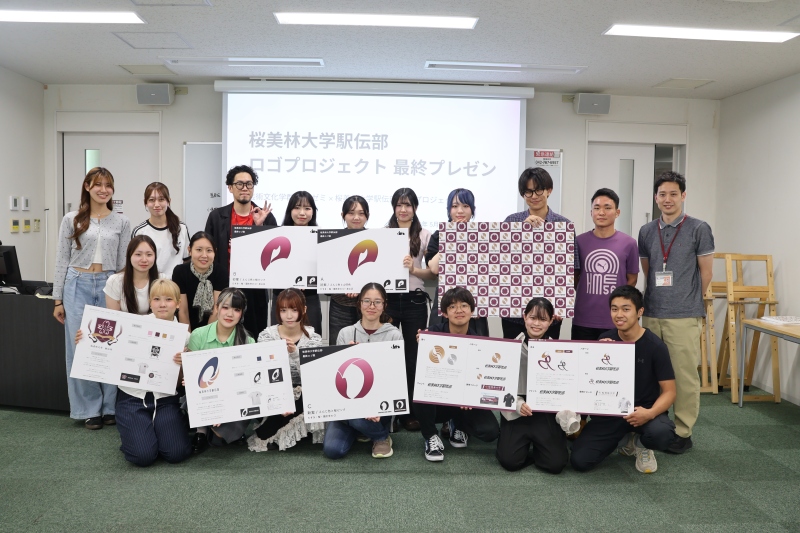
Main content
Students from College of Performing and Visual Arts 's Shunya Konishi seminar are working on creating the logo for the J. F. Oberlin University Ekiden team. This initiative is part of the seminar's activities, providing a practical learning opportunity to take real requests and turn clients' visions into reality.

The Ekiden Club has set the goal of "qualifying for the main event of the Hakone Ekiden," and students who take on diverse roles such as managers, trainers, and branding staff work as a "team that fights together," not only as athletes but also as managers, trainers, and branding staff. On the other hand, until now, there was no clear logo symbolizing the team, and as communication through social media and websites increased, the need for a symbol representing the "J. F. Oberlin University Ekiden Club" had grown.
The trigger for logo creation was a voice within the Ekiden Club Branding Team who wanted a logo that would represent the team. A staff member of the Ekiden Club belonging to College of Performing and Visual Arts had experience creating logos in the class "Introduction to Modeling Practical Skills C (Digital Editing Basics A)," so they consulted Associate Professor Konishi and decided to pursue this as a seminar activity.
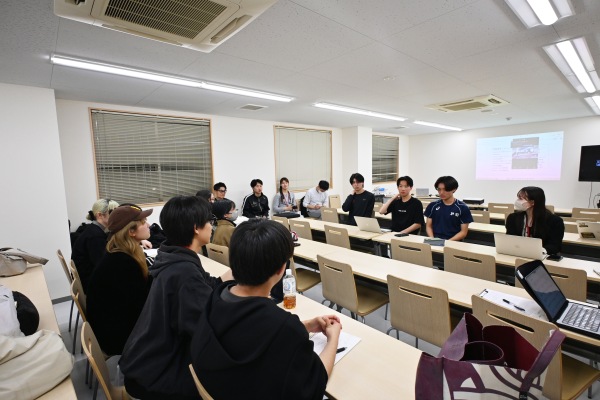
For the design process, students from Professor Konishi's seminar conducted interviews with the track and field team's branding team and key athletes. They gathered information about the team's goal of competing in the Hakone Ekiden, their aspirations as a team that fights together, and their attitude as challengers who will build history in the future. Through these interviews, they organized the keywords they wanted to incorporate into the logo.
Furthermore, students in Professor Konishi's seminar actually observed the track and field team's practices and competitions, deepening their understanding of the team's atmosphere and activities as they worked on the design. This was to reflect not only the superficial expression of the design, but also the attitude towards the sport and the team's values in the logo.
At the interim presentation held on May 14th (Friday), students from Professor Konishi's seminar were divided into three groups, each proposing a logo design based on a different concept. Following this, the track and field club conducted a hearing with all its members. They gathered opinions and requests regarding the design proposals presented in the interim presentation and provided feedback to Professor Konishi's seminar.
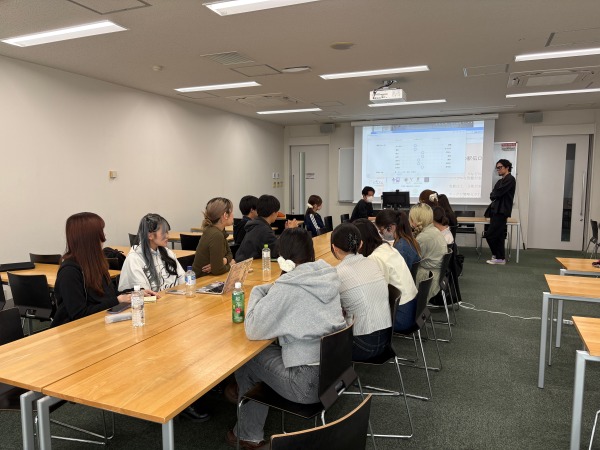
At the final presentation held on May 29th (Friday), a logo design incorporating feedback received during the interim presentation was unveiled. During the presentation,
Does it express the spirit of the track and field team?
Does it reflect the team's aspirations?
Is it a design that you can cherish for a long time?
Is it easy to use in clothing or on social media?
・Can it feel like a 'J. F. Oberlin University ekiden club'?
Each proposal was explained from these perspectives.
After the final presentation, all members will vote, and the new logo for the J. F. Oberlin University Ekiden team will be decided.
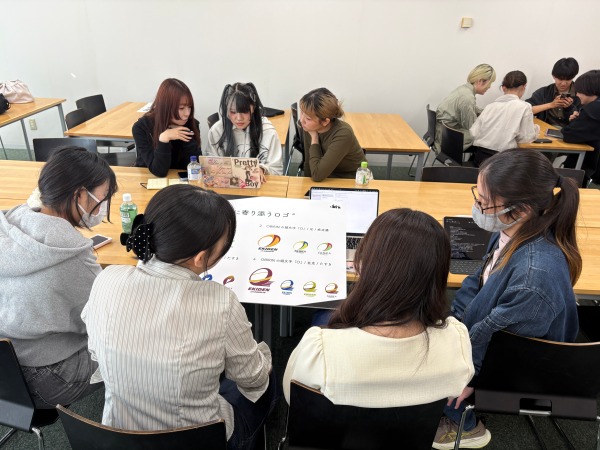
Students in Professor Konishi's seminar shared comments such as, "This was the first time I've worked on something other than creating my own artwork," and "I realized how difficult it is to create while taking into account the needs of others." They also spoke about the lessons learned from actual client work, saying, "Even a single word like 'simple' can be interpreted differently by different people, so I realized the importance of aligning perspectives," and "Even within a single client, there are different points that are emphasized, and it has been a valuable experience to incorporate them into a single design."
Meanwhile, students from the track and field team shared comments such as, "We were moved that our feelings were understood," and "Seeing the logo take shape made us feel even more motivated to work harder." They also commented, "It was a good opportunity to redefine our team and see how we are perceived from the outside," and "As a team that will make history from now on, we want to grow together with the logo," suggesting that the logo creation process also provided an opportunity for them to re-examine the team's identity.
Regarding this initiative, Associate Professor Konishi reflects, "Initially, I was personally asked to create the logo design, but I had never had the opportunity to collaborate with a group from another academic department, so I really wanted to take on this challenge. Also, I thought that the experience of working on a project while interacting with an actual client would be an extremely valuable learning experience for the students, so I decided to implement it as a seminar activity."
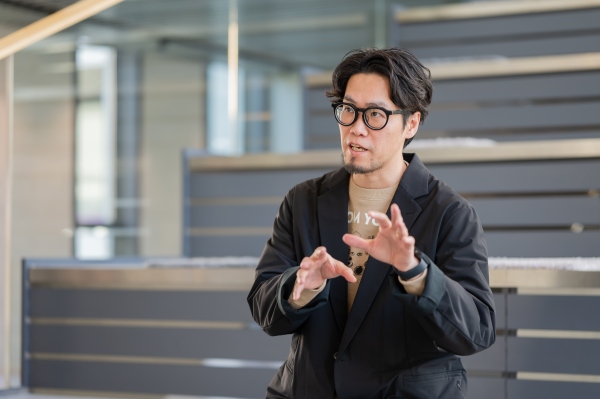
He also said, "Everything you learn from real-world client work is a learning experience. You can get feedback and make revisions, learn about other people's evaluations from unexpected reactions, and think about presentations that will convince the other party. These are things you can only experience through actual requests. The students approach their work with a sense of responsibility, and I feel that this is leading to an improvement in the quality of their work."
He added, "The students are confronting the essence of design—'designing for someone else'—and experiencing the importance and difficulty of interviewing, as well as the challenges of communicating with non-designers. There will undoubtedly be many difficulties, but that is precisely what design looks like when it comes to engaging with society. It is extremely beneficial for them to have such experiences in the environment of educational activities, and I am grateful to the members of the track and field team for their sincere efforts."
This initiative provides students with a practical opportunity to learn design in a way that closely resembles real-world settings, allowing students to receive actual requests and engage in ongoing dialogue while creating their work. The completed logo is expected to be used for many years as a symbol of the J. F. Oberlin University Ekiden team.
Inquiry
Obirin Gakuen, General Planning Department, Public Relations Section
- webadmin@obirin.ac.jp
Latest News
-
2026.10.10
東京都立千歳丘高等学校と高大連携協定を締結
-
2026.10.8
We held a send-off ceremony for the 2026 Hakone Ekiden qualifying race.External link
-
2026.10.8
J. F. Oberlin University ・Graduate School Japanese teacher training and practical training courses registered as 'Registered Practical Training Institutions' and 'Registered Japanese Teacher Training Institutions' by the Ministry of Education, Culture, Sports, Science and Technology
-
2026.10.2
Positive Psychology Fair 2026External link
-
2026.10.1
We have started accepting reservations for the online general entrance examination and the entrance examination information session utilizing the Common Test for University Admissions.External link