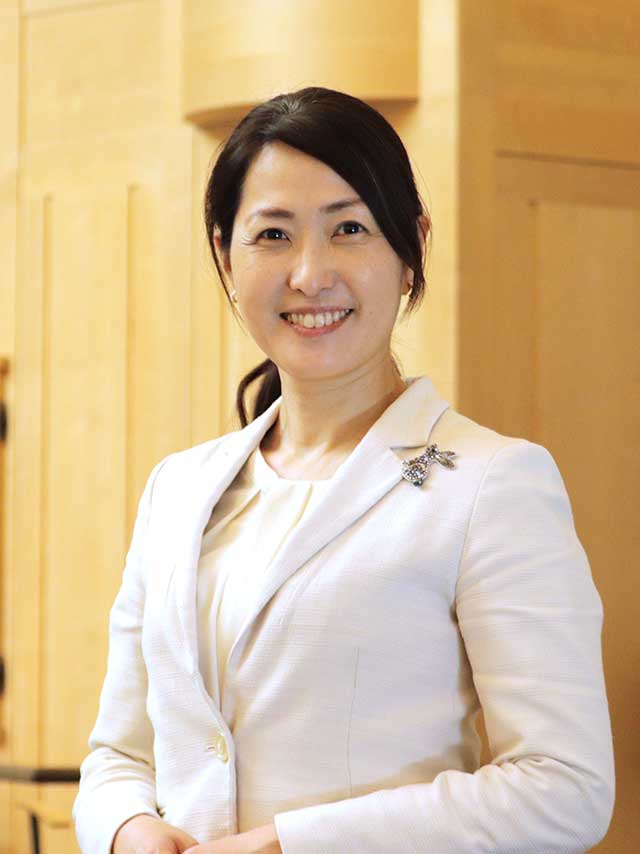
Introduction to the Chaplain
Index
At J. F. Oberlin University, alongside the Christian Center, chaplains (pastors) also support student life. If you would like to talk or consult with Chaplains, please feel free to join Chapel Hour.
Toshiyoshi Dobashi - School Chaplain and Director of the Christian Center
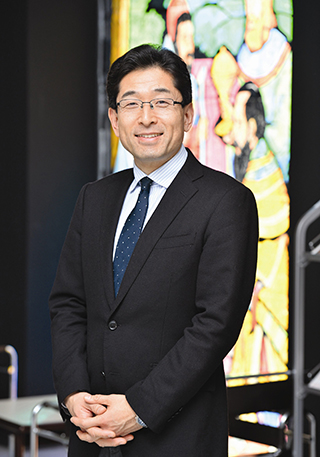
In the era I grew up in, Japan was a world where everyone worked in step and bureaucrats created policies from the top down, so each individual didn't have to have a clear way to think about it.
But now, we are entering the era of the individual. Without a path to think, you can't even create a frame. To adapt to the world ahead, unless we master the standards of 'how to think about things,' we are entering an era where nations, companies, and individuals cannot survive.
However, in the true sense, you cannot "think" alone. It is something that can only be achieved through experiences where you meet peers who recognize and trust each other, help each other learn, and live together. That's why there is a J. F. Oberlin University, and a Christian center exists.
It is no exaggeration to say that the "ability to think" has been steadily nurtured within the tradition built by Mr. Yasuzo Shimizu, who wished for people's happiness and true peace, and the senior J. F. Oberlin who admired his founder. J. F. Oberlin University, whose school motto is 'Learning and serving people,' has such traditions and experiences.
"Individuals" are weak beings. You cannot resolve anxiety, accept yourself, accept others, or cultivate a belief in the future alone. This is something that can only be achieved through the traditions of founders and predecessors who fought all kinds of fears, the courage of comrades who 'do their utmost but never lose hope,' and the family bonds that transcend blood relations. J. F. Oberlin University Also, Christian centers cherish such sites. Interreligious dialogue aiming for true universalism, beyond so-called "fundamentalism," is also essential in the coming era. While enjoying the spiritual richness of J. F. Oberlin University, let's join hands with everyone and meet many trustworthy companions.
Noriyuki Shimada (Noriyuki Shimada) - Professor College of Arts and Sciences, Head of Christianity Education Center
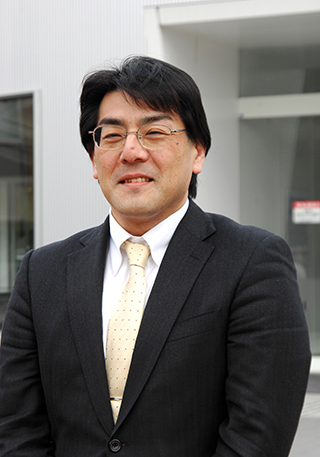
I have experienced many life changes, starting with long student lives in Japan and Germany, then working as a pastor in a local church, a kindergarten principal, and involved in the management of a nursing home, and now as a chaplain at Obirin University. However, one thing has remained constant throughout all of this: I have continued to read the Bible that my parents gave me as a graduation gift from elementary school, sometimes rebelling against it, sometimes being moved by it. And now, I am truly grateful to have encountered the Bible. This is because the Bible allows me to view my turbulent life as a story with a single "path," in a positive light. I would like to help everyone at Obirin University to have an encounter with the Bible that can give their lives a sense of purpose.
Jeffrey Mensendiek - Associate Professor at College of Business Management
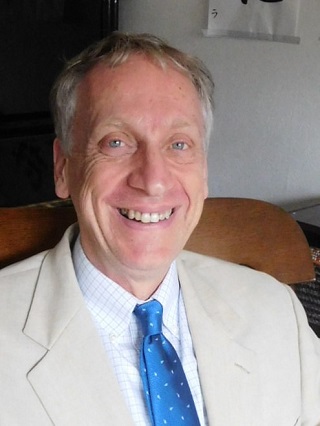
I am interested in issues of identity because, as an American raised in Japan, I have lived between two cultures. Furthermore, at the age of 17, I had a significant encounter in India that led me to consider my life from a North-South perspective. Standing between two different worlds can sometimes be difficult, but I have come to feel that this is where my role lies.
I worked for 23 years as a missionary for the United Church of Christ in America, specifically at the Sendai Student Center of the Tohoku Diocese of the United Church of Christ in Japan. Through various service activities, work camps, and study tours, I helped young people broaden their perspectives on society and the world. During the Great East Japan Earthquake, my workplace became a disaster relief center, accepting volunteers from all over the country. From these experiences, I learned that the stories of the Bible are most powerful when we face turning points and crises in our lives. I hope that all of you studying at Obirin Gakuen will also learn this resilient spirit.
Xue Enfeng-College of Arts and Sciences Associate Professor
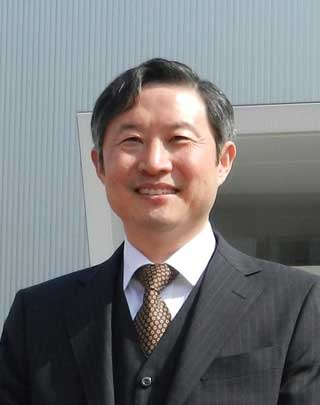
The Bible is the word revealed by God to humanity and is a crucial source that forms the foundation of Christian thought. Christian faith begins with listening to this word of God. The words written in the Bible are not merely one-sided commands, but rather leave it up to each individual to decide how to respond according to their own free will. This is because humans are not beings manipulated by God, but rather subjective beings who think, act, and build their relationship with God for themselves. Jesus said, "Whoever has ears to hear, let them hear" (see Matthew 13:1-9). These words highlight the importance of listening voluntarily. Furthermore, it is believed that the Gospel of God will surely bear abundant fruit in those who humbly accept its words. At Obirin Gakuen, morning worship services for faculty and staff and chapel hours (worship services) are held regularly each term. These services are precious times that have been carefully passed down since the founding of the school. God has broadly invited all people, so everyone is welcome to participate with peace of mind. I sincerely hope that we can share the message of the Bible together, and that this moment will contribute to the personal growth of each and every one of you.
Koji Sahara (Koji Sahara) - Associate Professor at College of Performing and Visual Arts and J. F. Oberlin Kindergarten President
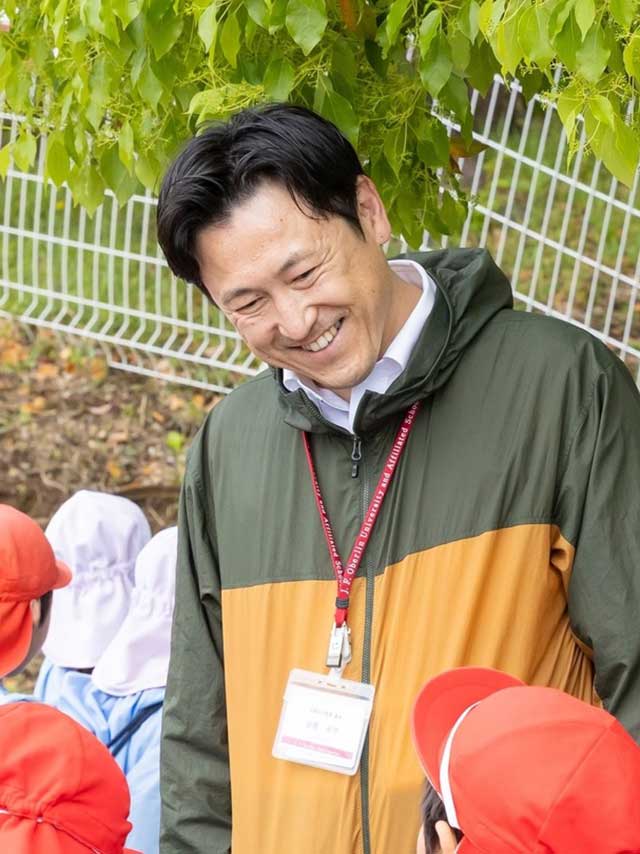
Life is a series of encounters. There are encounters with people, and also encounters (experience) joy and sorrow by facing various events. Such encounters shape who you are. I myself have met diverse people as an individual, as a pastor in churches in Japan and the United States, as a teacher at Christian schools and high schools, and in this J. F. Oberlin University and kindergarten. In particular, the people I met while working at a Japanese American church in Northern California (first- and second-generation Japanese Americans who experienced internment camps during World War II) had a profound impact on my outlook on life. In times of hardship, I feel taught how people can encourage one another to move forward, and the role that faith communities play in that context.
I like the expression 'to raise your face.' Generally, this gesture is seen as a sign of courage or confidence, but to me, I can sense the determination of someone who strives to move forward even in difficult times. And at such times, we may become aware of the "great being (God) that transcends ourselves." The Bible contains many such stories.
At Obirin, I hope many people will have many "encounters" that shape themselves and experiences of "raising their faces" to gods or the sky above.
I like the expression 'to raise your face.' Generally, this gesture is seen as a sign of courage or confidence, but to me, I can sense the determination of someone who strives to move forward even in difficult times. And at such times, we may become aware of the "great being (God) that transcends ourselves." The Bible contains many such stories.
At Obirin, I hope many people will have many "encounters" that shape themselves and experiences of "raising their faces" to gods or the sky above.
Yoko Domoto - Principal of Junior and Senior High School