Jia Yubin
College of Arts and Sciences
Psychology Program
4th Grade

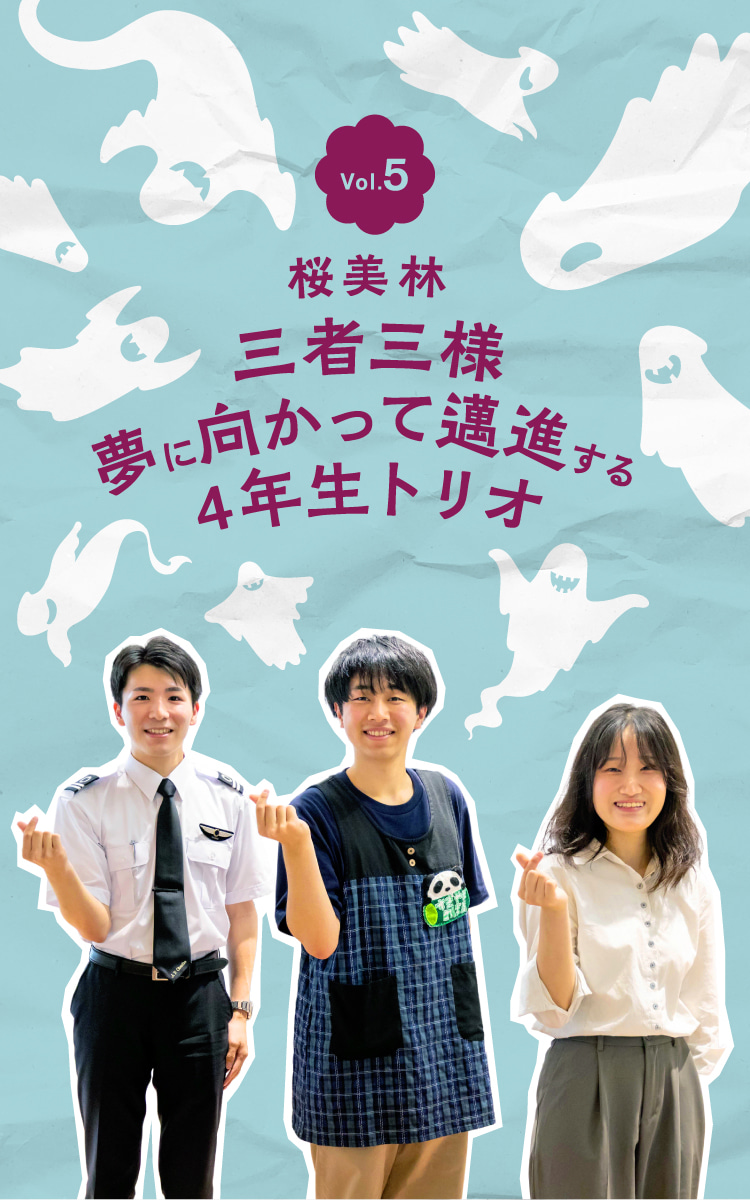
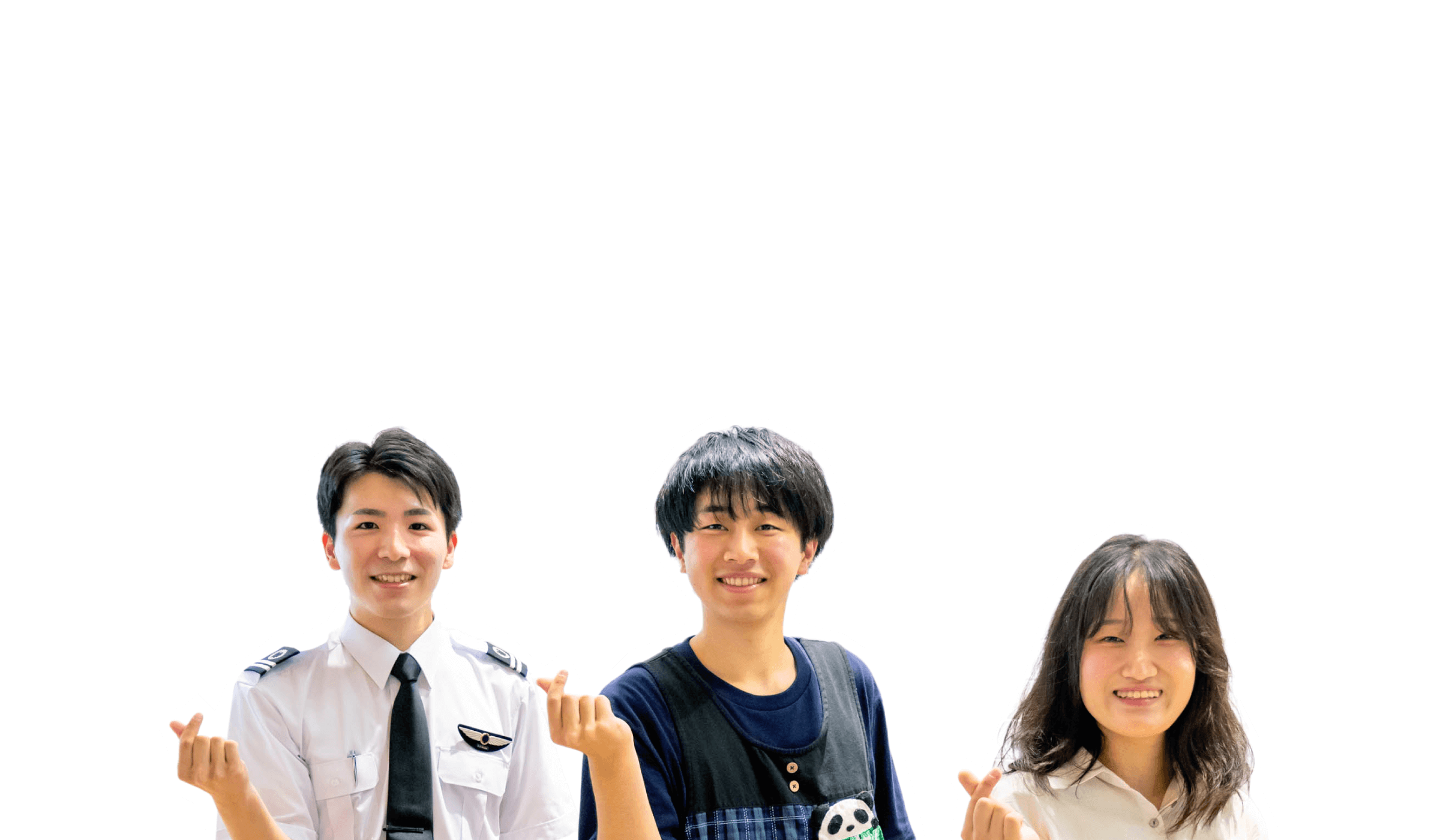
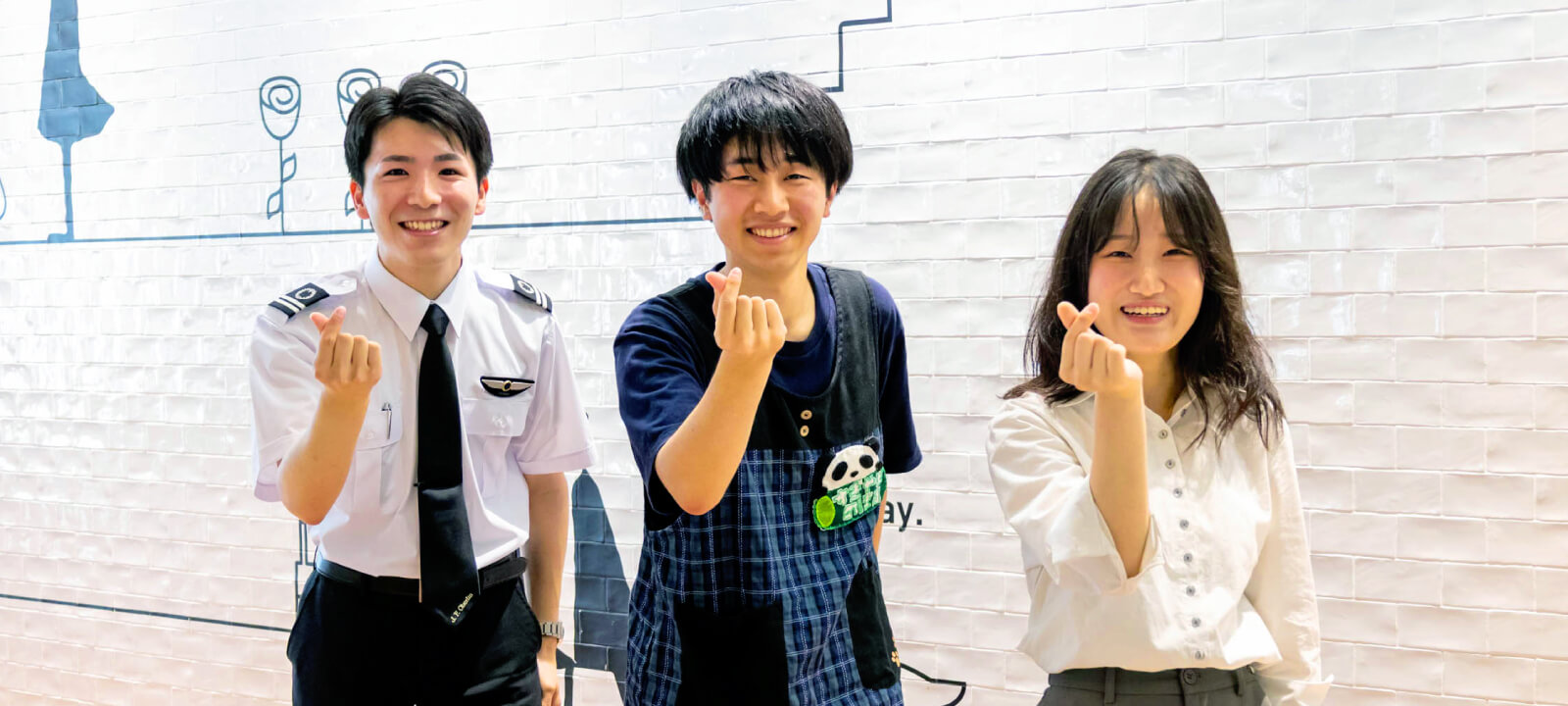
In their fourth year, students' dreams for the future become more concrete, and their activities to achieve them become more active. In the fifth installment of our roundtable discussion, three fourth-year students from different academic groups talked about their future dreams and shared their experiences and experiences at Obirin University. They discussed how, despite their completely different fields—certified psychologist, childcare worker, and pilot—they all agreed that "non-verbal communication" and "adaptability" are essential for effective communication. They also spoke about the appeal of Obirin University, which supports students in realizing any type of dream.
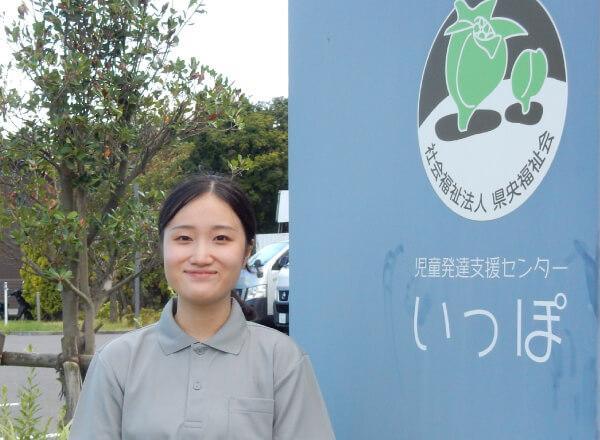
Jia Yubin
College of Arts and Sciences
Psychology Program
4th Grade
Noboru Sugiyama
College of Health and Welfare
Department of Early Childhood Education
4th Grade
Yuto Takehara
College of Aviation Flight
Operations Course
4th Grade
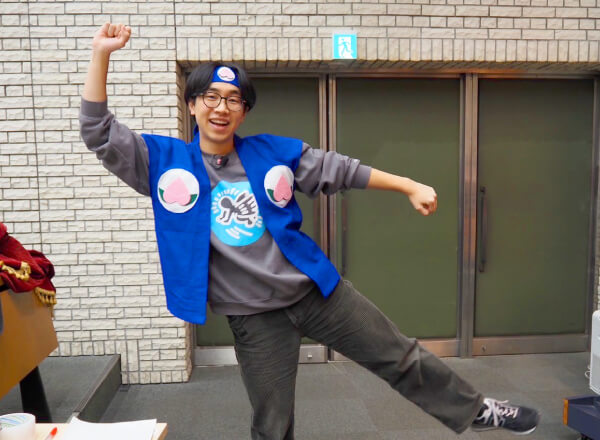
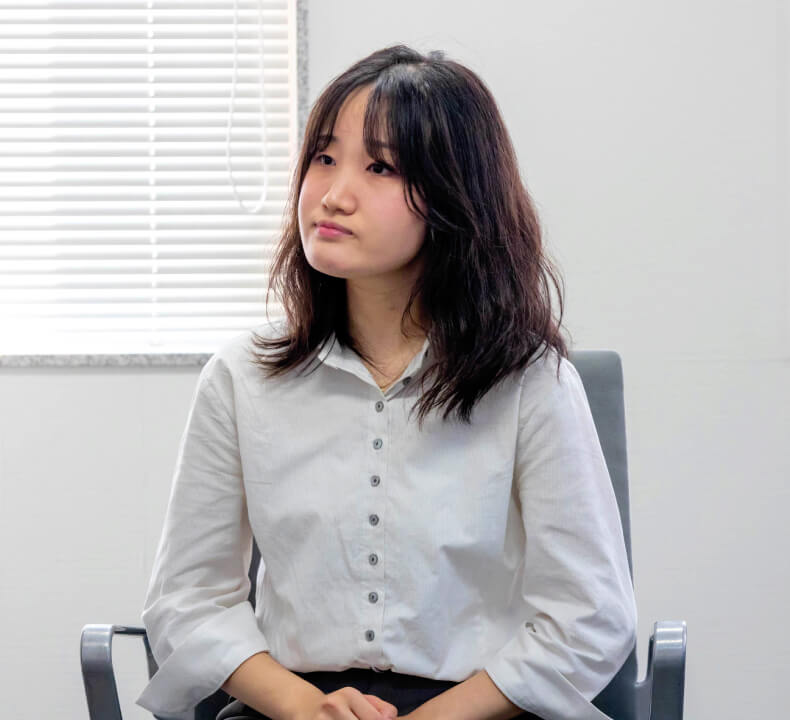
Jia:College of Arts and Sciences (LA Academic Cluster) My name is Jia Yubin, a fourth-year student majoring in the psychology program. Currently, I am studying to obtain the national qualification of a certified psychologist as a psychological counselor.
Sugiyama:My name is Noboru Sugiyama. College of Health and Welfare I am a fourth-year student majoring in childcare studies, studying to obtain a kindergarten teacher license and a childcare worker qualification.
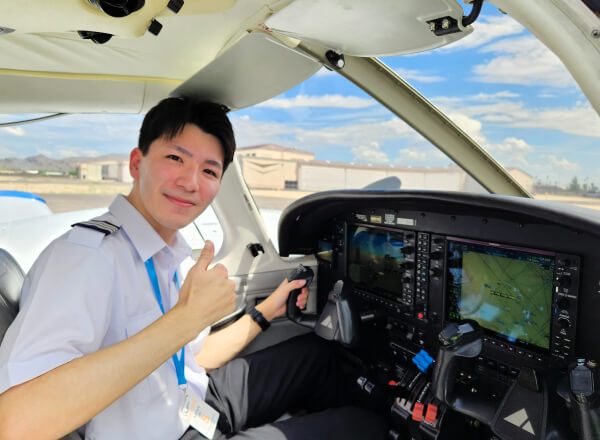
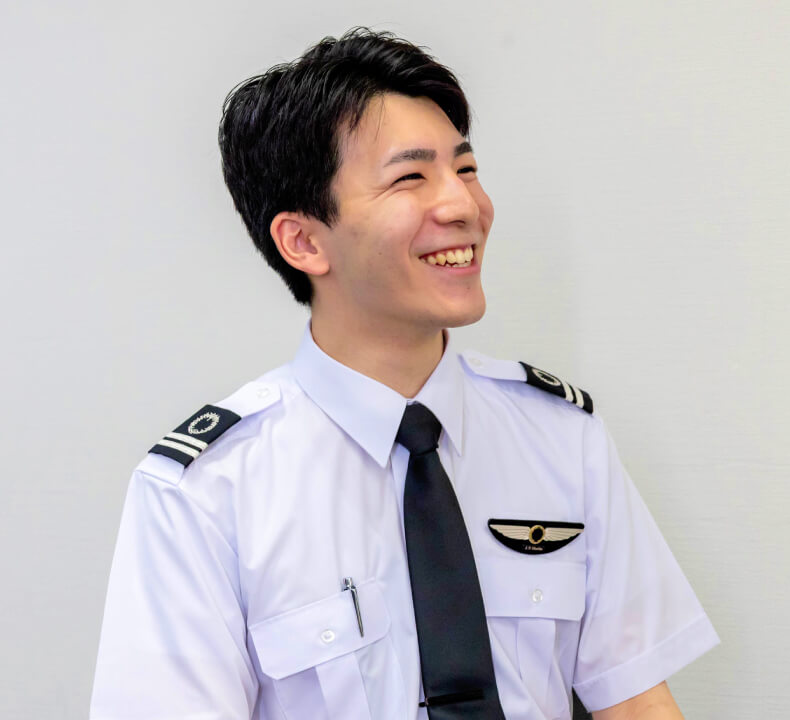
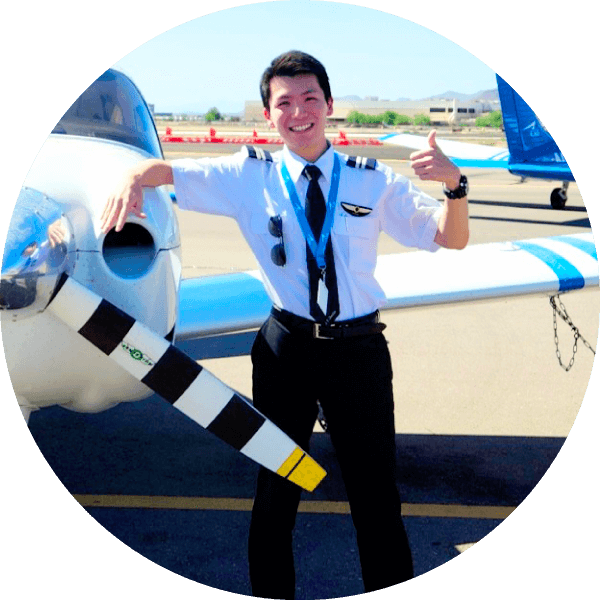
Takehara:College of Aviation My name is Yuto Takehara, a fourth-year student in the Flight Operations Course. I've already obtained all the licenses required to become a pilot at university, and I'm planning to work job hunting from now on.
Sugiyama:You can fly!
Jia:Wow! So that means we'll meet at the airport someday, right? (laughs)
Takehara:Please do ride it! (lol)
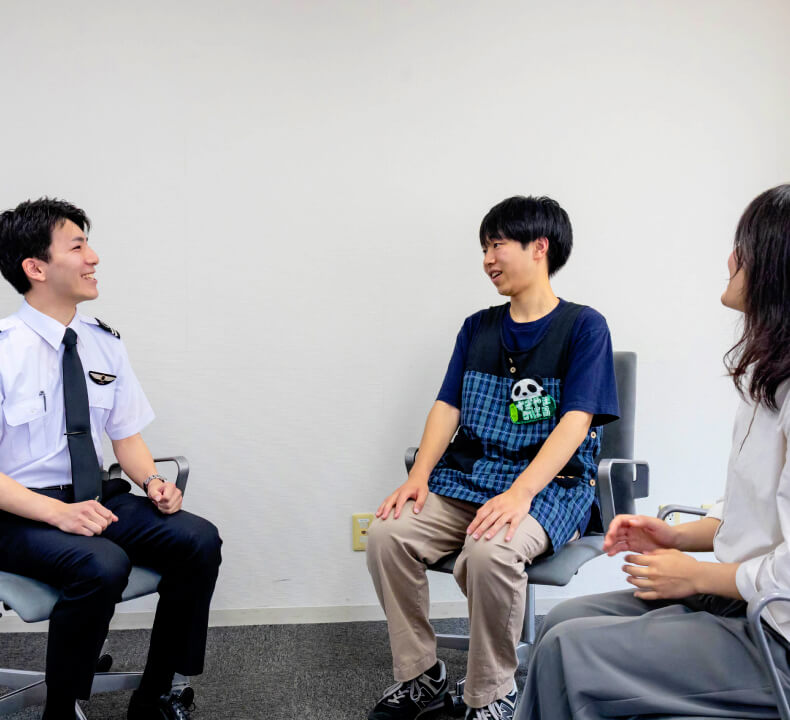
Takehara:College of Aviation The Tama campus is small, and my grade has just over 100 students, so the professors are very close and easy to talk to. The Flight Operations Track I belong to has a dormitory next to the campus, and I've been living in the dorm since my first year. I spend more time than with my family, so everyone gets along really well.
Jia:At the Machida campus, students from the LA School of Education, which I belong to, as well as students from College of Health and Welfare and College of Global Communication, study. There is active interaction not only with Japanese students but also with international students from various countries.
At LA College, students mainly take basic courses in their first and second years, and from the third year, students split into majors. I focus on psychology in the humanities Area as my major, and I work on multicultural coexistence programs in the minor areas, where I can learn new ideas and knowledge from various academic fields.
Sugiyama:The Machida Campus has various buildings where students can rent classrooms and facilities. There are movie screenings, classrooms with stages in the Sarenberger building where you can Events, and it's also an interesting place to learn, and you can also enjoy various activities. Events is also a fun campus.
College of Health and Welfare is a faculty where you can learn about welfare and health. Since I work in childcare, I do a bit of childcare and psychology, and I take other classes in the College of Health and Welfare to learn about the elderly.
Jia:Come to think of it, at the Machida Campus, classes sometimes overlap with those of other academic departments. College of Health and Welfare also come to the psychology program and take the same classes.
Takehara:I'm really envious of the opportunity to interact with students from different academic departments. In aviation studies, the curriculum is fixed, so we don't have that kind of opportunity.
Sugiyama:I love children and want to work in childcare. During my internships at a nursery school, kindergarten, and a residential facility for people with disabilities, I saw that the staff weren't just playing with the children; they were constantly thinking about how to help the children grow and how to support them, and I realized it was a more interesting job than I had imagined. Now I'm thinking about getting a childcare qualification and finding a job where I can put it to good use.
Jia:My goal is to obtain the Certified Clinical Psychologist qualification. It's a national qualification that requires a master's degree from graduate school, so I'll need to study for another year or so after passing the exam, and then I'll look for a job. I plan to work in Japan.
Since childhood, I've had family and friends who suffered from mental illness, and I myself experienced bullying at school and went through a period of mental health issues. That's why I decided to aim to become a certified psychologist.
My current seminar professor was part of a medical support team, so I aspire to become his apprentice in the future and work in disaster relief, as well as become a psychologist who can provide counseling to foreigners who have difficulty communicating in Japanese.
Takehara:What surprised you the most when you came to Japan? Was it the cultural differences?
Jia:Well, Koreans have a culture of speaking their minds directly, and when I first came to Japan, I would say things with good intentions, but a Japanese senior would tell me, "Yubin, we don't say things like that in Japan." That's when I realized that Japan has a culture of respecting other people's opinions. Also, there isn't much of a hierarchical relationship between teachers and students. Teachers would invite me to go to cafes with them, and they would listen to me talk about all sorts of things, and I realized that people can connect with each other on a deeper level, regardless of their culture or background.
Takehara:My goal for the future is to get a job at an airline and become a co-pilot. I've loved vehicles ever since I was little, and flying in the sky is especially exciting because it's something out of the ordinary. I entered this university with the dream of flying my own plane someday. Now that I'm actually here, I've found that there are far more things to do and think about in the air than I ever imagined. Right now, I'm still so focused on just flying that I sometimes struggle to keep up, but in the future, I want to be able to respond more flexibly and study harder so that I can fly with passengers on board.
Sugiyama:Even on the same route, different weather conditions would necessitate different considerations, but you still have to stick to the schedule, so it seems quite challenging.
Takehara:That's right. No two flights are ever the same. Even on the same route, the weather is different each time, and the situation with other planes flying around is completely different. The basics are the same, but there are extra things you have to consider that change every time.
Jia:The ability to adapt to changing circumstances is something that also applies to psychologists. There are times when things don't go according to the manual, right? I think that the ability to judge what you can do in those situations and strive to provide the best possible support is something that is common to both professions.
Sugiyama:Childcare is also a similar field. The other day, I did a practical training where I was in charge of supervising children for a day in place of the teacher. I wrote down a lot of anticipated behaviors of the children in my training notebook beforehand, but the children's actions exceeded my expectations, and there are some things that you just can't anticipate no matter how much you try. You have to make decisions and act on the spot.
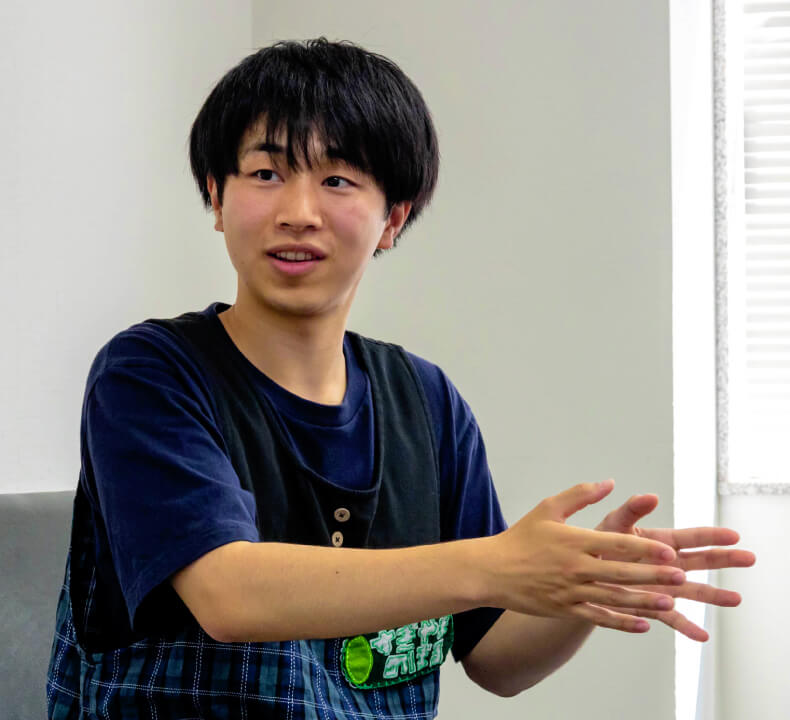
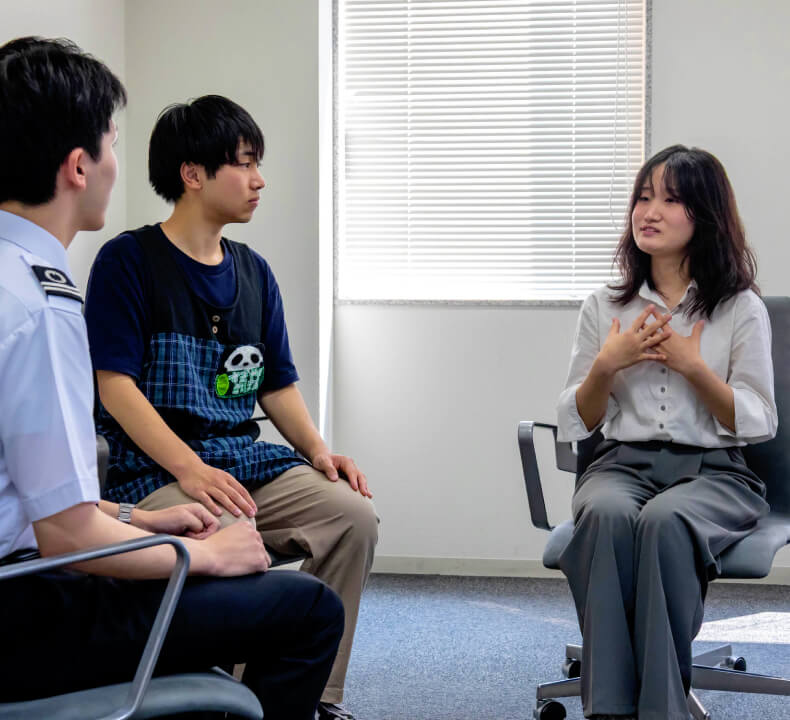
Takehara:My university life can be described as a period where I dedicated myself wholeheartedly to everything I had to do.
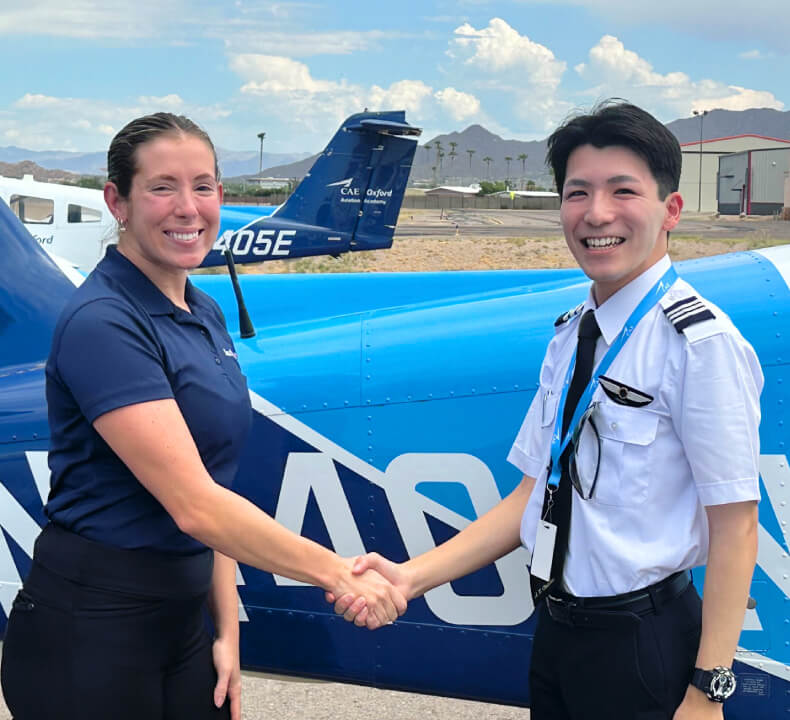
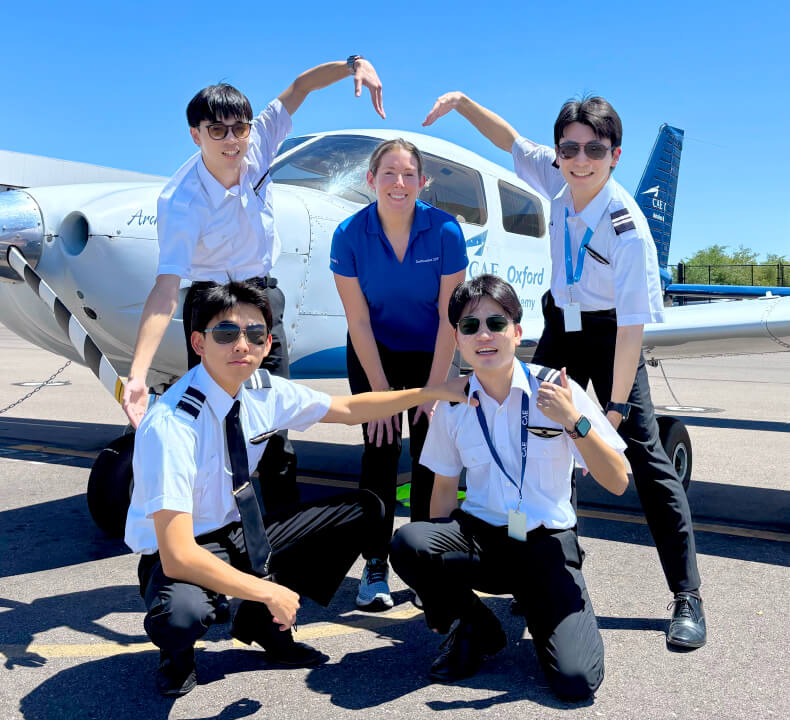
During the summer break of my first year, I obtained my Aeronautical Radio Operator license, and during the spring break, I had to pass an English interview with a flight training school in the United States. Then, by the end of the spring semester of my second year, I passed the written exams for my commercial pilot license and instrument rating. From the fall semester of my second year, I went to Phoenix, Arizona, in the United States for flight training and obtained American licenses (FAA Private Pilot License, FAA Instrument Rating, and FAA Commercial Pilot License). I returned to Japan in the fall of my third year, and from the winter, I went to Fukushima Airport to obtain the license necessary to fly passengers in Japan (JCAB Commercial Pilot Skill Certificate). From April to June of my fourth year, I went to Kagoshima Airport to obtain the license necessary to fly in clouds and other cloudy conditions (JCAB Instrument Rating) and returned home.
Jia:We worked on Japan-Korea exchange at international exchange events, held study sessions with Japanese seniors, held Christmas parties together, and brought Korean and Japanese sweets to exchange Events. After entering third year, I studied properly and tackled exams, but in my first and second years, it was relatively free, and I enjoyed various aspects of student life.
Sugiyama:I feel bad for Mr. Takehara, but in the Childcare major, practical training starts from the third year, so in the first and second years, I have relatively free time and can take classes in the LA campus or classes I like. I would look at emails from teachers and notices from the training support center and volunteer. For example, classes for senior citizens to consult about smartphones, or Events where local children come to play. Also, since I'm in the a cappella club, I sing there.
I had a wonderful encounter. While I was consulting about smartphones at the Senior Support Center, I met a 90-year-old grandfather. We visited his home about once a month to talk and study English together. When I told him I was going to perform a cappella two years ago, he made the effort to come even though he hardly ever goes out. Unfortunately, that person passed away last year, but I was really happy to have a connection that didn't exist unless I went out.
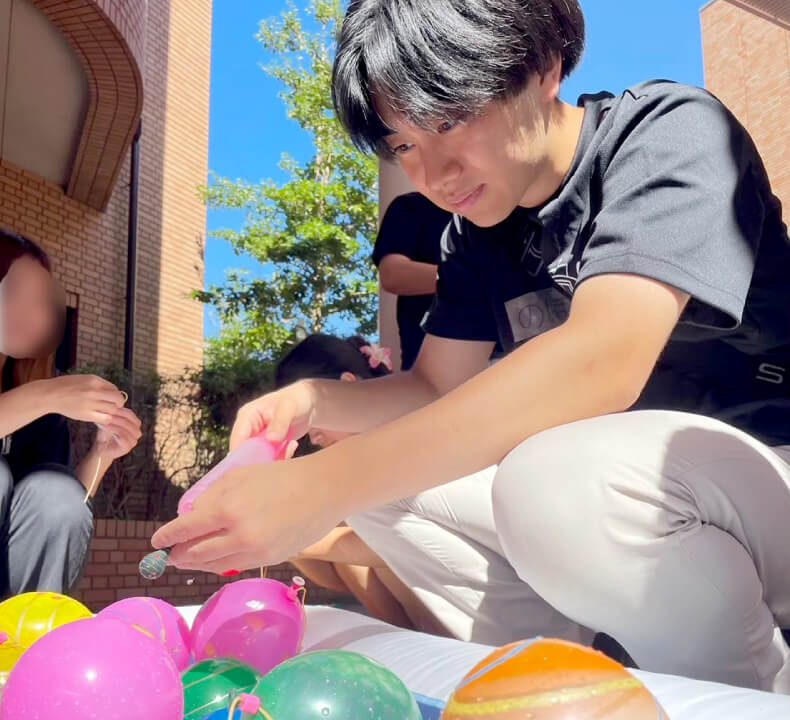
Jia:Sometimes I take initiative, but I also feel that the school is properly supporting me. Especially the students who are working hard have an atmosphere of giving their all to support them. I also had a somewhat special encounter when I came to Japan and met an 80-year-old teacher at the Writing Support Center. That teacher noticed I was lonely and introduced me to a French man working at another company, and we still go out to eat together in Machida and discuss our worries about life in Japan. I think J. F. Oberlin University has a lot of support.
Takehara:The school provides a lot of resources, and I think there are many proactive students.
Jia:Everyone in my psychology program is working incredibly hard. For example, some people volunteer at welfare organizations before starting their internships, attending day care services or support centers for people with disabilities, which really surprises me.
Sugiyama:That's right. Students aiming for careers in education, social work, or other fields that involve working with people tend to take their classes more proactively.
The early childhood education major has a high percentage of women, which initially surprised me a little, but once I started working in early childhood education, I realized that the proportion of women is also higher, so I've become comfortable interacting with women.
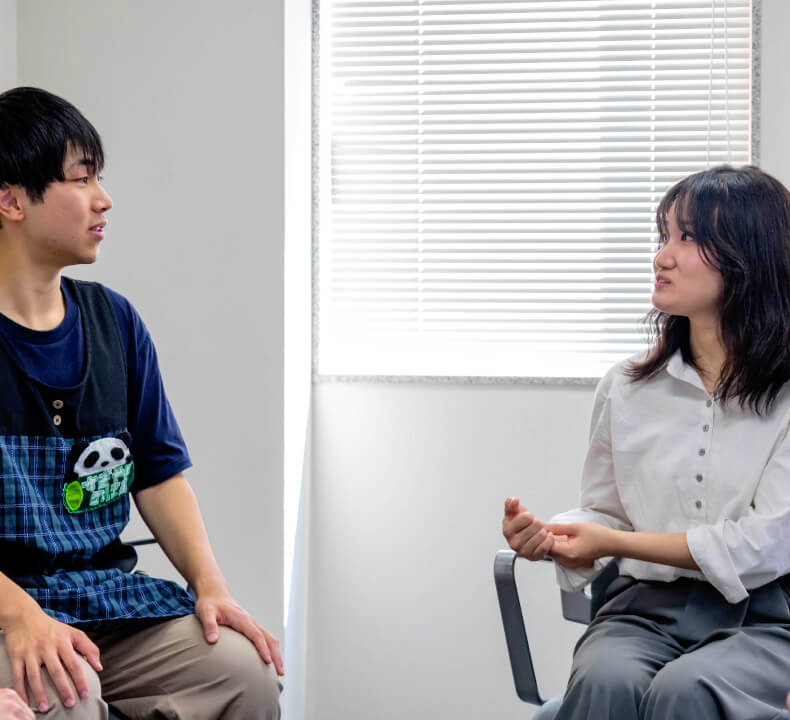
Sugiyama:One of the biggest differences between communicating with children and adults is that children can't speak, or they can speak but their communication is clumsy and they can't fully express themselves. For example, a child might ask me to fold origami for them. They might actually be able to fold it but aren't yet able to do it perfectly, so they might just want me to finish it nicely, or they might simply want to fold it together. Babies can't speak at all, so you have to think very hard about what's behind their words, or what they're thinking even without language.
Jia:It's a story I really relate to.
In psychology Area, I believe that I can be a supporter, and conversely, also a supporter, so all daily communication is practice. What I especially resonated with was nonverbal stories; when I feel someone is feeling a bit down, I think I need to understand their feelings not just through conversation.
Takehara:I make a conscious effort to build trust. I believe it's essential to build a relationship of trust that makes my fellow pilots feel safe and secure flying with me, so that they don't feel anxious.
Jia:As an international student myself, I am conscious of accepting the values of others. Now that I am actually a counselor, I am conscious of listening carefully to what kind of thoughts people have as individuals, regardless of their nationality or background, and conversely, I am conscious of listening to their true feelings rather than talking about myself.
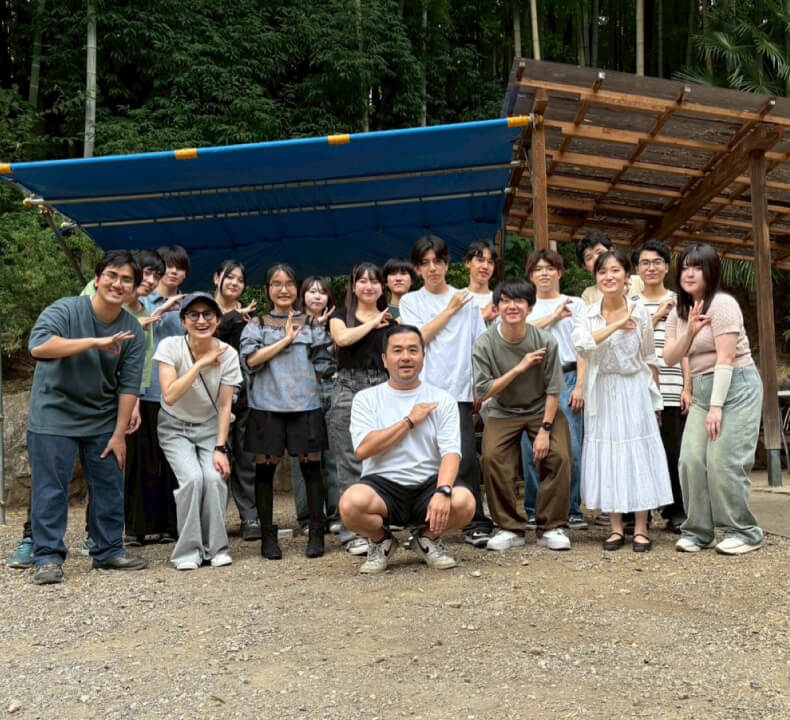
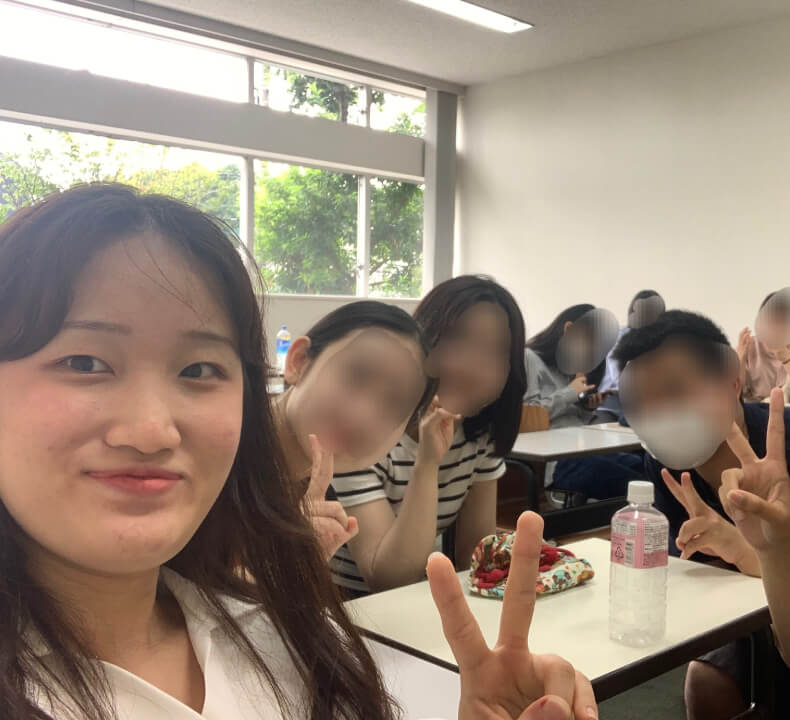
Jia:I think the way the teachers genuinely engage with the students is incredibly appealing. Even from the introductory classes for first-year international students, we didn't just learn Japanese; we often discussed study plans and debated when working on reports and assignments.
Sugiyama:There is a place where teachers engage with what students want to do and make those things a reality.
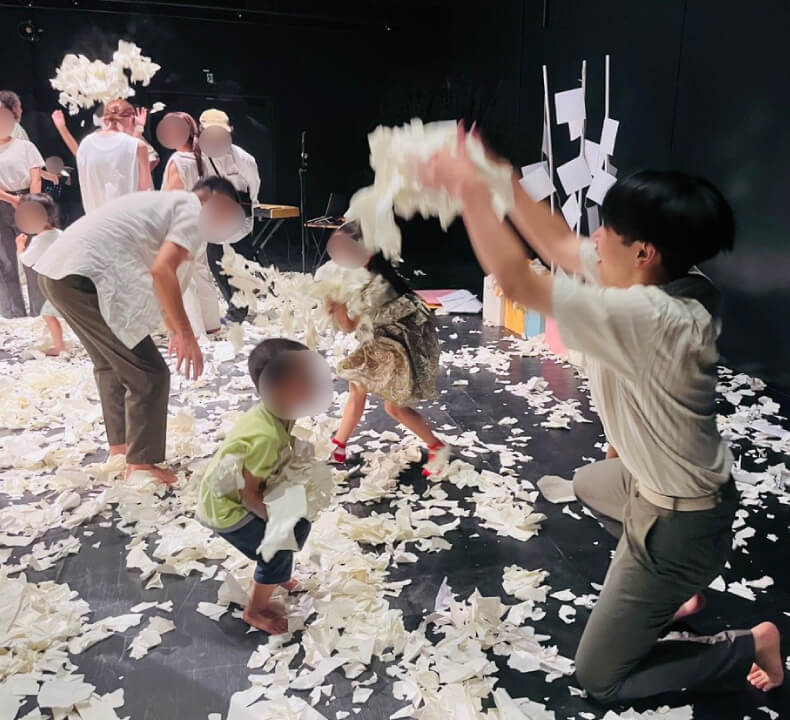
There's a Events called the Childcare Fair where local children are invited to J. F. Oberlin University, and when I told the teacher I wanted to do a play, they said, 'Let's do it,' and the students took the lead in presenting a mixed piece of music, dance, and a cappella in front of the children. It's a place where you can create your own learning without being bound by existing learning frameworks, and I think that's what leads to the development of communication skills.
Takehara:One of the unique aspects of our program is the close relationship we have with our instructors. We use a flight simulator (FTD) for our classes, which are conducted with just two students and one instructor. I don't think other departments offer classes with such small class sizes. We also get together with our classmates outside of training to share our flight experiences. When we do that, we have to find ways to explain our failures and successes in an easy-to-understand way, so that everyone can imagine the situation. I think that helps develop our communication skills.
Jia:There were surprisingly few classes where we just listened passively. Most classes involved the teacher presenting a topic, and then the group summarizing their thoughts and presenting their findings.
Sugiyama:In childcare classes, there are experiential learning activities where students are divided into roles of children and teachers. In small groups, they discuss how to ensure that the students playing the children can play smoothly, imagine what a real childcare setting might be like, and fully immerse themselves in the role of a teacher. Through these learning experiences, they naturally have opportunities to stand in front of others and do things with confidence, so I think they gradually gain more self-confidence.
Jia:As a foreigner, I think there are still some nuances and differences in how I understand things compared to Japanese people.
All:No, no
Jia:Oh really? (laughs)
The challenge was figuring out how to effectively explain what I was thinking. At first, I thought knowing a lot of Japanese vocabulary and words would be enough, but I was completely wrong. The atmosphere and nuances are also important. I believe that using Japanese that is easy for me to understand and that I can use to help others is a way to improve my communication skills.
Sugiyama:I attended N High School, but I wasn't able to challenge myself as much as I wanted. I was really happy when I got first place nationwide in an inquiry-based learning project, but there were so many more amazing people at my high school. I decided to come to university because I wanted to work harder myself.
At university, I tried everything I could get my hands on. At first, I lacked confidence and there were many things I couldn't do well, but I gradually grew, and now my experience has turned into confidence. I'm more confident than I was in high school, and I feel like I can continue to create great things in the future.
Takehara:I never thought of myself as being bad at communication in high school, but I think I've grown even more through training and classes since entering university. Before, there were times when I hesitated to express my opinion, but since safety is paramount when flying airplanes, I now speak up without hesitation if I think something is wrong. Of course, I still value teamwork, but I think I've developed the ability to say what needs to be said.
Sugiyama:It's a matter of life and death, after all.
Jia:In Korea, there's a strong sense that everyone has to get into a good university or work for a good company, and it felt like all my friends were competitors. Because of that, I sometimes felt inferior and ashamed. But when I came to Obirin University, I saw that people were not only studying, but also participating in academic activities, committees, and clubs, and working hard at what they could do. I realized that even if I couldn't surpass anyone, it was okay as long as I could do what I could in my own way, and I felt comfortable being myself.
If my past self and my present self were to talk to each other, they might be quite different.
 Jia's
Jia's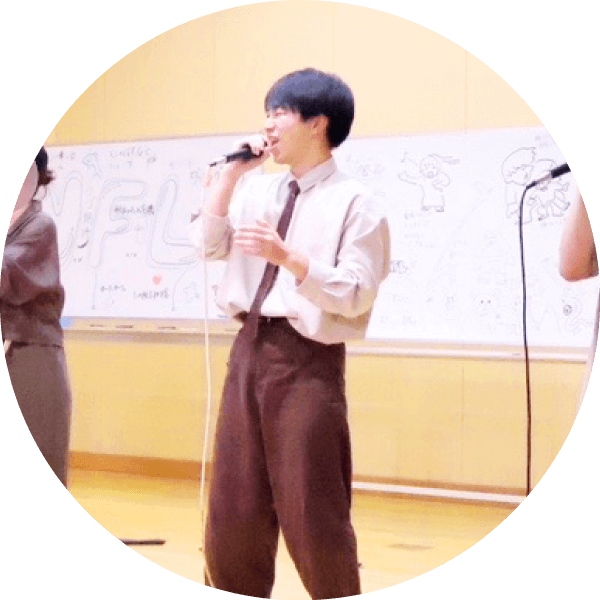 Sugiyama's affiliation
 Takehara's affiliation
Obirin University's "Communication Skills" Superstar Roundtable Discussion
Article Index