Ayaka Ikeza
College of Health and Welfare Health Sciences Major
Graduated March 2020



J. F. Oberlin University is full of proactive people. This time, we gathered three proactive "action ghosts" representing Obirin. The common trait of these three proactive individuals is their high communication skills. They say, "Being at Obirin naturally helps you develop communication skills," but what is the reason behind that? Through the stories of these three, please feel the charm and environment of J. F. Oberlin University.


Ayaka Ikeza
College of Health and Welfare Health Sciences Major
Graduated March 2020
He is currently playing as a football player in Ireland. At the age of 25, he went to Ireland on a working holiday visa to study abroad and joined the local top league without using an agent.
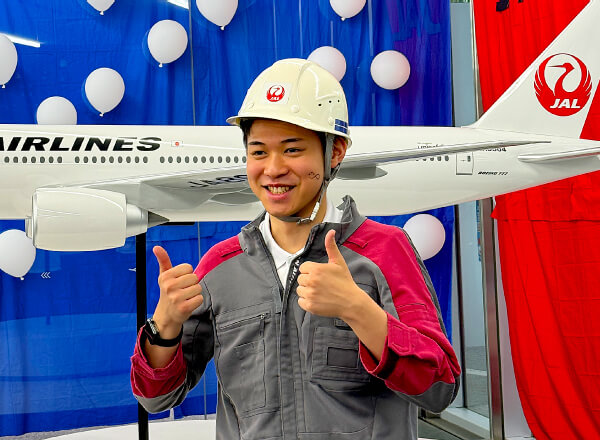
Yuki Onoda
College of Aviation
4th Grade (as of March 2025)
Established the University Festival Executive Committee at the Tama Campus and, as the representative of the J. F. Oberlin University TAMA Festival Executive Committee, planned and implemented the first university festival on the Tama Campus.


Haruna Obata
College of Business Management
Graduated September 2024
While still a student, I started a business based on my long-standing interest in hair coloring. I have a job offer from a major company in the Kansai region, starting in April 2025. Currently, I am working towards becoming a hair coloring influencer.
Ikeza:My name is Ayaka Ikeza. College of Health and Welfare I graduated from Health Science Major in 2020. Currently, I play as a soccer player in Ireland.
Currently, during the off-season, I am temporarily back in Japan, and since my university days, I have been working part-time watching over the schoolyard opening after school at my alma mater's elementary school, and I coach the boys' soccer team I came from. Since my time at Obirin University, I have been doing this and talk about the year I was away from the children and about soccer.
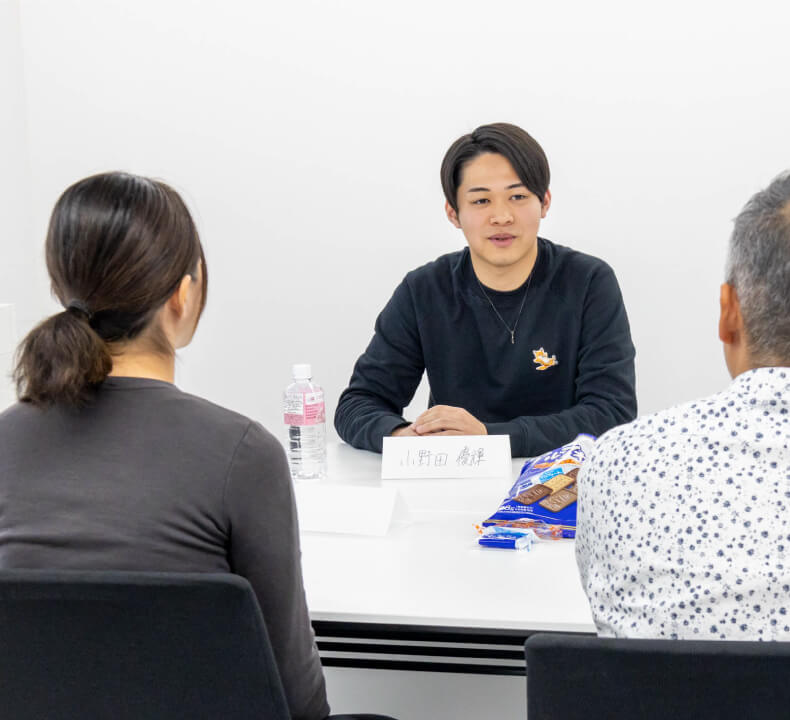
Onoda:I'm Yuki Onoda. College of Aviation I'm in my fourth year.
Currently, there are only one class per week, so I commute weekly from my hometown Ishikawa, but I think Tama is a bit far from Ishikawa (laughs). I commute from Ishikawa by plane.
In 2023, as the executive committee representative for the first university festival, we planned and implemented the "TAMA Festival" at the Tama Campus, where a new classroom building opened.
Obata:My name is Haruna Obata. College of Business Management I just graduated in September this year (2024), and starting next spring (2025), I plan to join a company in Kansai, where I have been assigned to a department involved in new businesses.
While still a student, I joined a seminar focused on entrepreneurship, which led me to start a hair coloring business.
I want to solve the problem that even professional hairdressers often don't dye my hair well, and change my values about the negative image of flashy colors associated with hair color. I'm currently studying TikTok to become an influencer about hair coloring in the future.
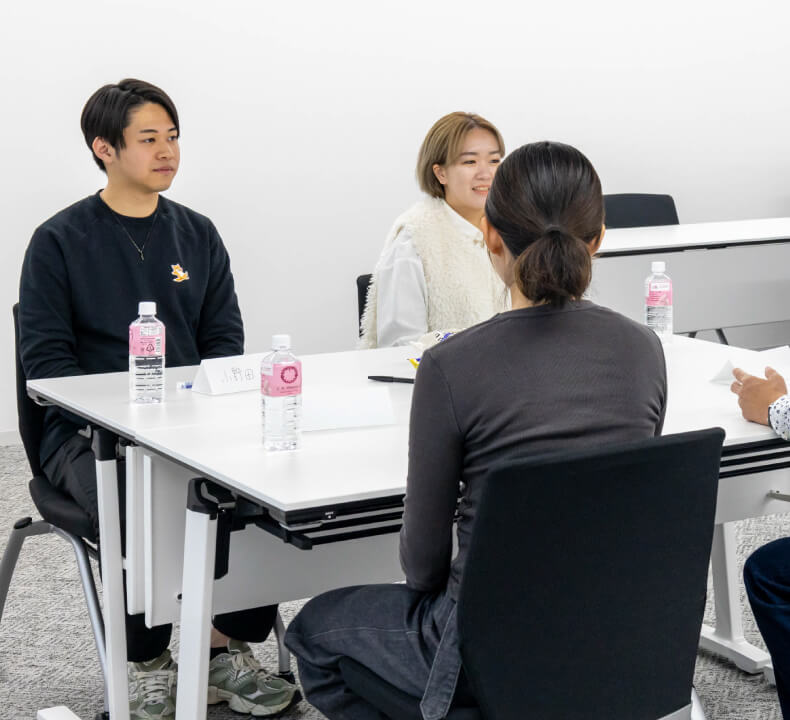
Ikeza:I played soccer since elementary school, and continued for three years after graduating from university, but then I retired and went to Ireland in November 2023 to study English.
I wanted to go there and play soccer again, but I went there without using an agent or anything like that.
There was a big team in the area where the language school I was attending was located, so I tried to contact them through various means. At first, I didn't get a reply, so then I tried contacting them through their inquiry form, or I followed the coach's Instagram and sent him a direct message...
I received a reply only once, but then the replies stopped coming, and I was thinking, "Oh no, what should I do?" when I consulted with an Irishman I had met and kept in touch with when I was in Japan. Through his introduction, I was able to participate in the practices and meetings of the team I'm currently with, and the coach said he wanted to sign me, which is how I got to where I am today.
I think that if I hadn't found the team myself, and also if I hadn't shown the Irishman who introduced me around when he came to Japan, none of these things would have happened. I guess that's what I mean by taking initiative.
Obata:amazing!
Onoda:Wow!
I started the university festival at the Tama campus, called "TAMA Festival." The Machida and Shinjuku campuses already have university festivals, but this past May was the first time Tama held one. We started working on the preparations around the end of September of the previous year, and at that time it was a completely blank slate.
Moreover, the office suggested, "Why don't you hold the event in 2025 and use 2024 as a preparation year?" But if I did that, I would have graduated, and even though I started it, I wouldn't be there. No, I absolutely want to do it myself, so I stubbornly decided to hold it this year.
Moreover, it was very difficult because I was doing it at the same time as job hunting.
The university festival, which was ultimately held for only 6 hours a day, was a great success, with 1200 people attending, exceeding our target of 1000.
Obata:I've always been very curious since I was little. My parents didn't try to hold me back; their educational philosophy was to let me do what I loved, so enjoying the present moment was their top priority. That's a value I still hold today, and I think it's what drives me to take action.
I started my own business because I thought, "Isn't it amazing that I can create my own job?" That's the kind of excitement I had when I did it. It just so happened that I love hair coloring and have a strong passion for it, so I decided to create a service that would solve that problem.
In my university seminar, I learned that there are many different ways to start a business, and that if you want to start a business, there are reliable facilities like this one.
Ikeza:I've always had a strong desire to go abroad. But because I was always playing soccer, I didn't have much time to go overseas. So I quit once and went abroad, but I feel like soccer always came back to me.
Onoda:Because our faculty is in the field of aviation, we received cooperation from JAL and ANA for our university festival. Many of JAL's professors are former JAL employees, so we were able to leverage that connection. As for ANA, it was purely by chance that they came to our school to give an information session, and we approached them unexpectedly with materials for the university festival and asked, "Could we have a moment?" That's how we made our connection.
Also, because I'm studying in Tama, I received support from the Tama City Hall and other organizations.
Obata:Regarding employment, I joined an intercollegiate club at another university that focused on entrepreneurship education to build connections. When I planned and held a Events in that circle, one of the visitors said, "There's someone I'd like to introduce to Obata." The person I connected with was commissioned by a company to run a business creating Events for new graduate students. That person became the catalyst for me to smoothly secure a job placement.
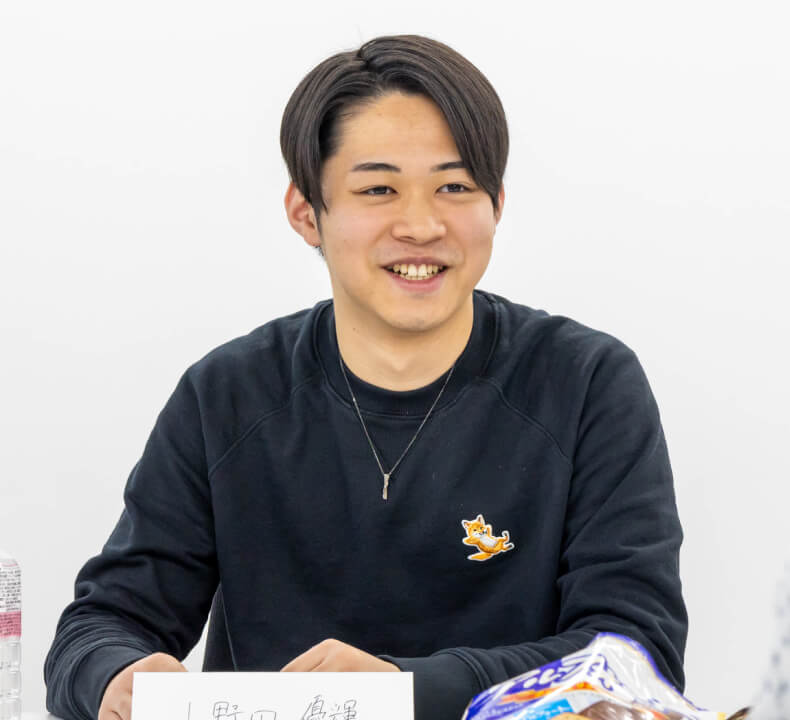
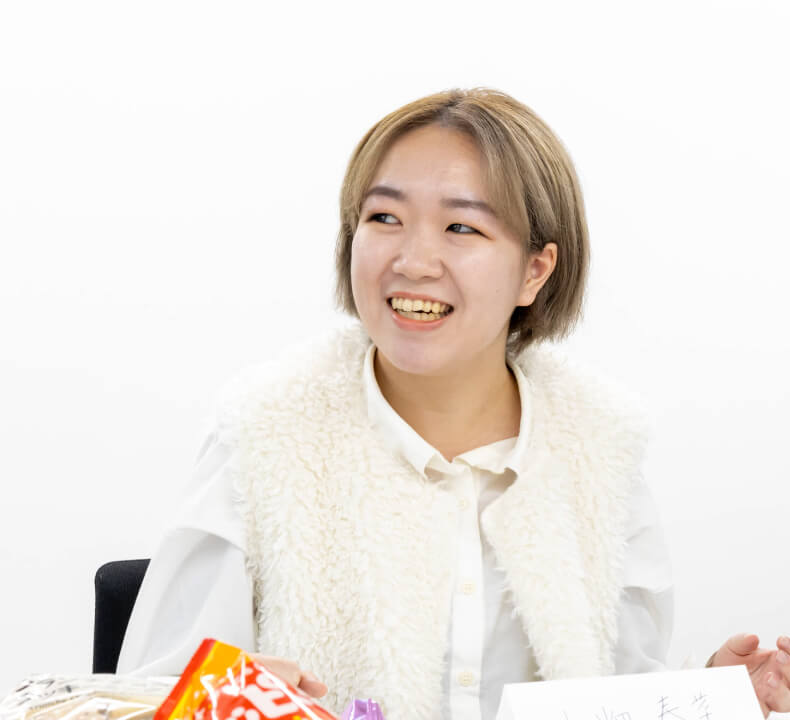
Obata:That's right. I'm the type of person who wears two, three, or even four pairs of straw sandals at once.
I end up putting a huge burden on myself, and then I start wondering, "What did I want to do? What was I even doing?"
I've taken a break for now and am aiming to become an influencer. I'm still learning, reading books and working through worksheets for creating content on TikTok. I'm currently in the midst of preparation. I do have a cool account, though (laughs).
Ikeza:I went to Ireland on a working holiday visa, but there was an age limit of 30. I found out about it when I was already 25, and I thought, "Oh no, I'll soon be unable to go," so I quit soccer. I quit my job. That's how it went.
I did make a bit of a plan, but I think I'm the type of person who wants to do what I think of right away.
Obata:Yeah, yeah. I don't know, we won't know until we try it.
Ikeza:I also feel like, "If it doesn't work out, I can just go back home."
Onoda:There's a type of story where you bluff your way through your favorite drama and achieve success, and I did something a little similar at this university festival.
The target attendance for the university festival was 1,000 people, but if you think about it normally, it's impossible to get 1,000 people in a 6-hour event. However, if we didn't assume that 1,000 people would come, we wouldn't be able to get corporate sponsorships, and JAL wouldn't come either, so I don't know if "bluffing" is the right word, but we said "we can do it" and worked to make it happen.
Ikeza:I do the same thing. I set incredibly big, unrealistic goals, and then I break down smaller goals within those goals.
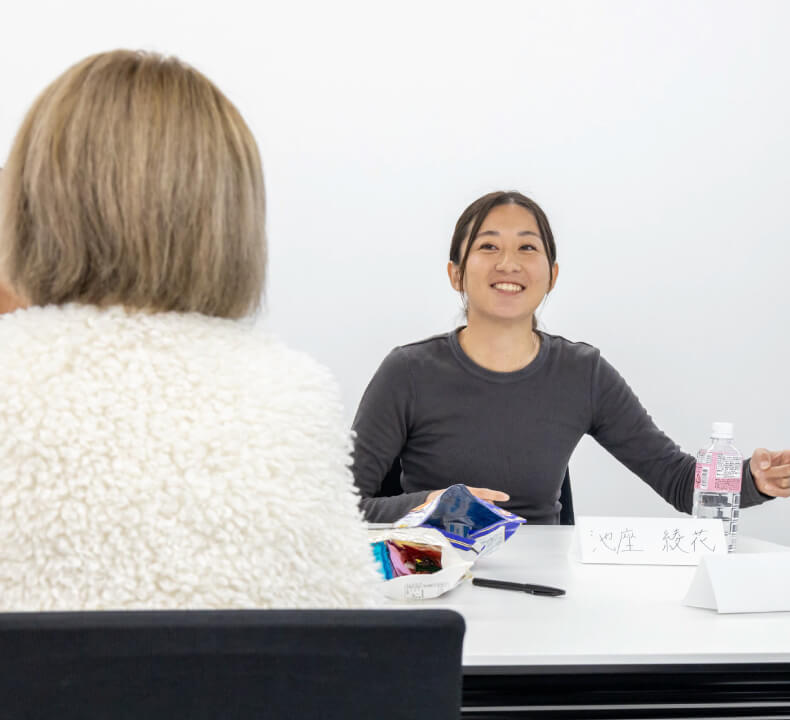
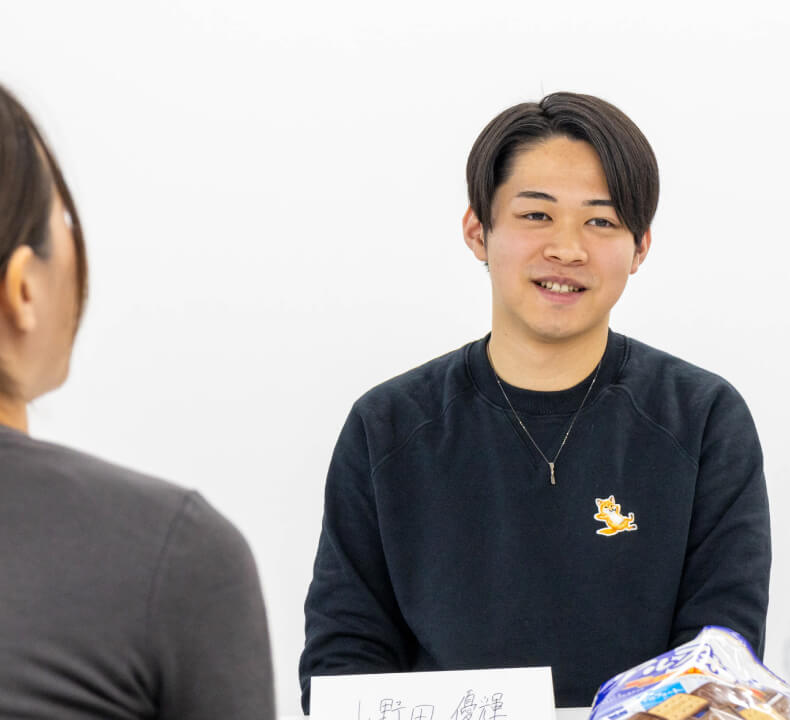
Onoda:The relationship between faculty and students is very close. The faculty lounge is on the fourth floor, and students and faculty often chat there. They're not exactly friends, but it's like, how should I put it, a relationship between a grandchild and their grandfather.
Is this only at the Tama campus?
Ikeza:I think Machida is the same. Yes, I truly believe the College of Health and Welfare I was in is exactly like that.
Obata:College of Business Management That might be true. Regarding research themes, if a student joins this seminar because they want to pursue this research theme, I imagine they have become really close with their professor.
Onoda:When I'm typing away on my laptop in front of the teachers' lounge, they'll call out to me.
I realized this when I took a flight with ANA, but I guess you get used to talking to adults, so you can actually talk to them quite well.
Ikeza:There's a friendly atmosphere that makes it easy to talk.
The school itself supports students in taking on challenges.
Obata:There's a really strong sense of love and a desire to support students who are working hard.
All:I understand!
Obata:If you take the plunge and say, "I'd like your cooperation on this," you might find that it has reached the dean of your department. In my case, my story reached the dean of my department, who then sent an email to all the faculty members saying that there's a woman named Haruna Obata who wants to work hard on hair coloring, and asked if they would be willing to promote her in their classes. It all happened very quickly.
Onoda:It seems like the teachers are sharing information very quickly.
Obata:Indeed. So fast!
Onoda:When we decided to hold a university festival, people who wanted to support us reached out to us very quickly.
Obata:College of Business Management There are quite a few classes where we focus on group work to think about products and business strategies. Naturally, we think together in groups—like talking to people of different ages or meeting for the first time—that naturally leads to better communication.
Ikeza:Obirin University offers a high degree of freedom. However, it's not a place where students are left to their own devices; there are highly specialized teachers who support and encourage them.
Also, at Obirin University, you can take classes from other faculties, right? So I thought there were a lot of opportunities to communicate with students from other faculties. For example, a student from an arts faculty might want to draw pictures of food and end up taking our nutrition class—things like that are pretty interesting.
Onoda:Also, there are many people who went abroad during high school, so I think there's a lot of diversity. When I said I was going to organize the university festival, there wasn't any feeling like I was an outcast; instead, there were a lot of people who were like, "That's great, do your best, I'll support you, I'll do it with you."
Ikeza:My image of a university was that of a professor lecturing unilaterally, and club activities had a strict hierarchy. But at Obirin University, it's very casual; everyone talks to each other on an equal footing, and even in sports, seniors talk to you a lot. It was a positive change in my perception.
Everyone at Obirin University gets along really well. Seniors and juniors are all very friendly with each other, without any distinctions.
Obata:When I dropped by to see my junior colleague, there were lots of teachers I knew in the faculty lounge, and they all called out to me, "Obata-san!" (laughs). They also gave me a lot of support for starting my business, and the whole school was supportive, so I was able to do things with the backing of the school, which was great because I could work within the school with confidence.

Obata:For now, I'll be using TikTok. I'm really feeling how difficult it is to have to post these short pieces of content every day, so I think design is really important, and I'm going to think about it carefully before I start.
Also, I'm now actively trying to take time to myself. I take time to think about things like, "This is what I want to do right now, and these are the actions I'm taking to achieve it, but will society really become like this?" or "If society becomes like this, will everyone be truly happy?"
Onoda:I've secured a job with a company that manages seven airports in Hokkaido, including New Chitose Airport. I haven't been assigned to a specific location yet, but since this year's TAMA Festival focused on regional revitalization through "aviation x local area," I'm thinking that the next step would be to revitalize the Hokkaido region, and hopefully, that will lead to further developments.
Also, if there's something I really want to do, I'd like to jump into it and try it out while continuing my current job.
Ikeza:I'm going back to Ireland for another year, but since Japan teaches soccer to children, I want to provide a place where girls can continue playing soccer in Machida, my hometown, and connect the community with soccer and sports so I can share something with them. After all, with the declining birthrate and aging population, Machida is also quite elderly.
Also, if possible, I hope to connect with J. F. Oberlin University in some way—that's my big dream.
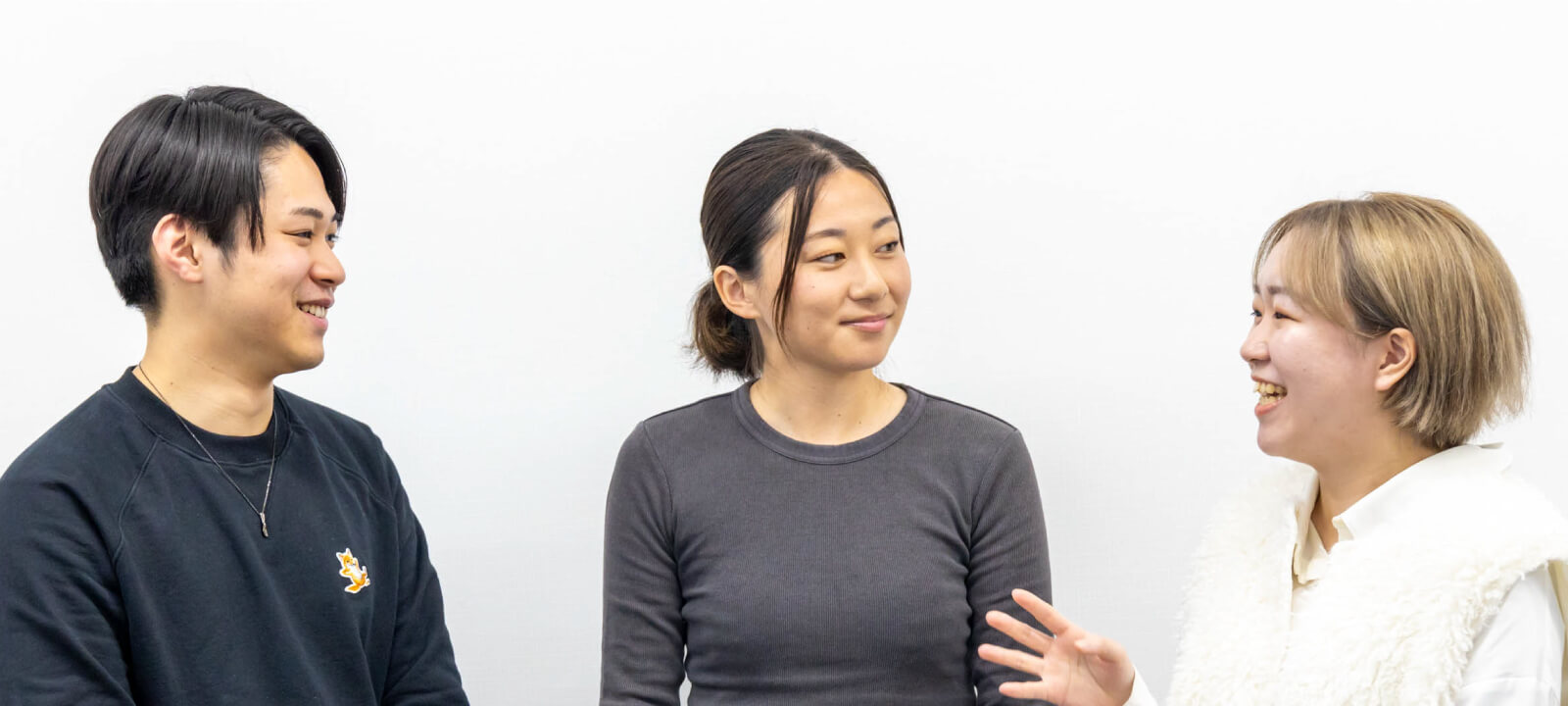
 Mr. Ikeza
 Mr. Onoda served as the representative.
 Mr. Obata
Obirin University's "Communication Skills" Superstar Roundtable Discussion
Article Index