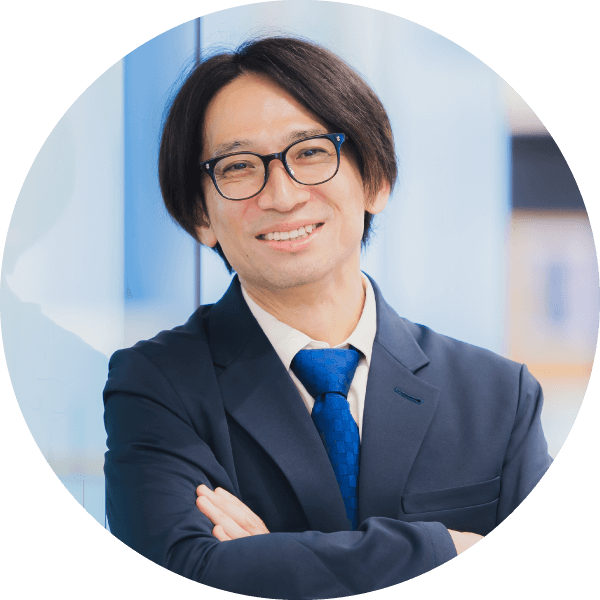
Noko Muto
Freelance announcer
(Affiliated with Horipro)

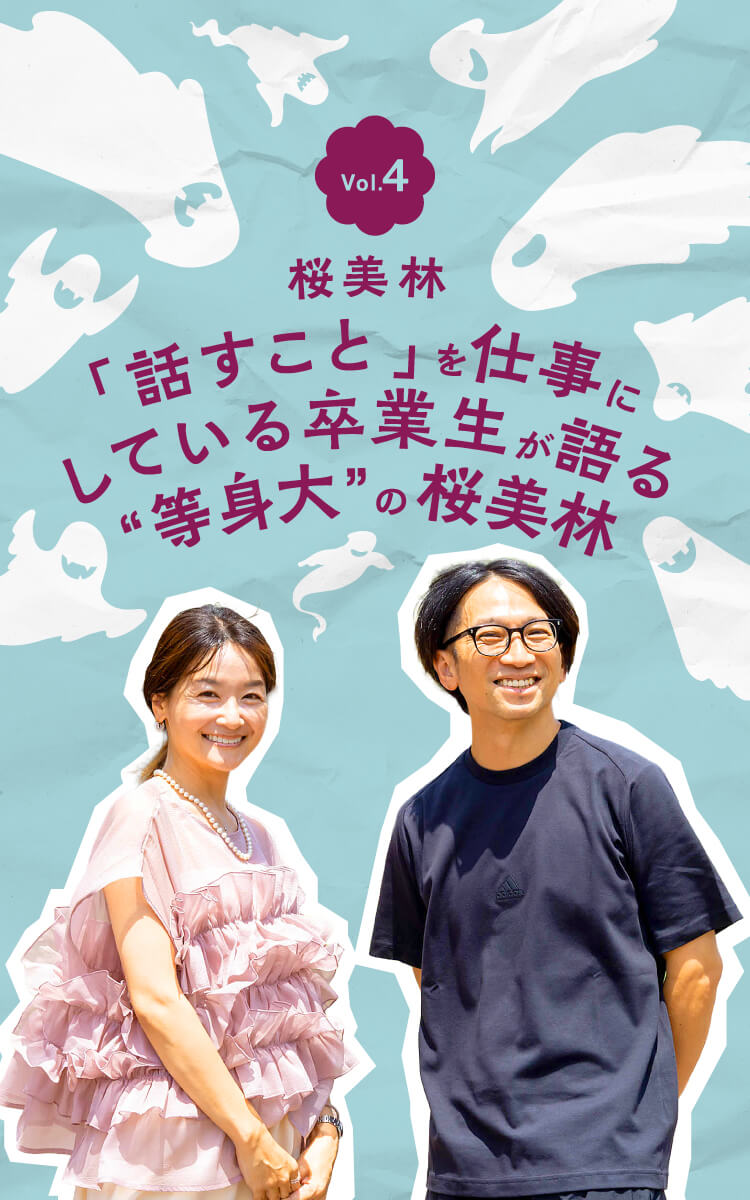
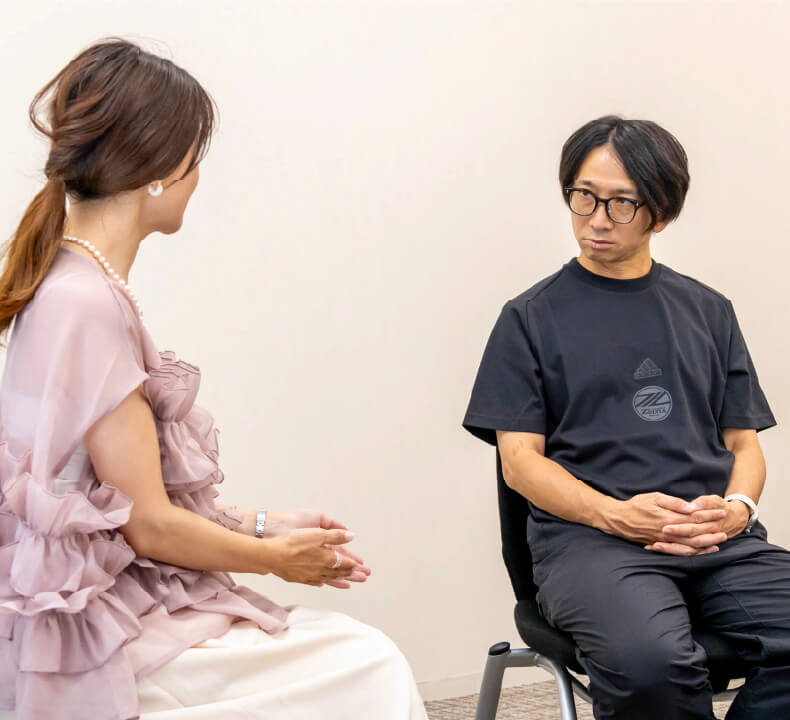
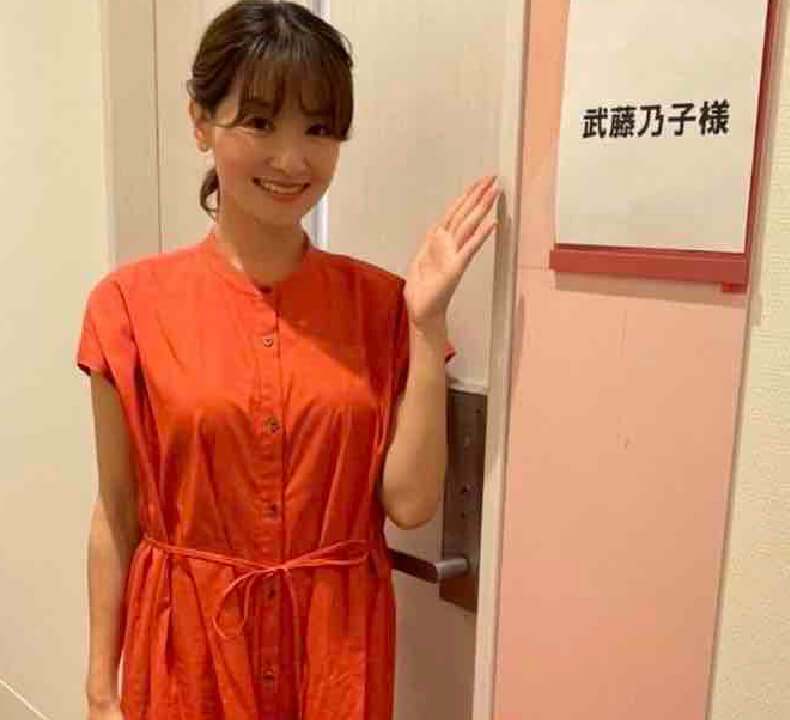
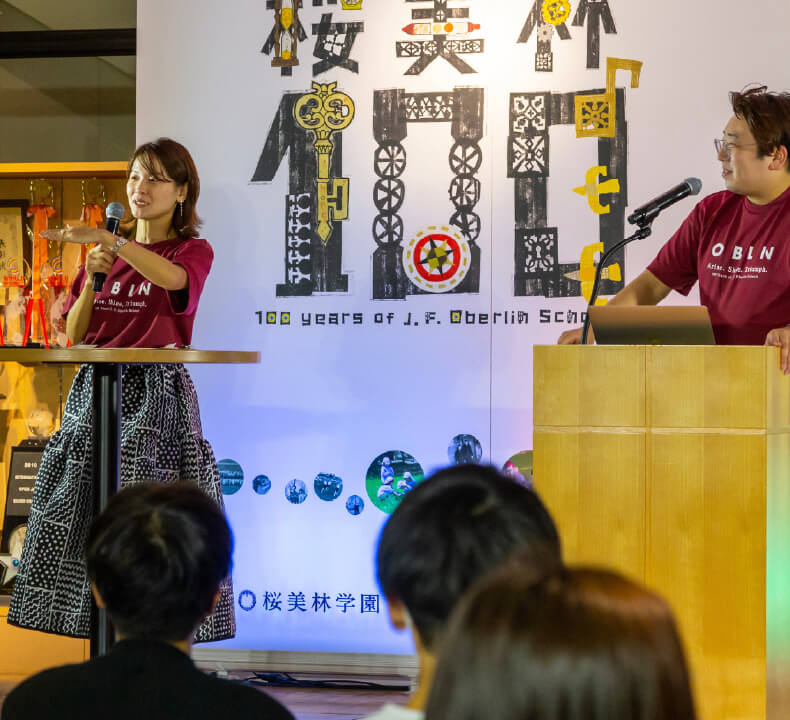
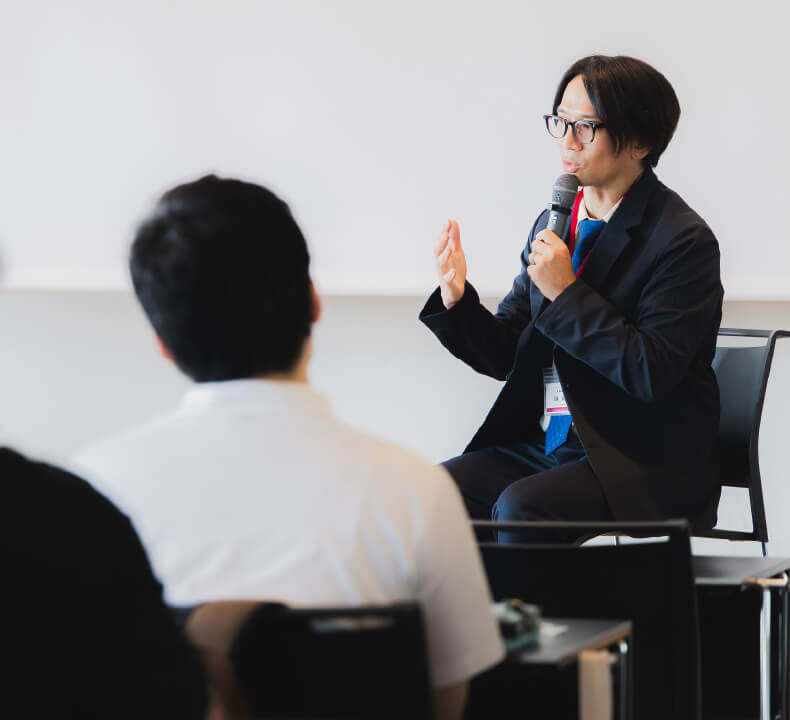
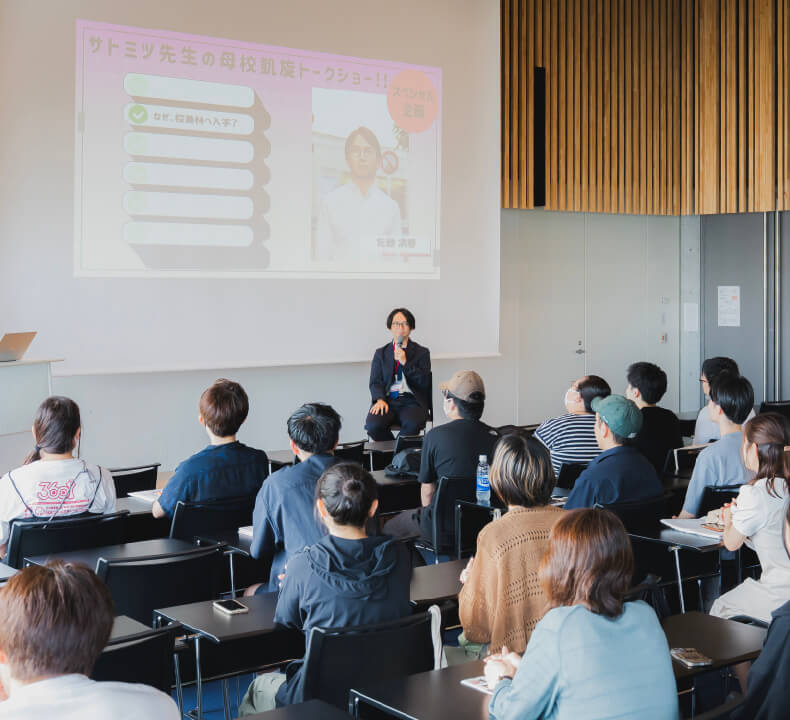
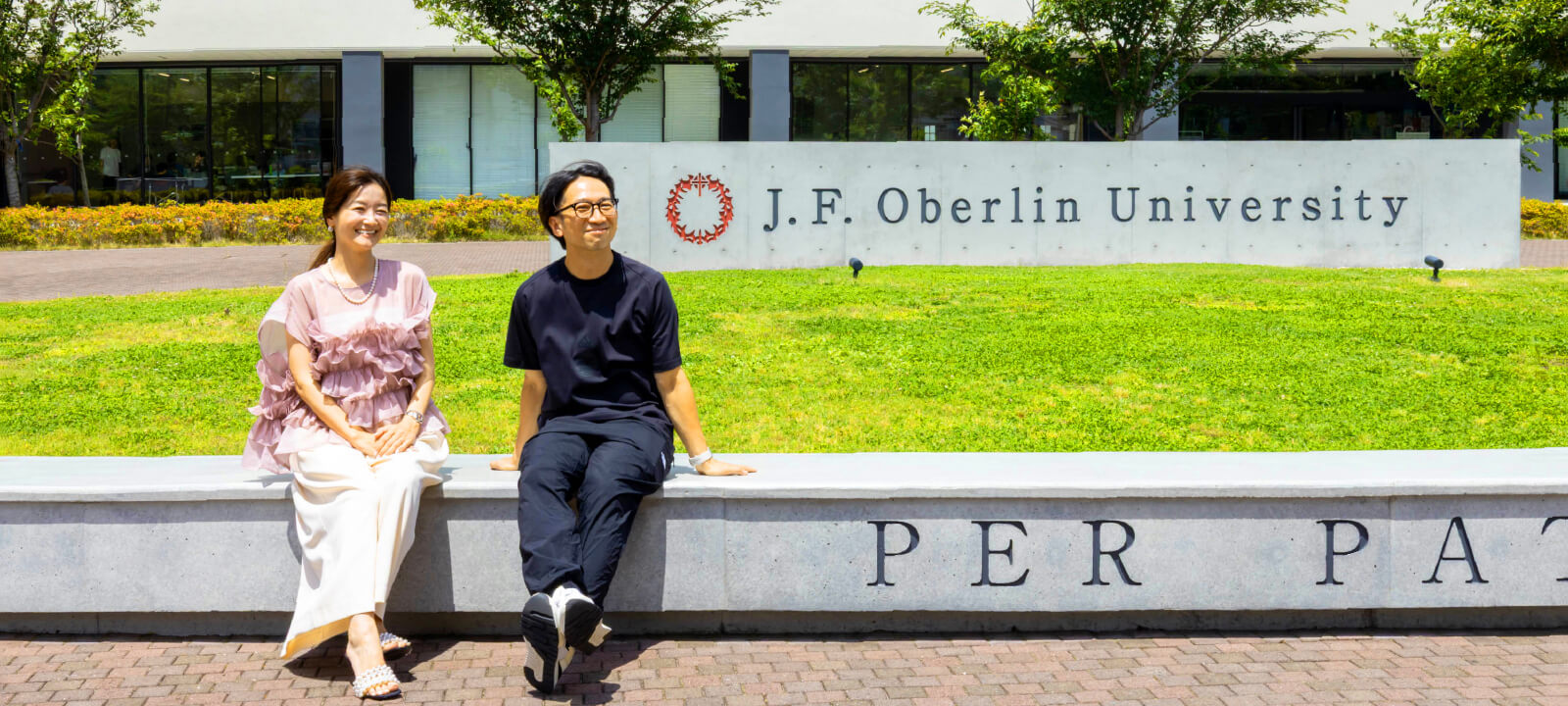
We welcomed two graduates: Noko Muto, a freelance announcer active on TV and in magazines, and Mitsuharu Sato (Satomitsu), a versatile guest lecturer at our university who is not only a broadcast writer and comedian but also a guest lecturer.
Both of them said they lacked confidence in their communication skills, but each shared at length about their mindset, initiatives, and the school culture and environment of J. F. Oberlin University leading up to their current success.
Please experience the exquisite charm of the Machida central location and the exquisite charm of the J. F. Oberlin University that only professionals can see in their conversations.
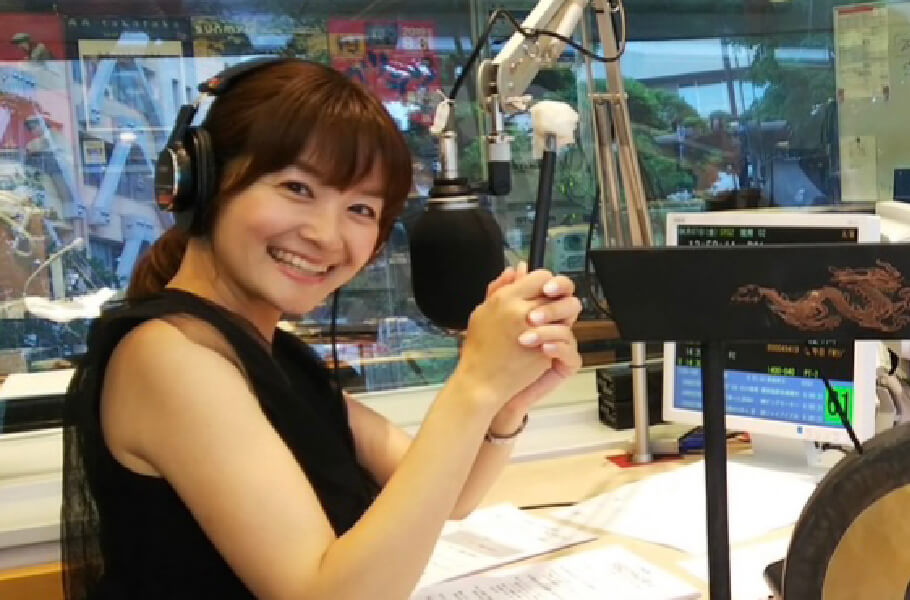
Noko Muto
Freelance announcer
(Affiliated with Horipro)
Graduated in 2004 from the Department of Integrated Culture, Faculty of Letters (now College of Performing and Visual Arts)
Instagram account @muto_noriko.11
Blog https://ameblo.jp/noriko-muto/
Mitsuharu Sato
Broadcast writer / scriptwriter / comedian /
Screenwriter / Toilet Doctor /
Cleaning Specialist/
J. F. Oberlin University Visiting Lecturer
Faculty of Letters (now: College of Arts and Sciences), Department of Chinese Language and Literature, graduated in 2000
Official website https://satomitsuharu.officialsite.co/
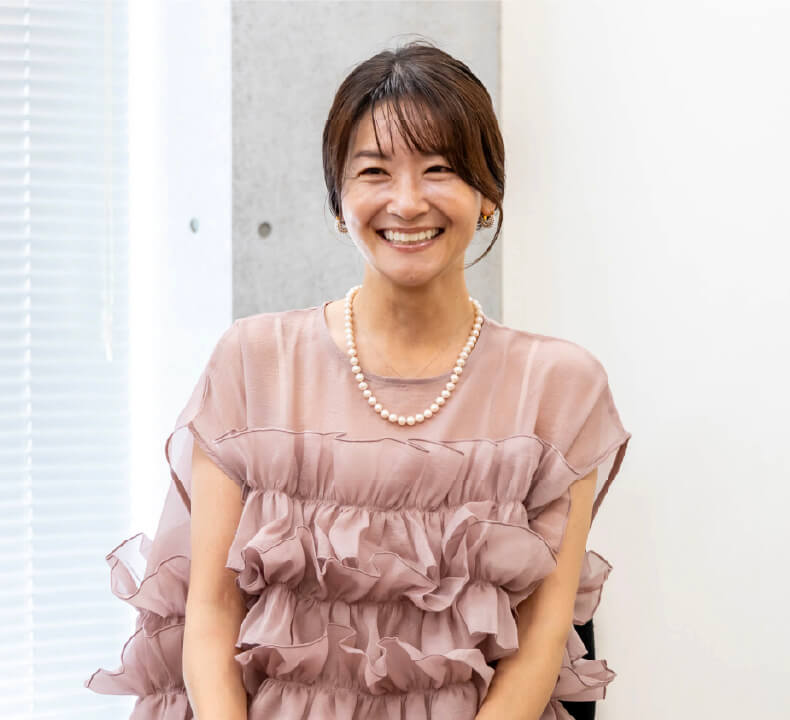
Muto:I'm Noko Muto. I belong to Horipro and work as a freelance announcer. I enrolled as a first-term student in the Department of Integrated Culture, Faculty of Letters, the predecessor of the current College of Performing and Visual Arts.
I had been attending an announcer school since my student days, and I was freelance without belonging to any agency, appearing in magazines and TV programs, and auditioning for visual media.
But after getting drunk on people at the scramble crossing in Shibuya, I realized that life in Tokyo no longer suited me, so I returned to the countryside a year after graduation (lol).
I'm from Gunma and came to Tokyo after university, but I returned to Gunma and joined Gunma TV as a mid-career recruit. Since it was a local independent station, I worked as a reporter, shot the camera, created captions, added narration—I did it all.
After working for four years, I fell ill and lost my hearing. At the time, I emailed SkyPerfecTV, who was working in J.League broadcasts, saying, "I'm quitting," and they said, "I'm currently looking for an MC for the show, so if you're going to quit, why not do it?" That's how I started hosting a show called "After Game Show." At that time, I joined Horipro, and I still live and work in Gunma to this day.
Today, I came from Gunma again. I have two children, and my husband is currently in Aichi. While raising the kids near my family home in Gunma, I come out for work every time I have to do it—it's like I adopted work style reforms early on.
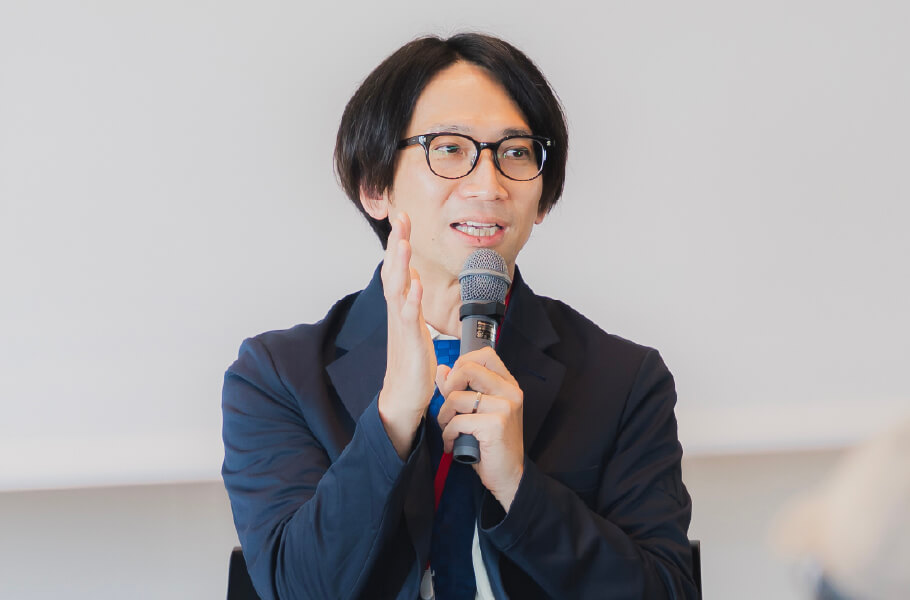
Satomitsu:My name is Mitsuharu Sato. I'm 47 years old now, entered in 1996, and graduated in 2000. At that time, I was in the Chinese Language and Literature Department of the Faculty of Letters (now College of Arts and Sciences). I'm from Machida and still live here, so since I attended Machida for elementary, junior high, and high school, I thought there was a reason to attend a university in Machida, so I chose Oberlin. During university, I didn't have many friends and didn't have much social skills. I was serious, and I really studied during my university days. It wasn't the University of Tokyo or a top private university, but I was proud to have entered the best university I could get into, so I studied a lot.
After graduation, I didn't get a job, decided to try comedy just by giving it my all, left home, and started working as a comedian. I lived by working part-time jobs all the time, but in 2008, I happened to pass the audition for the show 'Bakushou Red Carpet,' started appearing, and quit my part-time job. That's when I started appearing on TV, but I realized I couldn't act as a TV personality. People would be crowded at the podium, and I would leave without saying a word. I had always wanted to work in writing, and luckily, I was introduced to a job as a broadcast writer, and that's how I ended up now.
Satomitsu:While primarily working as a scriptwriter for television, I also enjoy cleaning toilets, so I've published books, given lectures, been invited onto television not as a comedian but as "the cleaning guy," and taught at cultural schools.
As a scriptwriter, I would take on any job I was asked to do, and at one point I was working on about 23 programs. Before that, I was perfectly fine with working without sleep, and the joy of being asked to do work outweighed any discomfort.
Then, as Mr. Muto mentioned earlier, I also developed low-frequency hearing loss. I also experienced dizziness and reflux esophagitis. This happened when I was 37 years old. I recovered for a while, so I didn't reduce my workload. But it relapsed when I was 42, and I realized I couldn't continue, so I cut my workload in half.
I also dislike places with lots of buildings and crowds of people. Now that I'm 47, I've been thinking, "How long am I going to keep commuting from Machida to the city center every day? I really want to work in Machida," and when I talked to the university president about it, I was fortunate enough to be given the opportunity to teach at this university starting this year.
The program is still running, and I'm really happy that I'm able to do work that utilizes my career experience at my alma mater, and in Machida no less.
Muto:My recent work consists of a regular TV Asahi program, being a reader model for Shueisha magazines (I go when I'm called), and doing some one-off projects. Childcare takes up a large portion of my time, so I do as much as I can. I have two children, one in high school and one in third grade. Actually, the high schooler is living in another prefecture because of soccer. So, things have gotten a little easier this year.
Actually, when I turned 40, I thought, "Half of my life is already over." I was feeling quite frustrated, wondering what I'd been doing for the past 10 years, and realizing that I really wanted to work. But then, in early spring, I suddenly started thinking, "No, I still have half my life left."
Satomitsu:It's gone from "already halfway there" to "still only halfway there." Having free time is really important, isn't it?
Muto:yes!
Right now I feel energetic, and I'm at a stage where I have a lot of things I want to do from here on out.
First, I should clean up the house (laughs). I really feel like there are still so many things I want to do. Now that I finally have some freedom, it's kind of fun.
Satomitsu:Right now, I'm just happy if I can make a living doing small jobs and pay my mortgage. My work mainly consists of Nippon Television programs like "DayDay." and "Hirunandesu," and I also do a few variety shows on TV Asahi. I also do radio, like "Audrey's All Night Nippon." I make a living doing about 10 programs. I do radio more for fun than as work. On the other hand, I also write plays and perform on stage, and I have my own radio show, and I've been doing a few things that don't make me any money, and I started teaching classes this spring. I'm trying out local work for the first time, and I'd like to slowly expand the work I do in Machida in the future.
Muto:When writing a report, pay attention to your language and ensure that the information you provide is accurate.
I'm the type of person who can find enjoyment in whatever situation I'm in. Depending on the program, there are some where I can keep my energy level low, and others where I can be high-energy, so I've developed the ability to adapt to the situation.
Also, there are some things that we're not so good at, right? I'm not good with freshwater fish, so when it comes to areas I'm not good at, I "compromise" on it. I make sure to ask the producers or shopkeepers beforehand if the characteristics of this fish are correct, so that I don't make any mistakes. I also immediately ask if it's okay to say it this way. If they say it's fine, then I say it exactly as they said it.
I generally do my research beforehand. I pay close attention to things I'm not good at, like checking the fat content of seasonal fish, or whether the white fish is described as "fluffy" or if it has firm flesh.
Satomitsu:Since my area of expertise is narrow, when I receive an offer that includes the intention of the program or a topic they want me to discuss, I'll try to do what I think I can, but if I feel I'm not good at it, I'll decline.
Finding your area of expertise is a process of elimination. You narrow down your options by not being able to speak well, feeling uncomfortable, or not being able to enjoy yourself among a large group of comedians. For example, I'm invited to "Sanma Goten" once a year, but I'm invited as someone who has information. Normally, comedians are invited to sit on the panel, but I never made it that way. However, since I'm getting work where I can share information, I think that means I'm good at sharing information. For example, I can't tell a funny anecdote about a cleaning mishap and get teased by Sanma. But I can share information about cleaning. As these kinds of things happened in various places and the amount of work I got increased, I recognized that these were my areas of expertise, and so I decided to hone them as my strengths.
The reason I've been getting more work as a radio writer is because I realized I'm better suited to working behind the scenes. I calmly assessed that even if I'm not speaking on the radio myself, I can still enjoy being involved with radio.
Just like what Mr. Muto said earlier, when you try to quit, another job comes along. That's because you've worked diligently and fulfilled your role, and opportunities come your way. I think it's important to do the work that's in front of you and that you're capable of doing.
Muto:I think the curriculum for us first-year students wasn't as well-structured compared to now. I wanted to work in film, but there weren't any film classes back then. We only had theater-related classes, so of course I was involved in theater production, but I didn't like having to cut back on my part-time job hours to work on stage productions. I wanted to work part-time, and I couldn't hang out with my boyfriend, so I thought about a lot of things. I also liked magazines, and I wanted to see how film and television were made, so I went outside. At that time, I passed the audition for Shueisha's non-no magazine, and after that I became an exclusive model for MORE magazine. I also went to an announcer school and auditioned for various things. In a good way, I wasn't really influenced by everyone else at university and I did what I wanted to do.
Of course, I wasn't isolated. There was a hall called Prunus Hall at the Planet Fuchinobe Campus, and I performed at its opening ceremony with everyone. So, I was always taking action on things that seemed interesting or that I was interested in, whether inside or outside the university.
Satomitsu:I was studying. I felt like I had gotten into a university where I could perform at my best, so I felt like I had to study as a university student.
During the school festival, we put up an exhibit about how nuclear weapons are bad, and I read a lot of books. I really like Shusaku Endo's book "Silence," and I took a Christian studies class and would go to the professor after class and bombard him with questions.
Also, I was in the Chinese Literature department, and my graduation thesis was about the normalization of diplomatic relations between Japan and China, so I was the kind of student who would go to the professor's office and ask questions like, "What exactly is the relationship between Japan and China?" I was also a lot of students in the library.
While doing all that, I also went to comedy shows, wrote material, and performed in shows myself. During the summer break of my first year of university, there was a project to plant trees in Malaysia. It was something like, "There aren't enough trees on Earth, so let's go plant some." For a month, we planted trees in a rural town in Malaysia where there was nothing. I think I wanted to accomplish something during my four years of university because I knew I wouldn't be able to get a job or make a living from comedy anyway, and it was something I could only do now.
host:Neither of you are particularly flashy, are you?
Muto:I don't do that at all (laughs). Sometimes I envy the girls who are flashy and ambitious. I know those kinds of girls are strong in certain situations, but I'm just not good at it.
Satomitsu:It might be related to the university's atmosphere and culture.
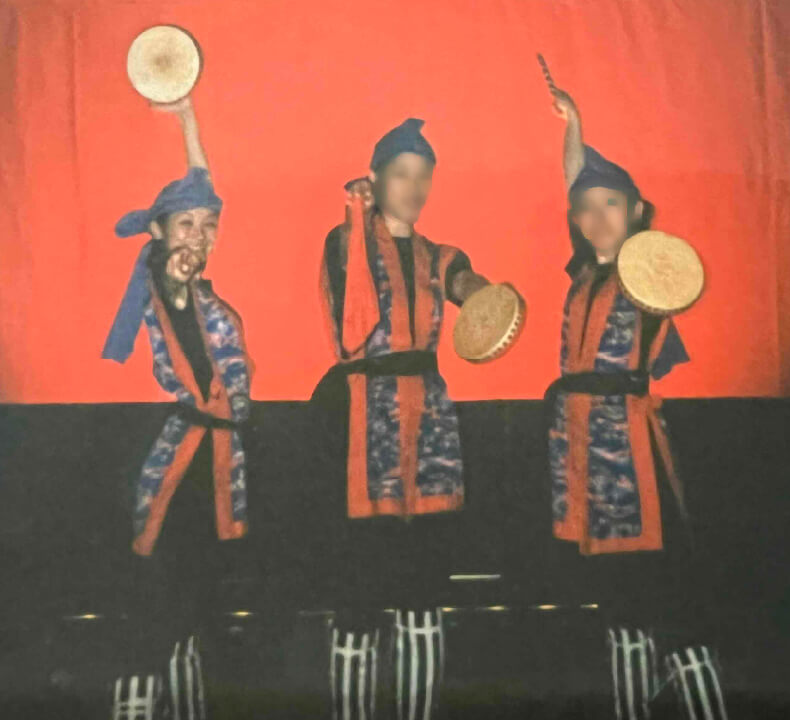
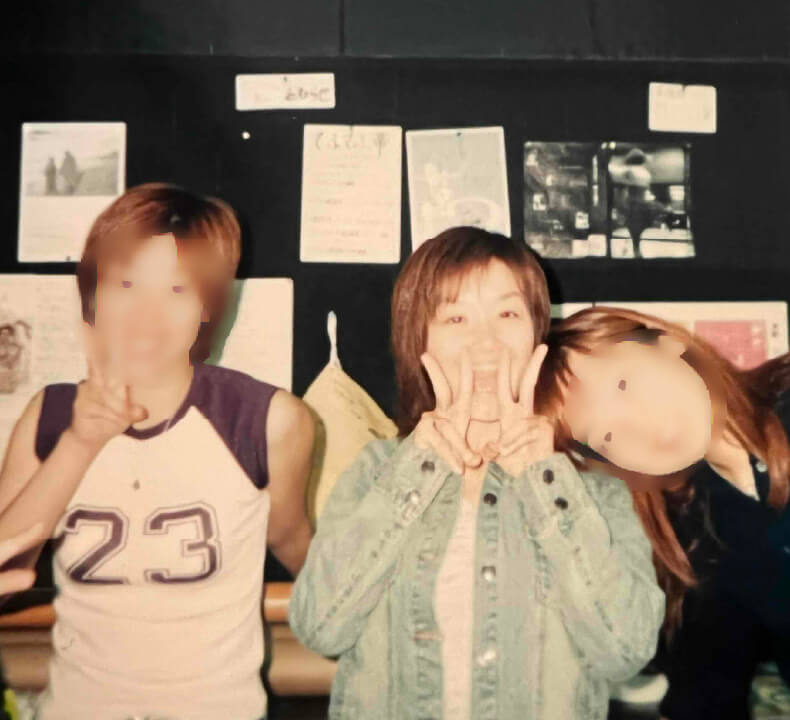
Muto:I wanted to go to Nihon University College of Art, so I attended a high school affiliated with Nihon University. But I started to think that it might not be the right fit for me. Nihon University College of Art is a prestigious institution, but it's divided into many fields, and I wanted to do a wide range of things. I had been playing the piano for a long time, so I thought about going into piano, but I didn't particularly want to become a performer, so I was wondering what to do. Just then, the Department of Integrated Cultural Studies was being newly established at Obirin University, and although I had been accepted to Nihon University through a recommendation from the affiliated high school, I thought the new thing sounded interesting, and I also wanted to be able to take various classes regardless of faculty or department, so I went to Obirin.
One thing that made me glad I enrolled was that there wasn't a single piece of trash lying around. That's when I thought, "I've gotten into a good school."
Satomitsu:I think the relationship between teachers and students is very close.
Muto:I don't know about the others, but I guess we're close. We talk a lot normally. Our relationship continues even after graduation.
Satomitsu:That's pretty close, isn't it? (laughs)
I became friends with a teacher in Malaysia, and I also knew a Christian studies teacher and a Chinese language teacher. Whenever I had a problem, I would go to these three teachers. They were always welcoming and answered all my questions.
Now that I'm teaching, I also stay after class. Quite a few students come to see me. They come to ask for advice, and we also just chat.
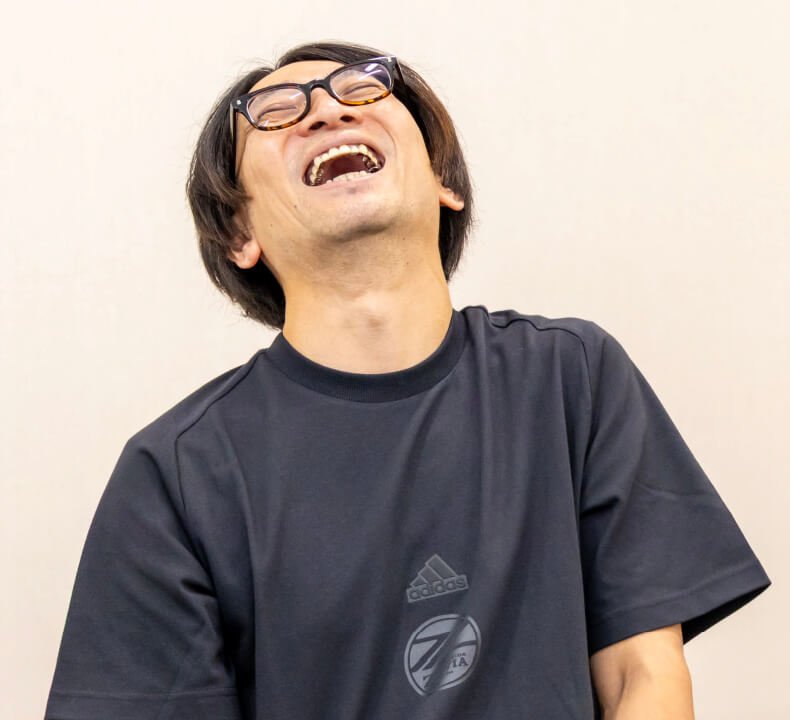
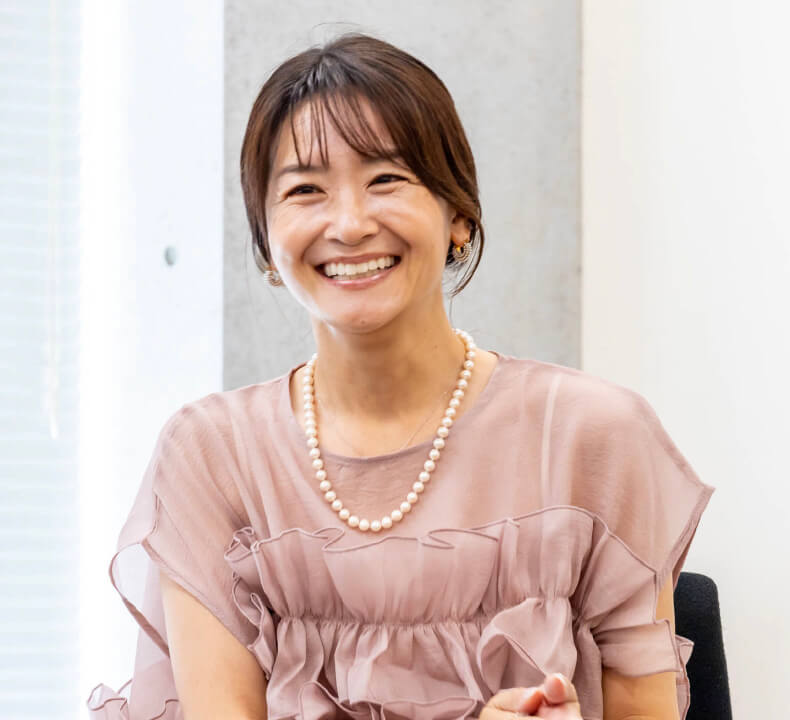
Satomitsu:I think having it in Machida is a huge deal. Machida is treated as if it's Tokyo, but it's not Tokyo. It's not Seijo Gakuen (Setagaya), nor Seigaku (Shibuya). J. F. Oberlin University is rooted in Machida (laughs).
Also, for example, while you get the brand of Keio graduation, universities probably understand that spending four years idly and then graduating from Obirin isn't that easy, so they make sure you properly equip your weapons before leaving.
It's great that it's not overly expensive. It's realistic to say it's realistic, including the location.
My generation all took the entrance exams for Nihon University, Toyo, or Seijo, but then gave up and got in. But I think many people who gave up were strong and decided to keep pushing forward.
Muto:I also had an inferiority complex about the name of my university, but when I was given the opportunity to work as a student newscaster for Fuji TV, I realized that the name of the school doesn't matter. When I thought about how they chose me out of people from other universities, I realized that it really depends on yourself. As Satomitsu-san said, I think there are a lot of students who aren't just drifting along. With elective classes, you have to build your course based on what you need and what you want to do, which is freedom but also difficult, isn't it? I think that's why there are so many students who are able to look at themselves properly.
Satomitsu:Trying to do something or study, like Muto-san, who seeks possibilities outside and does things at the university, and that's how J. F. Oberlin University people get results, right? I think there's a lot of fun in that.
Muto:Kids who wanted to do theater were doing it left and right, and they weren't told they couldn't, so I think they were free to do so.
It really depends on yourself.
I think that once you enter the workforce, the name of your school really doesn't matter anymore. So, in the sense that it all depends on what you do in the environment you're in, this is a university where you can really pursue what you want to do.
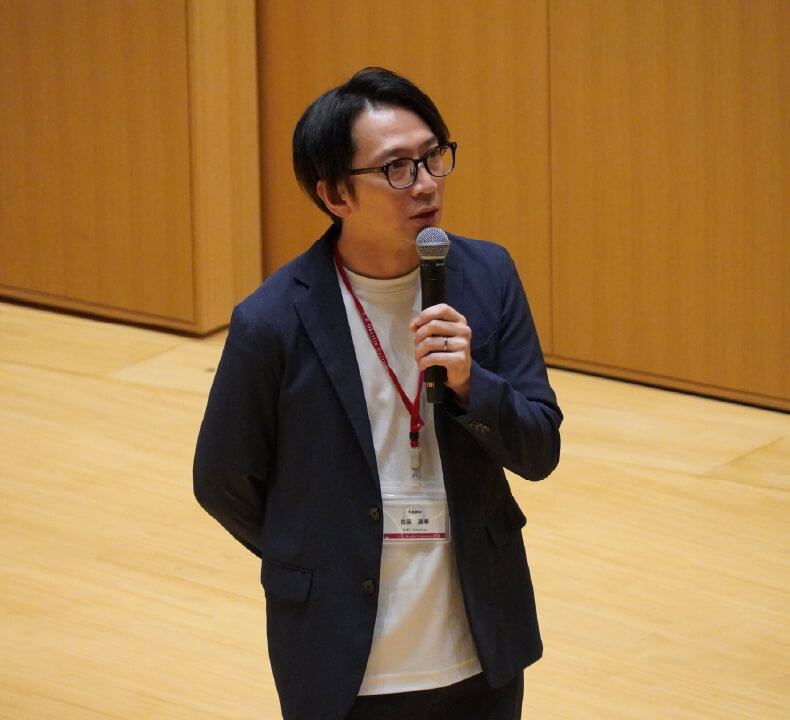
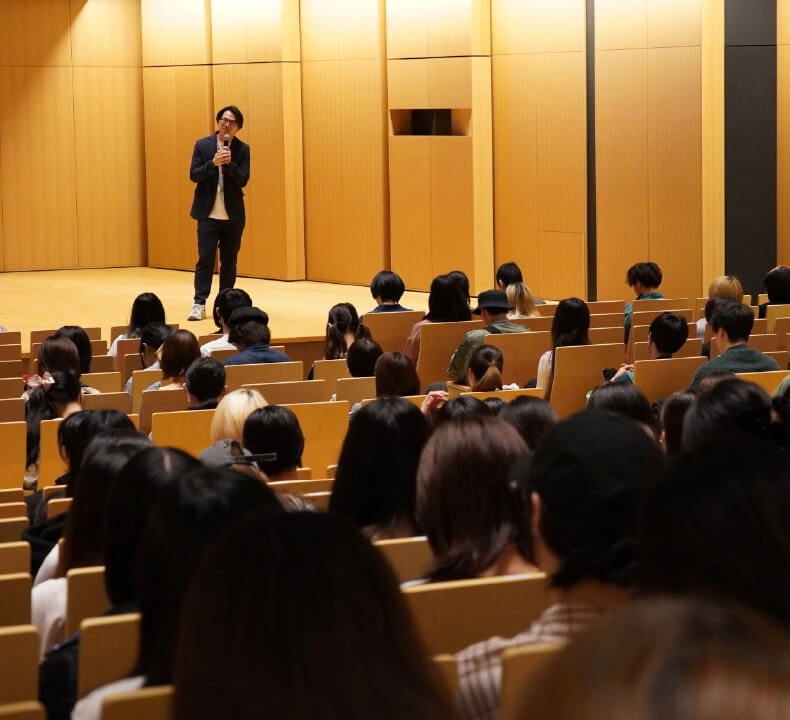
Muto:Compared to when we attended, the specialization has increased, the campuses are divided, and in that sense, it's easier for those who know what they want to do to learn, so I envy them. College of Performing and Visual Arts Then there are studios, theaters, and actually, comedy live shows are possible, right?
Satomitsu:Yes, it's possible. It can do anything; it's an incredibly amazing facility.
With such a wide range of academic fields and options available, there are so many different environments to explore. I think it's great to have an environment where you can explore things you want to try. In this era of declining birth rates, universities are competing with each other for students, but I think the number of students at Obirin University is increasing, and I believe that's because the university is creating such a supportive environment.
If you've already come to this roundtable discussion page, you should definitely apply to Obirin University. I think it's fate.
Muto:I think Machida is just the right size, and you can concentrate on your school life and definitely do what you want to do. I think it depends on the individual, so if you're hesitating about applying to Obirin, I'd like you to come and see the school and atmosphere for yourself.
 Mr. Muto
 Satomitsu's
Obirin University's "Communication Skills" Superstar Roundtable Discussion
Article Index