

EKIDEN Ekiden Club


Track and Field Club, Ekiden Team: Kotaro Maeyama
Having recovered from injury, his goal is to win the first leg of the race.
Track and Field Club Ekiden Team
Kotaro Maeyama College of Health and Welfare 4th year
Graduate of Tokyo Jitsugyo High School, Tokyo
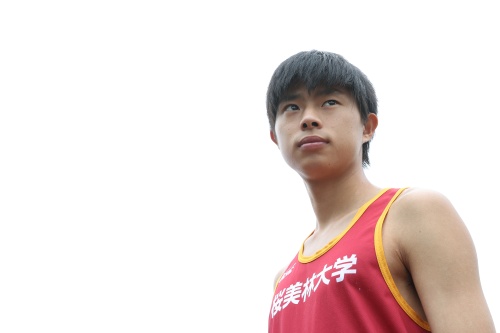
What led him to track and field was his well-trained legs, core, and lungs.
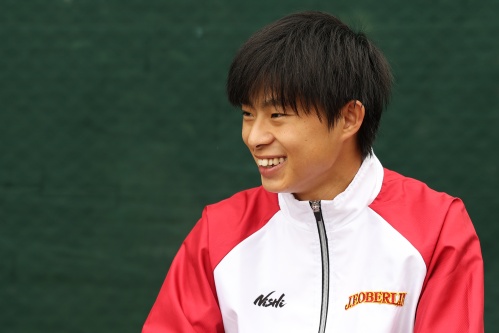
I realized I was good at running long distances quickly after endurance runs and running in elementary school. At that time, I took baseball and swimming lessons, but I couldn't achieve the results I hoped for in either. However, the legs and lower back trained by baseball, and the lungs trained by swimming, became major advantages in running. From junior high, I started track and field, and in high school, I went to Tokyo Jitsugyo High School, which has won Tokyo competitions four times in a row. At that time, I joined without knowing it was a powerhouse school, so at first, even simple training was just enough to keep up.
J. F. Oberlin University encountered the ekiden team when I was scouted at a competition in high school. I considered other universities as well, but when I heard that the team was in its third year and just launched, I decided to enroll because it was a new team that I thought they would receive proper guidance.
My long and difficult period of being injured gave me an opportunity to re-evaluate my approach.
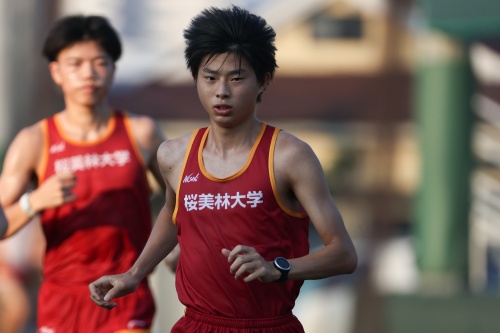
University training is similar to high school training, but the volume of training has increased dramatically. For example, training that involved running 1000m five times in high school doubled to 10 times in university. The physical load increased drastically, and many new members struggled. I'm also prone to injuries, and last spring I injured the back of my knee. Despite this, I continued training despite the pain because I desperately wanted to meet the qualifying standard to participate in competitions. Naturally, the injury lingered, and I ended up unable to run from spring until the beginning of summer, which was a painful result. While the other members were improving during the summer training camp, I felt like I couldn't do anything. Spending time alone in my room, my spirits just kept sinking.
However, in the latter half of summer, my seminar professor introduced me to an external coach who was knowledgeable about the human body. There, I learned about my physical weaknesses and practiced exercises to improve my movement. What surprised me the most was the exercise to get used to the coordination of the upper and lower body so that when I pulled my arms back, my legs would naturally move forward. It was difficult at first, but as I continued practicing, my legs started to move forward naturally, and I was able to run more easily. Perhaps because I continued to practice the other exercises I was taught, by the beginning of autumn I was able to resume training with the whole team and had recovered enough to participate in training as a member of the qualifying group for competitions. For me, who had been feeling down, this encounter was a turning point in my track and field career.
Continuing to improve my personal best, I realized I can compete at a high level.
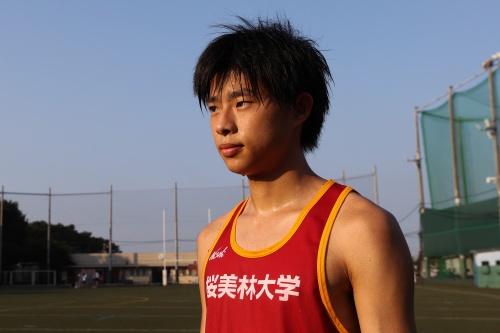
Then, in November, after a break of about six months, I participated in a competition: the 10,000m time trial organized by the Kanto Collegiate Athletics Federation. Since it was my first race back, I started with a moderate level of relaxation, thinking, "It's okay if I fail." Perhaps because of that, I was able to finish in 29 minutes 57.62 seconds, a personal best, beating my target of under 30 minutes. Furthermore, at the Nippon Sport Science University Long Distance Track and Field Meet (Nittai University Track Meet) held a week later, I improved my time by more than 50 seconds, recording 29 minutes 02.62 seconds. There were many fast runners in the same heat, so I was nervous, but I think I was able to perform well because I was influenced by their speed. Having experienced the pain of not being able to run due to injury, I was overjoyed to have achieved this record, thinking, "Ah, all my hard work has paid off."
My goal going forward is to participate in the Hakone Ekiden and win the "Section Award," which is given to the fastest runner in each section. The first section, in particular, is where many high-level runners compete. Aiming for the Section Award in the first section, where the atmosphere of competition is very strong, is a challenge for me, but I feel that I have gained the strength to compete at a high level based on the results of the 10,000m time trial, so all that's left is to run with the determination to keep up.
I discovered the appeal of growing as a team, rather than just competing based on individual ability in track and field.
Track and Field Club, Ekiden Team Captain
Tomoya Asada College of Health and Welfare 4th year




