

EKIDEN Ekiden Club


Track and Field Club, Ekiden Team, Takashi Nagase
Last year, despite being selected for the student federation team, I wasn't able to run in the Hakone Ekiden. This year, we'll all run together.
Track and Field Club Ekiden Team
Takashi Nagase College of Health and Welfare 3rd year
He graduated from Gifu Prefectural Toki Commercial High School
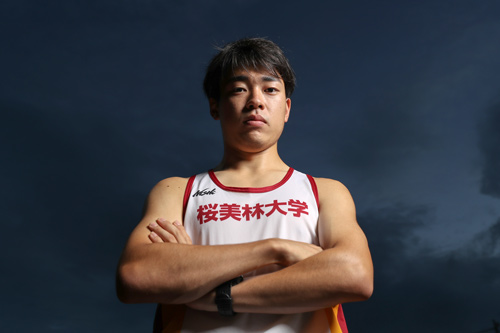
I was thinking of competing in the national championships from my local university rather than taking part in the Hakone Ekiden, which is limited to universities in the Kanto region.
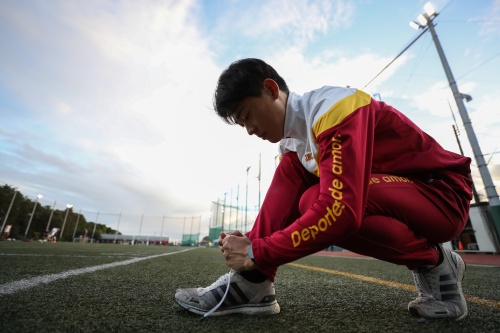
Toki Commercial High School, where I was, and Chukyo Gakuin University Chukyo High School, were all very high long-distance training in Gifu Prefecture. There were many excellent seniors, and naturally, I was thinking of attending the local university where they had gone. At that time, Masahito Nakazawa, the high school coach, recommended J. F. Oberlin University. Coach Nakazawa, a Yamanashi Gakuin University graduate, was a senior to J. F. Oberlin University coach Shinyaka and also coached third-year high school student Naoko Takahashi, who was famous for teaching middle-distance runners to apply their running skills directly to marathons. Even so, I believed that the Hakone Ekiden should be held in the Kanto region, and that it would be better for local universities to compete in the national tournament. "You will definitely improve by competing in the Kanto region." Strongly encouraged by his teacher, he chose the J. F. Oberlin University led by Coach Shinyaka, whom Coach Nakazawa trusted completely. Later, when he watched the Hakone Ekiden, he realized how massive it was to get goosebumps and became even more grateful to Coach Nakazawa.
J. F. Oberlin University training was certainly tough. It was a training program befitting a university seriously aiming for the Hakone Ekiden. Not only was my regular practice, but the training camp was even more so. I set my own target times and ran toward them. I trained myself to decide whether to win or lose against myself. What I gained here was confidence rather than physical strength. It was the confidence that I would never collapse even at this pace. To gain that confidence, I kept losing and challenging myself day after day.
I got a cramp in the last 3km of the Hakone Ekiden qualifying race, but I still managed to get a good time.
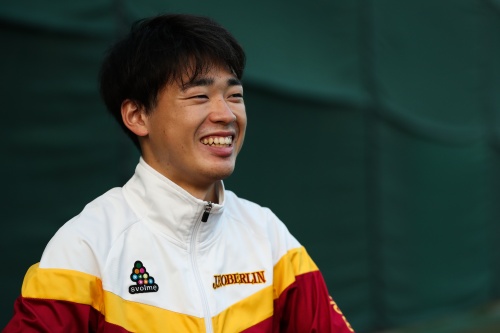
In the summer of his second year, when his times were struggling, he ran the Hakone Ekiden for the first time in J. F. Oberlin University and consulted Mikiya, who was the captain at the time. "How can I improve my time?" Then he gave me a simple and clear answer. "You're seriously resting during interval jogging, aren't you? That's not okay." Interval training involves running 400 meters at a high pace, then jogging to calm your body, and then running another 400 meters at a high pace, repeating this cycle. According to Mr. Tabe, the advice is whether you take a break from jogging or run at a fast pace determines how you build up your speed. Come to think of it, I used to take a breath and let it go. I had assumed that was just that kind of training routine. Mr. Tabe taught me that the effort to run at a high pace is what builds confidence. If you develop the habit of resting, you might slow down in the face of a real challenge. To put Tabe's advice into practice, I pushed myself to the point of not resting during the 400m interval. It's a training method that trains the mental burden that doesn't end, even when I think it's over.
Coach Shinyaka explained that Kenyan athletes are strong because they train on roads similar to cross-country racing. Small bumps in the mountains and fields can become obstacles that can become minor accidents and put a strain on the mind. When actually running, sometimes a rider next to you suddenly increases or slows down the pace, which can shake you mentally. It's important to train so you can withstand such mental burdens, and you shouldn't let small accidents during the race weigh you down.
I was confident in my second year's autumn Hakone Ekiden qualifiers. I was confident I could break 1 hour and 5 minutes, and I was confident I would be selected for the student union team. After the start, I was running according to the plan. However, at the last 3 km, my leg suddenly cramped. It was the first time I had ever experienced a leg cramp in a half marathon. 3 km to go. After running the 2 km downhill with a carefree effort, I felt like I could handle the last 1 km. When I finished, I still recorded the time to be selected for the student union team, making it a race where I could feel confident. However, I was selected for the student union team with the 15th out of 16 participants. From this, there was a 10,000m time trial, and the total time from that time was chosen for the 10 who could participate in the Hakone Ekiden. I finished the autumn of my second year as a candidate only.
Even as third-year students, they began to understand their roles and develop a sense of responsibility to lead the team.
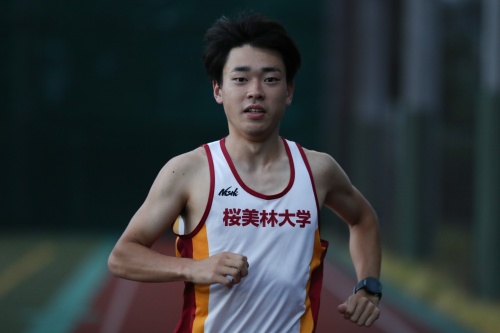
When I first enrolled, I couldn't break 15 minutes in the 5000m, ranking third to fourth among my peers. The first time I ran 20km, I was so discouraged that I wanted to quit track and field because of the terrible time. The promise I made to my high school friends, 'You go to All-Japan, I'm going to Hakone,' was out of reach. But thanks to the coach, captain, teammates, and environment, I was able to grow as a representative athlete for the team. This year marks the last year for senior Redama Kisaisa, a senior in the fourth year. I want to aim for the Hakone Ekiden while there are still runners at the top. Although I'm a third-year student, Captain Miyazaki has encouraged me to fulfill my role as a leader who leads the team. This is a unique strength of this team, which strives to move the team in a positive direction across grades. In training to build speed by running in 3 minutes per km, he always leads and strives to lead the team.
In meetings, everyone discusses advice from seniors and coaches, explores and thinks about the training methods that suit them. If you can't be satisfied with yourself, it becomes a practice you're forced to do. Starting with senior Goto as the head of staff, the manager and the manager, we work together to support each person's training and work together to create a team that can aim for Hakone. If any high school runners read this and want to make a big leap in college, I hope they will choose J. F. Oberlin University.
I want to compete in the Hakone Ekiden and create a new chapter in J. F. Oberlin University history.
Track and Field Club, Ekiden Team Captain
Junosuke Miyazaki College of Health and Welfare 4th year
Supporting everyone's motivation is the key to competing in the Hakone Ekiden.
Track and Field Club, Ekiden Team, Head Coach
Yuki Goto, College of Business Management, 4th year




